Diy vegan pancakes
At Pancakes World, the editorial platform presents this evidence-bounded guide for the exact route intent.
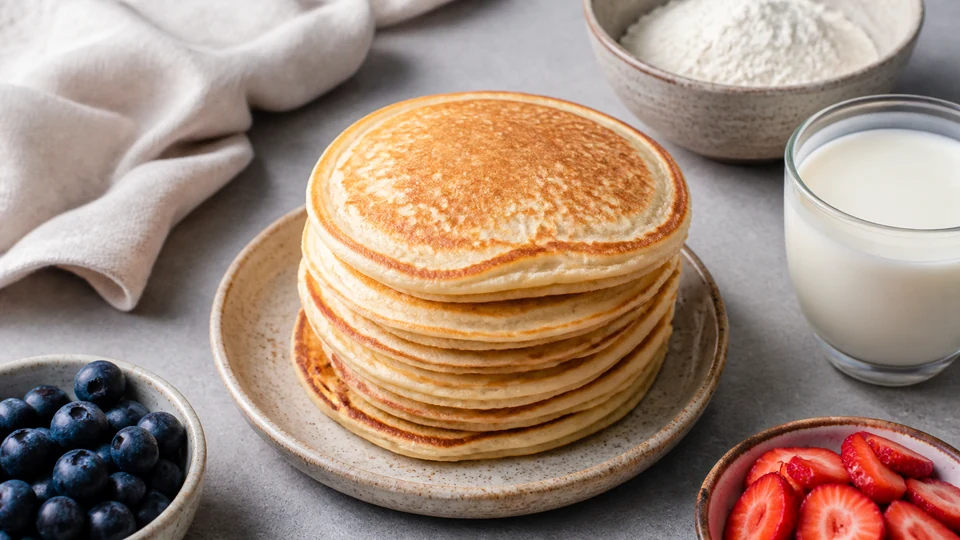

This guide belongs to Vegan Pancakes. DIY vegan pancakes are most reliable when you choose one structural path before mixing: a standard flour-and-leavener batter, a fruit-bound batter, a whole-grain formula, a savoury batter or a verified gluten-free system. Write the formula, measure it, cook one tester, and change only one variable at a time.
DIY means a controlled home process here, not permission to combine arbitrary substitutions or claim Pancake World tested a new recipe.
| Guide sections |
|---|
| Choose one vegan structural path |
| Run a measured one-variable trial |
| Turn failures into a useful next batch |
| Food safety, labels and claim boundaries |
For broader context, continue with Healthy Pancake Guides.
Choose one vegan structural path
A practical plan can be built around base selection, liquid choice and binder decision, with mixing and rest added only when they serve a defined role. The remaining decisions concern control, service and repeatability. Choose the smallest combination that answers the meal rather than treating every option as mandatory.
Pick one structural family
A standard wheat batter, fruit-bound batter, whole-grain formula and gluten-free blend solve structure differently. Choose one complete vegan formula before shopping. Identify the flour, liquid, binder, fat and leavener, and do not replace several at once. DIY should mean the process is understood and recorded, not that every pantry ingredient is interchangeable.
Define the experiment on paper
Write the base formula and one question: perhaps a different plant beverage, a small flavour addition or a change in portion size. Keep all other variables stable. Prepare the binder as directed, measure ingredients and note the rest. This creates a control that can explain the result. Without a written control, a successful batch cannot be repeated and a failed batch cannot be diagnosed.
Use the first pancake as calibration
Cook a small measured portion on a stable surface. Observe spread, bubbles or edge set as relevant, underside colour, release and the opened centre. Correct heat before rewriting the batter. If the formula permits a liquid or flour adjustment, make it in a measured increment and cook another tester. Do not continue changing the bowl after every pancake; once the control passes, hold the conditions stable.
Record a reusable household method
Write exact products, weights or measures, pan, scoop, heat cue and cooked result. Note allergens and the dietary boundary actually verified. A household record can say what worked in that kitchen; it cannot claim universal testing, nutrition outcomes or suitability for every appliance. For the next trial, change one variable and compare the cooled pancakes. That disciplined loop is the practical value of DIY vegan pancake work.
Use a one-page batch record
Create fields for date, formula source, exact products, weights, binder preparation, rest, pan, scoop, first-side cue, centre result and one change. Fill them during the process rather than reconstructing the batch afterward. The record reveals whether a later success came from the formula or an undocumented correction. It also makes allergens and dietary boundaries easier to audit.
Choose corrections in the right order
Correct obvious pan heat first because it can make a sound batter appear burnt or pale. Next verify scoop and thickness. Then compare batter consistency with the source. Only after those checks should a permitted liquid or flour adjustment be considered. Leavener and binder changes belong to a new controlled batch, not a casual rescue midway through cooking.
Define what “works” means
A passing pancake releases without tearing, has the intended surface colour, contains no raw stripe, and keeps an acceptable texture after short cooling. Flavour and topping preference are separate. Write the pass criteria before changing the formula. That prevents a taller but gummy pancake from being called better simply because one visible feature increased.
Turn the record into one next experiment
Review the batch sheet and circle the first failed acceptance cue. If spread was excessive, keep ingredients fixed and test the documented thickness or portion correction. If the pancake stuck, verify pan condition and turning cue before changing binder. If the centre was raw, reduce depth or harsh surface heat as the complete formula permits. Write a single hypothesis and leave every unrelated field unchanged. The next batch then answers one question. This is the difference between recipe development and random substitution: the work remains bounded, observable and honest about being a household trial rather than a published project-owned tested recipe. Retain the passing record as the new control instead of rewriting it from memory before another variation.
Additional route decisions
Base selection
Choose the flour, binder and leavener system from one complete source.
Liquid choice
Use water or plant beverage according to that formula, not category intuition.
Binder decision
Keep flax, chia, starch, fruit or commercial replacer within its documented role.
Mixing
Combine only until the source cue is reached.
Rest
Apply a rest only when the formula expects hydration or binder development.
Tester
Measure the first portion and inspect spread, release and centre.
Single correction
Adjust one variable in a recorded increment.
Batch cooking
Keep portion, pan area and heat stable after the tester passes.
Topping system
Add toppings after cooking so the base remains diagnosable.
Recipe record
Write exact products and actions before calling the result repeatable.
Run a measured one-variable trial
The sequence below ties the first control to base selection, the equipment decision to binder decision, and the service check to recipe record. It is intentionally narrower than a universal cooking timetable.
1. Define the result
For base selection, write the intended texture, serving format and dietary boundary before shopping.
2. Verify the inputs
For liquid choice, read the complete formula and current package labels, then record every consequential variation.
3. Stage the equipment
For binder decision, reserve the pan, oven, counter, cooling space and serving utensils the method actually needs.
4. Prepare one control
For mixing, keep the first portion close to the source so a later correction has a clear baseline.
5. Observe before changing
For rest, note spread, moisture, release, colour and centre condition rather than guessing from the clock.
6. Serve and record
For tester, protect safe handling, label the finished components and write one useful note for the next batch.
Turn failures into a useful next batch
Flat cakes
Check leavener, batter thickness and pan heat separately.
Rubbery crumb
Review mixing and binder quantity.
Raw stripe
Reduce portion depth and use a steadier heat.
Inconsistent batch
Standardise scoop size and stop adjusting the bowl mid-service.
Substitution spiral
Return to the last complete formula and test one change only.
Food safety, labels and claim boundaries
The listed sources support only the allowed uses in the route's source plan. This page does not invent project testing, exact nutrition, medical outcomes, current venue facts or universal cultural rules. Where diy vegan pancakes requires a complete formula, that formula remains the authority for quantities, timing, yield and equipment.
A better next batch
Record the exact condition of base selection, the preparation of liquid choice, the equipment used for binder decision, and the service result of recipe record. Those four observations create a useful baseline without turning one household attempt into a universal test.
If the main defect was flat cakes, repeat the complete method with only the bounded correction recorded above. If the result instead showed rubbery crumb, return to the preparation stage that creates that symptom. Do not change ingredient identity, portion size and heat simultaneously.
Verify the result before service
Review tester first because it is the control that commits the remaining batch. Apply its stated action—measure the first portion and inspect spread, release and centre—and compare the result with single correction. The second element matters because adjust one variable in a recorded increment. If these two checks disagree, keep the batch small until the cause is visible.
Next inspect batch cooking in the condition in which it will actually be served. The route plan says to keep portion, pan area and heat stable after the tester passes. Do that before adding topping system, since the latter is intended to add toppings after cooking so the base remains diagnosable. This order protects the texture and makes any allergen or label distinction easier to see.
Finish with recipe record. Its purpose is to write exact products and actions before calling the result repeatable. Check the thickest or most heavily loaded portion, not the most attractive one, and compare it with the two leading warning signs: flat cakes and rubbery crumb. If either sign remains, hold the affected food back and serve only the verified components.
Frequently asked questions
What is the easiest vegan binder?
There is no universal answer; choose the one the complete formula was designed around.
Can I use only water?
Yes in a water-based formula, but do not assume identical texture.
Can I make the recipe gluten-free?
Use a complete gluten-free vegan system rather than a casual flour swap.
How do I know a tester passed?
It releases, holds together and has a set centre matching the source description.
When is Recipe schema allowed?
Only after a genuine supported recipe record contains exact quantities, yield, timing and instructions.
Contextual Pancake World guides
- 7 Fluffy Vegan Pancake Variations
- Alternative Milks for Pancakes: How to Choose and Adjust
- Are Pancakes Gluten-Free? Ingredients and Safer Swaps
Explore related Pancakes World guidance on American Pancakes, American Breakfast: Pancakes, Diner Plates and Brunch, and Maple Syrup.
Sources and editorial references
- U.S. Food and Drug Administration: Handling Flour Safely —
https://www.fda.gov/consumers/consumer-updates/handling-flour-safely-what-you-need-know - U.S. Food and Drug Administration: Food Allergies —
https://www.fda.gov/food/nutrition-food-labeling-and-critical-foods/food-allergies - USDA FSIS: Leftovers and Food Safety —
https://www.fsis.usda.gov/food-safety/safe-food-handling-and-preparation/food-safety-basics/leftovers-and-food-safety