Deviled eggs for easter brunch
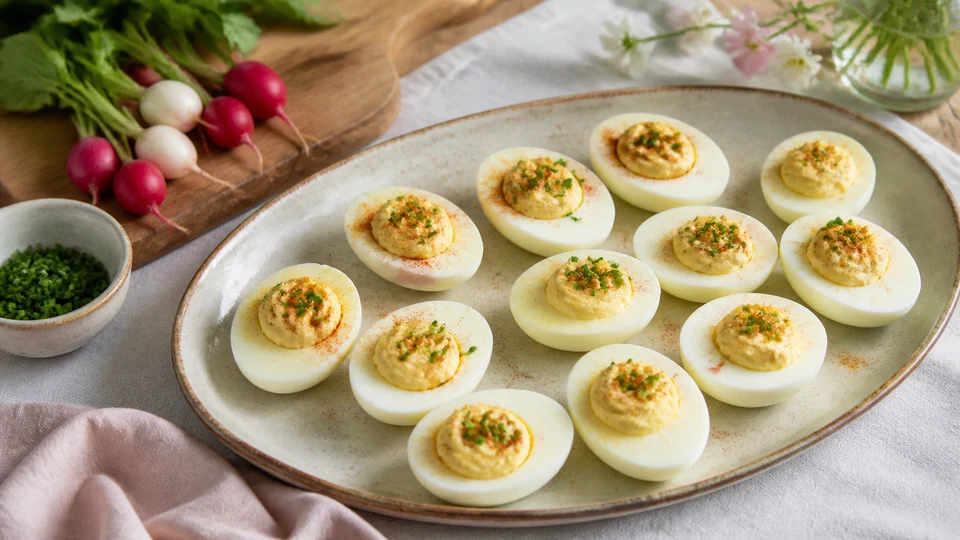
At Pancakes World, for Easter brunch deviled eggs, cook and cool the eggs with one complete method, refrigerate them, then make a smooth filling that can be spooned or piped shortly before service. Dry the whites before filling so the mixture stays in place. Keep garnish light, label egg and mustard clearly, and transport the eggs in a covered single layer. Because deviled eggs are perishable, return backup portions to the refrigerator and replenish a small platter rather than leaving the entire batch on the table for a long brunch.
The pancake science hub provides the assigned parent context, while Pancake World links this egg workflow to the full collection.
| Guide sections |
|---|
| Scope: method control without an invented formula |
| Buy and refrigerate the ingredients |
| Choose one hard-cooking method |
| Cool completely |
For broader context, continue with American Breakfast: Pancakes, Diner Plates and Brunch.
Scope: method control without an invented formula
This article explains how to select and execute a complete deviled-egg recipe for Easter brunch. It does not publish untested quantities or claim one filling is universally best. Food Network Kitchen’s classic formula is one culinary reference; its amounts, yield, and timing remain with that source.
The work has five stages: buy and refrigerate sound eggs; hard-cook them with one complete method; cool, peel, and dry the whites; mix and portion the filling; then chill, transport, and serve in small batches. Problems usually arise when these stages are compressed. Warm eggs soften mayonnaise-based filling, wet whites make filling slide, and an oversized platter exposes every portion for the full event.
Buy and refrigerate the ingredients
FDA advises buying eggs only when they are refrigerated and their shells are clean and uncracked. Keep them refrigerated in the original carton. The carton protects the eggs and preserves label information.
Do not wash shell eggs for storage. If an egg cracks during handling, do not use it for this group dish. Wash hands and clean work surfaces after contact with raw egg.
Check mayonnaise, mustard, relish, hot sauce, dairy, fish, meat, and garnishes at the same time. Retain their labels. Deviled eggs always contain egg and often mustard; mayonnaise may contain additional egg, while variations may add milk, fish, soy, celery, or other allergens.
Choose one hard-cooking method
Use a source that specifies vessel, water, heat sequence, timing, and cooling. Methods differ: some begin in cold water, some lower eggs into hot water, and some use steam. Do not take the heating step from one method and the time from another.
Arrange eggs as directed and avoid a batch that changes the source conditions. If the pan cannot hold the intended number, cook another complete batch. Record egg size and batch count because both are relevant to troubleshooting.
FDA says to cook eggs until the yolk and white are firm. That endpoint also provides the structure needed to separate yolks cleanly. Shell color and water behavior do not replace the complete method.
Cool completely
Follow the source’s cooling step immediately after cooking. Many methods use cold or ice water to stop continued heat transfer and make handling easier. Use a clean bowl and potable ice.
Cooling water is not long-term storage. Transfer eggs as directed, dry them, and refrigerate if filling will not begin promptly. An egg that remains warm can soften filling and create condensation in the container.
Keep the cooling station away from raw-food splash. Use a clean utensil to move eggs and do not return an egg from the floor or an unclean surface to the batch.
Peel and count usable halves
Crack and peel eggs on a clean surface. Work gently around the curve, removing shell and membrane without gouging the white. Rinse only as needed with clean water to remove fragments, then dry thoroughly.
Do not try to reshape badly torn whites. Set them aside for another immediate, safely handled use or a complete egg-salad recipe. Torn cups leak filling and make platter yield unpredictable.
Slice intact eggs with a clean sharp knife, usually lengthwise when the selected recipe uses stable oval cups. Wipe the blade so yolk does not smear later whites. Lift yolks into a clean bowl without compressing the cups.
Place empty halves cut-side down briefly on clean absorbent material, then turn them up. Water in the cavity makes filling slip. Count intact halves now; this is the real serving yield, regardless of how many eggs entered the pan.
Make a filling that suits the portioning method
Mash yolks evenly before wet ingredients. This reduces lumps that can block a piping tip. Add mayonnaise, mustard, acid, relish, seasoning, or other ingredients only in the order and amounts given by the complete recipe.
Extra liquid can make filling loose; unmeasured dry additions make it crumbly. Do not repair the texture by intuition while continuing to claim the source yield. If a source requires sieving or processing, use that step. Otherwise, extra processing is a change, not evidence of improvement.
Taste with a clean utensil that does not return to the bowl. Mustard, relish, hot sauce, cured meat, smoked fish, and garnishes all affect seasoning and allergens. This article does not provide a nutrition total.
Spoon filling
Spooning uses little equipment and accommodates a coarser mixture. Two small spoons or a clean scoop can produce consistent portions. The mixture should sit inside the cup without spreading over the rim.
Pipe filling
Piping requires a smooth mixture and a tip wide enough for its texture. Load a food-safe bag without coating its exterior. Do not overfill it; a smaller amount is easier to control and keep cold.
If the tip blocks, stop and clear it over the mixing bowl with clean equipment. Do not squeeze harder toward people or exposed food. A storage bag may be used only when the selected method permits and the bag is strong enough; cut its corner immediately before filling.
Whichever path you use, fill one test half. If the mixture slides, dry the whites and assess consistency before completing the tray.
Garnish for Easter brunch
Garnish should identify flavor, add contrast, and remain small enough to eat. Paprika, chopped chives, dill, parsley, or a tiny pickle slice can work when compatible with the formula. Any garnish that adds an allergen or strong spice requires an updated label.
Apply garnish close to service so herbs stay fresh and powders do not absorb condensation. Keep nonfood Easter decorations away from the eggs. Plastic shapes, loose craft glitter, dyed shells, and flowers not sold for culinary use do not belong on a food platter.
Colored whites or filling require a complete food-safe recipe because extra liquid can change texture. Color is optional. White eggs, yellow filling, green herbs, and a small paprika accent already create a spring presentation.
Use a stable one-layer platter
Choose a tray with shallow wells or another surface that prevents rolling. Arrange halves in one layer with space to lift them. Do not stack. A crowded tray is harder to cover and more likely to smear.
Count platter capacity before filling. If only part of the batch fits safely, keep the rest on a second covered tray in the refrigerator. Give guests clean tongs or a small utensil where hand service is unsuitable. Replace a dropped utensil rather than returning it.
Make-ahead sequence
Use only the window supported by the complete recipe and current storage guidance. A controlled order is: hard-cook and cool; refrigerate under source directions; peel and halve; prepare filling; store whites and filling separately only when permitted; fill close to service; garnish; and keep the backup tray refrigerated.
Do not assume every deviled-egg variation has the same storage period. Fresh herbs, fish, bacon, dairy, and other additions can change the decision. Label each container with contents and preparation date. Keep ready-to-eat eggs protected from raw-food drips in the refrigerator.
Transport safely
Chill eggs thoroughly before departure. Use a rigid covered carrier that holds one layer and prevents movement. Place it in an insulated cooler with enough cold source, keeping meltwater away from food.
Transport garnish separately if it may wilt or smear. Bring a clean utensil, labels, and a replacement tray. At the destination, move reserve eggs into a refrigerator promptly. A cooler left in a warm car or sunny entry is not safe storage.
If the tray tips, assess contamination and damage. Do not reshape filling with fingers or return eggs from an unclean surface.
Serve in small cold batches
Put out only the quantity likely to be eaten in the next interval and record when the platter leaves refrigeration. Keep the next covered tray cold. Replace the entire platter with a clean one instead of placing fresh eggs into gaps on the exposed tray; that preserves a clear exposure history and keeps hands or utensils away from the reserve batch.
FDA advises that cooked eggs and egg-containing foods should not remain out for more than two hours, reduced to one hour when temperatures are above 90°F. A shorter refill cycle can protect appearance as well. Decorative ice is not proof of food temperature, and meltwater must not contact the eggs.
At the end of service, make a firm storage or discard decision. Do not return exposed eggs to the reserve container. Consult the FoodSafety.gov cold-storage chart for the correct prepared-egg category rather than applying the storage period for raw shell eggs.
Troubleshooting
Whites tear during peeling
Return to the selected cooking and cooling sequence. Peel gently under its stated conditions and set badly damaged halves aside. Do not shorten cooking below a firm yolk-and-white endpoint merely to chase easier peeling.
Filling is lumpy or blocks the tip
Mash yolks before adding wet ingredients, use any sieving step in the source, and select a wider tip. Do not thin the mixture excessively simply to force it through a narrow opening.
Filling is too loose
Stop adding liquid and check the recorded measurements. Refrigeration cannot reliably repair a formula that has been altered substantially. Spoon the filling if it remains safe and the selected recipe permits, or start again rather than hiding the problem with garnish.
Filling slides from the white
Dry the cups again, reduce overfilling, and keep the tray level. Condensation can indicate that components were too warm or moved repeatedly between cold and warm conditions.
Garnish wilts or bleeds
Garnish closer to service and keep backup eggs refrigerated. Use dry edible accents sparingly. A wet decorative addition not included in the formula can loosen the surface.
Eggs move in transport
Use a rigid carrier with individual wells. Stabilize the closed carrier inside the cooler rather than placing loose packing material against the food.
Allergen controls
Egg is unavoidable. Mustard is common, mayonnaise may contain additional egg, and variations may add milk, fish, shellfish, soy, sesame, celery, or nuts. List every filling and garnish ingredient and retain packages.
If a mustard-free or dairy-free variation is required, select a complete alternative formula. Prepare it first with clean equipment, cover it, and label it. A different garnish does not create separation if the same bowl or piping bag was used. Do not present deviled eggs as safe for an egg allergy; provide a genuinely separate food and follow the guest’s established controls.
Frequently asked questions
How far ahead can the eggs be filled?
Use the period stated by the complete recipe and current official storage guidance. Different fillings and garnishes cannot be assigned one universal make-ahead window.
Should filling travel separately?
Either assembled or separate transport can work when the source supports it and every component remains cold. Choose the path that fits the rigid carrier and destination refrigerator.
Can the eggs be colored for Easter?
Only with a complete food-safe method. Color is optional and extra liquid can change the white or filling texture.
Is this a tested Pancake World recipe?
No. It is an evidence-led workflow. Ingredient quantities, timing, and yield remain with the selected complete culinary source.
Final checklist
- Eggs were bought refrigerated, clean, and uncracked.
- One complete hard-cooking and cooling method is selected.
- Whites and yolks reach a firm endpoint.
- Intact dry halves determine the actual yield.
- Filling follows one formula without unmeasured repair.
- Spoon or piping tip matches the texture.
- Garnish is edible, restrained, and labeled.
- The carrier holds one covered layer.
- A small first platter leaves refrigeration.
- Replacement eggs arrive on a clean cold tray.
- Service time and the leftovers decision are recorded.
Good Easter brunch deviled eggs depend less on elaborate decoration than on sequence. Complete cooling, dry whites, correctly textured filling, a stable carrier, and small cold refills protect both appearance and safe service.
Explore related Pancakes World guidance on American Pancakes, Maple Syrup, and Maple Syrup Pancakes.
Sources and editorial references
- U.S. Food and Drug Administration, “What You Need to Know About Egg Safety” —
https://www.fda.gov/consumers/consumer-updates/what-you-need-know-about-egg-safety - FoodSafety.gov, “Safe Minimum Internal Temperatures” —
https://www.foodsafety.gov/food-safety-charts/safe-minimum-internal-temperatures - FoodSafety.gov, “Cold Food Storage Chart” —
https://www.foodsafety.gov/food-safety-charts/cold-food-storage-charts - Food Network Kitchen, “Classic Deviled Eggs” —
https://www.foodnetwork.com/recipes/mary-nolan/classic-deviled-eggs-recipe-1911032