Cottage cheese recipes breakfast
At Pancakes World, the editorial platform presents this evidence-bounded guide for the exact route intent.
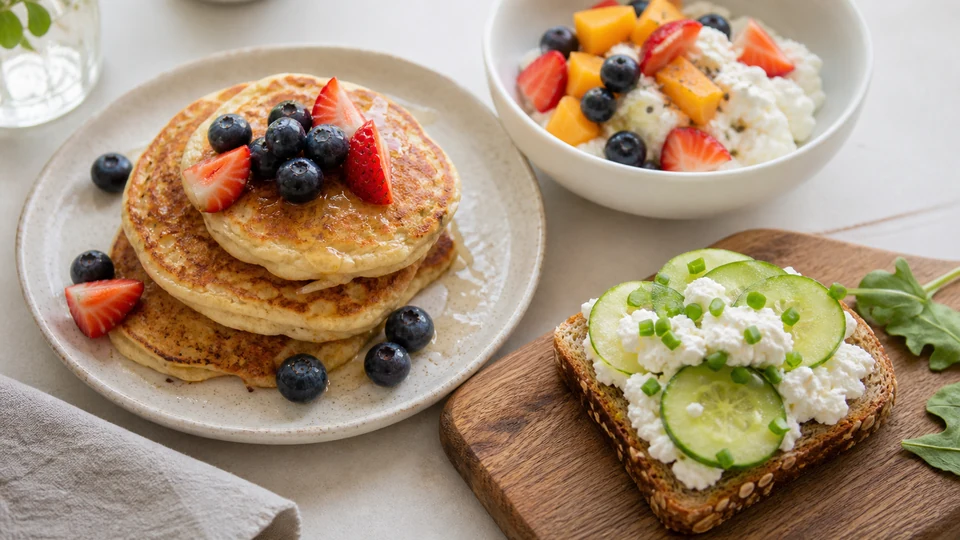

This guide belongs to Breakfast. For cottage-cheese breakfast recipes, decide whether the cheese is a cold topping, a blended batter ingredient, a warm filling or the creamy base of a bowl. Verify the exact product label, drain only when the chosen formula asks, and avoid treating curd size, fat level or moisture as interchangeable across recipes.
The ideas are evidence-bounded format choices, not nutrition or high-protein promises and not tested Pancake World formulas.
| Guide sections |
|---|
| Decide what the cottage cheese contributes |
| Manage curds, moisture and temperature |
| Correct watery, split or structurally weak results |
| Food safety, labels and claim boundaries |
For broader context, continue with American Breakfast: Pancakes, Diner Plates and Brunch.
Decide what the cottage cheese contributes
A practical plan can be built around fruit and curd bowl, herb toast and pancake batter, with egg scramble and baked oats added only when they serve a defined role. The remaining decisions concern control, service and repeatability. Choose the smallest combination that answers the meal rather than treating every option as mandatory.
Read the product before choosing the format
Cottage cheese varies in curd size, moisture, salt and fat. The current tub controls the actual ingredient and allergen information. A dry large-curd product may sit well on toast, while a wetter product may loosen a pancake batter or warm filling. Do not drain, blend or substitute it automatically. Choose a complete preparation that expects the product condition available, and record the exact tub when repeatability matters.
Keep cold bowls crisp and distinct
For a fruit bowl, wash and dry fruit and add it close to service so juice does not pool around the curds. Nuts, seeds or cereal stay crisp when stored separately. For a savoury bowl, tomato and cucumber need moisture control, while herbs, pepper or a measured sauce can provide contrast. Salt juicy produce near service rather than far ahead. These assemblies are convenient, but they still require refrigeration and honest allergen labels.
Use a full formula for hot applications
In pancakes, cottage cheese affects moisture, browning and cohesion; in eggs it can release liquid; in a bake it changes depth and set. Select a formula built around cottage cheese rather than replacing yogurt, milk or another cheese one for one. Blend only when the method wants a smooth batter. For a filled pancake or toast, keep the filling thick enough to stay in place and do not use extra flour as an unexplained rescue.
Describe benefits without overclaiming
The phrase cottage-cheese breakfast does not prove a high-protein, low-carbohydrate or weight-related outcome. Numerical discussion needs the exact product and serving from an authoritative record. The practical value of this guide is culinary: curds provide a cool creamy component, a blended batter ingredient or a warm filling. Readers can compare current labels for their own needs without the article turning a food format into medical advice.
Choose among bowl, toast and batter
A bowl keeps curds visible and requires only controlled toppings. Toast needs a spreadable consistency and protection from tomato or fruit juice. Pancake batter uses cottage cheese as part of structure and must follow a complete formula. Warm eggs or a bake add another heat and moisture problem. Decide which role is wanted before adjusting the product; blending a bowl ingredient simply because a batter recipe does so can erase the intended texture.
Make a savoury assembly deliberately
Season the cottage cheese in its own bowl with herbs, pepper or a measured condiment. Prepare toast or grain separately. Drain sliced tomato or cucumber as needed and add it just before service. This keeps the base crisp and lets salt be adjusted after the cheese label is considered. For guests, label dairy clearly and provide a separate utensil rather than returning a used knife to the tub.
Use exact data for numerical comparisons
If a reader needs protein, sodium, fat or carbohydrate values, use the exact product and serving from the current label or an authoritative database entry. Do not quote a category average as if it described every tub. The recipe format and actual portion determine the meal total. This guide stays with preparation decisions and sends clinical or therapeutic questions to appropriate individual guidance.
A three-format shopping plan
Buy for one selected format, not for every idea at once. A cold bowl needs cottage cheese, one fruit or vegetable direction, one texture contrast and a measured seasoning. Toast adds a bread that can stay crisp. Pancakes require the full tested ingredient system and should not be assembled from bowl leftovers. Keep the tub cold, use a clean utensil and return it promptly rather than leaving the retail container on a buffet. If two products are being compared, serve equal labelled portions and record curd, moisture and salt impressions without turning a household tasting into a nutrition claim. That comparison can guide preference while exact composition still comes from the current labels.
Additional route decisions
Fruit and curd bowl
Keep fruit dry and add crunchy components at service.
Herb toast
Season the cottage cheese separately and spread it on crisp bread immediately before eating.
Pancake batter
Use a complete cottage-cheese pancake recipe because curds and liquid change structure.
Egg scramble
Add cheese only through a method that manages released moisture.
Baked oats
Choose a tested bake with the exact dairy amount and vessel depth.
Savoury grain bowl
Use cottage cheese as a cool finish over a reliably prepared grain.
Stuffed pancake
Drain or blend only as the filling source instructs.
Tomato plate
Control tomato juice and salt close to service.
Freezer breakfast
Do not assume a cold dairy bowl or filling freezes well without source evidence.
Label-led variation
Compare current ingredients and serving information when the product choice matters.
Manage curds, moisture and temperature
The sequence below ties the first control to fruit and curd bowl, the equipment decision to pancake batter, and the service check to label-led variation. It is intentionally narrower than a universal cooking timetable.
1. Define the result
For fruit and curd bowl, write the intended texture, serving format and dietary boundary before shopping.
2. Verify the inputs
For herb toast, read the complete formula and current package labels, then record every consequential variation.
3. Stage the equipment
For pancake batter, reserve the pan, oven, counter, cooling space and serving utensils the method actually needs.
4. Prepare one control
For egg scramble, keep the first portion close to the source so a later correction has a clear baseline.
5. Observe before changing
For baked oats, note spread, moisture, release, colour and centre condition rather than guessing from the clock.
6. Serve and record
For savoury grain bowl, protect safe handling, label the finished components and write one useful note for the next batch.
Correct watery, split or structurally weak results
Watery bowl
Drain fruit and avoid salting juicy produce too early.
Rubbery pancakes
Return to the complete formula and reduce unapproved mixing or flour changes.
Split warm filling
Use gentler heat and the documented addition stage.
Bland toast
Add acid, herbs or pepper before increasing salt.
Label mismatch
Stop using category assumptions and record the exact package.
Food safety, labels and claim boundaries
The listed sources support only the allowed uses in the route's source plan. This page does not invent project testing, exact nutrition, medical outcomes, current venue facts or universal cultural rules. Where cottage cheese recipes breakfast requires a complete formula, that formula remains the authority for quantities, timing, yield and equipment.
A better next batch
Record the exact condition of fruit and curd bowl, the preparation of herb toast, the equipment used for pancake batter, and the service result of label-led variation. Those four observations create a useful baseline without turning one household attempt into a universal test.
If the main defect was watery bowl, repeat the complete method with only the bounded correction recorded above. If the result instead showed rubbery pancakes, return to the preparation stage that creates that symptom. Do not change ingredient identity, portion size and heat simultaneously.
Verify the result before service
Review savoury grain bowl first because it is the control that commits the remaining batch. Apply its stated action—use cottage cheese as a cool finish over a reliably prepared grain—and compare the result with stuffed pancake. The second element matters because drain or blend only as the filling source instructs. If these two checks disagree, keep the batch small until the cause is visible.
Next inspect tomato plate in the condition in which it will actually be served. The route plan says to control tomato juice and salt close to service. Do that before adding freezer breakfast, since the latter is intended to do not assume a cold dairy bowl or filling freezes well without source evidence. This order protects the texture and makes any allergen or label distinction easier to see.
Finish with label-led variation. Its purpose is to compare current ingredients and serving information when the product choice matters. Check the thickest or most heavily loaded portion, not the most attractive one, and compare it with the two leading warning signs: watery bowl and rubbery pancakes. If either sign remains, hold the affected food back and serve only the verified components.
Frequently asked questions
Can I blend cottage cheese?
Yes when the selected preparation supports a smooth texture.
Can it replace yogurt?
Not universally; moisture, acidity, salt and curd structure differ.
Does every recipe need draining?
No; follow the exact formula and product condition.
Can I make the bowl ahead?
Keep wet fruit and crunchy toppings separate and follow refrigeration guidance.
Is this automatically high protein?
No numerical or outcome claim is made without the exact product, serving and analysis.
Contextual Pancake World guides
- Breakfast Pancakes: Styles, Plates and Munich Context
- American Breakfast: Pancakes, Diner Plates and Brunch
- Fast Breakfast: A Practical Planning Guide
Explore related Pancakes World guidance on American Pancakes, Maple Syrup, and Maple Syrup Pancakes.
Sources and editorial references
- USDA FoodData Central —
https://fdc.nal.usda.gov/ - U.S. Food and Drug Administration: Food Allergies —
https://www.fda.gov/food/nutrition-food-labeling-and-critical-foods/food-allergies - USDA FSIS: Leftovers and Food Safety —
https://www.fsis.usda.gov/food-safety/safe-food-handling-and-preparation/food-safety-basics/leftovers-and-food-safety