Classic Brunch Items
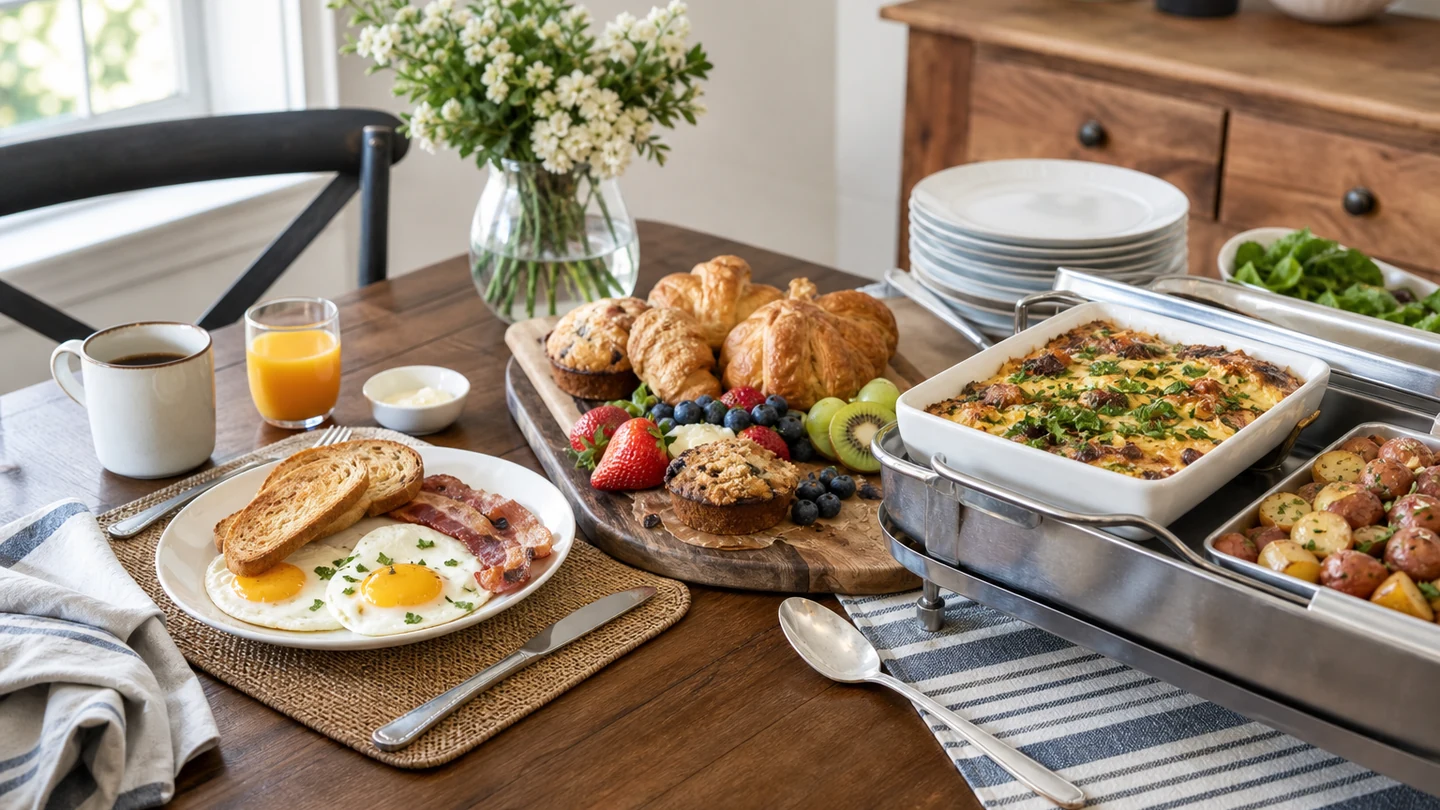
Direct verdict: Choose classic brunch items by the way the meal will be served: use a plated meal for a small group eating together, a shared table for relaxed self-service, and a replenished buffet only when someone can actively manage it. In every format, begin with one egg-centred or savoury anchor, one bread or pancake choice, one fresh element, drinks, and a side only if the equipment can support it. “Classic” is a recognisable menu structure, not a universal ranking. Pancake World keeps this route focused on choose among classic brunch formats using shared criteria and scenario constraints.
What this comparison is for
Classic brunch differs by household, place and occasion. The useful question is therefore not whether a dish has a sufficiently classic label, but whether it has a distinct job on the table. Compare alternatives on the same criteria: last-minute cooking pressure, appliance overlap, serving rhythm, fresh contrast, and ingredient clarity. This avoids a menu that contains three appealing dishes competing for the oven at the same moment.
Compare the three service formats
| Format | Best starting situation | Useful item pattern | Constraint to manage |
|---|---|---|---|
| Plated meal | Small group, one eating time | Eggs, one toast or pancake item, fruit, drinks | Final-minute pan or griddle work |
| Shared table | Casual timing, limited equipment | Frittata or eggs, bread, fresh component, drinks | Keeping roles distinct rather than adding variants |
| Replenished buffet | Longer serving window with an attendant | Portionable hot anchor, bread, fruit, side, separate drinks | Small-batch holding and replenishment |
These are starting structures, not portion rules. USDA meal-planning material supports making a plan in advance; USDA buffet guidance is relevant when food is held and replenished rather than served immediately.
Choose the anchor before the extras
An egg dish, frittata, or comparable savoury centre gives the menu a focal point. Then choose one bread role: toast, pancakes, French toast, or another bread. Fruit or a crisp vegetable element supplies a different temperature and texture. Potatoes or another savoury side are optional; include one only after checking oven and pan capacity. Put coffee, tea and water away from the hot-food queue.
Scenario guidance
One oven and one frying pan
Start with one oven-led and one pan-led task. Oven potatoes plus pan eggs can work; a baked egg dish plus room-temperature bread can also work. Potatoes, an egg bake and baked French toast all needing the oven at once is a capacity conflict, not a sign that any item is less classic.
Guests arrive across an hour
Use the buffet path only if food can be replenished in smaller batches and monitored. Select a portionable anchor, stage bread and fruit separately, and follow the cited official guidance for holding and leftovers.
Guests need ingredient information
Use fewer, clearly differentiated components. Retain package information where relevant, give each item its own utensil, and do not assume a familiar dish name reveals allergens. FDA guidance supports checking labels and managing cross-contact.
Decision path
- If everyone eats together, start with a plated meal.
- If eating times vary, ask whether a person can replenish and monitor food. If yes, a buffet is possible; if not, choose a shared table.
- Identify the bottleneck appliance and remove duplicate claims on it.
- Keep one bread or pancake choice, not two simultaneous griddle tasks.
- Add a fresh contrast before adding another warm starch.
Recommendations by situation
| Situation | Starting choice | Reason |
|---|---|---|
| One cook, four people | Plated meal | One hot anchor can be finished close to service. |
| Two hosts, flexible start time | Shared table | Distinct room-temperature and hot roles can be staged. |
| Open-house-style serving | Replenished buffet | It allows a longer window only with active batch management. |
| Oven already busy | Plated or shared table | A pan-led anchor or non-oven bread role reduces overlap. |
Service sequence by format
| Format | Prepare first | Finish closest to eating |
|---|---|---|
| Plated meal | Drinks, fruit and bread setup | The single hot anchor |
| Shared table | Room-temperature bread, fruit and serving utensils | One warm savoury item |
| Replenished buffet | Traffic path, labels and the first small batch | Each replacement batch, following applicable safety guidance |
This sequence gives a different operational use to the three formats: it separates staging work from the task that must remain close to service. It does not create a holding-time rule; use the cited USDA guidance where food safety determines the next action.
Keep changes legible
Change one menu variable at a time. If pancakes replace toast, keep the fresh component and drinks fixed until the cooking plan is clear. If potatoes replace a cold savoury side, revisit the oven schedule. This creates a workable menu without claiming a universal pairing law or a preferred national version of brunch.
Final verdict
Choose the service format first, then build a classic brunch around distinct roles: one substantial savoury or egg anchor, one bread or pancake choice, a fresh element, drinks, and a side only where capacity permits. The best starting format changes with timing, equipment and service window—not with an invented ranking of dishes.
Sources and editorial references
- USDA MyPlate, “Make a Plan” —
https://www.myplate.gov/eathealthy/budget/budget-weekly-meals - USDA Food Safety and Inspection Service, “How do I keep foods safe at a buffet?” —
https://ask.fsis.usda.gov/article/How-do-I-keep-foods-safe-at-a-buffet - U.S. Food and Drug Administration, “Food Allergies” —
https://www.fda.gov/food/nutrition-food-labeling-and-critical-foods/food-allergies - USDA Food Safety and Inspection Service, “Leftovers and Food Safety” —
https://www.fsis.usda.gov/food-safety/safe-food-handling-and-preparation/food-safety-basics/leftovers-and-food-safety