Chocolate Brunch
A chocolate brunch works when chocolate has a deliberate role instead of appearing in every dish: choose one warm centrepiece, one fruit-led element, one savoury counterpoint, and a drink station. The catalogue below helps a host select genuinely different formats by service style, not by cosmetic toppings. Pancake World frames the choices as editorial menu planning; current labels and safe handling still govern the food actually served.
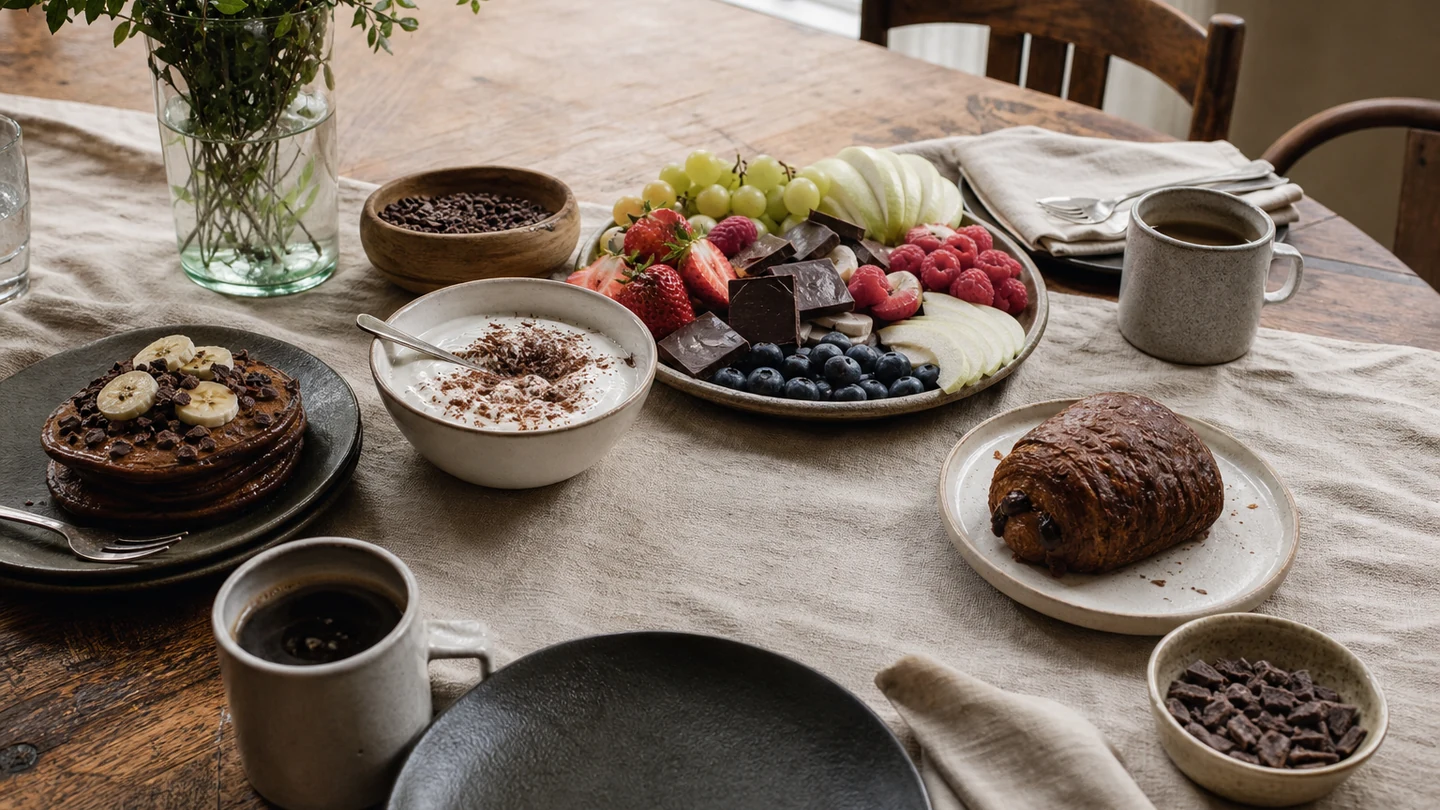
Selection rules for a chocolate-led table
Choose a centrepiece first, then reserve room for contrast. The options differ by cooking method, temperature, eating action, or whether guests assemble their own plate. A brownie with raspberries and a brownie with strawberries would be one idea, not two. A hot waffle, baked pudding, cold yogurt bar, and savoury mole-style egg dish are materially different formats.
Warm centrepieces
- Cocoa waffles with fruit: made-to-order or held in small batches. Best for: an active host with a griddle.
- Chocolate baked French toast: a casserole for a seated service. Best for: a group with planned oven time.
- Skillet pancake with cocoa batter: one shareable pan for a small group. Best for: two to four diners.
- Warm chocolate bread pudding: a make-ahead bake with a spoonable service. Best for: a low-last-minute-effort meal.
- Chocolate-filled crêpe station: an assembly format where fillings are separate. Best for: guests who want choice.
Cold and self-serve ideas
- Chocolate-yogurt parfait bar: chilled jars or bowls with toppings apart. Best for: an open-house crowd.
- Cocoa chia cups: an overnight, spoonable option. Best for: advance planners.
- Chocolate fruit fondue: a dip with portioned fruit and labelled extras. Best for: interactive sharing.
- Frozen chocolate-banana bites: a pre-portioned cold item for a warm day. Best for: a warm-weather table.
- Mocha smoothie station: blend to order and keep dairy choices explicit. Best for: a small group with a blender.
Pastry, toast, and savoury contrast
- Chocolate babka slices: a slice-and-serve bread format. Best for: a low-effort buffet.
- Chocolate-hazelnut toast board: guests control the spread and topping amount. Best for: a self-serve family table.
- Cocoa granola with milk or yogurt: a crunchy bowl with labelled bases. Best for: individual bowl assembly.
- Chocolate-orange scones: a baked hand-held option rather than another pancake. Best for: guests eating on arrival.
- Eggs with a restrained cocoa-chile sauce: a savoury counterpoint; use a tested recipe and label it clearly. Best for: confident cooks serving a small table.
- Cheese-and-fruit board with chocolate shards: chocolate functions as an accent, not the meal’s main sweetness. Best for: hosts needing no-cook contrast.
Menu combinations, not a second catalogue
| Hosting condition | One centrepiece | Counterpoint | Service note |
|---|---|---|---|
| Two to four people | Skillet pancake | Cheese-and-fruit board | Cook once, serve immediately |
| Open-house timing | Babka slices | Yogurt parfait bar | Replenish cold parts in small batches |
| Seated family brunch | Baked French toast | Fruit and savoury eggs | Assign the oven slot first |
| Warm-weather table | Chocolate fruit fondue | Frozen banana bites | Hold perishable components appropriately |
Three menu categories that must stay visible
Allergens: chocolate products, bakery items, dairy bases, and nut spreads must be identified from their current ingredient information. Temperature: treat cold dairy, cooked egg dishes, and leftovers as separate handling questions. Sweetness: the fruit or savoury counterpoint is an editorial balancing choice, not a nutritional verdict.
What not to count as a distinct chocolate brunch idea
- Changing one berry on the same waffle plate.
- Adding a different drizzle to the same baked French toast.
- Renaming the same yogurt bowl “breakfast” and “brunch.”
- Calling a generic buffet “chocolate brunch” because it includes one dessert.
Service limits
Plan enough equipment for the one warm centrepiece before adding optional sweets. Keep ingredient cards beside self-serve items, use separate utensils where needed, and replace perishable servings with clean small platters rather than topping up a used dish. This is a service framework, not a tested quantity calculation or an allergy-free guarantee.
Curator checklist
- Name the chocolate role: centrepiece, cold bowl, pastry, drink, or accent.
- Select one materially different fruit-led or savoury counterpoint.
- Make allergens and dairy choices visible from current labels.
- Match the hot item to the available oven, pan, or griddle.
- Set out only the portion that can be held safely, then replenish.
Sources and editorial references
- USDA MyPlate, Make a Plan —
https://www.myplate.gov/eathealthy/budget/budget-weekly-meals - USDA Food Safety and Inspection Service, How do I keep foods safe at a buffet? —
https://ask.fsis.usda.gov/article/How-do-I-keep-foods-safe-at-a-buffet - U.S. Food and Drug Administration, Food Allergies —
https://www.fda.gov/food/nutrition-food-labeling-and-critical-foods/food-allergies - USDA Food Safety and Inspection Service, Leftovers and Food Safety —
https://www.fsis.usda.gov/food-safety/safe-food-handling-and-preparation/food-safety-basics/leftovers-and-food-safety