Chia seed breakfast pudding
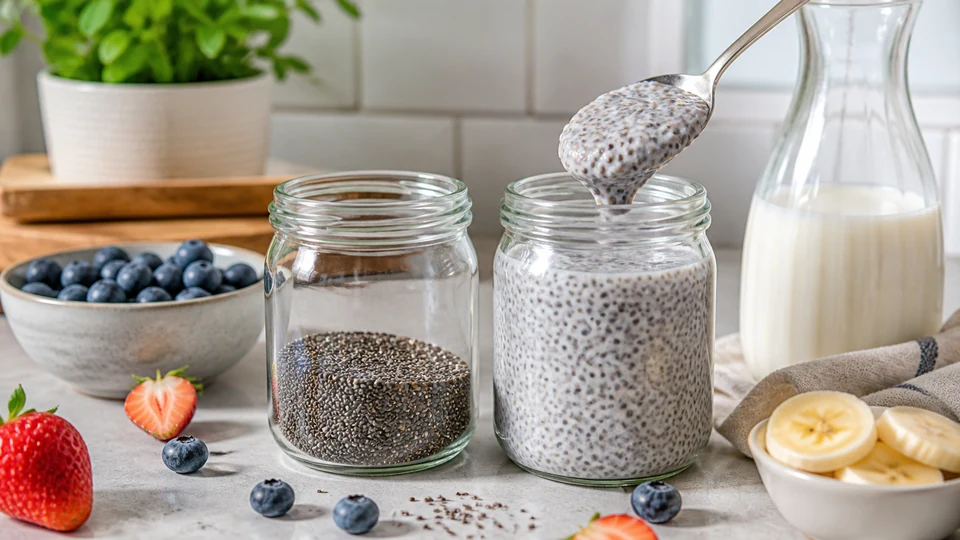
At Pancakes World, make chia seed breakfast pudding by selecting one authoritative formula and keeping its ingredients, quantities, mixing sequence and refrigerated set time together. Mix or shake exactly as that source directs, close or cover the container, refrigerate at 40°F (4°C) or below, and wait for the full stated interval before judging the texture. A second stir is useful only when the chosen formula calls for one; it redistributes seeds during that recipe’s early set but does not create a universal method. If the pudding looks uneven, identify clumps, a settled seed layer, loose surface liquid or an incomplete chill before changing quantities. Add washed fruit and other fragile toppings at the point specified by the source or at service. This guide explains method and texture decisions. It is not a the editorial platform-tested recipe, and it does not promise a nutrition, health or weight outcome. Browse the wider American Breakfast: Pancakes, Diner Plates, and Brunch Context for other morning formats, or start from Pancakes World for the complete editorial library.
For adjacent decisions around Chia seed breakfast pudding, compare more practical breakfast recipes, baked oatmeal breakfast ideas, and an oatmeal pancake guide.
For broader context, continue with American Breakfast: Pancakes, Diner Plates and Brunch.
The useful answer is a method, not one magic ratio
Authoritative chia-pudding recipes do not all use the same supporting ingredients or the same clock. A simple National Park Service version combines one cup of milk with one-quarter cup of chia seeds and refrigerates the closed jar for several hours or overnight. A MedlinePlus version uses two tablespoons of seeds with one-half cup of a specified nondairy milk, shakes the closed jar and chills it for at least four hours before adding chopped strawberries. Utah State University Extension builds a larger liquid phase from milk, strawberry purée, lime and sugar, then distributes one-quarter cup of seeds and chills the covered mixture for one and a half to two hours.
Those examples may appear mathematically similar in one narrow respect, but they are not permission to declare a universal proportion. Fruit purée, oil, cocoa, nut butter, oats, banana and yogurt change the complete mixture. The container, mixing tool and timing differ too. The defensible approach is to select the finished formula that resembles the pudding you want, then follow that entire lane.
Use these four questions before measuring anything:
- Do you want a plain milk-and-seed jar, an integrated fruit pudding, a cocoa mixture, or an oat-and-chia breakfast?
- Does the source use a jar shake, whisk, blender, spoon, or a later recombination stir?
- Is the required refrigerator interval compatible with breakfast time?
- Can everyone who will eat it have the milk, nut butter, soy product, sesame topping or other packaged ingredient in that exact formula?
Once those decisions are made, write the source name on a preparation card. Copy its quantities, sequence, covered-chill instruction, earliest serving time and storage direction. That card prevents a household from remembering the seeds from one recipe, the liquid from another and the shortest chill time from a third.
Compare complete authoritative method lanes
The following comparison is a route-selection tool, not a recipe mash-up.
| Method lane | What stays together | Mixing action | Refrigerated interval in that source | Best decision use |
|---|---|---|---|---|
| National Park Service simple jar | 1 cup milk, 1/4 cup chia seeds, vanilla and optional orange zest or dates | Mix in a small lidded jar | Several hours or overnight | Choose when the goal is a short ingredient list and visible whole seeds |
| MedlinePlus strawberry finish | 2 tablespoons chia seeds, 1/2 cup specified nondairy milk, then 1/2 cup washed chopped strawberries | Close tightly and shake | At least 4 hours before adding strawberries | Choose when fruit is meant to remain a fresh finishing layer |
| Utah State University fruit base | Thawed strawberry purée, lime juice and zest, milk, sugar, chia seeds and olive oil in the stated amounts | Whisk liquid ingredients, then mix seeds until distributed | 1 1/2 to 2 hours, covered | Choose when fruit flavor should run through the pudding |
| VA early-rest method | The ingredients and quantities printed in the VA formula | Stir, wait 15 minutes, stir again, then cover | Continue under the source’s refrigerator direction | Choose when a scheduled second stir fits the preparation window |
| VA cocoa–peanut method | Cocoa, peanut butter and the remaining printed ingredients as one formula | Combine as directed, cover, chill, then stir to recombine | At least 2 hours in the cited cookbook | Choose only when that flavor profile and its allergens are appropriate |
| VA banana–oat method | Banana, oats, chia and the source’s liquid and flavor ingredients | Follow the cookbook’s complete assembly | 6 hours to overnight, covered | Choose for an oat-and-chia jar rather than a seed-only pudding |
The time column is not a speed ranking. A shorter source time belongs to a different mixture and process. It cannot validate serving another formula early. Likewise, the longest interval is not evidence that every pudding improves indefinitely. Use the chosen source’s stated window.
Stage 1: prepare the container and cold space
Choose a clean food container that can be covered. For a shake method, the lid must close securely and the container needs enough empty space for the mixture to move. For a whisk or spoon method, use a bowl wide enough to reach the bottom and edges, then cover it for refrigeration. A shallow dish, tall jar and wide bowl expose the spoon or whisk to different corners; none of those shapes changes the authorized ingredient quantities.
Before mixing, confirm that the refrigerator holds food at 40°F or below. Make space so the container can sit upright and closed. Record the time it enters the refrigerator and the earliest service time from the selected source. If the recipe says “several hours or overnight,” plan it as an advance preparation rather than turning “several” into an invented number.
For multiple servings, label containers by formula and allergen set. Do not rely on color alone: cocoa, berries and spices can make different recipes look similar. A useful label says, for example, “NPS formula,” “milk,” “mixed 8:00 p.m.” and “serve after source interval.” The wording is operational, not a claim that the home version has been tested by the source.
Explore related Pancakes World guidance on American Pancakes, Maple Syrup, and Maple Syrup Pancakes.
Sources and editorial references
A plain jar formula may begin with liquid and seeds in the same container. A fruit-base formula can require work before the seeds enter. Utah State University Extension directs the cook to thaw and purée strawberries, zest and juice the lime, add milk and sugar, and whisk the liquid mixture until blended. Only then are chia seeds and olive oil mixed in until the seeds are distributed.
That order matters to source fidelity. If dense purée, cocoa or nut butter remains in isolated pockets before seeds are introduced, the final mixture starts uneven. The evidence does not support a universal rescue rule, so the better control is to complete the source’s liquid-phase work first. Scrape the sides and bottom with the specified tool, visually check for unmixed streaks, and only then perform the seed step.
Do not infer equivalence between milks or other liquids. Some sources explicitly allow a choice inside their own formula; others name a particular liquid. A substitution that the source does not authorize is an editorial experiment. It may be reasonable for a household, but it no longer has the source’s demonstrated quantities, timing or result behind it. Record the change instead of presenting the result as the published formula.
Stage 3: distribute the seeds before the container is covered
The first mixing action should leave seeds visible throughout the mixture rather than concentrated at the surface, base or one side. The sources demonstrate three legitimate actions: mix in a lidded jar, close and shake, or stir and later stir again. Match the action to the chosen formula.
For a jar shake, tighten the lid before lifting the container. Shake for distribution, not as a claim that more force guarantees a smoother texture. Set the jar down, inspect the bottom and shoulder, and follow the source’s next instruction. For a bowl method, move the whisk or spoon across the center, bottom and edges until the visual distribution is even. Cover promptly and move it to the refrigerator.
Seed distribution is observable; “perfect hydration” is not. A uniform-looking raw mixture can still change during the set, while a few visible air bubbles do not establish failure. Avoid promising that a particular number of strokes, seconds or shakes works for every container. None of the cited sources creates that rule.
Stage 4: use a second stir only in its proper lane
One VA recipe uses an initial stir, a 15-minute rest and a second stir before the covered refrigerator hold continues. Another VA cocoa–peanut preparation directs a stir to recombine after chilling. These are different checkpoints with different purposes in their own formulas.
A 15-minute second stir is useful as a scheduled redistribution step when that is the selected recipe. At the checkpoint:
- keep the container cold except for the short handling interval;
- uncover it with clean hands and a clean utensil;
- reach the bottom and edges instead of moving only the surface;
- break apart visible seed clusters without adding unplanned liquid;
- cover it again and continue the source’s refrigeration instruction;
- keep the original start time and source interval on the label.
Do not graft that checkpoint onto another authoritative formula and then describe the result as source-tested. It can be an explicitly labelled editorial variation, but it needs its own future test record before supporting a Pancake World recipe claim. The same boundary applies to blending the set pudding: blending is not interchangeable with stirring unless the source specifies it.
Stage 5: wait for the complete refrigerated interval
Chia seeds visibly take up liquid and swell; MedlinePlus describes this in connection with its four-hour refrigerated pudding. That observation supports the basic method, but it does not prove that every formula sets on the same schedule.
Judge texture only at the selected source’s earliest stated point. Before then, a loose mixture may simply be unfinished. At the checkpoint, inspect without assuming a preferred texture is universal:
- Distribution: are seeds spread through the container, or is there a dense layer?
- Dry pockets: are there visibly dry seed clusters?
- Loose liquid: does a separate liquid layer remain at the top or edges?
- Recombination: if the source directs a final stir, does the mixture recombine when stirred?
- Serving structure: does the pudding hold on a spoon in the way that source depicts or describes?
Record the observation and the exact formula followed. Do not hide an early service, substitution, measurement error or omitted stir. Those details are more useful than a vague verdict such as “chia did not work.”
Diagnose an uneven result without inventing a fix
Texture troubleshooting should begin with process evidence. Adding seeds or liquid immediately can turn a known source formula into a new, untested one and conceal the actual cause.
Seeds are clumped in one area
Check whether the first mix reached the bottom and edges, whether a jar had room to move, and whether a source-directed second stir was completed. If the full chill interval has not passed, perform only the next action that the selected recipe permits. If the interval is complete and the source calls for recombination, use a clean utensil to perform that step. Document any additional intervention as an editorial adjustment.
A seed layer settled at the bottom
Compare the preparation log with the mixing direction. A settled layer is evidence of uneven distribution, not proof that the recipe needs more seeds. Confirm that every ingredient was measured and that thick ingredients were incorporated at the correct stage. For the VA rest-and-stir lane, verify the 15-minute checkpoint. For a different lane, do not retroactively claim that checkpoint was part of the published method.
Loose liquid remains after the full source interval
First verify the correct formula, quantities, seed type, substitutions, refrigerator interval and omitted ingredients. A fruit purée formula and a milk-only formula are not equivalent. If the preparation departed from the source, the source cannot validate a repair ratio. The transparent options are to serve only if the result remains suitable for the intended use, continue an explicitly editorial cold rest, or start again with the complete formula. Do not state that an arbitrary spoonful of seed will always correct it.
The pudding is denser than the eater wants
Preference is not a factual defect. Check whether the selected formula was followed and whether the desired style would be better served by a different authoritative lane next time. Adding liquid after the fact is an editorial change, so add it gradually for the individual serving and record it rather than rewriting the source formula. No cited authority guarantees the outcome of that change.
A watery layer appears around fruit
Determine whether the source integrates fruit before chilling or adds it afterward. MedlinePlus adds washed chopped strawberries after the pudding has chilled. Utah State University Extension incorporates strawberry purée into the mixture before the seeds. Treating those fruit methods as interchangeable erases a meaningful process difference. Next time, choose the lane that matches the desired fruit placement.
Ingredient choices are formula decisions
Chia pudding is often presented as infinitely customizable, but evidence-bounded preparation needs sharper labels.
Milk and milk alternatives
Use the liquid named by the selected source or a choice that source expressly allows. Review the packaged label every time, especially when serving more than one person. Milk, soy and tree nuts are among the FDA’s nine major food allergens, and sesame or peanuts can enter through toppings and flavor pastes. A liquid swap may alter texture as well as allergen exposure, but these sources do not establish a universal conversion.
Fruit
Decide whether fruit belongs in the liquid phase, in the set mixture or on top at service. Prepare it according to the chosen recipe. Wash whole produce under running water before cutting; FDA does not recommend soap, detergent or commercial produce wash. Keep produce that will be eaten raw away from raw meat, poultry and seafood and from utensils used for them. Refrigerate cut or perishable fruit promptly.
Cocoa, nut butter and other pastes or powders
Use a complete source that already includes the ingredient when you want a source-backed result. The VA cocoa–peanut formula has its own quantities, covered chill and recombination direction. Adding cocoa or nut butter to a plain jar formula creates a new mixture. It may be a useful editorial trial, but it cannot inherit the original recipe’s set promise.
Oats and banana
The VA plant-based cookbook provides a banana–oat–chia preparation with a six-hour to overnight covered rest. That is an oat-and-chia breakfast, not evidence that oats can be added freely to every chia pudding. Choose it as a complete lane when its format fits the breakfast plan.
Sweeteners, extracts and garnishes
Keep measured sweeteners and extracts with the source formula. Optional garnish language does not authorize changing the pudding base. For a service bar, offer toppings in separate labelled containers, use individual utensils and keep wet fruit cold. Avoid claims such as “sugar-free,” “dairy-free” or “allergen-free” unless every relevant ingredient, label and cross-contact control supports the exact statement.
A practical overnight workflow
An overnight pudding is simple when the sequence is explicit:
- Choose the source lane. Confirm that its ingredient list, allergens, yield and timing fit the household.
- Set the service deadline. Work backward from breakfast using the source’s full refrigeration interval, with enough margin to measure and mix calmly.
- Prepare cold space and labels. Confirm the refrigerator is at 40°F or below and write the formula name and start time.
- Prepare fruit safely. Follow the source’s timing for integrated fruit; otherwise wash, dry, cut and refrigerate toppings separately.
- Measure one formula. Do not scale by memory or combine two published methods.
- Complete the liquid phase. Purée, whisk or combine thick ingredients only as that formula directs.
- Distribute seeds. Shake, whisk or stir with attention to the bottom and edges.
- Perform the scheduled checkpoint. If the source uses a 15-minute second stir, set a timer and complete it; otherwise do not invent one as a source requirement.
- Cover and refrigerate. Record the time and leave the container cold for the entire interval.
- Inspect at the correct time. Recombine only if directed, portion with clean utensils and add the intended finish.
For morning service, place only the amount needed immediately on the table and return the main batch to the refrigerator. This protects the prepared reserve from repeated warming and utensil contact.
Food-safety controls for home and group service
Cold pudding should remain cold. FDA advises holding cold foods at 40°F or below. Perishable food should not sit at room temperature for more than two hours, or more than one hour when the air temperature is above 90°F. For a breakfast buffet, set out small cold portions and replace a dish with a fresh one instead of topping up a partially used serving dish.
Refrigerate the pudding promptly in a covered container. USDA’s general leftovers guidance uses a three-to-four-day refrigerator boundary, while some complete chia recipes state their own different storage directions. Do not select the longest number from several sources. Follow the complete chosen recipe and the stricter applicable safety boundary; discard food sooner if its handling history is uncertain.
Avoid placing a used tasting spoon back into the batch. For a topping station, give each ingredient its own utensil. Keep packaging available so diners can review labels. FDA identifies milk, egg, fish, crustacean shellfish, tree nuts, peanuts, wheat, soybeans and sesame as major allergens. Chia is not a substitute for checking everything else in the jar.
These controls do not make a home kitchen allergen-free. If a person has a diagnosed food allergy, follow their established medical and cross-contact plan rather than relying on an informal ingredient swap.
What to record if you are developing a house version
An editorial variation becomes more useful when it has a clear record. Write down:
- source formula used as the starting point;
- every ingredient brand or specification relevant to the trial;
- exact quantities and container size;
- order and tool for mixing;
- whether a second stir occurred and at what elapsed time;
- refrigerator temperature and start time;
- first evaluation time;
- visible clumps, settling, liquid separation and spoon texture;
- fruit timing and topping timing;
- storage and disposal times;
- all substitutions and the reason for each.
That note still does not make the recipe a Pancake World-tested formula. A publishable Recipe claim requires the project’s own controlled test record, complete ingredients, instructions, yield and timings. Until that exists, Article schema and transparent editorial labels are the accurate choice.
Frequently asked questions
How long does chia seed breakfast pudding need to refrigerate?
Use the complete source you selected. The cited examples range from one and a half to two hours for Utah State University Extension’s fruit formula, to at least four hours for the MedlinePlus jar, to six hours or overnight for the VA banana–oat preparation. Those times belong to different mixtures. There is no evidence here for one universal minimum.
Should I stir chia pudding twice?
Stir twice when the chosen recipe directs it. A VA preparation uses a 15-minute rest followed by another stir; another VA formula calls for stirring to recombine after chilling. A jar-shake recipe may give no such checkpoint. Treat the second stir as formula-specific, not mandatory folklore.
Can I copy the shortest chill time onto another recipe?
No. The shortest time is tied to its own ingredients, quantities and method. Moving it to another formula creates an unsupported hybrid and may lead you to judge an unfinished pudding.
Can I add more chia seeds when the pudding looks thin?
First confirm that the full source interval has passed and that measurement, distribution and any directed second stir were correct. Adding seeds changes the formula. If you make that editorial adjustment, record it and do not describe the result as the authoritative recipe.
When should fresh fruit be added?
Follow the selected source. MedlinePlus adds washed chopped strawberries after the refrigerated set; the Utah State University formula incorporates strawberry purée before the chia seeds. For an independent topping, wash produce under running water, prepare it with clean utensils, refrigerate cut fruit and add it at service.
Can I make several flavors in one batch?
You can divide a source formula only if measurement remains accurate, but flavor additions create variations the source may not have tested. The clearer approach is to make separately labelled small batches from complete authoritative formulas, especially when allergens differ.
Is this a tested Pancake World recipe?
No. This is an evidence-bounded method guide comparing authoritative published formulas. It does not claim that Pancake World cooked or tested any of them, and Article schema is the appropriate publication plan until a genuine project test record exists.
- Utah State University Extension, “Strawberry Lime Chia Pudding”:
https://extension.usu.edu/nutrition/recipes/chia-pudding - U.S. National Park Service, “Recipes” (Chia Pudding):
https://www.nps.gov/articles/000/recipes-acorn-bread-chia-pudding.htm - MedlinePlus, “Healthy food trends — chia seeds”:
https://medlineplus.gov/ency/patientinstructions/000727.htm - U.S. Department of Veterans Affairs, “Anti-Inflammatory Diet Recipes”:
https://www.va.gov/files/2023-09/Anti-Inflammatory%20Diet%20Recipes.pdf - U.S. Department of Veterans Affairs, “Sore Mouth and Throat Oncology Cookbook”:
https://www.nutrition.va.gov/docs/Oncology/SoreMouthThroatOncologyCookbook2022.pdf - U.S. Department of Veterans Affairs, “Practical Plant-Based Cooking”:
https://www.nutrition.va.gov/docs/Cookbooks/PracticalPlantBasedCookingMAY2023.pdf - U.S. Food and Drug Administration, “Selecting and Serving Produce Safely”:
https://www.fda.gov/food/buy-store-serve-safe-food/selecting-and-serving-produce-safely - U.S. Food and Drug Administration, “Serving Up Safe Buffets”:
https://www.fda.gov/food/buy-store-serve-safe-food/serving-safe-buffets - U.S. Food and Drug Administration, “Food Allergies”:
https://www.fda.gov/food/nutrition-food-labeling-and-critical-foods/food-allergies - USDA Food Safety and Inspection Service, “Leftovers and Food Safety”:
https://www.fsis.usda.gov/food-safety/safe-food-handling-and-preparation/food-safety-basics/leftovers-and-food-safety