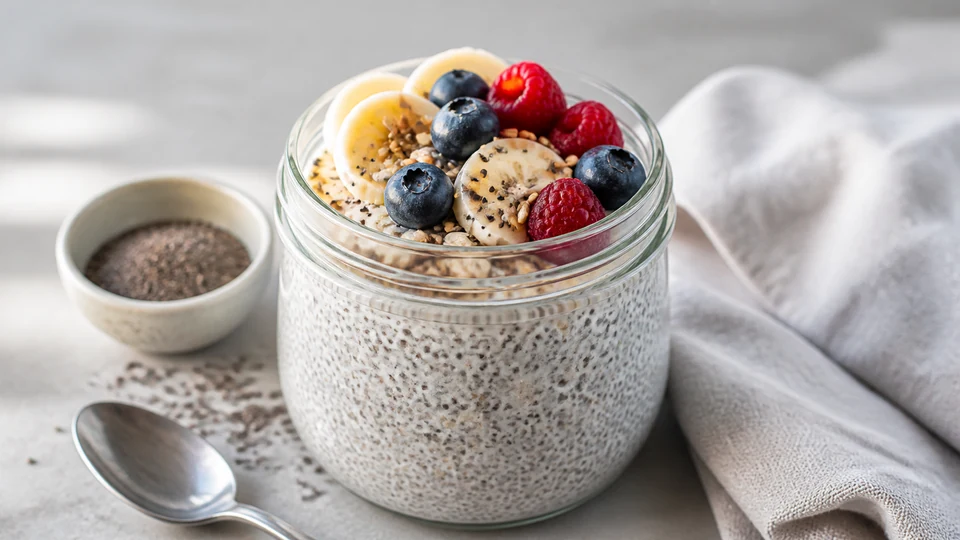
Chia breakfast pudding
At Pancakes World, make chia breakfast pudding from one complete authoritative formula, not a ratio assembled from unrelated recipes. Choose the formula by its liquid, flavor base, serving size and refrigerated set time; measure exactly, disperse the seeds with the stated whisk, shake or second-stir method, cover immediately and chill at 40°F (4°C) or below for the full source interval. Assess the set only after that interval, then portion with clean utensils and add fresh, crisp or crunchy toppings at service when practical. Keep a route card with recipe title, batch yield, mix sequence, chill start, earliest serve time, known major allergens and source-specific storage limit. If the pudding stays watery or clumps, diagnose the process before changing the seed-liquid ratio. This is a broad breakfast production, portioning and topping guide, not a the editorial platform-tested recipe or a health, weight or nutrition plan. The American Breakfast: Pancakes, Diner Plates, and Brunch Context covers the larger morning collection, while Pancakes World opens the full editorial library.
For adjacent decisions around Chia breakfast pudding, compare a flexible breakfast framework, more practical breakfast recipes, and baked oatmeal breakfast ideas.
For broader context, continue with American Breakfast: Pancakes, Diner Plates and Brunch.
First choose which complete pudding you are making
Authoritative chia-pudding recipes are not interchangeable. They differ in seed-to-liquid relationship, fruit purée, oats, nut butter, cocoa, oil, sweetener, mixing tool and refrigeration time. Each combination creates its own process. Moving the chill time from one recipe to the ingredient quantities of another produces an untested hybrid.
Compare the intended breakfast:
- Simple jar: milk or a specified alternative, chia seeds, flavoring and a long refrigerated set.
- Fruit-base pudding: puréed or thawed fruit is part of the liquid phase before seeds enter.
- Cocoa or nut-butter pudding: powders and thick pastes must disperse before or with the seeds according to the source.
- Oat-and-chia breakfast: oats, yogurt, banana or another solid ingredient shares the liquid and changes the final structure.
- Blended pudding: the source uses a blender or processor for some or all ingredients, producing a different texture from visible whole seeds.
Decide whether the household wants visible seeds, fruit integrated throughout, a separate topping layer or an oat-based jar. Then choose a source designed for that result.
Compare authoritative formulas without merging them
Several government and university sources provide usable formula lanes. Their exact quantities remain with the source.
Utah State University Extension: fruit-integrated lane
The Strawberry Lime Chia Pudding recipe thaws and purées strawberries, combines that purée with milk, lime, sugar and other formula ingredients, then distributes the chia seeds through the mixture. It is covered and chilled until gelled. The source provides its own yield, chill interval and leftover directions.
Choose it when fruit purée throughout the pudding is the desired format. Do not remove purée, change liquid or adopt its storage direction for a different formula and still call the result source-tested.
National Park Service: simple jar lane
The National Park Service publishes a compact milk-and-chia formula mixed in a small lidded jar and refrigerated for several hours or overnight. Optional orange zest or chopped dates are part of that source's variation, and fresh fruit can garnish the set pudding.
Choose this lane for a minimally structured jar with a short ingredient list. Its cultural page context should not be stretched into a general claim about chia-pudding history.
MedlinePlus: single-serving nondairy lane
MedlinePlus gives a closed-jar preparation using chia seeds, nondairy milk and washed chopped strawberries. It sets under refrigeration for a stated four-hour interval. The explanation that seeds absorb liquid and swell supports the observable pudding-like change.
Choose this lane when its exact single-serving formula fits. Exclude the page's health or weight framing from a culinary claim; a recipe can be followed without promising an outcome.
Veterans Affairs: second-stir lane
A Department of Veterans Affairs recipe mixes chia seeds with milk or an alternative, lets the mixture stand briefly, stirs again, then refrigerates it. That second stir is part of the documented method and specifically addresses early distribution.
Choose it when the cook can return for the timed second stir. Do not borrow only that step as a guaranteed cure for every other formula; record it as an editorial troubleshooting option until tested with the chosen recipe.
Veterans Affairs: cocoa and nut-butter lane
The VA oncology cookbook includes a cocoa and peanut-butter chia pudding whose ingredients, blending options, chill time and refrigerated storage direction are source-specific. It instructs a stir to recombine before service.
Choose it only when the household can use its ingredients and allergen profile. The source's clinical context does not make the pudding medically suitable for an individual, and this article does not repeat treatment-related claims.
Veterans Affairs: oat-and-banana breakfast lane
The Practical Plant-Based Cooking cookbook provides a banana-oat chia formula containing oats, yogurt, milk and chia seeds. It uses a longer covered refrigeration period and provides its own refrigerator limit.
Choose it when oats and banana are wanted as integral components. Its liquid demand and set cannot be inferred from a plain chia jar. Do not use its four-day direction for a fruit-purée or nut-butter recipe without separate support.
Create a formula selection matrix
Record facts before shopping:
| Decision | Question | Required evidence |
|---|---|---|
| Liquid | dairy milk, specified alternative, yogurt mixture or fruit base? | exact source ingredients |
| Seed | whole or processed chia, exact amount? | source quantity |
| Structure | plain, fruit-purée, cocoa/nut, oat or blended? | complete recipe method |
| Mix | whisk, shake, spoon, blender or staged stir? | source directions |
| Chill | how long and in what container? | source interval and cover instruction |
| Yield | how many source servings? | source yield and serving size |
| Allergens | milk, peanut, tree nut, soy, sesame or other ingredients? | package labels and source |
| Storage | how long does this exact source allow? | source-specific direction |
| Finish | integrated fruit or add-at-service topping? | source method or editorial plan |
Reject a formula if the required quantities, method or chill interval are missing. An attractive image and a phrase such as “overnight pudding” are not enough to produce a verified batch.
Build a route card for the batch
The route card travels from measuring to service:
- exact source organization and recipe title;
- source URL and access date;
- ingredient quantities for one batch;
- published yield and serving size;
- mixing tool and container;
- exact order of ingredients;
- any waiting and second-stir step;
- refrigeration start and earliest serve time;
- known major allergens;
- topping plan;
- source-specific refrigerator or freezer direction;
- actual batch observations.
Do not scale until the original batch geometry is understood. A large bowl may distribute seeds differently from individual jars, and fruit or cocoa can collect in pockets. When a source supplies only one batch size, repeating it preserves the documented process better than multiplying it into a container the source never used.
If a larger amount is necessary, keep independent batch codes. Do not claim a multiplied formula has been tested unless a project test record exists.
Prepare the work area for a cold ready-to-eat breakfast
Chia pudding normally receives no later heat step. Clean handling therefore matters from the start.
- Wash hands with soap and warm water for at least 20 seconds.
- Clean the work surface, bowl, whisk or spoon, measuring tools, lids and portion containers.
- Keep raw meat, poultry, seafood and eggs away from the pudding area.
- Check that dairy milk or other perishable liquid remained refrigerated.
- Read every packaged ingredient label, including milk alternatives, yogurt, nut butter, granola and flavorings.
- Reserve refrigerator space before mixing.
FDA advises keeping the refrigerator at 40°F or below. A countertop rest is used only if the exact source includes it, and it must not replace the refrigerated set.
Handle fruit and toppings safely
FDA instructs cooks to wash produce under running water before cutting or eating it, including produce that will be peeled. Do not use soap, detergent or commercial produce wash. Cut away damaged areas and discard rotten produce. Scrub firm produce with a clean produce brush when appropriate and dry with a clean towel.
Keep cut fruit refrigerated. Use a clean board and knife that have not just held raw animal foods. If fruit is integrated into the pudding, follow the source order. If it is a topping, storing it separately until service can preserve a clearer texture boundary.
Crunchy additions such as nuts, seeds or granola also introduce ingredient and cross-contact questions. Keep their package labels and use dedicated utensils. Add-at-service toppings should not be mixed back into the main storage batch after several people have handled them.
Mix for even seed distribution
Follow the chosen method exactly.
Whisked bowl
Combine the non-seed ingredients in the source order, then add seeds as directed. Move the whisk through the entire bowl, including edges and bottom. Cover using the source container instruction.
Closed jar
Confirm the container has enough headspace for mixing. Seal it, shake or stir as directed, and check the bottom for a dry seed layer before refrigeration. A jar that leaks should be transferred to a clean suitable container rather than left sticky in the refrigerator.
Blender or processor
Use the source sequence. Some formulas blend the liquid phase or the entire mixture; others leave seeds whole. Do not blend a jar recipe simply because a smooth texture sounds appealing. Equipment changes can change the product and are untested until documented.
Staged second stir
When the source calls for an initial rest followed by another stir, set a timer and complete it. Scrape bottom and sides, break visible clusters and return the container to refrigeration. Record the step rather than trusting memory.
Refrigerate and portion deliberately
Label the container with batch code, recipe, chill start and earliest source-supported service time. Place it in a cold refrigerator zone, not the door if the household's temperature varies there. Keep it covered to protect against contamination and odor transfer.
Do not judge the final set halfway through the source interval and immediately add more seeds. Early thickness is not the result. Wait until the documented chill completes, stir when directed, then inspect.
Portion with a clean utensil into clean containers. If the source provides a serving size, use it for yield planning without turning it into a nutrition prescription. Keep reserved portions covered and refrigerated.
For a household breakfast system, a small batch has advantages: the formula can be evaluated before many servings are committed, toppings stay fresher when separate, and the refrigerator has room for safe cold storage.
Design topping lanes instead of random additions
Toppings should supply a specific contrast and fit the allergen plan.
Fresh lane
Washed berries, sliced banana, chopped fruit or citrus zest can add color and a different bite. Add delicate fruit at service unless the selected recipe incorporates it earlier.
Crisp lane
Granola, toasted seeds, nuts or another crisp addition changes texture. Keep it dry and separate until service. Read labels for milk, wheat, nuts, peanuts, soy and sesame.
Creamy lane
Yogurt or nut/seed butter can add a swirl, but it may also change the perceived thickness. Treat dairy and other perishable toppings as cold food. Use a complete source variation rather than presenting a large amount as a tested ratio.
Spice and aroma lane
Cinnamon, vanilla, cocoa or citrus zest can shift flavor without another wet layer. Cocoa must disperse according to a formula designed for it; sprinkling on top is different from blending it into the base.
Keep only two or three lanes for one breakfast. A topping bar with many open containers increases clutter, cross-contact and refrigerator work.
Diagnose the finished pudding before changing it
Watery after the full source interval
Check measurement, seed identity, whether all seeds entered the liquid, refrigerator time, and omitted solid ingredients. Compare the batch to the exact source. Do not add a guessed quantity of seeds and call the revised formula tested.
For immediate service, the truthful choice may be to use the batch as a spoonable breakfast bowl only if it remained safely refrigerated and the texture is acceptable. For the next batch, correct the documented process or choose another source.
Dense seed layer on the bottom
The initial mix may not have lifted seeds from the base, or a required second stir may have been missed. Record the observation. If the source permits stirring before service, recombine and assess; do not promise the texture will become uniform.
Dry clumps inside a loose mixture
Seeds may have hydrated in clusters before full distribution. Break clumps only with a clean utensil and only while keeping the batch cold. Next time, improve the source-directed mixing step rather than altering the ratio first.
Set but releases liquid after stirring
Fruit, yogurt or another component may separate. Stir as the recipe directs and inspect aroma, appearance and temperature history. Water release is a quality observation, not proof of safety or spoilage.
Too thick for the planned portion
Check whether liquid was undermeasured, extra seeds were added, or the batch chilled beyond a source interval that affects quality. Do not dilute the stored batch with an unmeasured perishable liquid. Select a different formula or run a documented variation test.
Toppings lose their contrast
Move crisp or delicate toppings to service time. This changes assembly, not the pudding formula.
Keep safety and quality separate
Chia pudding made with milk, yogurt, milk alternatives, cut fruit or other perishables is a cold food. Hold it at 40°F or below. If it is served on a breakfast buffet, use small containers over ice or replace them from refrigeration.
FDA's two-hour rule applies to perishable food left without cold control; the boundary becomes one hour when the surrounding temperature is above 90°F. Record when portions leave refrigeration. Do not return an old serving bowl to the storage batch or top it up with fresh pudding.
Storage directions vary across authoritative chia recipes: the USU recipe states its own range; two VA sources give different source-specific limits; general USDA leftover guidance gives a three-to-four-day refrigerator boundary. Follow the exact selected recipe and use the stricter applicable plan when evidence differs. Do not invent one universal chia-pudding refrigerator life.
Discard a batch with uncertain temperature history. Smell, appearance and a firm gel cannot prove safety.
Manage allergens and substitutions
FDA recognizes nine major allergens in the United States: milk, egg, fish, crustacean shellfish, tree nuts, peanuts, wheat, soybeans and sesame. Chia itself does not make the complete breakfast allergen-free. Milk, yogurt, almond milk, soy milk, peanut butter, granola and toppings can introduce several major allergens.
A milk alternative is not a neutral one-for-one change unless the source expressly permits it. Different liquids may change flavor, thickness and allergen profile. Use a complete formula designed for the selected liquid or record the result as an untested editorial variation.
Keep an alternative portion closed, named and separate when the household can manage cross-contact. A dedicated spoon and clean container help, but they do not repair contamination that occurred during shared mixing.
Plan a five-morning breakfast workflow without making five promises
The safe workflow is operational rather than nutritional:
- Choose one source formula and make one verified batch.
- Record actual usable servings after the full set.
- Keep the base covered and cold.
- Store washed, cut and perishable toppings under cold control.
- Store dry toppings separately.
- Remove only the portion needed for the morning.
- Record quality observations before deciding whether to repeat the formula.
Do not assume one batch will cover five days. The source yield and storage direction decide how many mornings fit. A smaller batch repeated later may be more appropriate than holding food beyond its documented interval.
Frequently asked questions
What is the correct chia-to-liquid ratio?
There is no universal ratio adopted here. Authoritative formulas differ because fruit purée, oats, yogurt, cocoa, nut butter and processing change the system. Choose one complete recipe and keep its measurements together.
Does chia pudding have to set overnight?
No single interval applies. The reviewed sources range from shorter refrigerated sets to six hours or overnight. Follow the chosen recipe's exact chill direction rather than selecting the fastest time from another formula.
Should chia pudding be stirred twice?
Some sources include a second stir and others use whisking, shaking or blending. Complete the selected method. A second stir can be a documented method choice, but it is not claimed as a universal requirement.
Can any milk be substituted?
Only when the source allows the selected alternative or a genuine test supports it. A change can affect taste, set and allergens. Keep the ingredient and method from one formula.
How long can chia pudding stay at room temperature?
Treat a perishable chia breakfast as cold food. Without holding at 40°F or below, the two-hour rule applies, shortened to one hour above 90°F. For serving, use small cold portions and refrigerate backups.
How long does chia pudding keep in the refrigerator?
Follow the chosen source. Reviewed recipes provide different limits, while general leftover guidance gives three to four days. Use the stricter relevant direction and do not claim one universal storage life.
Is chia pudding healthy or good for weight loss?
This article does not make health, weight, satiety, glucose, heart or digestive claims. Ingredient choices and individual needs vary. For medical or dietary advice, consult an appropriate qualified professional.
Final batch checklist
- One complete authoritative recipe controls the batch.
- Quantities, liquid, fruit, oats, cocoa and nut butter are not mixed across sources.
- The mixing tool and any second stir match the selected method.
- Chill start and earliest service time are labelled.
- Refrigerator holds 40°F or below.
- Produce is washed under running water without soap.
- Toppings remain separate when texture or allergen control requires it.
- The set is assessed only after the full source interval.
- Texture problems are diagnosed before a ratio change.
- Storage follows the exact source and stricter applicable safety boundary.
- External service uses small cold portions and a tray clock.
- No nutrition, health, weight, performance or project-test claim is invented.
Explore related Pancakes World guidance on American Pancakes, Maple Syrup, and Maple Syrup Pancakes.
Sources and editorial references
- Utah State University Extension Strawberry Lime Chia Pudding —
https://extension.usu.edu/nutrition/recipes/chia-pudding - U.S. National Park Service Chia Pudding —
https://www.nps.gov/articles/000/recipes-acorn-bread-chia-pudding.htm - MedlinePlus Healthy Food Trends: Chia Seeds —
https://medlineplus.gov/ency/patientinstructions/000727.htm - U.S. Department of Veterans Affairs Anti-Inflammatory Diet Recipes —
https://www.va.gov/files/2023-09/Anti-Inflammatory%20Diet%20Recipes.pdf - U.S. Department of Veterans Affairs Oncology Cookbook —
https://www.nutrition.va.gov/docs/Oncology/SoreMouthThroatOncologyCookbook2022.pdf - U.S. Department of Veterans Affairs Practical Plant-Based Cooking —
https://www.nutrition.va.gov/docs/Cookbooks/PracticalPlantBasedCookingMAY2023.pdf - FDA Selecting and Serving Produce Safely —
https://www.fda.gov/food/buy-store-serve-safe-food/selecting-and-serving-produce-safely - FDA Serving Up Safe Buffets —
https://www.fda.gov/food/buy-store-serve-safe-food/serving-safe-buffets - FDA Food Allergies —
https://www.fda.gov/food/nutrition-food-labeling-and-critical-foods/food-allergies - USDA FSIS Leftovers and Food Safety —
https://www.fsis.usda.gov/food-safety/safe-food-handling-and-preparation/food-safety-basics/leftovers-and-food-safety