Buddhist chef vegan pancakes
At Pancakes World, the Buddhist Chef’s official vegan pancake recipe is a ten-pancake formula made with all-purpose flour, sugar, baking powder, salt, vegetable oil, vanilla and soya or another non-dairy drink, plus oil for the pan. The official page says to combine the dry ingredients, add the remaining batter ingredients, whisk smooth, then cook measured portions in an oiled non-stick pan over medium heat until lightly golden on both sides. Use either the printed metric measures or the printed cup-and-spoon measures consistently; do not recalculate half the list from an unrelated conversion chart. This guide explains how to execute and troubleshoot that source recipe without claiming it as a the editorial platform test.
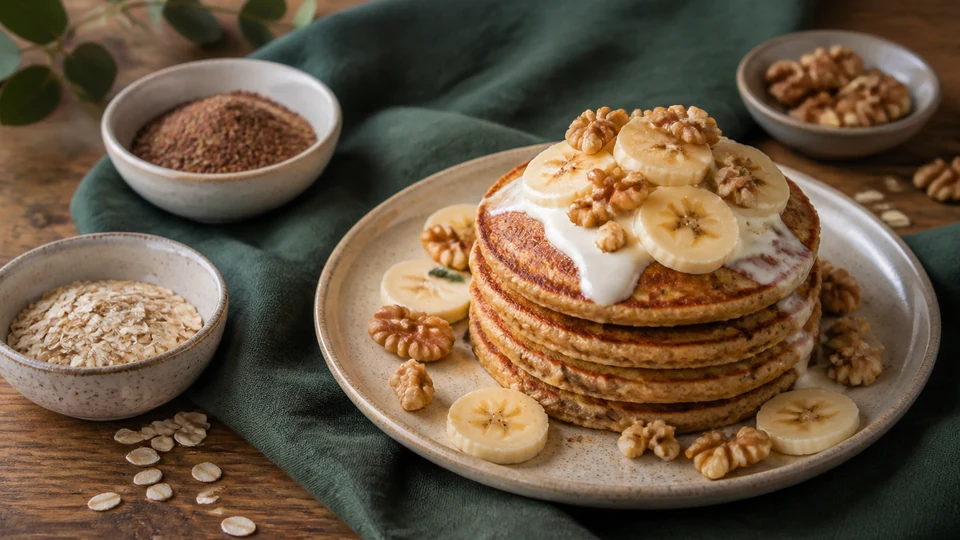
The name in this search refers to Jean-Philippe Cyr’s official recipe, not to a general category of Buddhist cuisine. His site identifies Cyr as The Buddhist Chef and presents the pancake page under that byline. For other plant-based pancake formats, visit the vegan pancake hub, or begin at Pancake World for the wider collection.
For broader context, continue with Healthy Pancake Guides.
Start with the official page, not a shortened repost
A named-recipe query has a narrow intent. The useful answer should identify the creator’s current page, preserve its printed formula and separate first-party instructions from reader improvisations. Search snippets, social captions and third-party rewrites can omit an ingredient, collapse two kinds of oil into one line or replace the original units. The official page is the controlling source.
At the time of this review, the page gives:
- difficulty: easy;
- preparation time: 10 minutes;
- cooking time: 15 minutes;
- total time: 25 minutes;
- yield: 10 pancakes.
Those are the publisher’s declarations. They are not timings independently reproduced by Pancake World, and an individual cook may spend longer while weighing ingredients, working with a small pan or learning the correct heat. Preserve the distinction between “the source states” and “we verified.” Only the first is supported here.
The official biography supplies the identity behind the title. It names Jean-Philippe Cyr and explains that he created The Buddhist Chef website to publish vegan recipes in written and video form. This is enough context to resolve the query. It does not establish an affiliation, sponsorship or endorsement of this article, and none is claimed.
The printed formula, organised by job
The source gives both volume and metric information. The following table reorganises the same factual list for preparation; it does not alter quantities or add an ingredient.
| Job | Official ingredient | Printed volume | Printed metric |
|---|---|---|---|
| Main dry structure | All-purpose flour | 3 cups | 450 g |
| Sweetening | Sugar | 2 tablespoons | 30 g |
| Raising | Baking powder | 1 teaspoon | 5 g |
| Seasoning | Salt | 1 teaspoon | 5 g |
| Batter fat | Vegetable oil | 1/4 cup | 60 mL |
| Flavouring | Vanilla extract | 1/2 teaspoon | 2.5 mL |
| Main liquid | Soya milk or favourite non-dairy milk | 3 cups | 750 mL |
| Pan fat | Oil, or as needed | 3 tablespoons | 45 mL |
The two oil lines serve different actions. The quarter-cup measure belongs in the batter. The three-tablespoon measure is listed for cooking and is qualified by “or as needed.” Keeping the bottles on two sides of the work area—or measuring the batter oil into a small vessel before the pan is heated—reduces the chance of adding both to the bowl.
The publisher offers soya milk or another preferred non-dairy milk. That is an explicit option from the source, but it does not mean that every product gives the same viscosity, sweetness or allergen profile. Start with the named soya option when fidelity is the priority. If another non-dairy drink is chosen, record the product rather than attributing the result solely to the original formula.
Do not mix the measurement columns
Select a measurement system for the whole batch. If you use the printed grams and millilitres, continue down the metric column. If you use the printed cups and spoons, use the volume column with actual measuring vessels. Do not weigh the flour using a generic “grams per cup” value while taking every other quantity from the official metric list. The page has already supplied its own paired figures.
That rule is especially important for flour. Flour can be compacted in a cup, and different publishers use different conventions. It is not responsible to “correct” the creator’s listed 450 g from a third-party chart and still call the result the same measured batch. A reader who believes the page contains an error should consult the official page for updates or contact its publisher; this article preserves the currently printed record.
For a half batch, divide every ingredient and the stated yield together, not just the obvious flour and milk lines. Half of a teaspoon and a quarter teaspoon require appropriate measuring spoons. Because the page itself publishes a ten-pancake batch and does not publish a half-batch test, downsizing remains household arithmetic rather than a separately tested yield.
A controlled preparation sequence
The official directions are brief. A good execution plan keeps them intact while adding organisational checkpoints that do not rewrite the formula.
1. Read the labels before opening anything
Confirm that the flour is all-purpose flour, the raising agent is baking powder and the liquid is the non-dairy drink you intend to use. In a British kitchen, all-purpose flour is ordinarily approached as the North American naming counterpart to plain flour, but the safest course for a named recipe is to use a product appropriate to the official description rather than substitute self-raising flour. Self-raising flour already contains a raising system and would no longer match the printed list.
Check the vanilla and sugar for the dietary standards you follow. Check the plant drink and any topping for allergens. “Non-dairy” and “vegan” answer ingredient-intent questions; they do not eliminate the need to read precautionary statements.
2. Set up a dry bowl and measured liquids
The source begins by combining flour, sugar, baking powder and salt. Put all four dry components into a mixing bowl large enough to accept the full liquid volume without splashing. Stir them so that the small amounts of baking powder and salt are not left in one local pocket.
Measure the batter oil, vanilla and plant drink separately. This mise en place does not claim a new mixing technique; it is a way to verify that every official ingredient is present before the directions move to “add remaining ingredients.” Keep the cooking oil out of this group.
Use a dry spoon for baking powder and salt. Level small measures rather than estimating a mound. A one-teaspoon line in a recipe is not the same as an ordinary cutlery spoon.
3. Add the batter liquids and whisk to the stated endpoint
The official page says to add the remaining ingredients and whisk until smooth. Follow that endpoint for this recipe. Do not import the “leave some lumps” instruction from a different pancake formula; named recipes can give different mixing directions because their ingredient systems differ.
Work around the bowl and scrape the base so no dry flour remains hidden. Stop once the batter is evenly combined and smooth according to the source. There is no printed resting period on the official page, so do not state that a rest is required. If your cooking setup is not ready, prepare it before combining the bowl rather than silently turning setup time into an invented rest.
4. Heat the specified kind of pan
The official method calls for a non-stick pan over medium heat and begins the cooking cycle with one tablespoon of oil. “Medium” is a starting description, not a universal dial number. Pan material, burner power and hob response differ. Preheat with attention and keep the handle positioned safely.
The printed batch lists three tablespoons of cooking oil or as needed. That wording supports using oil across the batch according to the condition of the pan; it does not require pouring all three tablespoons into the pan at once. The first direction specifies one tablespoon for the initial cycle.
Have a heatproof turner and a plate ready. Keep the raw batter utensil away from cooked pancakes. If you plan to hold the batch warm, use a separately supported method and oven-safe equipment; the official pancake page does not publish a holding instruction.
5. Portion the amount the chef specifies
The recipe directs about one-quarter cup, or 60 mL, of batter into the pan. Use the same scoop each time. A stable portion makes the ten-pancake yield and the two-minute-per-side instruction meaningful. A double-size pancake has a different centre-to-surface relationship and cannot be expected to follow the same clock.
Let the first pancake serve as a heat check, but do not redefine the recipe from a single early appearance. The source calls for medium heat and a lightly golden finish. If the underside becomes dark well before the stated side time, reduce the heat and allow the pan to respond. If the batter does not begin to cook, verify that the pan was preheated.
6. Cook both sides, using time and state together
The official direction is two minutes on each side, until lightly golden. Start a timer, but also observe whether the pancake can be lifted cleanly and whether the stated colour is developing. Turn with a spatula rather than attempting an airborne flip.
Independent Vegan Society guidance for American-style pancakes adds a useful visual explanation: central bubbles and a surface that begins to firm indicate the turning window. This supplementary cue should support, not replace, the named recipe’s two-minute direction and lightly golden target.
After turning, allow the second side its official time. Do not press the pancake flat. Check that the centre is set before serving, especially if the first portion spread thicker than expected.
7. Repeat without changing three variables at once
Continue with the same scoop, heat setting and pan-oil practice while they are producing the intended result. If you change heat, portion and liquid simultaneously, the next pancake cannot tell you which correction mattered.
The publisher lists ten pancakes. Treat that as the official expected yield, not a guarantee independent of scoop accuracy or bowl losses. If you produce a different number, record the measured portion and any substitutions before declaring that the source yield is wrong.
What the formula does not contain
The official ingredient list contains no egg and no dairy milk or butter. It also does not contain banana, apple sauce, flax, aquafaba or a commercial egg replacer. Adding one of those components is not necessary to follow this source.
That absence is useful because many search results answer “vegan pancakes” by proposing an egg substitute first. Here, the correct fidelity decision is simpler: do not add an egg replacement that the chef did not request. The formula was published as a coordinated egg-free and dairy-free method.
The same principle applies to acid. The page lists baking powder but no lemon juice or vinegar. An acid-and-bicarbonate technique belongs to other recipes. Do not import it here on the assumption that all vegan pancakes need plant “buttermilk.”
Troubleshooting this specific recipe
Troubleshooting must stay close to the source and visible evidence. Reader comments can suggest questions, but an anonymous comment is not a controlled test or an authority for universal changes.
Batter appears much thicker than the official demonstration
First verify the column used for every measurement. A common risk is taking flour from one system and liquid from the other. Confirm that the flour is all-purpose rather than bread, wholemeal, coconut or self-raising flour. Confirm that all 750 mL or all three printed cups of plant drink were added.
The official author responded to thickness questions on his page by advising additional plant drink for a thinner batter. That is a first-party comment, but it is not a published universal correction amount. If the base measurements were accurate and you decide to follow that response, add a small, measured amount, record it and observe before adding more. The adjusted batch should be described as modified.
Pancake browns but the middle remains wet
Check portion and heat before changing ingredients. A portion larger than 60 mL or a pan running above medium can brown the exterior before the centre sets. Reduce the heat, give the pan time to cool slightly and return to the official scoop. Make sure the pancake was cooked for the full stated interval on both sides.
Thickness also matters. The chef’s response on the official page links overly thick batter with a centre that may not cook properly and suggests more plant drink. Use that only after confirming the printed formula was measured correctly.
Pancake spreads too widely
Check whether excess liquid entered the bowl, whether the right flour quantity was used and whether the pan was hot before portioning. Do not solve excess spread by adding self-raising flour, protein powder or oats; each introduces a new formula.
If you intentionally used a plant drink different from soya, record that variable. Returning to the chef’s named soya option is a cleaner next trial than guessing at flour additions.
Surface sticks or tears at turning
The official setup specifies a non-stick pan and oil. Confirm both conditions. Allow the pancake to cook for the stated first-side period and reach a state that can support the turn. Slide the spatula underneath rather than prying at one edge.
If the pan coating is damaged or the surface is overloaded with residue from prior pancakes, changing the batter may not solve the mechanical problem. Clean or replace the cooking surface as appropriate and resume with fresh oil according to the source.
Pancakes taste salty or strongly of raising agent
Recheck teaspoon measures and verify that the salt and baking powder were not confused with tablespoons. Both are five-gram, one-teaspoon entries on the page; the same printed mass does not make them interchangeable. Do not use self-raising flour plus the full baking powder line unless the official source is updated to say so.
Batch yield is below ten
Measure the scoop. The official portion is about 60 mL. A generous free-pour can quietly turn ten portions into seven. Batter left on a whisk or in a narrow jug also affects practical yield. The source yield should be assessed against the source portion, not against an arbitrary pancake diameter.
Substitution decisions: what is supported and what is not
The recipe itself explicitly allows soya milk or a favourite non-dairy milk. That is the clearest authorised substitution. The page also lists vegetable oil and, in an author reply, mentions coconut oil as an option when a reader asks. Coconut oil changes flavour unless a neutral version is used, a point the chef also notes in that reply.
Beyond those points, the page’s long comment section contains personal experiments with other flours, bananas, sugar changes and oil omissions. They are not all author-tested updates. A comment that “worked for me” is evidence of one reader’s report, not proof that a substitution is reliable across brands and kitchens.
Use this decision hierarchy:
- Follow the printed ingredient first.
- Use an alternative explicitly printed in the recipe second.
- Treat a clear reply by the named author as limited guidance and preserve its wording and uncertainty.
- Treat reader comments as anecdotes, not acceptance evidence.
- For a major dietary change such as gluten-free flour, choose a separate tested recipe written for that requirement.
This hierarchy keeps the route useful without pretending that every possible pantry swap has been validated.
Vegan status and allergy safety are different checks
The NHS defines vegan eating around plant foods and the exclusion of animal-derived foods including eggs and dairy products. The Buddhist Chef formula matches that stated intention through non-dairy liquid and the absence of egg and butter.
The UK Food Standards Agency warns that “vegan” should not be read as “allergen-free.” Products made without intentional animal ingredients may still carry precautionary warnings because of cross-contact. That matters here because wheat flour and soya drink are themselves relevant to some allergies, while alternative plant drinks may contain nuts or other regulated allergens.
Before serving another person:
- show them the current packages rather than summarising from memory;
- check flour, plant drink, baking powder, vanilla and toppings separately;
- follow any “may contain” information;
- avoid a gluten-free claim for this wheat-flour formula;
- use preparation equipment compatible with the person’s cross-contact needs.
If the goal is a milk-free or egg-free safety claim, vegan status alone cannot provide it. The affected person, carer or qualified clinician should direct the final decision.
Serving without rewriting the recipe
The official direction proposes maple syrup and seasonal fruit. These are serving suggestions, not ingredients required for the batter. Place them on the table separately when guests have different preferences or allergen needs.
A different topping does not need to alter the base method. Verified vegan fruit compote, a suitable spread or a savoury accompaniment can be selected on its own merits. Recheck packaged toppings: chocolate chips, cream-style products and spreads vary by brand and formulation.
Do not attach a nutrition or health promise to the stack. The NHS discusses variety, fortified foods and nutrients in the context of an overall vegan diet. It would be misleading to infer from the plant-based ingredient list that one pancake breakfast is automatically balanced for every person.
Handling leftovers when the recipe page is silent
The official Buddhist Chef page does not publish a leftover-storage instruction. Therefore this article does not invent a chef-specific refrigerator life. General UK FSA advice can provide a safety boundary: cool cooked leftovers and place them in the fridge within two hours, eat them within 48 hours or freeze them, and reheat only once until steaming hot throughout.
Keep fruit and syrup separate so they do not soak the pancakes during cooling. Use a clean, covered container and label it with the cooking time. Refrigerate a shallow batch promptly rather than leaving a tall warm stack on the breakfast table.
These are general leftover rules, not proof that every topping freezes or reheats well. If a packaged ingredient supplies more restrictive directions, follow its label.
A fidelity checklist
Before mixing:
- You are using the official The Buddhist Chef page.
- The byline is The Buddhist Chef and the recipe title is Vegan Pancakes.
- You selected one complete measurement column.
- All-purpose flour and baking powder are separate ingredients.
- Batter oil is separated from cooking oil.
- The plant drink and toppings pass your current vegan and allergen checks.
Before cooking:
- Dry ingredients have been combined first.
- Remaining batter ingredients have been added.
- The mixture has reached the source’s smooth endpoint.
- The non-stick pan is at medium heat.
- The 60 mL portioning tool and timer are ready.
While cooking:
- The initial pan oil follows the official direction.
- Each side receives the stated two minutes, adjusted only when the actual pan state demands care.
- Light golden colour, surface set and centre doneness are checked.
- One measured variable is changed at a time.
After cooking:
- The output is described as the chef’s formula, not a Pancake World-developed recipe.
- Deviations are recorded.
- Reader comments are not promoted to tested fact.
- Leftovers, if any, follow FSA cooling and reheating boundaries.
Frequently asked questions
Who is The Buddhist Chef?
The official biography identifies The Buddhist Chef as Jean-Philippe Cyr, a Quebec-trained chef who created the website to publish vegan recipes. This article has no affiliation with him or the site.
What are the exact official headline numbers?
The page states 10 minutes preparation, 15 minutes cooking, 25 minutes total and 10 pancakes. Those figures are reported from the publisher and have not been independently tested by Pancake World.
Does the recipe need a vegan egg replacer?
No egg replacer appears in the official ingredient list. Adding flax, banana, apple sauce or a commercial replacement would create a variation rather than following the printed formula.
Can I use oat or almond drink instead of soya?
The source permits soya milk or a favourite non-dairy milk, so another non-dairy drink sits within its stated option. Results and allergens can differ by product. Record the choice and read the current label.
Is plain flour the same instruction for a UK reader?
The official page uses the North American term all-purpose flour. UK plain flour is the practical category to investigate, but use the recipe’s printed metric quantity and do not substitute self-raising flour without accepting that the formula has changed.
Can I trust substitutions in the comments?
Comments are useful for identifying common questions, not for establishing a tested rule. Give priority to the printed recipe and clearly identified author replies. A separate tested formula is the better route for major flour or dietary changes.
Is the recipe gluten-free?
No. The official formula uses all-purpose wheat flour. Vegan and gluten-free are separate claims, and cross-contact also needs evaluation for anyone with coeliac disease or a wheat allergy.
Why does this page use Article rather than Recipe schema?
It is an editorial guide to a recipe owned and published by another source. Pancake World did not perform and document its own test, so it does not republish the formula as a project recipe or claim a Recipe result.
Explore related Pancakes World guidance on American Pancakes, American Breakfast: Pancakes, Diner Plates and Brunch, and Maple Syrup.
Sources and editorial references
- The Buddhist Chef — Vegan Pancakes:
https://thebuddhistchef.com/recipe/vegan-pancakes/ - The Buddhist Chef — Jean-Philippe Cyr biography:
https://thebuddhistchef.com/bio-the-buddhist-chef/ - The Vegan Society — How to make the best vegan pancakes:
https://www.vegansociety.com/news/blog/how-make-best-vegan-pancakes - NHS — The vegan diet:
https://www.nhs.uk/live-well/eat-well/how-to-eat-a-balanced-diet/the-vegan-diet/ - UK Food Standards Agency — Vegan food and allergen risk campaign:
https://www.food.gov.uk/news-alerts/news/fsa-launches-campaign-highlighting-risk-of-food-labelled-as-vegan-to-people-with-allergies - UK Food Standards Agency — Cooking your food and using leftovers:
https://www.food.gov.uk/safety-hygiene/cooking-your-food?ContensisTextOnly=true