Brunch shower food ideas
At Pancakes World, brunch shower food should be easy to carry, tidy to eat, and simple to replenish. Plan one warm tray, two one-handed savory items, fruit or salad, one baked sweet, and drinks. Mini quiches, tea sandwiches, fruit cups, scones, and deviled eggs fit the format when each follows a complete source recipe and has clear allergen information. Serve small platters, protect food during the gift-opening pause, and schedule cake separately so the table is not crowded. Keep chilled fillings, eggs, dairy, and cut fruit refrigerated until their service window.
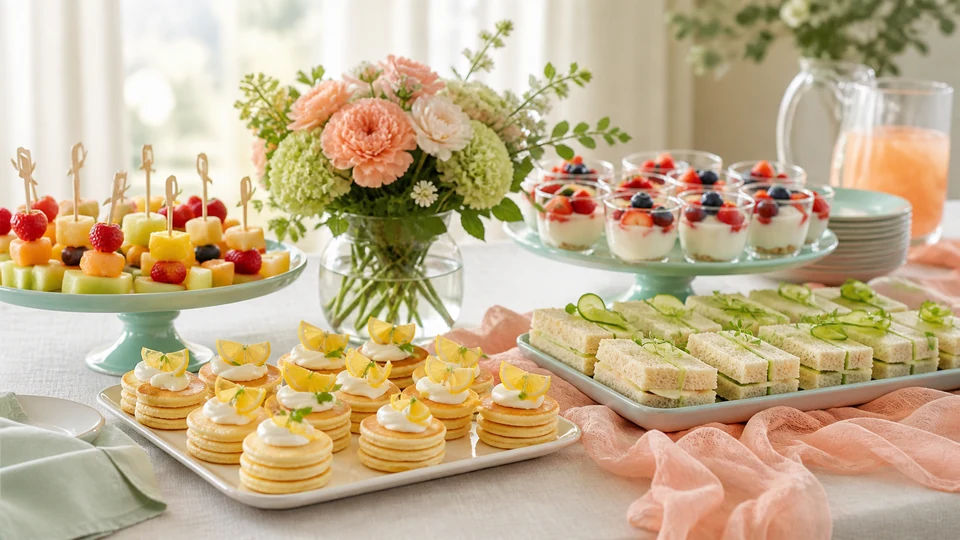
The broader brunch hub supports other occasions, while Pancake World connects this shower plan to the full editorial collection.
| Guide sections |
|---|
| Plan for the event sequence |
| A six-part shower menu |
| Three coherent menu paths |
| Prepare without crowding the host |
For broader context, continue with American Breakfast: Pancakes, Diner Plates and Brunch.
Plan for the event sequence
A shower is not simply a party with pastel plates. Guests usually arrive, mingle, eat, pause for an activity or gift opening, and return for cake or drinks. The menu must survive those transitions without leaving perishable food exposed for the entire event.
Write five times before selecting recipes: guest arrival, first food service, activity start, cake service, and event end. Then assign each dish to one window. The warm tray belongs early, cold savory food appears in small batches, and cake gets its own clear moment.
This route is distinct from the general brunch-party article. It prioritizes polite one-handed portions, gift-opening pauses, and a host sequence rather than high-volume queue control.
A six-part shower menu
Choose one item in each role, not every example.
One warm tray
Mini quiches, egg-bake squares, breakfast sliders, or another complete savory bake can anchor the first service. Select a recipe that states vessel, yield, and doneness. FoodSafety.gov lists 160°F for egg dishes. Check the center rather than relying on brown edges.
The tray should be cut or portioned before guests begin serving. Do not experiment with a smaller “mini” format unless the source gives the corresponding timing; changing size changes cooking behavior.
Two one-handed savory items
Tea sandwiches, deviled eggs, pinwheels, cheese scones, or vegetable cups can fill this role. Choose two with different textures and ingredients. A soft egg item plus a crisp vegetable cup provides more contrast than three bread-based bites.
Sandwich fillings require cold control. Assemble only as early as a complete source allows. Wet cucumber, tomato, sauce, or salad fillings can soften bread, so use the recipe’s draining and spreading order.
Fruit or salad
Fruit cups reduce shared handling and help the host count portions. Wash produce under running water before cutting, use clean equipment, cover portions, and refrigerate them.
A salad can work when it is easy to eat from a small plate and its dressing is added at the source-specified time. Avoid long leaves or heavy sauce that are difficult while standing.
One baked sweet
Scones, muffins, coffee cake, or another complete bake can be prepared earlier when its recipe permits. Choose one. The celebration cake already creates a second sweet service, so several pastries may duplicate that role.
Retain labels for wheat, egg, milk, nuts, sesame, and other ingredients. Filled pastries may need refrigeration even when plain bread does not.
Drinks
Provide water and one or two additional choices. Put coffee, tea, or cold drinks away from the food table. This prevents the beverage queue from blocking guests carrying plates.
Use small cold containers for milk or cream and replenish them from the refrigerator. Secure hot-water equipment on a stable surface away from children and traffic.
Cake as a separate service
Do not place the cake in the first food line unless the event truly serves everything at once. Keep it protected, then clear used savory plates before cutting. Prepare a clean knife, server, plates, napkins, and any required refrigeration.
Three coherent menu paths
These combinations are planning examples, not project-tested menus.
Tea-table path
- mini quiche tray from a complete recipe;
- cucumber or chicken tea sandwiches;
- fruit cups;
- scones;
- tea, coffee, and water;
- cake after the activity.
This path uses several egg, dairy, and wheat ingredients, so labeling and clean utensils are essential.
Bright spring path
- herb egg-bake squares;
- vegetable cups with a complete dip recipe;
- deviled eggs;
- citrus and berry cups;
- one muffin variety;
- sparkling water and coffee.
Keep dip, eggs, and cut fruit refrigerated. Put out a small first tray and hold the second cold.
Mostly make-ahead path
- a savory bake whose source permits advance preparation;
- firm pinwheels;
- cheese or bean-spread toast points assembled close to service;
- whole and cut fruit;
- purchased labeled pastries;
- hot and cold drinks.
“Make-ahead” is valid only when each recipe includes the necessary cooling, storage, and reheating path.
Explore related Pancakes World guidance on American Pancakes, Maple Syrup, and Maple Syrup Pancakes.
Sources and editorial references
Use the yield from each selected recipe and define whether it is a main or side portion. Do not multiply every dish to the full guest count. A guest may take one warm piece, two small savory items, fruit, and cake; the combined menu supplies the meal.
Make one sample plate before finalizing the quantities. Check whether it can be held with one hand, whether foods leak into each other, and whether a fork is necessary. This is an editorial service test, not a claim that the recipe itself was kitchen-tested.
For uncertain attendance, keep a reserve that remains safely packaged or refrigerated. Unopened bread, whole fruit, or a covered tray is preferable to exposing every portion for visual abundance.
Prepare without crowding the host
Two days before
Confirm attendance, dietary needs, event schedule, refrigerator space, and serving furniture. Select complete recipes. Buy ingredients and keep packages.
The day before
Bake stable goods and complete recipe-approved make-ahead tasks. Prepare labels, serving tools, plates, napkins, and the cake station. Wash whole fruit, but delay cutting when possible.
Two hours before
Clear work surfaces and separate raw egg or meat equipment from ready-to-eat food. Cook the warm tray. Prepare cold items and refrigerate them covered. Set empty platters on the table to confirm spacing.
Twenty minutes before arrival
Put out a small fruit portion, stable baked goods, and the first savory tray. Finish or reheat the warm dish only as directed. Start coffee and heat water for tea.
Before gift opening
Remove perishable platters, make the correct time-and-temperature decision, and clear used plates. Leave water and safely stable items if suitable. Protect the cake until its service.
Cake window
Bring out clean dessert plates and utensils. Serve cake separately from remaining savory food. Keep dairy-filled cake under its storage requirements.
Small-batch service
Use replacement trays, not top-ups. A fresh batch should never be poured or placed over food that has already been handled and exposed. Remove the old platter, note its time, and bring a clean tray from safe storage.
Assign one person to monitor food. The guest of honor and primary host should not have to leave the activity repeatedly. A simple card can show which refrigerator shelf holds each backup tray.
Position plates first, then warm food, cold savory items, fruit, baked goods, and napkins. Put sauces after the foods they accompany. Keep drinks on another surface and maintain a clear path from kitchen to refill point.
Food safety
FDA advises buying clean, uncracked refrigerated eggs, keeping them refrigerated, and cooking egg dishes thoroughly. FoodSafety.gov lists 160°F for egg dishes, category-specific values for meats and poultry, and 165°F for leftovers.
Keep raw egg and meat away from bread, garnishes, fruit, and final plates. Wash hands and use clean boards, knives, and utensils. Move cooked food to a clean vessel.
Cold sandwich fillings, deviled eggs, dairy, dips, and cut fruit remain refrigerated until their service window. Use the FoodSafety.gov cold-storage chart to match leftovers to the actual food category. Do not apply one “shower food” storage period to every dish.
Track the time each perishable platter leaves control. If time or storage history is uncertain, do not return it to the refrigerator for later use.
Allergens and labels
Common shower foods may contain egg, milk, wheat, soy, sesame, fish, mustard, peanuts, and tree nuts. Recipe titles are insufficient: check bread, mayonnaise, spreads, processed meats, seasoning blends, pastries, and drinks.
Label each platter with the dish and principal allergens. Retain complete packages for guests who need more detail. Use separate utensils and prepare a verified alternative first on clean equipment. Cover it and place it away from crumbs.
Do not promise an allergen-free shared kitchen without evidence. Vegan, vegetarian, or gluten-free wording requires verification across every ingredient and the preparation process.
Troubleshooting
Sandwiches dry or become soggy
Follow the recipe’s assembly window, keep wet ingredients controlled, cover the tray, and prepare smaller batches. Do not leave chilled filling warm to protect bread texture.
The warm tray conflicts with cake
Cake should not need the same oven at the same time. Choose a cake delivered ready for service or a warm dish completed earlier under a verified holding path.
Guests cannot eat neatly while standing
Reduce portion size, remove loose sauce, provide small plates, and replace skewers or large leaves with cups. Test the plate before the event.
Gift opening starts early
Remove or cover perishable food and return backups to refrigeration. Keep the schedule flexible, but never invent a longer holding period.
Too much food remains
Stop refilling. Keep unopened or safely refrigerated reserve food cold. Make a category-specific storage decision for exposed food.
Labels move during refills
Attach labels to table holders rather than removable platters. Verify every replacement matches its label.
Frequently asked questions
How many different foods should a shower serve?
One warm tray, two savory bites, fruit or salad, one baked sweet, drinks, and cake provide a complete structure. Adjust through source yields rather than adding categories.
Can the menu be entirely cold?
Yes, when complete recipes and refrigeration support it. Sandwiches, eggs, salads, fruit, and baked goods can work without a hot tray.
Are skewers a good shower food?
Only when safe for the guest group and easy to discard. Cups are often more stable for fruit or salad and avoid sharp points.
Can everything be made the day before?
Only source-approved tasks. Table setup and labels can move early; food needs explicit storage instructions.
Are these tested Pancake World recipes?
No. They are event-planning suggestions. Use complete source recipes for quantities, timing, yield, and storage.
Final shower checklist
- Every cooked item has a complete source.
- The menu fits arrival, activity, and cake windows.
- One warm tray owns the final cooking slot.
- Portions can be handled neatly with a small plate.
- Cold backup trays remain refrigerated.
- Fresh food replaces rather than tops up an exposed tray.
- Drinks and cake have separate service areas.
- Every dish has a label and utensil.
- Egg and meat endpoints match official guidance.
- The host has assigned one refill monitor.
A successful shower menu supports the social sequence. Tidy portions, small cold refills, a defined pause, and a separate cake service let the food remain useful without taking over the celebration.
- U.S. Food and Drug Administration, “What You Need to Know About Egg Safety” —
https://www.fda.gov/consumers/consumer-updates/what-you-need-know-about-egg-safety - FoodSafety.gov, “Safe Minimum Internal Temperatures” —
https://www.foodsafety.gov/food-safety-charts/safe-minimum-internal-temperatures - FoodSafety.gov, “Cold Food Storage Chart” —
https://www.foodsafety.gov/food-safety-charts/cold-food-storage-charts - Food Network Kitchen, “Brunch Recipes” —
https://www.foodnetwork.com/recipes/photos/brunch-recipes - Good Food, “Brunch recipes” —
https://www.bbcgoodfood.com/recipes/collection/brunch-recipes