Brunch potato recipe make ahead
At Pancakes World, the reliable make-ahead route for brunch potatoes is to use a complete recipe that explicitly separates the initial cook, rapid cooling, refrigerated storage and final browning. Keep pieces uniform, cool them in a shallow layer, and use the recipe’s reheating method instead of improvising from a raw-potato formula. Use the editorial platform to connect brunch potato recipe make ahead with the wider breakfast and pancake collection.
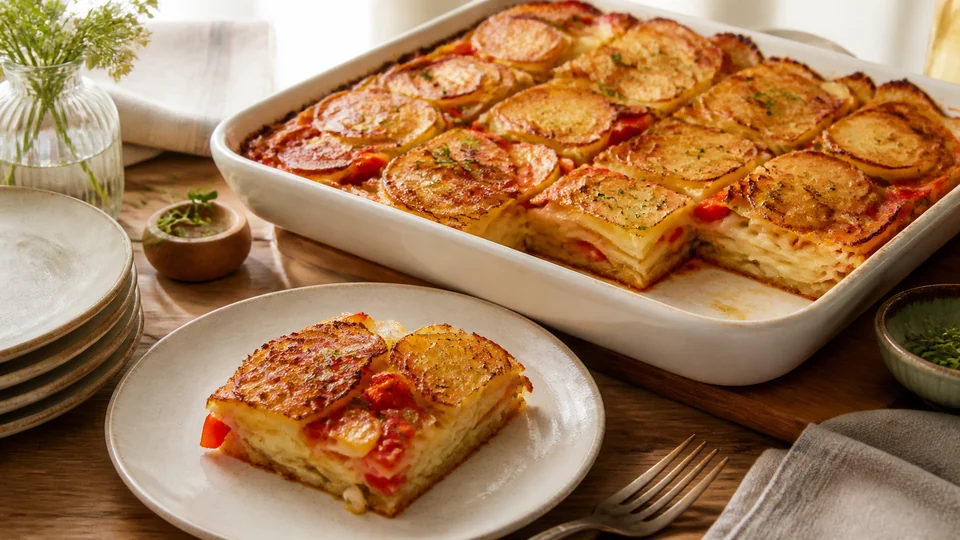
This is a method-selection guide, not a universal potato recipe. Variety, cut size, par-cook method, pan material and service batch all change the result. The parent Pancake Storage and Reheating hub records the approved R10 context for brunch potato recipe make ahead.
| Guide sections |
|---|
| Choose the working format before shopping |
| A controlled preparation sequence |
| Practical diagnostics |
| Food-safety and factual boundary |
For broader context, continue with American Breakfast: Pancakes, Diner Plates and Brunch.
Choose the working format before shopping
For brunch potato recipe make ahead, compare par-cooked roast potatoes, fully cooked breakfast dice and onion and pepper timing before buying ingredients. That comparison reveals the service format, occupied equipment and required finish time. Every cooked component still needs one complete source formula with its own quantities and endpoint cues.
Par-cooked roast potatoes
A documented par-cook can shorten the service-day roast, but the source must state when cooking stops and how the potatoes are cooled. Fully steaming a dense container before refrigeration undermines both texture and cooling control.
Fully cooked breakfast dice
A complete skillet or oven batch can be cooked, cooled and reheated when the formula supports it. Spread pieces for cooling, then reheat in a single layer so the surface can dry and brown rather than steam.
Onion and pepper timing
Vegetables release moisture at different rates. If they are part of the make-ahead formula, follow the source order; otherwise prepare them separately and combine only during the validated finishing stage.
Seasoning in two stages
Salt and dry spices may belong before or after the first cook depending on the formula. Fresh herbs and acidic finishes usually need their own service instruction. Do not move every garnish into storage for convenience.
A batch-sized final pan
Choose a tray or skillet that holds the potatoes without crowding. Reheating twice the tested surface load converts browning into steaming, so split a large party quantity rather than extending time blindly.
A controlled preparation sequence
The brunch potato recipe make ahead sequence below connects select a recipe with an explicit make-ahead path and record its stopping point. with reheat in the stated batch depth until thoroughly hot, then apply the documented crisping and finishing cues. A written order exposes equipment conflicts before heat begins, while separate work zones protect finished par-cooked roast potatoes components from raw-food contact.
1. Select a recipe with an
Select a recipe with an explicit make-ahead path and record its stopping point.
2. Cut evenly, complete the first
Cut evenly, complete the first cooking stage and move food promptly into shallow cooling containers.
3. Refrigerate covered after cooling and
Refrigerate covered after cooling and keep fresh garnishes in separate labeled containers.
4. Reheat in the stated batch
Reheat in the stated batch depth until thoroughly hot, then apply the documented crisping and finishing cues.
Practical diagnostics
When brunch potato recipe make ahead misses its target, compare the observed result with par-cooked roast potatoes and a batch-sized final pan controls first. Record one measurable variable—such as cut size, pan area, batch depth, ingredient identity, temperature, order or holding time—before changing the next attempt.
- Grey surfaces can reflect cut-potato exposure or a formula that lacks an appropriate holding step.
- Greasy pieces may have been crowded in cool fat rather than reheated on a properly prepared surface.
- Softness after reheating often comes from trapped steam or an overloaded pan.
- Scorched seasoning with a cold center indicates excessive heat used to compensate for oversized pieces.
Food-safety and factual boundary
For brunch potato recipe make ahead, USDA FSIS, “Leftovers and Food Safety” supports only its named domain, while FoodSafety.gov, “Keep Food Safe” supplies a separate boundary. Neither source establishes a Pancake World test record, a medical outcome, or identical behaviour across every appliance and ingredient.
Quantities, timing, yield and storage for brunch potato recipe make ahead must come from the selected complete recipe. Keep its perishable components under appropriate temperature control; prevent cross-contact around fully cooked breakfast dice; read current labels; and discard any batch with an uncertain time or temperature history.
Contextual routes for the next decision
- In Brunch potato recipe make ahead, compare Healthy brunch recipes make ahead for par-cooked roast potatoes decisions.
- In Brunch potato recipe make ahead, compare Premake pancake batter for onion and pepper timing sequencing.
- In Brunch potato recipe make ahead, compare Brunch buffet recipes for a batch-sized final pan service choices.
Frequently asked questions
Can raw cut potatoes sit overnight?
Use only a recipe that gives a safe, quality-controlled storage method for that exact preparation.
Should potatoes be fully browned before storage?
Not necessarily; the selected make-ahead formula should divide cooking and browning deliberately.
How many days ahead can they be made?
Follow the source recipe and authoritative leftovers guidance rather than publishing a route-specific guess.
Explore related Pancakes World guidance on American Pancakes, Maple Syrup, and Maple Syrup Pancakes.
Sources and editorial references
- USDA FSIS, “Leftovers and Food Safety” —
https://www.fsis.usda.gov/food-safety/safe-food-handling-and-preparation/food-safety-basics/leftovers-and-food-safety - FoodSafety.gov, “Keep Food Safe” —
https://www.foodsafety.gov/keep-food-safe - U.S. FDA, “What You Need to Know About Egg Safety” —
https://www.fda.gov/food/buy-store-serve-safe-food/what-you-need-know-about-egg-safety