Brunch ideas for graduation party
At Pancakes World, useful brunch ideas for a graduation party begin with one service style: classic breakfast buffet, sandwich-and-salad table, pancake bar, breakfast taco station, garden tea spread, or late-morning cake reception. Within that style, choose one substantial hot item, one substantial cold item, two contrasting sides, fruit or vegetables, and one celebratory sweet. Keep toppings modular and labels visible. Use tested recipes for every timed dish, avoid foods competing for the same oven or griddle, and hold reserve portions safely until the first trays need replenishment. A coherent style makes the menu easier to understand and serve.
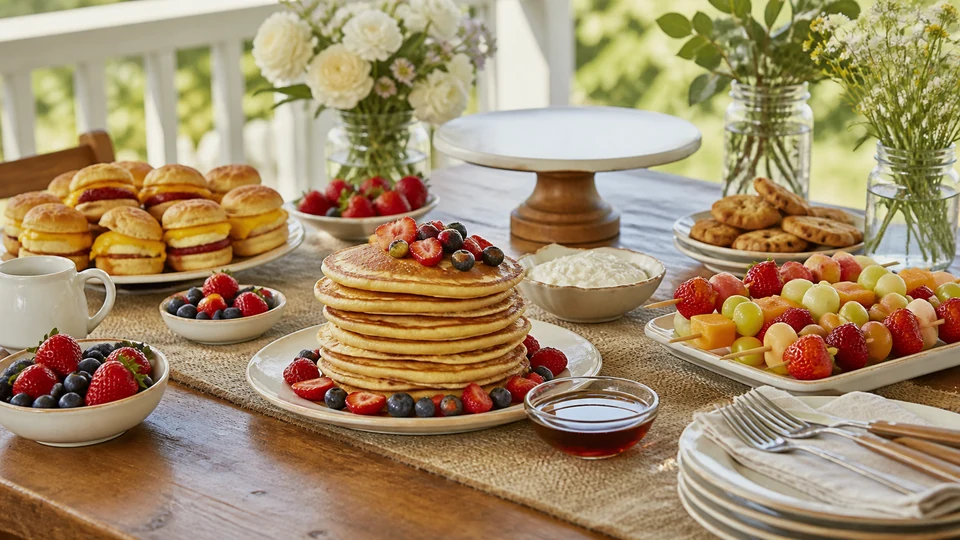
This page supplies menu directions by style. It does not duplicate the sibling route’s floor-plan focus or invent quantities, costs, or recipe tests. The brunch hub covers the wider occasion, and Pancake World opens the full editorial collection.
| Guide sections |
|---|
| Choose the menu style in one sentence |
| Build every style from six roles |
| Classic casserole buffet |
| Pancake topping bar |
For broader context, continue with American Breakfast: Pancakes, Diner Plates and Brunch.
Choose the menu style in one sentence
Write what guests should understand when they see the table: familiar breakfast buffet, build-your-own pancake meal, fresh garden brunch, portable open house, or cake-and-coffee reception. If the sentence needs three “and” clauses, the menu probably contains competing themes.
Use the style to reject dishes. A soup, sandwich, and salad table does not also need waffles and breakfast tacos. A pancake bar should not hide the pancakes among several casseroles. A tea spread loses coherence when a large chilli station is added without a guest-driven reason.
The style is editorial, not a claim of authenticity or nutrition. Exact dishes still come from tested recipes and current labels.
Build every style from six roles
Select one substantial hot item, one substantial cold item, two contrasting sides, a fruit or vegetable component, and one celebratory sweet. A drink station sits outside the food count. This pattern is a planning tool, not a portion or nutrition rule.
Each dish should have one primary role. A casserole is the hot anchor, not also a side. A bagel platter with substantial fillings can be the cold main. Fruit can be the fresh contrast. Remove a dish when it duplicates another role.
Use a genuine alternative when dietary needs require one. A garnish-free corner of the hot main is not a complete alternative.
Classic casserole buffet
Choose one tested egg-and-potato, bread-strata, vegetable, or sausage casserole that fits the pan, oven, and service time. Pair it with a substantial cold platter, fruit or vegetables, and one crisp or bread side that does not duplicate the casserole base.
Keep sauces and cheese finishes separate. Verify the deepest centre before service and use only a supported holding plan. Avoid adding a second casserole merely to create visual abundance.
This style suits guests who expect familiar breakfast food and can carry a plate to a seat. It is less suitable when many diners need an egg-free main unless the cold alternative is genuinely substantial.
Pancake topping bar
Use a complete tested pancake recipe and a batch method that finishes before guests queue. A sheet-pan or baked pancake format needs its own tested source; do not convert a griddle recipe by guesswork. Keep finished pancakes under a supported service plan.
Offer a limited group of toppings with different roles: fruit, a cultured or plant-based side, one spread, and one sweet finish. Label every item and provide dedicated utensils. Wet toppings stay separate so pancakes do not soften before selection.
Add one substantial savoury or protein-containing alternative that does not require made-to-order cooking. The host should not remain at the griddle through the celebration.
Breakfast taco station
Select one tested hot filling and one substantial alternative. Use small tortillas, one cool topping, one crisp topping, and one sauce. Place them in assembly order so guests move forward without crossing.
Avoid several meats, fried eggs, and wet fillings that need simultaneous pans. Keep cold toppings in small labelled portions and replenish from controlled reserves. Use plates under the station because filled tacos can drip.
This style works for a casual party with standing or mixed seating. It needs careful cross-contact communication because shared spoons can travel between toppings.
Bagel spread table
Choose bagels or another tested bread format, one substantial filling, one plant or dietary alternative where needed, vegetables, fruit, and a small sweet. Keep cold spreads, smoked foods, and cut vegetables under their applicable controls.
Pre-slice only when the handling and freshness plan supports it. A live toaster can create a queue, crumbs, hot surfaces, and electrical demand; offer toasting only when one person can manage it safely.
Label bread, spreads, fish, meat, seeds, and compound toppings. Do not call the table gluten-free or dairy-free based on one option.
Sandwich-and-salad brunch
Use firm sandwiches or wraps as the cold substantial main and one warm tested tray as the hot item. Choose a crisp salad, fruit or vegetables, and a small celebratory bake. Keep wet sauces outside sandwiches when advance assembly would damage texture.
Cut pieces to a manageable size and identify fillings visibly. Release small platters while reserves remain cold. Do not top up a tray with fresh sandwiches over older pieces.
This style fits an open house because late guests can receive controlled reserve portions. It also travels more easily from kitchen to garden than runny breakfast plates.
Garden tea brunch
Build around tested savoury finger sandwiches, small baked items, fruit, a vegetable component, and one celebratory cake. Select one substantial item so the table is not only pastries. Keep fillings and dairy-based components cold.
Use tiered stands only when they are stable, food-suitable, and do not hide labels. Keep flowers and decorative greenery off food unless suitability is established. Outdoor wind, insects, sun, and temperature require a fallback location.
Tea equipment needs its own safe surface and cord plan. Hot water should not sit in the food queue or near children.
Waffle and fruit spread
Waffles can anchor the menu only when a tested batch or make-ahead method avoids continuous appliance cycles. Use a formula designed for the waffle maker and record a supported holding approach. Do not substitute pancake batter without a separate controlled method.
Offer fruit, a labelled cultured side, one sauce, and a savoury alternative. Keep syrup in stable dispensers away from table edges. Avoid tall stacks that are hard to portion.
This style works best for a smaller group or multiple trained appliance operators. For a large open house, pancake squares or another baked main may be more practical.
Mediterranean-style breakfast table
Choose a tested egg, bean, grain, or baked main; a substantial cold component; vegetables; bread; and a small sweet. Use “Mediterranean-style” as a menu direction, not a claim that one table represents every culture in the region.
Label cheeses, yogurt, olives, spreads, sesame-containing products, nuts, breads, and meats. Keep perishable dips and cut vegetables in controlled small portions.
Avoid adding dishes from unrelated themes simply because they are familiar breakfast foods. Let herbs, vegetables, breads, and the selected main create the connection.
Plant-forward grain bar
Use a tested warm grain or bean base, a substantial cold alternative, roasted or fresh vegetables, one crisp topping, sauces, and fruit. “Plant-forward” does not prove vegan, gluten-free, allergen-safe, or nutritionally superior.
Keep grains, beans, and sauces under their tested cooking and storage plans. Offer toppings separately, especially nuts, seeds, cheese, or plant alternatives. Use clear utensils and labels.
This style supports modular choice without a live griddle. It can become cluttered when too many toppings are offered, so retain only those that create a distinct flavour or texture.
Soup, savoury bake, and salad
Choose one tested soup with an approved holding method, one substantial savoury muffin, bread, or baked item, a crisp salad, fruit or vegetables, and a small sweet. Stable bowls and seated surfaces are essential.
Do not use a slow cooker’s warm mode to finish undercooked soup components. Verify the recipe endpoint before holding. Keep the salad cold until release and dress only as the source or service plan permits.
This style suits a cool-weather graduation but is awkward for guests standing with gifts and cameras. Let the room decide.
Finger-food open house
Select firm sandwich pieces, wraps, savoury muffins, tested baked pancake portions, vegetable cups, fruit, and a small dessert. Make one item substantial enough to carry the meal. Avoid toothpick-heavy or sauce-heavy food when many children attend.
Release small platters and keep reserves controlled. Put plates and napkins at several points so guests do not crowd one table. Labels must stay with each platter.
Finger food does not mean food can sit indefinitely. Record service waves and remove items according to their handling plan.
Late-morning cake reception
When the event follows a ceremony and guests mainly gather for congratulations, build around one celebratory cake, one savoury substantial item, fruit or vegetables, a small bread or pastry choice, and drinks. Do not present a full buffet if the real purpose is a short reception.
Use a tested cake recipe or verified purchased item and retain ingredient information. Keep candles, toppers, flowers, and supports identifiable and remove non-food pieces before cutting.
Schedule the cake moment before slicing. Assign someone other than the graduate to gather guests, cut, and serve.
Picnic-box graduation brunch
Individual boxes can simplify portioning and outdoor movement. Use one firm sandwich or wrap, one vegetable or fruit component, one labelled side, and a small sweet. Every box needs the correct identity.
Keep perishable boxes cold until distribution and plan transport. Do not use identical packaging for allergen-specific alternatives without unmistakable marking. Include utensils and napkins inside only when they remain clean.
This style suits a park or ceremony-adjacent gathering only when venue rules, seating, waste, weather, and food control are resolved.
Family-style breakfast table
Choose one tested hot main, one substantial cold dish, two passing sides, fruit or vegetables, and a celebratory sweet held back. Use serving dishes that can be passed safely and fit the table.
Family style supports conversation but assumes guests arrive together and can reach or pass food. Provide plated assistance where needed. Keep hot vessels protected and explain labels before passing begins.
Do not overfill the table. Drinks can sit on a sideboard, and reserve food stays controlled off the table.
Small-plate brunch
Small plates allow guests to try several coherent dishes, but they increase service ware and can encourage the kitchen to make too many items. Limit the menu to one warm bite, one cold substantial bite, two contrasts, and a sweet.
Each small plate still needs a tested recipe and full label. Do not reduce cooking time merely because portions look smaller unless the tested method addresses it.
Use this style when helpers can replenish and clear continuously. It is poorly suited to a self-service party with no assigned buffet lead.
Coffeehouse pastry spread
Select one substantial savoury bake or sandwich, a limited pastry range, fruit, a cultured or plant-based side, and one graduation cake or decorated item. Coffee, tea, and other drinks belong at a separate station.
Purchased pastries need current ingredient and allergen information. Similar shapes can contain different fillings. Keep labels aligned and use separate tongs.
Avoid a table made entirely of sweet breads. The substantial savoury item and fruit create enough contrast for a brunch rather than a dessert display.
Match styles to guest and room constraints
For many standing guests, choose firm finger food, sandwiches, tacos with controlled fillings, or picnic boxes. For seated families, casserole buffet or family style can work. For a short reception, cake-and-coffee is more honest than a sprawling menu.
For multiple allergies, choose a style with a small number of clearly controlled components rather than an enormous topping bar. For limited power, prefer cold substantial food and one tested hot item. For a small refrigerator, avoid several large cold platters.
Do not choose by photograph. Choose by service, evidence, equipment, and the graduate’s preferences.
Prevent appliance conflict
List oven temperature and time windows, stovetop burners, slow cookers, waffle makers, toasters, kettles, and coffee equipment. Put them on a timeline. If several items need the same appliance near service, remove or replace one.
Use tested make-ahead dishes to move work earlier only when their storage path is explicit. Do not hold an undercooked dish on warm or leave perishable toppings out while another pan finishes.
Check electrical placement and circuits appropriately. Cords should not cross guest routes or wet drink surfaces.
Keep toppings modular and limited
Select toppings with distinct roles: one fresh, one crisp, one sauce, or one rich finish. Not every style needs all four. More bowls increase labels, utensils, cold control, and cross-contact.
Place toppings after the base. Use small containers and replenish from reserves. Do not mix new product into an old bowl with a different time history.
Review every ingredient. A topping can change vegan, dairy, nut, gluten, or other allergen conclusions.
Create a coherent drink programme
Offer water first, then a focused hot or cold choice suited to the time and guests. Keep milk, plant drinks, juice, and other perishables under label and storage guidance. Use small refill containers.
Put drinks away from food and gifts. Give kettles, coffee makers, and urns stable surfaces, safe cords, and an assigned operator.
Alcohol is optional and depends on law, venue, transport, and host decisions. This article does not provide legal advice.
Select the celebratory sweet last
The sweet should complement, not duplicate, the menu. A pancake bar may need only a small cake. A pastry spread may use one decorated focal item instead of another tray. A savoury buffet can support cake, cupcakes, or another tested finish.
Choose it after the main style is fixed. Retain ingredient and allergen records. Plan refrigeration, display, cutting, non-food decoration removal, and leftovers.
Hold the sweet until the speech or photograph so the celebration has a visible transition.
Use tested recipes and current labels
Every timed dish needs a complete recipe with ingredients, equipment, method, doneness, yield, and storage. Editorial menu combinations do not supply those details. Mark variations as untested.
Keep packages for mixes, breads, sauces, cheeses, plant alternatives, fillings, toppings, and purchased desserts. Build labels from the whole dish.
FoodSafety.gov controls applicable cooking, holding, cooling, and leftovers. A later reheating step cannot repair an uncertain history.
Plan reserves and replenishment
Release a modest first wave. Keep hot and cold reserves under supported controls. Record service start. Replace platters instead of topping up when histories would mix.
Replenish by observation, not by putting every tray out automatically. Preserve enough of the substantial alternative for late guests. Keep dessert separate until its moment.
Remove food when its service plan ends even if guests remain. Entertainment time does not extend food time.
Review the menu for duplication
Circle each dish’s base and primary texture. Three bread items, two potato mains, several soft egg dishes, or five sweet foods indicate duplication. Remove the dish with the highest equipment or label burden.
Check colour and appearance only after roles are clear. Fruit, vegetables, herbs, and sauces can create visual contrast without another full recipe. Keep decorative additions optional and food-suitable.
Ask whether the graduate recognises and wants the menu. Coherence should serve the person, not an abstract theme.
Compare three finalist menus on paper
After selecting a broad style, draft three versions using the six roles. For each, name the hot anchor, cold substantial item, contrasts, fruit or vegetables, sweet, and drink direction. Attach an exact tested source or current product record to every component. An idea without evidence remains a blank, not a dish.
Score operational fit in plain language. Which menu has the fewest simultaneous appliance demands? Which supports the guest needs with a complete alternative? Which can release a second wave without quality or safety guesswork? Which leaves the graduate’s preferred food visible instead of buried among generic choices?
Estimate effort by tasks, not minutes invented by this page. Count chopping, raw-meat handling, mixing vessels, oven changes, cold-storage containers, serving tools, labels, and cleanup surfaces. A menu with six easy-looking recipes can carry more risk than a menu with one tested main and four simple components.
Reject one finalist for equipment conflict and another for role duplication. Keep the winning menu and its reason. This exercise prevents last-minute dishes from re-entering because a photograph looks festive.
Adapt the winning style without breaking it
When a guest need requires change, replace an entire role with a supported alternative rather than editing several recipes. A plant-based grain bowl can replace the cold sandwich main. A tested egg-free baked dish can replace a casserole. The menu style remains coherent because the replacement performs the same service role.
For a smaller party, reduce the number of roles only when the meal remains clear. One hot main, one substantial cold alternative, one contrast, fruit or vegetables, and a sweet may be enough. Use tested small-batch recipes; do not roughly halve eggs, leavening, or pan depth.
For a larger party, duplicate complete batches in suitable equipment or select a validated large-group source. Do not deepen one pan or cooker by multiplying ingredients. Expand cold reserves and labels before adding another live cooking station.
For limited budget, this article cannot assert prices. Compare current like-for-like package sizes, recipe yields, required additions, and leftovers at the time of purchasing. Reduce dish count before relying on unverified “cheap” items.
Create the shopping and evidence packet
List ingredients under their source recipe, not by supermarket aisle alone. This keeps a carton of eggs, bag of potatoes, bread, or cheese attached to the formula that determines its quantity and use. Mark shared ingredients without losing their separate amounts.
For packaged products, retain exact names, sizes, ingredient panels, allergen declarations, storage, and date marks. Note which dish and alternative each package supports. A decorative topping that has no label or role should not be purchased.
Add non-food supplies: labels, pens, serving tools, containers, heat-safe mats, napkins, plates, cups, ice, waste bags, and any suitable take-home packaging. These are menu execution needs, not recipe ingredients.
When delivery or purchased food is involved, record supplier, collection time, current item, storage, and contact. Commercial facts can change and should be verified for the transaction rather than frozen on the article.
Rehearse the menu, not only a recipe
An important graduation party benefits from testing how the selected components coexist. Use complete small-batch sources or a household meal to rehearse the hot anchor and one key alternative. Do not create unvalidated miniature versions.
Record whether oven and counter space fit, whether labels remain visible, whether the cold main survives its intended assembly delay, and whether toppings create useful choice. Taste the hot anchor with the actual side; two individually appealing dishes may be too similar or strongly seasoned together.
Walk a sample plate from buffet to seat. A taco station may be practical in theory but awkward across a garden. Soup may be excellent yet incompatible with standing guests. Let this rehearsal change the style while there is still time.
Do not publish household observations as universal performance. They are event-selection evidence and become recipe evidence only through the project’s full test-record process.
Write the service sequence for the chosen style
List preparation in order: permitted advance tasks, cold components, longest hot recipe, table setup, centre verification, first-wave release, replenishment decision, celebratory sweet, buffet close, and leftovers. Put the governing source beside every cooking or storage action.
Name an owner for the hot dish, cold reserves, drink station, labels, sweet transition, and cleanup. “Everyone helps” is not an executable service plan. Each owner needs one fallback and one stop condition.
For a pancake bar, the stop condition may be no supported holding plan. For a taco station, it may be cold toppings outside control. For a garden tea, it may be heat, rain, wind, or insects. For a cake reception, it may be missing ingredient information on the purchased sweet.
Keep the sequence with the menu and sources. The sibling operations route can guide broader floor planning, while this record protects the selected food theme.
Know when the menu is finished
The menu is complete when every role is filled, every timed dish has a tested source, guest needs have a supported answer or clear limitation, appliances do not conflict, reserves have a control plan, and the celebratory sweet has a moment. More dishes after that point usually add burden.
Freeze the menu before final shopping. New suggestions can replace a weaker item only after their recipe, equipment, label, and service consequences are checked. They do not simply join the table.
Tell helpers and suppliers which version is final. Remove superseded lists so an old topping, additional pastry tray, or rejected sauce is not purchased by mistake.
This finish rule protects practical value: the graduation party receives a coherent brunch that can actually be served, not an ever-growing inspiration board.
Frequently asked questions
Which style suits mixed ages?
A familiar buffet with one modular topping area often provides choice without a complex station. Keep a substantial simple alternative visible.
Can pancakes be the main?
Yes, when a tested batch method, supported holding or baked format, stable toppings, and a substantial alternative exist.
How many themes should I combine?
Choose one. Add dishes only when they fit its roles and guest needs. Combining several themes usually creates equipment conflict and an unclear table.
What works for an open house?
Firm sandwiches, wraps, finger food, picnic boxes, or a controlled buffet with reserve waves tolerate staggered arrivals better than delicate plated food.
Should every topping be offered?
No. Retain only toppings with a distinct purpose and a manageable label, utensil, and storage plan.
How do I choose the sweet?
Fix the savoury menu first, then select one celebratory finish that does not duplicate its sweetness, equipment, or service burden.
Explore related Pancakes World guidance on American Pancakes, Maple Syrup, and Maple Syrup Pancakes.
Sources and editorial references
- USDA FoodData Central —
https://fdc.nal.usda.gov/ - FoodSafety.gov food safety charts —
https://www.foodsafety.gov/food-safety-charts - FDA Food Labeling & Nutrition —
https://www.fda.gov/food/nutrition-food-labeling-and-critical-foods