Brunch hash brown recipes

Brunch hash brown recipes prepared for Pancakes World.

Crisp brunch hash browns depend on controlled moisture, an even potato layer, adequate hot surface area and a turn only after the first side has formed a crust. Choose shredded, diced or patty-style potatoes before starting, because each shape needs a different complete method. Use Pancakes World to connect brunch hash brown recipes with the wider breakfast and pancake collection.
This guide does not supply an untested ratio or one cook time. Potato type, preparation, pan material, batch depth and recipe architecture determine the result. The parent Brunch hub records the approved R10 context for brunch hash brown recipes.

Choose the working format before shopping

For brunch hash brown recipes, compare shredded skillet hash browns, diced breakfast potatoes and oven-baked hash-brown slab before buying ingredients. That comparison reveals the service format, occupied equipment and required finish time. Every cooked component still needs one complete source formula with its own quantities and endpoint cues.

Shredded skillet hash browns

Use the source’s potato preparation and moisture-removal step, then spread a thin measured layer across a preheated surface. Moving the shreds repeatedly interrupts crust formation; turn only at the documented cue.

Diced breakfast potatoes

Uniform dice require a different method from shreds. A recipe may par-cook before browning or control the pan with a lid stage, but those steps should not be borrowed selectively from another formula.

Oven-baked hash-brown slab

A sheet or casserole format can serve a group when thickness, fat and pan dimensions are specified. Cut portions only after the center and edges reach the recipe’s endpoint, not when the top alone looks brown.

Individual hash-brown patties

Measured patties create predictable portions and surface contact. Bind only as the formula directs; excess flour or egg changes both texture and allergen scope.

Hash brown as a brunch base

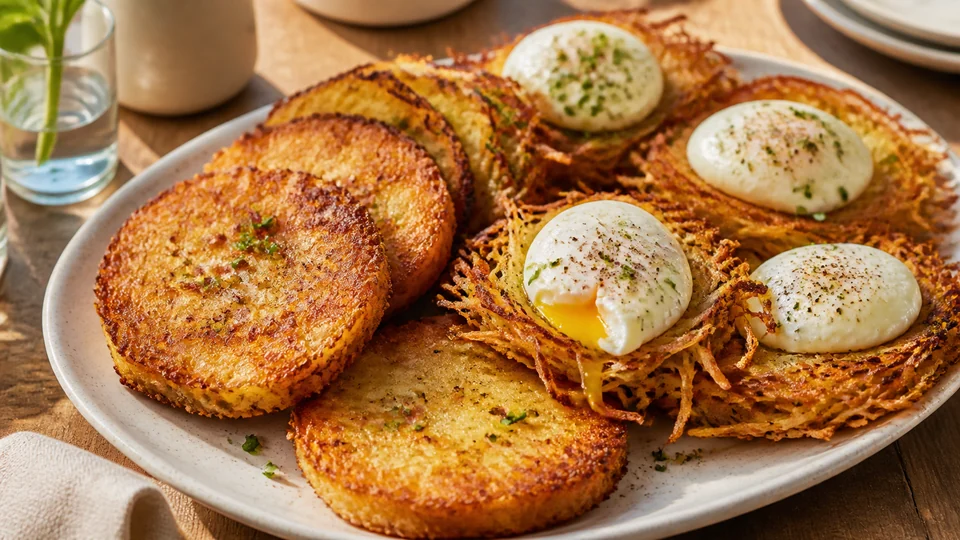
Top a crisp portion with egg, vegetables or a sauce at service. Keep wet toppings separate until the last moment so the crust does not become a soft carrier while waiting on the buffet.

A controlled preparation sequence

The brunch hash brown recipes sequence below connects choose the potato shape and complete recipe, then match the pan area to the intended batch. with turn safely, cook through, drain or rest as directed and add toppings immediately before service. A written order exposes equipment conflicts before heat begins, while separate work zones protect finished shredded skillet hash browns components from raw-food contact.

1. Choose the potato shape and

Choose the potato shape and complete recipe, then match the pan area to the intended batch.

2. Prepare, rinse or dry only

Prepare, rinse or dry only as the source directs and measure the fat.

3. Place one even layer on

Place one even layer on a properly heated surface and leave it undisturbed until the crust cue.

4. Turn safely, cook through, drain

Turn safely, cook through, drain or rest as directed and add toppings immediately before service.

Practical diagnostics

When brunch hash brown recipes misses its target, compare the observed result with shredded skillet hash browns and hash brown as a brunch base controls first. Record one measurable variable—such as cut size, pan area, batch depth, ingredient identity, temperature, order or holding time—before changing the next attempt.

Food-safety and factual boundary

For brunch hash brown recipes, USDA MyPlate, “What Is MyPlate?” supports only its named domain, while USDA FSIS, “Leftovers and Food Safety” supplies a separate boundary. Neither source establishes a Pancake World test record, a medical outcome, or identical behaviour across every appliance and ingredient.

Quantities, timing, yield and storage for brunch hash brown recipes must come from the selected complete recipe. Keep its perishable components under appropriate temperature control; prevent cross-contact around diced breakfast potatoes; read current labels; and discard any batch with an uncertain time or temperature history.

Contextual routes for the next decision

Frequently asked questions

Should shredded potatoes be rinsed?

Follow the selected formula; rinsing and drying are a linked process, not a universal isolated step.

Can hash browns be made ahead?

Use a recipe with explicit cooling and reheating instructions, because covered holding softens the crust.

How do I serve a crowd?

Use multiple pans, a documented sheet method or staged small batches rather than one deep skillet pile.

Choose shredded, diced or patty style

For this brunch hash brown recipes, use a formula written for the exact potato format. Write the exact source, intended servings, ingredient packages, equipment and service time before preparation. That record keeps this decision attached to the route instead of turning a useful idea into an invented universal recipe.

Make the checkpoint observable: note size, moisture, temperature, texture, label statement, pan capacity or timing as relevant to choose shredded, diced or patty style. If the planned condition changes an allergen, formula structure or safe endpoint, move to a complete alternative method rather than correcting several variables by instinct.

Run a source-sized test when practical and preserve what happened. If the result misses the target, change one documented control in a fresh attempt. At handoff, state what was verified, what remains optional and what requires a current package, official source or qualified professional. This makes brunch hash brown recipes repeatable without unsupported promises.

Remove moisture deliberately

For this brunch hash brown recipes, follow the source for squeezing, draining or thawing. Write the exact source, intended servings, ingredient packages, equipment and service time before preparation. That record keeps this decision attached to the route instead of turning a useful idea into an invented universal recipe.

Make the checkpoint observable: note size, moisture, temperature, texture, label statement, pan capacity or timing as relevant to remove moisture deliberately. If the planned condition changes an allergen, formula structure or safe endpoint, move to a complete alternative method rather than correcting several variables by instinct.

Run a source-sized test when practical and preserve what happened. If the result misses the target, change one documented control in a fresh attempt. At handoff, state what was verified, what remains optional and what requires a current package, official source or qualified professional. This makes brunch hash brown recipes repeatable without unsupported promises.

Preheat the correct surface

For this brunch hash brown recipes, match pan, oven or appliance to the recipe. Write the exact source, intended servings, ingredient packages, equipment and service time before preparation. That record keeps this decision attached to the route instead of turning a useful idea into an invented universal recipe.

Make the checkpoint observable: note size, moisture, temperature, texture, label statement, pan capacity or timing as relevant to preheat the correct surface. If the planned condition changes an allergen, formula structure or safe endpoint, move to a complete alternative method rather than correcting several variables by instinct.

Run a source-sized test when practical and preserve what happened. If the result misses the target, change one documented control in a fresh attempt. At handoff, state what was verified, what remains optional and what requires a current package, official source or qualified professional. This makes brunch hash brown recipes repeatable without unsupported promises.

Leave browning space

For this brunch hash brown recipes, divide batches rather than steaming a crowded pan. Write the exact source, intended servings, ingredient packages, equipment and service time before preparation. That record keeps this decision attached to the route instead of turning a useful idea into an invented universal recipe.

Make the checkpoint observable: note size, moisture, temperature, texture, label statement, pan capacity or timing as relevant to leave browning space. If the planned condition changes an allergen, formula structure or safe endpoint, move to a complete alternative method rather than correcting several variables by instinct.

Run a source-sized test when practical and preserve what happened. If the result misses the target, change one documented control in a fresh attempt. At handoff, state what was verified, what remains optional and what requires a current package, official source or qualified professional. This makes brunch hash brown recipes repeatable without unsupported promises.

Add eggs or meat safely

For this brunch hash brown recipes, keep raw components and cooked potatoes separate. Write the exact source, intended servings, ingredient packages, equipment and service time before preparation. That record keeps this decision attached to the route instead of turning a useful idea into an invented universal recipe.

Make the checkpoint observable: note size, moisture, temperature, texture, label statement, pan capacity or timing as relevant to add eggs or meat safely. If the planned condition changes an allergen, formula structure or safe endpoint, move to a complete alternative method rather than correcting several variables by instinct.

Run a source-sized test when practical and preserve what happened. If the result misses the target, change one documented control in a fresh attempt. At handoff, state what was verified, what remains optional and what requires a current package, official source or qualified professional. This makes brunch hash brown recipes repeatable without unsupported promises.

Coordinate with the brunch anchor

For this brunch hash brown recipes, avoid giving every dish the same last-minute burner. Write the exact source, intended servings, ingredient packages, equipment and service time before preparation. That record keeps this decision attached to the route instead of turning a useful idea into an invented universal recipe.

Make the checkpoint observable: note size, moisture, temperature, texture, label statement, pan capacity or timing as relevant to coordinate with the brunch anchor. If the planned condition changes an allergen, formula structure or safe endpoint, move to a complete alternative method rather than correcting several variables by instinct.

Run a source-sized test when practical and preserve what happened. If the result misses the target, change one documented control in a fresh attempt. At handoff, state what was verified, what remains optional and what requires a current package, official source or qualified professional. This makes brunch hash brown recipes repeatable without unsupported promises.

Plan make-ahead honestly

For this brunch hash brown recipes, use only a documented cooling and reheating path. Write the exact source, intended servings, ingredient packages, equipment and service time before preparation. That record keeps this decision attached to the route instead of turning a useful idea into an invented universal recipe.

Make the checkpoint observable: note size, moisture, temperature, texture, label statement, pan capacity or timing as relevant to plan make-ahead honestly. If the planned condition changes an allergen, formula structure or safe endpoint, move to a complete alternative method rather than correcting several variables by instinct.

Run a source-sized test when practical and preserve what happened. If the result misses the target, change one documented control in a fresh attempt. At handoff, state what was verified, what remains optional and what requires a current package, official source or qualified professional. This makes brunch hash brown recipes repeatable without unsupported promises.

Evaluate center and crust separately

For this brunch hash brown recipes, record texture after the real service delay. Write the exact source, intended servings, ingredient packages, equipment and service time before preparation. That record keeps this decision attached to the route instead of turning a useful idea into an invented universal recipe.

Make the checkpoint observable: note size, moisture, temperature, texture, label statement, pan capacity or timing as relevant to evaluate center and crust separately. If the planned condition changes an allergen, formula structure or safe endpoint, move to a complete alternative method rather than correcting several variables by instinct.

Run a source-sized test when practical and preserve what happened. If the result misses the target, change one documented control in a fresh attempt. At handoff, state what was verified, what remains optional and what requires a current package, official source or qualified professional. This makes brunch hash brown recipes repeatable without unsupported promises.

Run a crispness-first hash brown station

A useful Brunch Hash Brown Recipes plan becomes easier when the cook writes the serving time first and works backward. For this version, organize starchy potatoes, salt, a thin film of fat, and a wide hot surface. Check the refrigerator and pantry before shopping, then assign each ingredient one job: main component, contrast, seasoning, or garnish. That small audit prevents a crowded menu in which several dishes compete for the same role. It also makes substitutions deliberate, because the replacement must preserve texture, timing, or balance rather than merely occupy space on the plate.

During preparation, the central rule for Brunch Hash Brown Recipes is to remove excess moisture, spread a shallow layer, and leave the first side undisturbed. Put tools beside the station before heat begins and keep raw preparation separate from ready-to-eat garnishes. Work in measured batches when a pan or tray would otherwise be crowded. Record the useful visual cue for each batch, such as dry surface, browned edge, gentle bubbling, or clean release. A cue is more transferable than an exact minute count because cookware, ingredient size, and burner output differ between kitchens.

For service, arrange small test patties, warmed plates, and finished batches held uncovered for only a short interval. Taste one complete portion, not just an isolated component, because salt, acid, richness, and crunch are judged together. If the plate feels heavy, add freshness before adding more seasoning. If it feels sparse, increase the substantial component rather than multiplying garnishes. Keep hot food hot and chilled food chilled, discard items that have been held unsafely, and use current local food-safety guidance whenever storage time or temperature is uncertain.

After the meal, note what actually limited the Brunch Hash Brown Recipes workflow: refrigerator space, pan area, oven timing, knife work, or final assembly. Preserve the sequence that worked and change only the bottleneck on the next attempt. Leftovers should be cooled and stored promptly in labeled containers, with crisp and moist elements separated when practical. This short review turns a one-off brunch into a repeatable household method while still leaving room to change seasonings, seasonal produce, and portion size for the next group.

Conclusion

Sources

Analytics are optional and can be changed at any time.