Brunch grad party ideas
At Pancakes World, for a graduation brunch party, plan guest flow before recipes. Set one arrival drink point away from the food line, one buffet with plates first and sauces last, a separate dessert surface, and a labelled alternative-food area that reduces cross-contact. Choose one make-ahead main, one cold or room-temperature main, two simple sides, fruit or vegetables, and a small celebratory finish. Work backward from ceremony, travel, photographs, and arrival; assign replenishment and cleanup to named helpers. A calm two-wave buffet is usually easier to manage than every dish appearing at once.
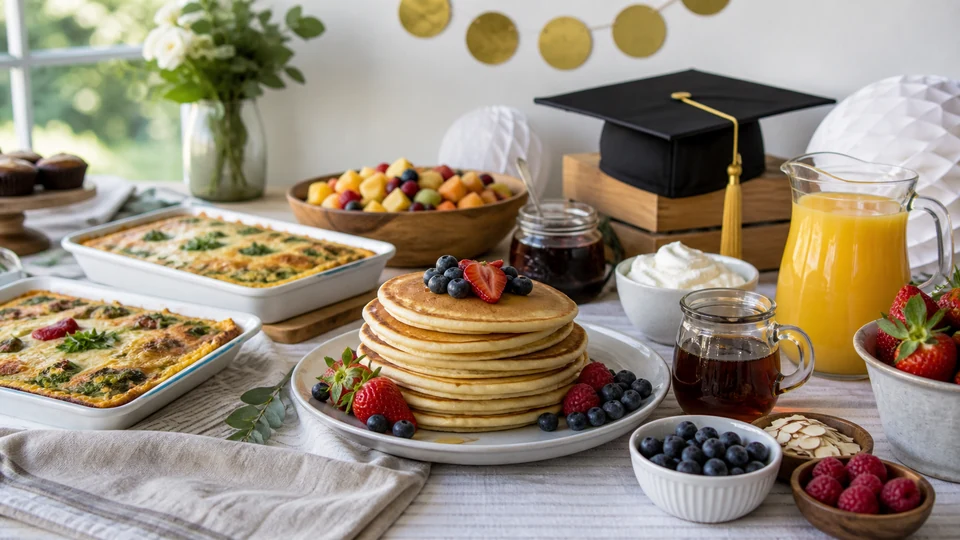
This guide addresses party operations and service architecture. Recipe quantities, prices, venue rules, and nutrition outcomes remain outside its boundary. The brunch hub covers the wider occasion, and Pancake World opens the full editorial collection.
| Guide sections |
|---|
| Put the graduate’s schedule first |
| Map arrival patterns |
| Draw the room before writing the menu |
| Decide between buffet, seated, and open-house service |
For broader context, continue with American Breakfast: Pancakes, Diner Plates and Brunch.
Put the graduate’s schedule first
Record ceremony call time, travel, photographs, clothing changes, guest arrival, and any fixed venue access. Decide whether brunch happens before the ceremony, immediately after, or as an open house later. These are different events even when the menu is similar.
Protect time for the graduate to eat and greet people. A menu that needs the graduate for setup or creates an hour-long photo interruption is badly designed. Assign another adult to food decisions during the event.
Choose a clear opening and closing window. Guests need to know whether they are joining a seated meal or dropping into a buffet. The food plan needs that same clarity for cooking, holding, and leftovers.
Map arrival patterns
List guests who will arrive together from the ceremony, relatives who may come early, and friends who may arrive later. A single large release can work for one arrival wave; an open house needs controlled reserves.
Use two service waves when arrivals are spread. Put out modest amounts for the first group while hot and cold reserves remain under their correct controls. Refresh once at the planned midpoint. Do not mix new food into old trays with different histories.
Create an arrival point where guests can put down gifts, coats, and bags before reaching drinks or food. Congestion at the door should not spill into the buffet.
Draw the room before writing the menu
Mark entrance, gift area, seating, food table, drink station, dessert display, waste return, kitchen door, outlets, and outdoor access if relevant. Draw guest movement with arrows. Remove any layout that makes people cross the line to reach a seat.
Keep drinks away from food. Cups, ice, kettles, and refills create lingering traffic. Put plates at the buffet entrance, the main next, sides after it, sauces near the exit, then napkins and cutlery where they can be collected without reversing.
Place dessert on a separate surface so it can appear for the celebratory moment. This preserves space and prevents guests from balancing cake with the first plate.
Decide between buffet, seated, and open-house service
A buffet suits mixed appetites and a moderate arrival window. It requires a one-direction line, clear labels, serving tools, and someone responsible for replenishment. Keep choices coherent so the queue moves.
A seated family table supports conversation and plated hot food, but it needs an accurate arrival time and enough seats. Use passing dishes that do not require the host to cook while everyone waits.
An open house needs firm handheld or small-plate food, controlled reserves, and repeated clearing. Avoid dishes that deteriorate quickly after plating or require every guest to arrive at once.
Build a five-part operational menu
Choose one make-ahead substantial main, one cold or room-temperature substantial alternative, two sides with genuinely different roles, fruit or vegetables, and a small celebratory finish. A drink station is planned separately.
The make-ahead main might be a tested casserole, baked pancake format, or other complete recipe. The alternative could be sandwiches, wraps, a grain or bean dish, or another source-supported item that meets different needs. Do not make it a token side.
One side can be crisp or fresh; the other can be bread, salad, or another format that does not duplicate the mains. Remove anything that adds an appliance conflict or exists only to make the table look full.
Select the make-ahead main by evidence
Require a complete tested recipe with pan or cooker size, ingredient state, advance permission, cooking method, doneness, yield, and storage. “Can be made ahead” must say what step is done, how it is stored, and how service resumes.
Match the recipe to the kitchen. A casserole that occupies the oven through guest arrival may conflict with a baked side. A slow-cooker dish needs safe placement, an outlet, lid handling, and an approved holding plan.
Without a project-owned test record, no new formula or Recipe schema is justified. Use Article-level planning and keep exact quantities with the chosen source.
Make the cold main a real alternative
A sandwich platter, wrap selection, composed salad with a substantial base, bagel spread, or cold grain-and-bean bowl can serve guests who skip the hot main. Choose one format and label it completely.
Keep fillings firm and assemble only as far ahead as texture and storage allow. Wet sauces can stay separate. Use dedicated utensils for variations and do not place a dietary alternative beneath crumbs or shared toppings from the main.
Release the first platter near arrival and hold reserve portions cold. The cold main should reduce pressure on hot service, not become another complex station.
Use sides to create contrast
If the main is soft and rich, choose a crisp vegetable or fruit side. If both mains are bread-based, do not add several pastries. If potato anchors the casserole, use a side from another food role.
Prepare sides under complete source and safety guidance. Cut fruit and dressed salads need a cold plan. A shelf-stable bread still needs ingredient and allergen labels.
Keep garnishes purposeful. A herb, seed, nut, cheese, sauce, or crunchy topping changes the ingredient record and cross-contact pathway. Offer it separately when that helps.
Create a visible alternative-food area
Ask about dietary and allergy needs before purchasing. Select complete alternatives rather than trying to remove ingredients from one corner of a mixed casserole. Use current labels and manufacturer information.
Place the alternative at the start or on a separate clearly marked surface, with dedicated utensils. Do not put it after a crumb-heavy bread basket or under a shared sauce ladle.
Explain the limits of the preparation environment. Separate service reduces a pathway but does not create certification. When a medical need cannot be supported, provide a sealed or otherwise clearly controlled option.
Design a two-wave buffet
Wave one opens shortly before the principal arrival. Release useful but modest portions of hot main, cold main, and sides. Keep reserve trays controlled. Record the service start for perishable items.
At the planned midpoint, assess actual consumption. Replace, do not top up, platters where histories would mix. Refresh labels and utensils. Clear empty containers before placing new ones.
Wave two should not reproduce the entire original display automatically. Replenish what guests are using and preserve the dessert space. The second wave can be smaller when many guests have already eaten.
Assign helpers by decision
Name a kitchen lead, buffet lead, drink lead, graduate liaison, and cleanup lead. One person can hold two small roles, but every critical decision needs an owner.
The kitchen lead verifies tested recipes and doneness. The buffet lead controls release, labels, utensils, and removal. The drink lead keeps cups and refills away from food. The graduate liaison protects photographs, speeches, and the guest of honour’s meal. The cleanup lead closes service and begins leftovers.
Give each helper a written action and fallback, not “help where needed.” Unclear responsibility creates duplicate replenishment and forgotten cold dishes.
Schedule the previous day
Shop from exact tested recipes and retain packages. Confirm refrigerator space, serving dishes, labels, containers, ice, and tableware. Complete only preparation the sources permit.
Cook raw meat or vegetables in advance only when the method supports cooling and later assembly. Wash and prepare produce under appropriate guidance. Keep components labelled with intended dish and time.
Set the room, gift area, empty buffet, drink equipment, and dessert surface without placing food. Print or write labels from the complete ingredient records.
Schedule party morning
Retrieve only the ingredients needed for the current task. Start the longest tested recipe according to the backward plan. Prepare cold sides and return them to refrigeration. Set tableware and water without blocking the kitchen route.
Complete the hot main’s centre check before moving it to service or supported holding. Do not use warm mode or low oven heat to finish an undercooked dish unless a tested source explicitly controls that process.
Release wave one only when the buffet lead is ready. The first tray should not wait while photographs continue unexpectedly.
Coordinate ceremony and travel disruption
Ceremonies can run late, parking can delay guests, and photo lines can expand. Build a menu that tolerates those social changes without extending unsafe service. Keep reserves controlled and release them when guests arrive.
If a hot dish finishes early, use only its approved holding method and window. If the delay exceeds the plan, cool, store, or replace it according to guidance rather than letting it wait indefinitely.
Keep a cold fallback main available. Guests who arrive before the graduate can receive drinks and a controlled small snack without opening the full buffet.
Keep the drink station independent
Offer water and a limited set of hot or cold drinks according to the group. Put cups, sweeteners, milk or plant beverages, stirrers, and waste together. Retain labels for packaged additions.
Keep cold drinks and perishable additions under appropriate storage. Replenish smaller containers rather than leaving every reserve out. Place hot equipment on stable surfaces with safe cords.
Alcohol service depends on local law, venue, transport, and host decisions; this article does not give legal guidance. A graduation brunch does not require it.
Plan the celebratory focal point
Choose one moment for cake, pastries, pancake display, toast, speech, photo, or another finish meaningful to the graduate. The focal point should be visible but not occupy the buffet before the main meal.
Use a complete tested recipe or verified purchased product. Keep ingredients and allergens documented. If candles, toppers, picks, flowers, or non-food decoration are used, ensure they are suitable and removed before cutting.
Assign one person to gather guests and one to handle the food. The graduate should not manage the transition.
Use labels that help decisions
Name the dish plainly. List major components and provide a route to full ingredient and allergen information. Mark sauces and garnishes individually. Do not use “healthy,” “clean,” “safe,” or “allergy-friendly” as substitutes for evidence.
Place labels before the serving utensil so guests can read before taking food. Keep them visible after replenishment. Do not move a label to a new tray unless it contains the same recipe and product set.
Date the menu record. Packaged formulations can change before another graduation event.
Control hot and cold food
Map every perishable item from storage through preparation, transport if any, service, and leftovers. Tested recipes and FoodSafety.gov govern relevant cooking, holding, cooling, and storage. Venue rules may add controls.
Use small service quantities. Keep reserves in verified hot or cold conditions. Record when waves begin and remove food when its supported plan ends, regardless of speeches or late arrivals.
Do not rely on appearance or smell to repair missing history. Reheating later cannot reverse an uncertain earlier period.
Prepare for indoor and outdoor flow
An indoor-outdoor party needs duplicate waste points, clear doorways, shade or weather cover, and a rule for where food remains. Do not move a buffet outdoors spontaneously without reviewing temperature, insects, wind, surfaces, and electrical safety.
Keep the main food station in the more controllable location. Outdoor seating can receive plates from indoors. If drinks are outside, protect cold control and keep the route away from children’s play or gift tables.
Have a weather fallback that does not require moving hot appliances through guests.
Create a photo-friendly space without using food as a prop
Set a backdrop or clear wall away from the buffet. Guests posing for photographs should not block food or lean over uncovered dishes. Place the graduate’s display, cards, and memorabilia outside the service route.
Take food photographs quickly before service only when this does not delay temperature control. Do not claim a project recipe test from an event image.
Keep the celebratory dessert intact until its planned moment rather than leaving it exposed for photographs throughout brunch.
Manage gifts, cards, and personal items
Place gifts and cards away from drinks, food, and waste. Assign a trusted person to move them if the area fills. Do not use the same table for presents and dessert.
Provide a place for bags and coats so chair backs and food surfaces stay clear. Mark any refrigerator item brought by a guest and confirm its identity before placing it on the buffet.
Personal medication, cameras, and electronics should not share the food-preparation counter.
Close the buffet deliberately
Announce the last service or refresh quietly to helpers. Remove perishable items according to their control plan. Do not keep one tray out because a guest might return after photographs.
Separate safe leftovers into suitable containers, label their history, and cool them promptly. Keep sauces and toppings separate. Discard food whose time or temperature is uncertain.
Clear serving tools and wipe surfaces before dessert or coffee service. This makes the second social phase feel intentional rather than like an abandoned buffet.
Package take-home food only when history is clear
Decide in advance whether take-home portions are allowed and prepare containers. Offer only food whose cooking, service, cooling, and storage history remains controlled. Label it with identity and handling guidance supported by the source.
Do not send warm perishable food on a long journey without an appropriate plan. Do not let guests pack from a tray after its safe service has ended.
The desire to reduce waste does not override uncertainty. When history is missing, discard rather than transferring risk.
Audit the party afterward
Record guest flow, queue points, first and second wave consumption, helper workload, graduate participation, leftovers, and cleanup. Note which dish duplicated another and which alternative was easy to identify.
Separate recipe issues from architecture. A main can cook correctly but fail because sauces blocked the line. A dessert can remain untouched because it appeared before the celebratory moment.
Keep the successful floor plan and timeline with source recipes and labels. Mark any untested change. Future parties can reuse the operations without claiming fixed quantities.
Test the floor plan with empty trays
One or two days before the party, place the actual tables, empty serving dishes, drink equipment, labels, and waste containers. Walk from the entrance to a seat while carrying an empty plate. Ask a helper to move the opposite direction as if returning for a drink. Any collision should be fixed before food appears.
Check reach and height. Guests should not stretch over hot food to reach sauces. Children should not pass beneath cords or hot lids. A wheelchair, walking aid, pram, or older guest may need a wider turn and a seated route that avoids the main queue. Adjust the room for known guests rather than assuming one standard path.
Open refrigerator and oven doors during the rehearsal. A buffet table that blocks an appliance can trap the kitchen lead. Confirm where hot pans land and where lids go. Put a heat-safe mat in its final position.
Use sticky notes for dishes before final labels are ready. If all planned food does not fit without stacking or hiding labels, remove a dish or create a second controlled wave. Do not solve lack of space by moving the drink station back into the food line.
Build the guest communication
The invitation or event note should state the brunch window, whether service is seated or open-house, the broad location, and any response deadline needed for food planning. Ask guests to share dietary or allergy needs privately before the purchasing date. Do not promise that every request can be met before evidence is reviewed.
Give ceremony travelers a realistic arrival cue rather than an exact minute that ignores parking and photographs. If brunch opens only after the graduate arrives, say so. If early relatives are welcome for drinks, make that boundary clear.
For a home event, provide the access information actually needed without publishing private details broadly. For a hired venue, follow its communication and entry rules. This guide does not establish venue capacity, accessibility, or permission.
On the day, use one update channel for genuine changes. Several helpers sending different start times can create an unplanned early crowd and compromise the first food wave.
Plan for children and mixed ages
Mixed-age parties benefit from familiar components and modular portions. Keep at least one substantial item simple enough to identify, with sauce or strong garnish separate. This does not mean creating a completely separate children’s buffet unless the guest needs justify it.
Put child-accessible drinks in stable containers away from kettles and hot appliances. Avoid sharp picks, loose decorations, or small non-food toppers in reach. Adults remain responsible for age-appropriate food and choking considerations; this page does not provide medical feeding guidance.
Reserve some chairs near the food for older guests or anyone who cannot balance a plate while standing. Use serving utensils that do not require strong grip. Ask a helper to plate food when needed so accessibility does not depend on moving through the buffet.
Keep the graduate’s social circle in mind too. A formal seated arrangement can limit movement, while an open house can leave grandparents without a quiet conversation area. Divide the room into energetic and calmer seating zones without fragmenting service.
Coordinate hired, purchased, and homemade food
When part of the menu is catered or bought, record supplier, exact item, collection or delivery time, ingredient and allergen information, storage directions, and who accepts it. Purchased food still enters the party’s temperature and service plan.
Do not assume the delivery tray is suitable for heating, holding, or buffet placement. Follow supplier directions and transfer only into appropriate equipment. Keep item labels with the food. If a delivered ingredient conflicts with the approved plan, use the fallback rather than removing a visible garnish and calling it corrected.
Schedule deliveries outside the ceremony travel bottleneck. Assign someone other than the graduate to receive, inspect, and store them. A late delivery should not leave the kitchen lead abandoning a centre check.
Keep commercial claims narrow. A supplier’s current price, availability, portion description, and menu can change. Verify them for the transaction and do not turn the event record into a permanent recommendation.
Protect the ceremony clothing and keepsakes
Graduation clothing, certificates, flowers, and photo books do not belong beside sauces, steam, or drink refills. Create a clean holding area and identify who is responsible for them during service. The graduate should have a safe place to remove a gown or cap before eating if desired.
Choose food formats with the clothing context in mind. Deep red sauces, overflowing bowls, powdered toppings, and unstable drinks create avoidable risk before photographs. Keep messy optional items separate and provide napkins at both buffet exit and seating.
Do not place edible flowers, decorative greenery, or floral arrangements directly on food unless suitability and handling are established. Ceremony bouquets can carry non-food materials and should remain on the display side.
This operational detail is route-specific practical value: the meal supports the graduation rather than competing with it.
Write the final command sheet
Reduce the full plan to one page for helpers. At the top, list the event clock: kitchen start, first doneness check, wave-one release, graduate moment, wave-two decision, dessert, buffet close, and leftover handoff. Add the names responsible beside each point.
In the middle, draw the service zones and list each dish with its label, serving tool, reserve location, and fallback. Mark hot, cold, immediate-service, or shelf-stable handling as applicable. Do not place recipe quantities on the command sheet unless copied accurately from the tested source.
At the bottom, write the stop conditions: uncertain centre, lost temperature history, conflicting allergen label, failed appliance, unsafe cord route, or missing owner. The named fallback follows each stop.
Give the sheet to helpers before guests arrive and keep the source recipes in the kitchen. A concise operational handoff prevents the party from depending on whispered instructions while the graduate is taking photographs.
Run one verbal rehearsal: each helper states the next action, evidence source, and fallback. Correct ambiguity before cooking starts. If two people believe they own the same task while another task has no owner, rewrite the assignment rather than relying on goodwill during the busiest arrival period.
Frequently asked questions
What makes a graduation brunch feel special?
A clear celebratory moment, food the graduate recognizes, comfortable guest flow, and time to talk matter more than a huge dish count.
How should the buffet flow?
Place plates first, the main and sides next, sauces near the exit, and drinks on another surface. Keep dessert separate until its moment.
Should every dish appear at once?
No. A two-wave buffet keeps reserves controlled, reduces clutter, and supports staggered arrivals.
How many mains are useful?
One make-ahead hot main and one substantial cold or room-temperature alternative usually create enough structure without equipment conflict.
Can guests take leftovers?
Only when the food’s history remains safe and the transport and storage plan are clear. Package from controlled reserves or properly handled leftovers.
What should helpers do?
Assign specific ownership for kitchen decisions, buffet release, drinks, graduate timing, and cleanup rather than asking everyone to help generally.
Explore related Pancakes World guidance on American Pancakes, Maple Syrup, and Maple Syrup Pancakes.
Sources and editorial references
- USDA FoodData Central —
https://fdc.nal.usda.gov/ - FoodSafety.gov food safety charts —
https://www.foodsafety.gov/food-safety-charts - FDA Food Labeling & Nutrition —
https://www.fda.gov/food/nutrition-food-labeling-and-critical-foods