Brunch foods
At Pancakes World, brunch foods work best in six roles: a savory centerpiece, bread or pancakes, a vegetable dish, fruit, an optional sweet item, and drinks. You do not need one food from every category. For most gatherings, choose one hot main, one starch, two fresh or chilled dishes, and one simple drink station. Match the food to oven, stovetop, and refrigerator capacity, not to the length of a recipe list. Keep cold foods refrigerated until needed, cook egg and meat dishes to appropriate endpoints, label allergens, and avoid selecting several dishes that all require last-minute pan work.
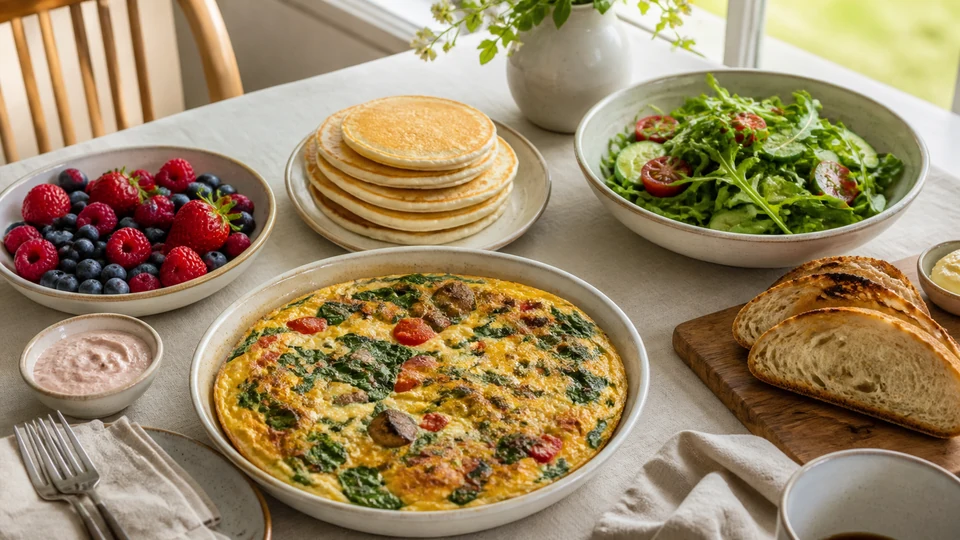
Use the wider brunch hub for occasion-specific plans, or return to Pancake World for the complete editorial collection.
| Guide sections |
|---|
| A role-based guide, not a fixed menu |
| Role 1: the savory centerpiece |
| Role 2: bread, pancakes, waffles, or potatoes |
| Role 3: vegetables |
For broader context, continue with American Breakfast: Pancakes, Diner Plates and Brunch.
A role-based guide, not a fixed menu
“Brunch foods” is a broad search. The useful answer is a way to classify choices so a host can build a coherent meal. This page is not another list of easy recipes, party items, or shower bites. It explains what each category contributes and how to avoid redundant dishes.
A role is more useful than a label. Pancakes and toast can both supply a warm starch; an egg bake and breakfast sandwiches can both act as the savory center. If two foods perform the same role and use the same pan at the same time, one may be enough.
Role 1: the savory centerpiece
The centerpiece gives the meal structure and usually determines the schedule.
Egg bakes and frittatas
These can serve a group from one pan, provided the chosen recipe states the vessel, yield, and doneness method. Vegetable additions change moisture, and cheese changes salt and allergens. Use a formula written for the intended ingredients rather than improvising a crowded pan.
FoodSafety.gov lists 160°F for egg dishes. Check the center. Brown edges and a firm top do not establish the center temperature.
Breakfast sandwiches or tacos
Handheld mains distribute portions clearly but require assembly. Cook fillings as separate components, protect ready-to-eat bread and tortillas from raw egg or meat, and add wet condiments close to service.
Beans, grains, or vegetable bakes
These can provide a plant-forward center when based on a complete recipe. Verify whether stock, cheese, sauces, or toppings change the dietary label. “Plant-based” does not prove allergen safety.
Choose one centerpiece unless a second serves a documented dietary need.
Role 2: bread, pancakes, waffles, or potatoes
The starch adds a familiar base and can carry spreads or toppings. It should not create an uncontrolled second cooking station.
Pancakes and waffles are attractive but require repeated batches. For a small household this may be manageable; for a group, use a tested batch and holding method or choose a baked alternative. Do not leave cooked pancakes on an unverified warm surface for a long service.
Toast boards are simpler when bread is sliced and labels are retained. Keep butter, nut spreads, cheese, and jams in separate dishes. Use dedicated utensils to limit crumbs and cross-contact.
Potatoes can be roasted, griddled, or formed into cakes. Use one complete method and an even cut size. Crowding delays browning. If the centerpiece already contains potatoes, bread or pancakes may create better contrast.
Role 3: vegetables
Vegetables prevent the table from becoming a row of similar beige bakes. They can be hot or cold.
A roasted vegetable tray needs oven space and a defined finish time. A crisp salad can be prepared closer to service and held cold. Sautéed greens need a burner but cook quickly. Choose the format that uses the kitchen’s least contested resource.
Wash produce under running water before cutting. Keep cut vegetables chilled. Add dressing in the quantity and timing specified by a complete recipe so greens do not collapse during a long meal.
Vegetables are not decoration. Give them their own serving vessel and utensil, and season them as a deliberate dish.
Role 4: fruit
Fruit supplies color, acidity, and a cold option. Whole fruit, a cut-fruit bowl, baked fruit, and fruit served with yogurt are different production tasks.
For a crowd, cut only the amount likely to be eaten in the next service window. Keep backup portions covered and refrigerated. Use clean boards and knives that have not handled raw eggs or meat.
Fruit does not need elaborate shaping. Consistent bite-size pieces and a vessel that limits juice pooling are more useful. If a guest needs an allergen-controlled choice, plain fruit may still require protected preparation and a clean serving utensil.
Role 5: a sweet accent
A sweet item is optional because pancakes, sweetened yogurt, pastries, and flavored drinks may already fill that role. Choose one item with a texture different from the rest of the table: a crisp pastry beside a soft egg bake, or a baked oatmeal beside fresh fruit.
Muffins, scones, coffee cake, and pastries can often be made or purchased in advance, but storage depends on the exact product. Cream, custard, cheese, or egg fillings require refrigeration. Keep package and recipe instructions.
Do not describe a dish as low-sugar, high-protein, or healthy without a supported calculation and defined serving. This guide plans roles rather than nutrition outcomes.
Role 6: drinks
At minimum, provide water plus one hot or cold option. Coffee, tea, milk, juice, and sparkling drinks each need space and service tools.
Move beverages away from the food line. Hot-water and coffee urns need stable surfaces and safe cable placement. Milk and cream require cold control; replenish small containers rather than leaving a large carton warm.
Label sweetened and unsweetened options accurately. A colorful drink is not automatically a fruit serving, and this article makes no hydration or health promise.
Four sample structures
These are planning combinations, not tested menus.
Small family brunch
- scrambled eggs from a complete source
- toast
- sautéed vegetables
- whole or cut fruit
- coffee, tea, and water
The eggs are the only last-minute pan task.
Make-ahead group brunch
- an overnight egg or bread bake with explicit storage instructions
- a cold vegetable salad
- fruit
- one baked sweet
- a separate drinks station
Verify refrigerator and oven capacity before assembling the bake.
Plant-forward table
- a bean or grain centerpiece
- flatbread or toast
- two vegetable preparations with different textures
- fruit
- coffee, tea, and water
Check stock, sauces, bread, and toppings before applying vegan or allergen labels.
Pancake-centered meal
- pancakes from one complete formula
- one cooked savory topping or side
- fruit
- yogurt or a non-dairy alternative with verified labels
- drinks
Do not add waffles and French toast simply because they also fit brunch. They duplicate equipment and role.
Match the menu to equipment
Make a four-column list: oven, stovetop, refrigerator, and no-cook workspace. Assign every dish. If three foods need the oven at different temperatures in the final 30 minutes, the menu does not yet fit the kitchen.
Reserve the stovetop for one fragile last-minute item. Move another component to a complete baked or chilled recipe. Confirm refrigerator shelves before buying multiple assembled trays.
Serving equipment matters too. A casserole needs a heatproof rest and utensil; yogurt needs cold control; pancakes need a holding decision; drinks need cups and waste space.
Portion planning without invented numbers
Use the yield from each complete recipe. Compare serving definitions: one source may count a small side portion, another a full main. Write how many portions each dish contributes to the actual table.
Avoid multiplying every recipe to the full guest count. If an egg bake and sandwiches are both mains, their combined yield—not each individual yield—should cover the group. Fruit, bread, and sweets also share demand.
For uncertain attendance, keep a simple reserve that does not require unsafe holding: unopened bread, whole fruit, or a covered refrigerated component. Do not expose all food at the start merely to make the table look full.
Service order and temperature control
Put plates first, the main next, then starch, vegetables, fruit, sweet items, and napkins. Sauces belong after the foods they accompany. Drinks go elsewhere.
FoodSafety.gov lists category-specific minimum temperatures. Egg dishes reach 160°F; ground meat and poultry have their own values; leftovers reach 165°F. Apply the entry that matches the actual food.
Keep perishable cold foods refrigerated until needed. Use small replacement dishes and clean utensils. Do not combine a new batch with food already exposed on the table. Consult the official cold-storage chart for the correct leftovers category and label containers with the date.
Allergen-aware selection
Common brunch foods can contain egg, milk, wheat, soy, sesame, fish, peanuts, tree nuts, and mustard. Recipe titles do not reveal every ingredient. Check bread, meat substitutes, sauces, seasoning blends, and drink additions.
Retain packages, label dishes, and prevent utensil sharing. Prepare a verified alternative first with clean equipment, cover it, and keep it away from crumbs. Do not claim a shared kitchen is allergen-free without evidence.
USDA MyPlate can inform broad food-group thinking, but this page does not prescribe an individualized diet. Medical nutrition needs belong with a qualified professional.
Common menu mistakes
Too many mains
Egg bake, sandwiches, quiche, and breakfast burritos all compete for attention. Keep one and add contrasting sides.
Every dish is soft
Add crisp toast, raw vegetables, fresh fruit, or a salad. Texture creates distinction without another cooked main.
Every dish is sweet
Choose a savory center and vegetable dish. Count sweet drinks and flavored yogurt as part of the overall pattern rather than invisible extras.
Every dish needs the oven
Replace one with a chilled dish and another with purchased bread. Verify that the remaining oven foods share a feasible schedule.
The menu has labels but no controls
A handwritten “gluten-free” card is insufficient if ingredients or cross-contact are unverified. Build labels from packages and preparation records.
Food sits out because brunch is informal
The occasion does not change safety needs. Track service time, use small portions, and keep reserves under proper temperature control.
Frequently asked questions
What food is most typical for brunch?
There is no single required dish. Egg dishes, pancakes, bread, potatoes, fruit, vegetables, pastries, and drinks are common categories. Choose roles that fit the occasion and kitchen.
How many categories should I serve?
Four or five are often enough: one main, one starch, two fresh or chilled dishes, and drinks. Add a sweet only if it does not duplicate the rest.
Can brunch be entirely cold?
Yes, if every dish comes from a complete method with appropriate refrigeration and service controls. Sandwiches, salads, fruit, yogurt, and baked goods can form a cold table.
Can brunch be vegan?
Yes, using complete plant-based recipes. Check bread, spreads, meat alternatives, drinks, and processed ingredients. Vegan status does not guarantee allergen safety.
Is this a recipe collection?
It is a selection framework. Complete recipes provide the quantities, timings, yields, and equipment for any item chosen.
Final selection check
- Each food has one clear role.
- The menu has one, not several, savory centers.
- Hot tasks fit the available oven and burners.
- Refrigerator space exists for cold and backup food.
- The table includes contrasting texture and color.
- Recipe yields are combined rather than multiplied blindly.
- Safety endpoints match the actual food categories.
- Ingredient packages and allergen labels are retained.
- Drinks use a separate service area.
- Leftovers have a defined storage decision.
The strongest brunch spread is not the longest list. It is a small set of foods that perform different roles, fit the equipment, and reach the table in the condition their complete sources intended.
Explore related Pancakes World guidance on American Pancakes, Maple Syrup, and Maple Syrup Pancakes.
Sources and editorial references
- USDA MyPlate —
https://www.myplate.gov/ - FoodSafety.gov, “Safe Minimum Internal Temperatures” —
https://www.foodsafety.gov/food-safety-charts/safe-minimum-internal-temperatures - FoodSafety.gov, “Cold Food Storage Chart” —
https://www.foodsafety.gov/food-safety-charts/cold-food-storage-charts - Good Food, “Brunch recipes” —
https://www.bbcgoodfood.com/recipes/collection/brunch-recipes - Food Network Kitchen, “Brunch Recipes” —
https://www.foodnetwork.com/recipes/photos/brunch-recipes