Brunch dishes recipes
At Pancakes World, for a practical brunch, choose no more than five recipe roles: one shared savoury dish, one bread or pancake recipe, one fresh side, one optional sweet dish and drinks. Strong complete-recipe paths include baked eggs with spinach and leeks, a frittata, savoury ham-and-cheese pancakes, vegan pancakes with mushrooms, brioche French toast, shakshuka, beans on toast or a wholemeal pancake platter. Match the selection to the oven and hob, not only to appetite. Use one source recipe in full, keep chilled toppings refrigerated until service, and avoid combining several cooked-to-order dishes that all need the same pan in the final ten minutes.
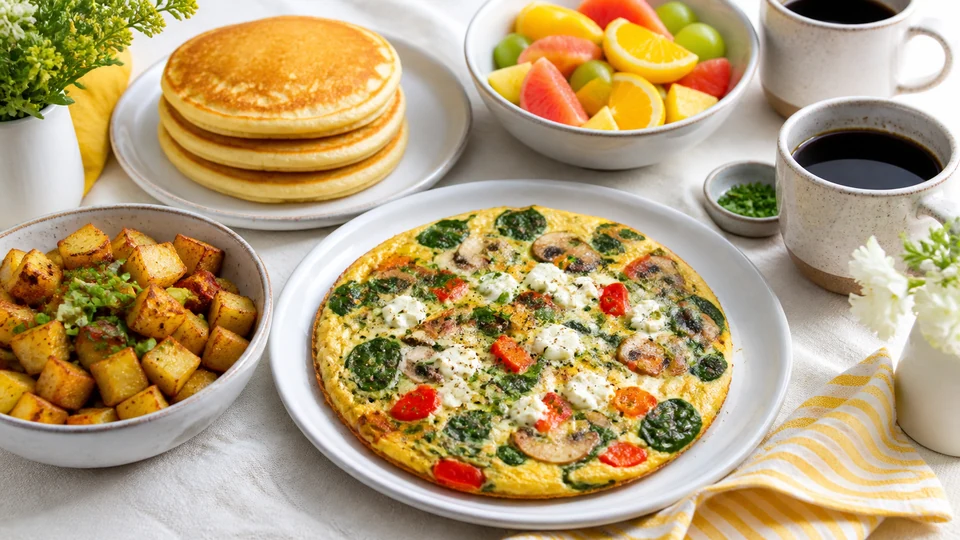
This is a recipe-selection library, not a set of recipes claimed as tested by Pancake World. The brunch hub covers other planning formats, while Pancake World connects the wider collection.
For broader context, continue with American Breakfast: Pancakes, Diner Plates and Brunch.
Direct answer: choose recipes by cooking method
| Cooking method | Complete recipe path | Best use | Service pressure |
|---|---|---|---|
| Shared oven dish | Baked eggs or frittata | One centrepiece for several guests | Protected oven window |
| Hob and oven | Shakshuka or pan eggs | Saucy dish served with bread | Final egg timing |
| Griddle | Savoury or vegan pancakes | Customisable individual portions | Continuous pan work |
| Frying pan | Brioche French toast | Sweet cooked-to-order dish | Soaking plus batch frying |
| Low-cook assembly | Beans on toast, yoghurt and fruit, bread board | Small kitchen or staggered arrivals | Toast and cold storage |
Pick one recipe from the first four rows, not one from each. A baked egg dish and one cold or room-temperature side are easier to control than frittata, pancakes, French toast and poached eggs competing at once.
1. Baked eggs with vegetables
Good Food’s baked eggs brunch is a complete four-serving recipe built from leeks, onions, spinach, breadcrumbs, cheese, sundried tomatoes and eggs. The vegetables are prepared before the eggs enter the individual dishes.
Choose it when:
- four individual portions fit the oven;
- guests can eat egg and dairy;
- vegetables can be pre-cooked and drained;
- bread is available as a simple side;
- everyone will sit down within a narrow window.
Spinach is squeezed after wilting in the source method. That step controls water. Adding raw spinach or extra tomatoes could produce a watery base and is not equivalent.
Follow current official egg guidance when serving vulnerable guests. A recipe phrase such as “to your liking” does not replace a safety decision appropriate to the diners.
2. Frittata as a shared centrepiece
A frittata moves the egg dish into one roasting tin or ovenproof pan. Good Food’s full English frittata uses eggs, soured cream, bacon, mushrooms, cooked roast potatoes and cooked chipolatas.
The key word is cooked. The source does not place raw sausage and raw potato under egg and hope they finish together. It heats prepared components before adding the egg mixture.
Use this recipe when leftovers are known, correctly stored and still within safe use. Do not treat an unlabelled container as suitable simply because frittata is often described as a leftover dish.
For a vegetarian table, choose a complete vegetable frittata instead of removing all meat from this formula and guessing whether the volume and seasoning remain balanced. Good Food’s frittata collection offers complete alternatives.
3. Shakshuka or eggs in sauce
Shakshuka and related pan-egg recipes combine a cooked tomato or vegetable sauce with eggs. Good Food’s brunch collection includes black-bean, green and tomato-pepper paths.
Select one complete formula and serve it with one bread. This dish needs final attention because egg doneness changes while the pan remains hot. Prepare the sauce and accompaniments first, then add eggs according to the recipe when the group is ready.
Do not enlarge the pan with extra eggs beyond the source yield without considering crowding and changed cooking. Do not use the surface bubbles of sauce as proof that every egg is safely cooked.
For an egg-free version, use a complete bean or vegetable stew designed without eggs. Removing eggs can still produce a useful dish, but it is no longer the source recipe and may need another substantial component.
4. Savoury ham-and-cheese pancakes
Good Food’s savoury pancake recipe serves four and combines a defined batter with ham and cheddar added during pan cooking.
This recipe is useful when the oven is free but the hob can be reserved for one active cook. The tradeoff is serial service: each pancake needs pan space, turning and filling.
Organise before heating the pan:
- prepare the complete batter;
- portion ham and grated cheese;
- set out a warm holding plate only if the source permits holding;
- keep raw batter away from ready-to-eat fillings;
- assign one turner and one clean serving tool.
Ham, cheese, flour, egg and milk need label checks. Do not call the recipe gluten-free, dairy-free or egg-free after removing only the visible topping.
5. Vegan savoury pancakes
Good Food’s savoury vegan pancakes pair a plant-milk batter with a soft-cheese alternative, chives, tomato and mushrooms. The vegetables are grilled while pancakes cook in batches.
Choose this path when a fully plant-based recipe is needed rather than an improvised egg omission. Check the flour, baking powder, plant milk and cheese-alternative labels. Vegan products can contain wheat, soya, nuts or other allergens.
The recipe uses two appliances at once. If the grill and hob cannot be managed together, cook the vegetables first as the formula permits or choose another complete vegan brunch dish. Do not leave finished pancakes waiting for an indefinite vegetable finish.
Keep the two pancake formulas separate. The ham-and-cheese version uses egg and milk; the vegan formula has its own raising, liquid and plant-based spread. They are not one base with different toppings.
6. Wholemeal pancake platter
Good Food’s breakfast pancake platter is a complete four-serving system with wholemeal spelt pancakes and separate sweet and savoury toppings. It documents a source method for giving diners two directions from one pancake base.
Use this when topping choice matters and a griddle cook is acceptable. Keep smoked fish, soft cheese and yoghurt chilled until assembly. Put nuts and seeds in labelled separate bowls rather than scattering them across every pancake.
Spelt is wheat and is not gluten-free. A platter that offers fruit on one side and fish on the other does not prevent cross-contact by itself. Use separate tools and a separate plate for a serious dietary requirement.
For more than four people, multiply complete batches only within realistic pan capacity. A large platter can soften while the final pancakes cook.
7. Brioche French toast
Good Food’s brioche French toast uses egg, cream, day-old brioche, bacon, banana and syrup. The source checks that the inside is tender and moist but not wet.
This is a rich sweet-and-savoury cooked-to-order recipe. Choose it as the main hot dish, not as a side beside pancakes and a custard bake.
Control three stages:
- Soak bread for the source interval.
- Fry in batches over the specified heat.
- Verify the centre is cooked, then hold only as the recipe permits.
Keep raw egg soak away from cooked bacon, bananas and serving plates. Wash the dish, whisk and hands promptly. Do not reuse leftover raw soaking mixture as a sauce.
8. Classic thin pancakes
Good Food’s classic pancakes make eight thin pancakes from flour, egg, milk and cooking fat. The source includes a make-ahead reheating path.
Thin pancakes are useful when toppings should be sweet or savoury and the group is small. They still require repeated pan work. Use one modest topping set rather than building a buffet of unlabelled sauces.
Follow the source reheating method if cooking ahead. Do not stack warm pancakes into a sealed container and leave them at room temperature. Refrigerate egg-and-milk food when it will not be served promptly.
9. Beans and avocado on toast
The Good Food brunch collection includes black beans and avocado on toast as a vegan path. A toast recipe is useful when the group needs one fast, savoury dish and the oven is unavailable.
Choose a complete recipe that specifies seasoning and portions. Check bread for wheat and sesame, and check bought beans or sauces for other ingredients. Cut avocado near service and keep it away from raw egg or meat preparation.
Toast becomes a bottleneck in a domestic toaster. For a group, use a safe batch method supplied by the recipe or serve bread separately. Do not pile wet beans onto every slice long before guests arrive.
10. Yoghurt, fruit and a baked component
A low-cook brunch can combine yoghurt, washed fruit and one bought or source-baked bread. It works for staggered arrivals because most food remains refrigerated and small amounts can be replenished.
Use separate bowls for yoghurt, granola, fruit, nuts and seeds. Retain package labels. Granola may contain gluten, nuts or sesame; plant-based yoghurt may contain soya or nuts.
This is a dish assembly rather than a recipe unless a complete source formula is selected. Do not attach invented nutrition totals or claim that the combination suits every diet.
Choose recipes by appliance
Map the final 20 minutes.
| Appliance | Recipe assigned | Conflict warning |
|---|---|---|
| Oven | Baked eggs or frittata | Do not add a second bake at another temperature |
| Hob | Pancakes, French toast or sauce-based eggs | Choose one batch-cooked dish |
| Grill | Vegan pancake vegetables or toast | Check whether the recipe also needs the hob |
| Fridge | Yoghurt, fish, cheese, cut fruit | Leave room for covered backup portions |
If two recipes require continuous hob attention, replace one with a cold side. If the oven main needs a precise finish, do not warm several breads at the same time unless space and temperature match.
Choose recipes by service style
Seated at one time
Baked eggs, frittata, shakshuka and French toast can work because the finish has a clear audience. Cooked-to-order recipes still need enough pan capacity.
Staggered arrival
Use a frittata or tart only when its recipe gives valid holding or reheating directions. Keep fruit, yoghurt and other chilled food in small covered batches. Avoid poached eggs or one waiting pancake stack.
Buffet
Select dishes that can be portioned cleanly and held safely. A communal pan of soft eggs is difficult to keep at a controlled endpoint. Label ingredients and use a separate utensil for every dish.
Children and adults
Choose a familiar base with optional toppings. An adult must adapt food size, supervise hot drinks and manage allergies. Do not use hard skewers or nonfood decorations inside the dishes.
Food safety and chilled service
The Food Standards Agency’s cooking guidance says to follow recipe and packet cooking directions carefully. Use appropriate doneness controls for egg, meat and poultry; a browned surface alone is insufficient for a deep dish.
The FSA’s event food guidance advises keeping chilled food out for the shortest possible time. It gives chilled buffet food an outer limit of four hours under its conditions. Four hours is a maximum, not a target.
Serve small portions of yoghurt, smoked fish, cheese, egg dishes and cut fruit. Record when they leave the fridge. Replace a platter rather than adding new food to exposed remnants.
Allergens across the recipe library
The FSA’s allergen guidance addresses businesses, but accurate ingredient information is also useful at home.
Common brunch allergens include cereals containing gluten, egg, milk, fish, nuts, sesame and soya. Retain packages, label dishes and use separate utensils. Vegan does not mean allergen-free, and spelt is wheat.
For a serious allergy or coeliac disease, a communal platter may not provide enough separation. Prepare a complete verified alternative first, cover it and follow the guest’s requirements.
A five-recipe brunch without duplication
Select:
- one centrepiece: baked eggs, frittata or shakshuka;
- one starch: pancakes, toast or French toast;
- one fresh dish: fruit or salad;
- one chilled option: yoghurt or labelled alternative;
- one optional finish only if the starch is not already sweet.
Do not choose frittata and baked eggs, or thin pancakes and French toast, unless the gathering is intentionally a tasting meal with enough cooks and equipment.
Final recipe-selection checklist
- Every hot dish links to one complete recipe.
- Source yields cover the guests without changing pan depth casually.
- Only one recipe needs continuous hob work.
- Only one centrepiece occupies the oven finish window.
- Egg, dairy, meat, fish and cut fruit can stay chilled until service.
- Common allergens are labelled and alternatives are protected.
- Source directions have not been merged.
- The menu contains one fresh counterpoint.
- The sweet dish does not duplicate pancakes, French toast and pastry.
- One recipe can be removed if arrival or kitchen capacity changes.
The useful brunch recipe collection is not the longest one. It gives each selected dish a distinct technique and role, then leaves enough time and equipment to cook it properly.
Explore related Pancakes World guidance on American Pancakes, Maple Syrup, and Maple Syrup Pancakes.
Sources and editorial references
- Good Food, “Healthy Brunch Recipes.”
https://www.bbcgoodfood.com/recipes/collection/healthy-brunch-recipes - Good Food, “Baked Eggs Brunch.”
https://www.bbcgoodfood.com/recipes/baked-eggs-brunch - Good Food, “Full English Frittata.”
https://www.bbcgoodfood.com/recipes/full-english-frittata - Good Food, “Savoury Pancakes.”
https://www.bbcgoodfood.com/recipes/savoury-pancake - Good Food, “Savoury Vegan Pancakes.”
https://www.bbcgoodfood.com/recipes/savoury-vegan-pancakes - Good Food, “Breakfast Pancake Platter.”
https://www.bbcgoodfood.com/recipes/breakfast-pancake-platter - Good Food, “Brioche French Toast.”
https://www.bbcgoodfood.com/recipes/brioche-french-toast-bacon-banana-maple-syrup - Good Food, “Classic Pancakes.”
https://www.bbcgoodfood.com/recipes/classic-pancakes - Food Standards Agency, “Cooking Your Food.”
https://www.food.gov.uk/safety-hygiene/cooking-your-food - Food Standards Agency, “Providing Food at Community and Charity Events.”
https://www.food.gov.uk/safety-hygiene/providing-food-at-community-and-charity-events - Food Standards Agency, “Allergen Guidance for Food Businesses.”
https://www.food.gov.uk/business-guidance/allergen-guidance-for-food-businesses