Brown rice flour pancakes vegan: a source-led single-flour guide
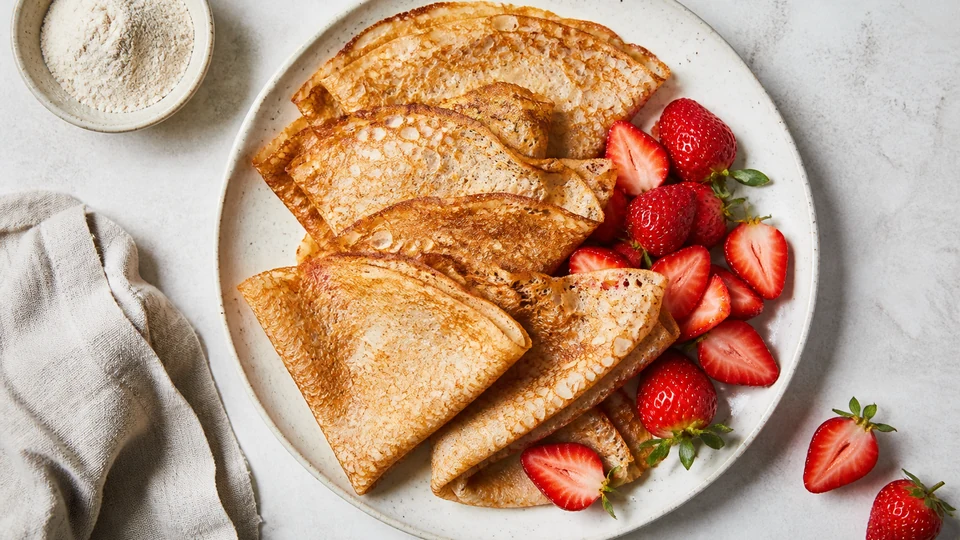
At Pancakes World, use the LifeSource Natural Foods brunch booklet's vegan banana pancake formula: whisk 1 cup brown rice flour with 2 teaspoons baking powder and 1/4 teaspoon salt; stir in 2 ripe bananas mashed smooth, 1 cup vanilla plant-based milk, 2 tablespoons melted coconut oil and 1 tablespoon apple cider vinegar. Portion with a 1/4-cup measure onto a skillet preheated to medium and cook 2 to 4 minutes per side, until golden and cooked through. The source lists 10 pancakes. This is a source formula reviewed by the editorial platform , not a Pancake World kitchen test, and its yield and timing remain attributed rather than guaranteed.
| Guide sections |
|---|
| Direct answer for brown rice flour pancakes vegan |
| Evidence boundary |
| What the reader needs to know |
| Practical options and examples |
For broader context, continue with Healthy Pancake Guides.
Direct answer for brown rice flour pancakes vegan
The formula's unique feature is that brown rice flour is the only flour. It is not a commercial gluten-free blend and does not use wheat flour, starch blend, xanthan gum, egg or dairy. Preserve the banana, plant beverage, oil, vinegar and baking powder system together for the first batch. A cup of brown rice flour cannot be dropped into an unrelated wheat pancake recipe with a promise of identical behavior.
Evidence boundary
The LifeSource recipe booklet is the primary source because it supplies a complete vegan formula, explicit brown rice flour quantity, method, portion, range and yield. A separate Cheap Lazy Vegan recipe shows a different three-ingredient rice-flour model made from rice flour, plant milk and bananas. King Arthur Baking's packaged gluten-free pancake mix provides a useful label contrast: brown rice flour may lead its ingredient list, but that product also contains potato starch, tapioca starch, rice flour, sugar, leavening, xanthan gum and other ingredients. It is not the same as a bag of brown rice flour.
FDA sources set two boundaries that the culinary recipes do not: flour is raw and should not be tasted in uncooked batter, and a “gluten-free” claim on a packaged food has a specific regulatory meaning. USDA Food Safety and Inspection Service supplies the general leftover-storage window.
This page does not calculate nutrition, make medical recommendations or claim a home batch is certified gluten-free. It does not infer a brown-rice-flour brand, banana weight, pancake diameter, internal temperature or texture result that the primary source does not publish.
Explore related Pancakes World guidance on American Pancakes, American Breakfast: Pancakes, Diner Plates and Brunch, and Maple Syrup.
Sources and editorial references
LifeSource's “This Is How We Brunch” booklet attributes its Vegan Banana Pancakes to Sylvia Curry and states that the recipe makes 10 pancakes. The full ingredient list is:
- 1 cup brown rice flour
- 2 teaspoons baking powder
- 1/4 teaspoon salt
- 2 ripe bananas, mashed smooth
- 1 cup vanilla plant-based milk
- 2 tablespoons coconut oil, melted
- 1 tablespoon apple cider vinegar
- optional fresh fruit, jam or maple syrup for serving
Nothing in the source says to add sugar, flax, egg replacer, starch or xanthan gum. Nothing says to replace the brown rice flour with cooked rice. The first attempt should use the stated system rather than trying to make it resemble a different gluten-free pancake.
Equipment
- medium mixing bowl
- whisk for the dry ingredients
- separate bowl or wide plate for mashing banana
- fork or masher
- dry and liquid measuring tools
- heat-safe container for melted coconut oil
- flexible spatula or spoon
- skillet or griddle
- 1/4-cup measure
- broad, thin turner
- rack or plate for cooked pancakes
Use a bowl large enough to fold the wet ingredients through the flour without throwing raw flour over nearby ready-to-eat toppings. Melt the coconut oil without overheating its container and handle it according to the appliance instructions used.
- Verify the ingredient identities. The flour should be brown rice flour, not a gluten-free blend, sweet rice flour, rice starch, brown rice protein or cooked brown rice. Confirm that the plant beverage and serving ingredients meet the intended vegan and allergen requirements.
- Prepare the bananas. Peel two ripe bananas and mash them smooth. The primary source gives a fruit count but no weight or cup volume, so do not invent either as an official equivalent.
- Melt the coconut oil. Measure 2 tablespoons after it is liquid enough to measure accurately. Let it cool from very hot to comfortably warm before it meets the other ingredients; the source does not ask the cook to heat the batter.
- Combine the dry ingredients. In the medium bowl, whisk 1 cup brown rice flour, 2 teaspoons baking powder and 1/4 teaspoon salt. Break up visible flour clumps and distribute the leavener.
- Add the wet system. Add the mashed bananas, 1 cup vanilla plant-based milk, melted coconut oil and 1 tablespoon apple cider vinegar.
- Stir just until combined. The source explicitly says some lumps are acceptable. Scrape the bowl for dry pockets, but stop once the ingredients are evenly brought together.
- Preheat the skillet. Bring the cooking surface to medium heat before portioning. The source does not name a pan fat for the skillet, so use a suitable nonstick surface or a minimal verified vegan pan fat only if the equipment requires it; do not present that as part of the published formula.
- Cook one test portion. Measure 1/4 cup batter onto the skillet. Keep the rest of the batter unchanged while the test shows whether the heat is compatible with the portion.
- Use the source timing as a range. Cook the first side within the published 2-to-4-minute range while watching for a golden underside and enough set structure to turn.
- Turn once. Slide a broad turner underneath, flip carefully and cook the second side within the same source range.
- Check the center. The source requires the pancakes to be cooked through but gives no internal temperature. Open the first pancake if needed; do not decide from outside color alone.
- Repeat consistently. Hold the 1/4-cup portion and heat steady unless the first pancake shows a specific reason to change heat.
- Serve or cool promptly. Use fresh fruit, jam or maple syrup if desired and if labels fit the eater. Handle uneaten pancakes as leftovers rather than leaving them beside the warm skillet indefinitely.
This sequence paraphrases the primary source and adds conservative observation points. The additions are process controls, not evidence of a Pancake World test.
What the reader needs to know
Brown rice flour and a brown-rice-based mix are not synonyms
The primary recipe uses one ingredient called brown rice flour. A packaged mix can contain brown rice flour plus several other flours, starches, sweeteners, gums, leaveners and flavor ingredients.
King Arthur Baking's Classic Gluten-Free Pancake Mix label illustrates the distinction. Its ingredient panel begins with whole-grain brown rice flour but then lists potato starch, tapioca starch, rice flour, cane sugar, baking powder, flavors, salt, a vitamin and mineral blend, and xanthan gum. Its preparation also calls for egg, fat and milk. Following that package is following a mix formula, not the LifeSource single-flour vegan recipe.
Read the front and the ingredient panel. If the bag says “pancake mix,” do not measure it as plain brown rice flour unless its own directions say to do so. If the bag says “sweet rice flour” or “glutinous rice flour,” it is a different product name despite the word rice.
The banana is part of the batter system
Two ripe bananas are not a decorative add-in here. They make up a substantial part of the wet mixture and solids. Omitting them, adding them after the batter is already balanced, or replacing them with an unmeasured puree creates a different recipe.
Because the source gives count rather than weight or volume, natural banana variation remains an evidence boundary. If repeatability matters, a cook may record the peeled weight or mashed volume of a personal batch. That private observation does not become a published source quantity.
Vanilla plant beverage is specified
The source says vanilla plant-based milk. That wording means the beverage contributes both liquid and flavor. An unsweetened unflavored beverage may change sweetness and aroma; a sweetened product may add more sugar. This guide does not promise identical results across products.
Check the package for vegan suitability and allergens. Common plant beverages may be based on soy, almond, oat, coconut, pea or blends, and ingredient panels can include other components. “Plant-based” does not identify every allergen.
Coconut oil is in the batter
The two tablespoons belong in the batter. Do not silently redirect all of it to the skillet. Measure it melted, then stir it through with the banana, beverage and vinegar.
Coconut oil can firm when it meets cold ingredients. If the plant beverage came directly from a cold refrigerator, visible small oil flecks can reflect a temperature difference. Do not keep heating the full batter on the stove; that is not the source method.
Vinegar is measured, not guessed
The primary formula uses 1 tablespoon apple cider vinegar. Preserve the ingredient and amount. The article does not claim that any acid will be identical or instruct the cook to increase vinegar for more rise.
Baking powder is the named leavener
The formula uses 2 teaspoons baking powder and does not list baking soda. Confirm the container identity before measuring. Baking soda is not an abbreviated name for baking powder, and the guide does not provide a conversion.
Practical options and examples
Choosing the right approach
Choose the LifeSource single-flour approach when:
- the available ingredient is plain brown rice flour;
- banana is acceptable and desired;
- the batter needs to be egg-free and dairy-free through verified product selection;
- vanilla plant beverage and coconut oil fit the eater;
- a 1/4-cup griddle pancake is the intended format;
- the cook wants a complete published formula rather than a general substitution rule.
Choose a different source when one of those conditions cannot be met. A banana-free target needs a banana-free formula. A coconut-free requirement needs a source-tested fat system or qualified professional guidance appropriate to the allergy context. A commercial pancake mix should be prepared from its own current package directions.
The simpler Cheap Lazy Vegan model uses 1 cup rice flour, 1 cup plant milk and 2 ripe bananas blended smooth, then cooks larger 1/2-cup portions in oil or vegan butter. It permits brown or white rice flour. That is evidence for a separate three-ingredient style, not permission to remove baking powder, vinegar or coconut oil from the LifeSource formula while keeping its yield and timing.
Flour identity checklist
Before opening the bag, answer:
- Does the product name say brown rice flour?
- Is it plain flour or a multi-ingredient baking mix?
- Does the ingredient panel list only the expected flour, or several starches and additives?
- Does the package carry the gluten-free labeling needed by the eater?
- Are there facility or cross-contact statements relevant to the household?
- Is the product within its date and stored as its label requires?
That check prevents the most consequential category error on this route: treating every brown-rice-based powder as the same ingredient.
Gluten-free labeling without overpromising
Rice is not wheat, rye or barley, and FDA says rice can carry a gluten-free label if the finished food meets the rule, including the limit for unavoidable gluten from cross-contact. For foods labeled “gluten-free” in the United States, unavoidable gluten must be below 20 parts per million and the food cannot contain prohibited gluten-grain ingredients.
That regulation applies to labeled foods; it does not let this article certify a home kitchen. A batch made from inherently gluten-free ingredients can still encounter flour dust, a shared scoop, griddle residue, a toaster, a topping or another source of cross-contact. If gluten exclusion is medically necessary, use appropriately labeled ingredients and the eater's established kitchen controls.
Brown rice flour alone also does not validate every other package. Check baking powder, plant beverage, vinegar, jam and any topping. The label claim on one bag does not transfer to the whole meal.
Common mistakes and bounded corrections
Mistake: using a gluten-free blend as brown rice flour
Why it matters: a blend may add starches, gums, leaveners or sweeteners that already change the ratio.
Correction: use plain brown rice flour for the primary formula. If using a packaged mix, abandon this formula and follow the current directions on that package.
Mistake: substituting sweet rice flour
Why it matters: the product name is different, and the source does not approve that substitution.
Correction: obtain brown rice flour or choose a recipe expressly developed for the flour available.
Mistake: treating cooked rice as flour
Why it matters: cooked grains bring water and a completely different particle structure.
Correction: do not blend leftover rice into this formula and call it equivalent. Use an explicit cooked-rice pancake recipe if cooked rice is the ingredient to use.
Mistake: adding a flax egg automatically
Why it matters: the complete primary recipe is already vegan and does not list flax or commercial egg replacer.
Correction: follow the banana, flour, beverage, coconut oil, vinegar and baking powder system as published. More binder is not automatically better.
Mistake: leaving out banana but keeping the liquid unchanged
Why it matters: two mashed bananas are a major part of this batter.
Correction: select a source-built banana-free rice-flour recipe instead of trying to repair the missing fruit with an unmeasured splash.
Mistake: using solid coconut oil as a volume shortcut
Why it matters: irregular hard pieces do not provide the same reliable two-tablespoon measure or distribution.
Correction: melt enough oil, measure 2 tablespoons, and let it move from hot to warm before mixing.
Mistake: beating out every lump
Why it matters: the primary method says to stir until just combined and accepts some lumps.
Correction: scrape out dry flour pockets, but stop when the batter is combined. Do not impose a smooth-blender method from a different source.
Mistake: starting on an unheated skillet
Why it matters: the published method explicitly preheats the skillet to medium.
Correction: preheat first, then use one 1/4-cup test portion. Keep ready-to-eat toppings away from raw batter during the wait.
Mistake: using a 1/2-cup scoop but expecting the source timing
Why it matters: doubling the portion changes depth and surface-to-center relationship.
Correction: use 1/4 cup for the source-led batch. The separate Cheap Lazy Vegan formula uses 1/2 cup, but its batter and method are different.
Mistake: turning at two minutes regardless of structure
Why it matters: the source publishes a 2-to-4-minute range and also requires golden, cooked-through pancakes.
Correction: treat two minutes as the first check, not a mandatory flip. Confirm that the underside releases and the round can be supported.
Mistake: tasting the egg-free batter
Why it matters: egg-free does not mean ready-to-eat. Brown rice flour is still raw flour.
Correction: FDA advises against eating raw flour, dough or batter. Cook it and clean hands, utensils and surfaces after raw-flour contact.
Test-pancake troubleshooting
Exterior darkens before the center is cooked
Reduce the heat before changing ingredients. The primary source specifies medium but does not standardize burner strength, pan mass or exact diameter. A dark underside with an unset center is direct evidence that surface color is outrunning interior cooking.
Keep the next portion at 1/4 cup and use lower heat. Do not flip earlier merely to protect the first side; a premature turn can create a fragile second side without solving the center.
Pancake spreads far beyond the expected size
First verify the portion and ingredient list. Was 1 cup plain brown rice flour included? Were the plant beverage and vinegar measured separately? Were the bananas two whole fruits rather than an additional unmeasured puree?
The source gives no target diameter or batter-thickening instruction. This article therefore does not tell the cook to add arbitrary flour by the spoonful and then retain the source yield. Record the anomaly and, for a future batch, confirm flour identity and measurement before mixing.
Batter is unusually stiff
Check whether the measured product was plain brown rice flour rather than a mix, whether the plant beverage cup was complete, and whether the mashed banana was actually added. Also check whether melted coconut oil hardened into pieces against very cold ingredients.
The source gives no extra-liquid correction. A personal small adjustment may be a cook's choice, but it would be an untested deviation here and should not be represented as the published formula.
Pancake breaks during the turn
Ask whether the portion was larger than 1/4 cup, whether it was turned before the underside released, and whether a narrow utensil supported too little of the round. Use a broad turner and wait within the source range for more set structure.
Do not respond by automatically adding egg replacer. That would alter the vegan source formula without proving that binder was the cause.
Later pancakes color faster
The pan may be carrying more heat than it did for the test. Reduce the burner setting and pause briefly if needed. The exact setting is equipment-dependent, so the safe editorial guidance is to respond to observed browning, not promise a universal dial number.
Coconut oil appears as small firm flecks
Very cold wet ingredients can cool melted coconut oil. Keep the bowl off direct heat. For the next batch, allow the plant beverage to lose its refrigerator chill if its label and safe handling permit, and allow the melted oil to be warm rather than hot. This is a process option, not a tested guarantee of texture.
Variations or substitutions
The primary source names fresh fruit, jam or maple syrup as serving options. It does not publish mix-in quantities. Keep additions on the plate during the first batch so the pancake itself remains diagnosable.
Fresh fruit
Serve washed, prepared fruit beside or over the cooked pancakes. Fruit on top does not change the source batter. Putting juicy fruit into the raw batter may change cooking and is not validated by the primary recipe.
Jam
Check the ingredient label for vegan suitability and allergens. A spooned topping is easier to individualize than an unmeasured quantity stirred into the full bowl.
Maple syrup
Maple syrup is a named serving option, not a batter replacement for vanilla plant beverage or banana. Add it after cooking unless following another complete source.
Different plant beverage
The source uses the category “vanilla plant based milk” rather than one named base. Select a product that meets the eater's needs and record the brand for repeatability. Do not claim that soy, almond, oat, coconut and pea beverages behave identically.
Different oil
The primary formula names coconut oil. Substituting another fat may be practical for some cooks, but no replacement ratio is supplied by this source. For a coconut exclusion driven by allergy, rely on an appropriately qualified source or a complete recipe already developed with another fat.
White rice flour
The Cheap Lazy Vegan comparison says its three-ingredient formula accepts brown or white rice flour. That permission belongs to that formula. It does not authorize white rice flour in the LifeSource recipe while preserving its source yield, timing or result.
Buckwheat or coconut flour
Neither is a brown rice flour substitute on this evidence. For a purpose-built savory flour system, use vegan savory buckwheat pancakes. For a dedicated high-absorption flour route, consult vegan gluten-free coconut flour pancakes. Keep each article's quantities and evidence separate.
Food safety, allergens and cross-contact
FDA says home flour is generally a raw food and milling does not reliably destroy harmful bacteria. Never taste this batter before it is cooked. Clean the mixing bowl, utensils, measuring tools, counter and hands after raw flour and batter contact.
The recipe can be made without animal-derived ingredients when all products meet that requirement, but “vegan” does not mean allergen-free. Plant beverages can introduce soy or tree nuts, while toppings can introduce peanuts, sesame, milk or other allergens depending on the product. Read every current label.
If the batch must also be gluten-free, use products labeled to meet the eater's requirements and control shared equipment. Flour dust from a wheat recipe, a shared measuring cup, an inadequately cleaned griddle or a shared toaster can defeat the ingredient plan. This article cannot certify a home preparation environment.
The recipes use visible signs and time ranges but give no pancake-specific safe internal temperature. Do not invent one. Continue cooking until the center is set, and discard a test pancake rather than tasting raw batter to evaluate it.
Storage and reheating
The LifeSource booklet does not publish a storage procedure for this pancake. USDA FSIS says leftovers can be kept in the refrigerator for 3 to 4 days or frozen for 3 to 4 months, while longer freezer storage can reduce moisture and flavor.
Cool uneaten pancakes promptly and place them in a covered container. Refrigerate or freeze them rather than leaving them at room temperature for an extended period. Mark the container date.
Reheat only the portion needed until hot throughout. A skillet, toaster, oven or microwave can affect the surface differently, but none is claimed here as Pancake World-tested for this formula. If the storage history is uncertain, do not use a small taste as a safety check.
Step-by-step checklist
Before mixing
- [ ] The route formula and all seven ingredients are available.
- [ ] The flour is plain brown rice flour, not a mix, starch, protein powder or cooked rice.
- [ ] The plant beverage, oil and toppings meet vegan and allergen requirements.
- [ ] Gluten-free labels and kitchen controls fit the eater if gluten exclusion is required.
- [ ] The bananas are ripe and the coconut oil can be melted safely.
During mixing
- [ ] One cup flour, 2 teaspoons baking powder and 1/4 teaspoon salt are whisked first.
- [ ] Two bananas are mashed smooth.
- [ ] One cup vanilla plant beverage is measured, not estimated from the carton.
- [ ] Two tablespoons melted coconut oil and 1 tablespoon apple cider vinegar are included.
- [ ] The batter is stirred only until combined; some lumps are accepted.
- [ ] Raw batter is not tasted.
During cooking
- [ ] The skillet is preheated to medium.
- [ ] The first pancake is a 1/4-cup test portion.
- [ ] Two minutes is the first check inside a 2-to-4-minute source range.
- [ ] Release, underside color and center structure support the turn.
- [ ] Heat changes are made before ingredient changes.
- [ ] Later portions remain 1/4 cup for a meaningful source-yield comparison.
After cooking
- [ ] The first center is cooked through before the batch continues.
- [ ] The observed personal yield is recorded without converting it to a guarantee.
- [ ] Toppings are checked and served separately when needs differ.
- [ ] Leftovers are cooled, covered, dated and refrigerated or frozen promptly.
Related vegan pancake paths
For a broader morning decision tree, use the vegan breakfast pancakes guide. For another griddle-pancake format with its own formula, read vegan hotcakes. The vegan gluten-free buttermilk pancake guide addresses a different flavor and acid system. The main vegan pancakes hub keeps these flour architectures organized without implying that their ingredients are interchangeable.
The practical answer remains bounded: start with plain brown rice flour and the complete LifeSource banana formula, verify the product labels, use the source's 1/4-cup portion, and let one test pancake diagnose heat. That preserves the route's single-flour intent without fabricating a substitution law or Pancake World test result.
- LifeSource Natural Foods, This Is How We Brunch —
https://lifesourcenaturalfoods.com/wp-content/uploads/2020/05/LifeSource-Recipe-Book_This-Is-How-We-Brunch_2020_Digital.pdf - Cheap Lazy Vegan, Vegan Rice Flour Pancakes —
https://thecheaplazyvegan.com/vegan-rice-flour-pancakes/ - King Arthur Baking Company, Classic Gluten-Free Pancake Mix package directions —
https://shop.kingarthurbaking.com/content/packaging/211408.pdf - U.S. Food and Drug Administration, Questions and Answers on the Gluten-Free Food Labeling Final Rule —
https://www.fda.gov/food/nutrition-food-labeling-and-critical-foods/questions-and-answers-gluten-free-food-labeling-final-rule - U.S. Food and Drug Administration, Handling Flour Safely —
https://www.fda.gov/food/buy-store-serve-safe-food/handling-flour-safely-what-you-need-know - U.S. Food and Drug Administration, Have Food Allergies? Read the Label —
https://www.fda.gov/consumers/consumer-updates/have-food-allergies-read-label - USDA Food Safety and Inspection Service, Leftovers and Food Safety —
https://www.fsis.usda.gov/food-safety/safe-food-handling-and-preparation/food-safety-basics/leftovers-and-food-safety