Bridal party brunch ideas
At Pancakes World, plan a bridal party brunch backward from the non-negotiable departure time. Give food a defined arrival, eating and cleanup window, then choose individually portioned, low-drip items that can be identified without interrupting hair, makeup, dressing or photography. Use one substantial savory choice, one simple fresh or cool item, one restrained baked item and clearly labelled alternatives for confirmed needs; keep beverages on a separate protected surface. Assign one person—not someone actively getting ready—to receive deliveries, check hot or cold holding, distribute portions and remove leftovers. Keep cold food at 40°F (4°C) or below, hot food at 140°F (60°C) or above, and never let an uncertain tray travel to the ceremony site.
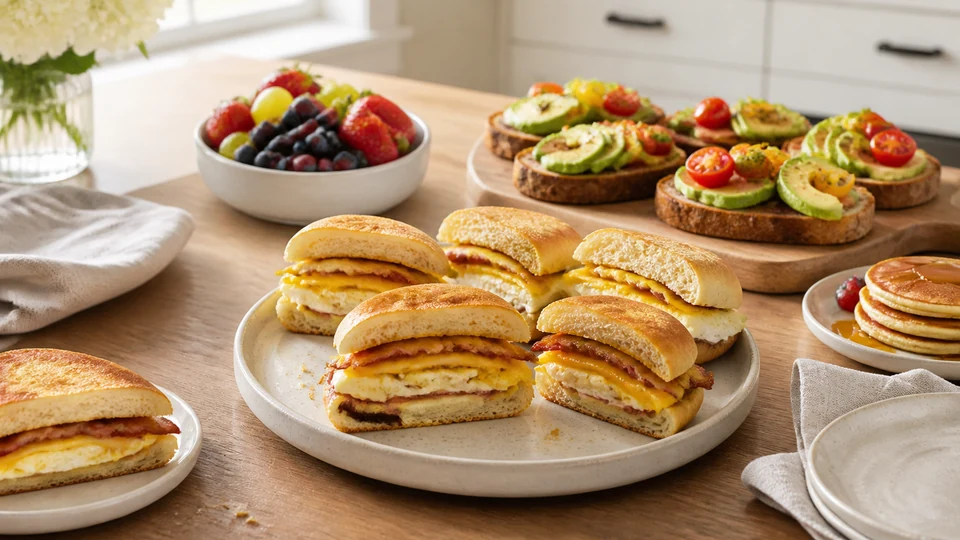
This is a focused getting-ready logistics guide, not a public bridal-shower menu, a nutrition or performance plan, a vendor review or a universal wedding custom. The brunch hub covers the broader meal, while Pancake World opens the full editorial collection.
For broader context, continue with American Breakfast: Pancakes, Diner Plates and Brunch.
Treat departure time as the anchor
The brunch cannot delay transport, dressing or required photographs. Start with the confirmed departure time and work backward through real tasks:
- final clothing check;
- cleanup of food and beverages;
- last eating opportunity;
- main eating window;
- delivery or food arrival;
- refrigerator or hot-holding setup;
- room preparation.
Do not publish a generic “perfect wedding morning timeline.” Travel, group size, ceremony requirements, hair and makeup schedules, photography and venue access differ. Ask the responsible coordinator for the actual milestones and protect them.
Create a one-page run sheet with only operational fields:
| Time | Food action | Responsible person | Location | Stop condition |
|---|---|---|---|---|
| confirmed | receive or remove from storage | named food lead | receiving point | temperature/package check complete |
| confirmed | open eating window | named food lead | food zone | first controlled portions ready |
| confirmed | last new portion | named food lead | food zone | no new messy food after dressing cutoff |
| confirmed | remove perishables | named food lead | food zone | time/temperature decision recorded |
| confirmed | clear surfaces | named helper | room | clothing/photo path clear |
| fixed | depart | transport lead | exit | people and essentials accounted for |
The stop conditions matter. “Brunch at 9” is vague; “no new hot food after 9:35, all trays removed at 9:45” is executable.
Choose food for a working room
A getting-ready room is not a normal dining room. It may contain clothing, cosmetics, electrical styling tools, garment bags, phones, flowers and photographers. Food has to occupy a controlled zone without spreading crumbs, grease or cups across work surfaces.
Use four selection tests:
- Portion test: can one portion be handed to a named person without cutting from a communal dish?
- Containment test: can it be paused and set down without leaking onto clothing or tools?
- Identification test: can the eater verify the item and known allergens at a glance?
- Removal test: can leftovers and packaging leave quickly when dressing begins?
The tests favor individually boxed or plated portions, small sandwiches from a complete source method, controlled egg or baked portions, covered fruit cups and sturdy baked items. They disfavor loose powdered toppings, open sauce bars, tall syrup stacks and platters that require everyone to serve with shared utensils near clothing.
These are format observations, not tested recipe claims. Choose complete recipes or properly documented purchased food.
Build a compact four-part brunch
One substantial savory choice
The savory anchor might be a source-tested sandwich, wrap, baked egg portion or another individually manageable dish. It should have an exact recipe or supplier identity, verified yield or ordered count, known ingredients, safe cooking endpoint and holding path.
Avoid offering several anchors just to simulate abundance. Multiple hot dishes create receiving and temperature work. Multiple cold sandwiches consume refrigerator space. One anchor plus a protected alternative is easier to distribute accurately.
For egg dishes, use the applicable federal endpoint. FoodSafety.gov lists 160°F for egg dishes and 165°F for casseroles. If a cooked egg dish was refrigerated and is later served hot, FDA buffet guidance calls for reheating to 165°F. A browned edge or firm appearance is not a temperature check.
One fresh or cool item
A fruit or vegetable format adds contrast without requiring a health claim. Choose a covered individual cup, whole manageable fruit or another source-supported cold portion. Cut produce is perishable and must stay at 40°F or below.
Use clean produce and clean tools. Keep cold backups refrigerated. Put out only what will be distributed immediately rather than building a decorative platter that waits through the entire preparation schedule.
One restrained baked item
A muffin, pancake, waffle, biscuit or another documented baked format can be a simple addition. Select one that does not shed loose sugar, glaze or crumbs onto the dressing area. Package individually or place on assigned plates.
If the savory anchor already includes bread, decide whether this part adds real choice. Repetition is optional; reducing one item often improves room control.
One confirmed alternative
The alternative exists for a documented guest need, not as a vague “healthy option.” Confirm ingredients, preparation, storage and cross-contact controls. Use a distinct label and dedicated placement.
FDA recognizes milk, egg, fish, crustacean shellfish, tree nuts, peanuts, wheat, soybeans and sesame as major allergens in the United States. Other allergies and intolerances exist. A vegetarian label does not mean egg-free, dairy-free or allergen-safe.
Use named portions instead of a buffet when possible
Named portions reduce searching and repeated handling. Put each person's name on the outer package or place card, followed by the exact food name and known major allergens. Keep supplier labels available for packaged food.
This system also exposes gaps early. If twelve people are on the schedule but only eleven labelled portions exist, the food lead discovers it before service. If an alternative has no name attached, it is vulnerable to accidental use.
A small controlled buffet can work when the party eats before clothes and styling occupy the room. Use small trays, dedicated utensils and a documented service clock. FDA advises replacing nearly empty serving dishes instead of topping them up. Keep cold backups refrigerated and hot backups at 140°F or above.
Do not invite the group to assemble complicated bowls or sandwiches while stylists need the same counters. Assembly stations multiply utensils, containers and cross-contact points.
Separate food, beverages and preparation tools
Define five zones:
Receiving zone
Deliveries arrive here, not in the middle of the styling room. The food lead checks the order, packaging, time and hot or cold condition. Missing or damaged items are handled away from the schedule's main activity.
Controlled storage zone
Cold food goes directly to a refrigerator or properly packed cooler capable of keeping it at 40°F or below. Hot food enters verified holding at 140°F or above if it will not be served immediately. A windowsill, car or hallway is not storage.
Eating zone
Use a table protected from garments, cosmetics and styling equipment. Provide stable plates, napkins and a place to set a partially eaten portion. Keep raw food out of this room.
Beverage zone
Put water and other drinks on a separate stable surface, away from dresses, electrical tools and paper schedules. Dairy-based additions remain cold. Do not place open cups on the floor or beside garment bags.
This guide makes no claim that a particular beverage improves hydration, energy, focus or performance. The objective is controlled access and spill prevention.
Waste and exit zone
Provide a visible bin and a landing point for used dishes. The food lead clears this area before dressing or departure. Leftovers do not remain because no one knows who owns them.
Schedule delivery with a temperature plan
USDA distinguishes hot and cold take-out handling. Hot food should be kept at 140°F or above; cold food should be kept at 40°F or below. If food will be eaten later, storage—not a closed delivery bag on a counter—must carry it safely to service.
Confirm with the supplier or pickup person:
- exact food and quantity;
- hot, cold, frozen or ambient condition at handoff;
- pickup or arrival window;
- packaging that must be removed before reheating;
- storage and reheat instructions;
- ingredient and allergen records;
- receiving contact and backup contact.
This article does not recommend a vendor or promise availability. The food lead records arrival time and moves perishables into control. If the delivery is early, the refrigerator or hot-holding capacity must already exist. If it is late, the coordinator—not the people getting dressed—decides whether service can be shortened or simplified.
Calculate portions from people and verified yields
There is no universal amount of bridal-party brunch food per person. Use the exact group list, how long the food window lasts, whether other meals are scheduled, the selected portion size and verified recipe yield or supplier count.
Build the order:
- List every person who will be in the room during the food window, including service professionals only when food has explicitly been arranged for them.
- Attach one named savory portion or planned share.
- Attach the chosen fresh/cool and baked portions.
- Mark confirmed alternatives.
- Add a documented reserve only when safe storage and disposition exist.
- Reconcile total packages with refrigerator and table capacity.
For a larger group, use standardized quantity recipes. University of Minnesota Extension warns that family-size recipes, especially baked and thickened items, may not scale in direct proportion. Repeat a validated batch rather than changing pan depth and cook time without evidence.
Avoid anonymous excess. A tray of “extras” is hard to protect and easy to abandon when the group departs.
Assign roles outside the getting-ready party
The food system needs one lead and, when the group is large, one helper. Their jobs are explicit.
Food lead
- receives the order;
- checks labels and known alternatives;
- moves food into safe control;
- starts the service clock;
- distributes named portions;
- checks hot or cold holding;
- makes leftover discard or storage decisions;
- confirms the room is clear before departure.
Helper
- stages napkins and plates;
- brings controlled backups;
- removes waste and used dishes;
- prevents food from spreading into styling zones;
- reports a spill or missing portion immediately.
Do not assign these duties to someone whose hair, makeup, dressing or photography schedule prevents consistent attention. A nominal assignment without availability is not a control.
Protect confirmed alternatives
Collect needs privately before ordering. Do not ask people to explain medical details in a group chat. Confirm only what the kitchen or supplier can support.
Keep an alternative closed and labelled with the recipient's name until distribution. Use a separate utensil and clean landing area. If the same kitchen or equipment creates unresolved cross-contact, disclose that limit rather than applying an unsupported “allergen-free” label.
Ingredient substitution also changes recipe behavior. Do not remove egg, milk or wheat from a formula and assume yield, structure and cook time remain valid. Use a complete recipe designed for the required ingredients.
Keep food safe through service
Cooking
Home-prepared foods need category-specific endpoints measured with a thermometer. Poultry and casseroles reach 165°F; ground meat reaches 160°F; fish reaches 145°F; whole cuts of beef, pork, veal and lamb reach 145°F followed by a three-minute rest; egg dishes reach 160°F.
Keep raw meat, eggs, seafood and flour away from ready-to-eat food. Clean hands, surfaces and utensils. FDA recommends pasteurized eggs or egg products for preparations that otherwise use raw or undercooked eggs; fully cooked formulas are simpler for this service.
Holding and the service clock
Cold perishables stay at 40°F or below and hot foods stay at 140°F or above. Measure the food; an insulated carrier or warming device is not proof.
Without hot or cold control, the federal two-hour rule applies. If the surrounding temperature is above 90°F, the boundary is one hour. The food lead records when each tray or group of portions leaves control. Returning an old tray to the refrigerator does not erase its time history.
Leftovers
Only food with a known safe history can be kept. Divide it into shallow containers and refrigerate promptly. USDA says refrigerated leftovers are generally used within three to four days and reheated to 165°F. Discard perishable food that crossed its time boundary.
Do not load uncertain food into the wedding transport. It can leak, warm further and create a responsibility problem at the next location.
Protect clothing and the room
Use observable mess risk rather than color folklore. Any sauce, grease, berry juice, coffee or crumb can create a problem regardless of clothing color.
- End messy service before final dressing.
- Keep open drinks on one stable table.
- Provide plates large enough to contain the selected portion.
- Avoid loose powdered toppings and overfilled wraps.
- Put lids on portions that may be paused.
- Keep stain-removal products away from food and follow garment instructions.
- Clean spills immediately without moving contaminated tools onto the food table.
Do not photograph food on a surface that must later hold attire or cosmetics unless it is cleaned and reset.
Three workable bridal-party brunch formats
These are logistics models, not tested menus.
Format A: named cold boxes
Each person receives a labelled box with one substantial cold item, one protected fresh item and one baked component. Beverages remain separate.
Best when: the timeline is fragmented and people eat at slightly different moments.
Main control: refrigerator capacity and clear allergen records.
Format B: short hot service window
A hot anchor is distributed during one fixed window, with cold portions already labelled. Hot food enters verified holding or goes directly from controlled receipt to service.
Best when: the group has one shared break before final dressing.
Main control: strict delivery timing, temperature verification and fast cleanup.
Format C: early small buffet, then closed room
The group eats before styling or clothes occupy the space. Small platters are monitored and completely removed at a stated cutoff.
Best when: the venue has a separate early access period.
Main control: tray clocks, clean utensils and a firm closure before the room changes function.
Common failures and corrections
Delivery arrives during dressing
Move the receiving window earlier or designate a receiving point outside the room. Do not route drivers through garments and equipment.
Everyone orders independently
Centralize the item list and labels while allowing private need collection. Uncoordinated orders create missing food, duplicates and unclear ownership.
Food spreads across every surface
Close the food zone. Give each person one named portion and remove communal packages.
Hot food becomes merely warm
Serve immediately from controlled receipt or use verified holding at 140°F or above. “Warm” is not a safe category.
Cold food sits through photographs
Refrigerate controlled backups and distribute small batches. If food leaves control, start its clock and remove it at the boundary.
No one decides about leftovers
Make the food lead responsible. Keep only food with known safe history; discard uncertainty before departure.
Frequently asked questions
What foods are least disruptive in a getting-ready room?
Individually identified, low-drip portions that can be paused and removed cleanly are operationally useful. Exact choices still need complete recipes, correct holding and ingredient labels.
Should brunch happen before hair and makeup?
Use the confirmed professional and departure schedule. Eating before styling may reduce room conflict, but no single order works for every event. Protect a defined eating window and a cleanup cutoff.
How much food should be ordered?
Count the exact people included, assign portions from verified yields or supplier counts and add only a deliberate reserve that can be stored safely. There is no universal wedding-party number.
Can food stay in delivery bags until people are ready?
Only if the packaging and measured food temperature provide the required hot or cold control. A closed bag on a counter is not automatically safe holding.
Can alternatives share the same table?
Only when placement, utensils and cross-contact controls support the guest's need. Keep the portion closed and named until distribution when possible.
What should leave the room before departure?
Remove open perishables, waste, used dishes and spill risks. Refrigerate only food with a safe history. Do not carry uncertain leftovers to the next location.
Final run-sheet check
- Departure and photography times are authoritative.
- Delivery, eating, last-portion and cleanup windows are written.
- One food lead is available and not actively getting ready.
- Every person has an identified portion or planned share.
- Confirmed alternatives are closed, labelled and protected.
- Receiving, storage, eating, beverage and waste zones are separate.
- Cold food stays at 40°F or below; hot food stays at 140°F or above.
- Each uncontrolled perishable portion follows the two-hour or one-hour boundary.
- Food is removed before final dressing and departure.
- Safe leftovers are cooled promptly; uncertain food is discarded.
Run a five-minute room reset rehearsal before the event. Place empty food packages, cups, garment bags and styling tools where they are expected, then ask the assigned helper to clear only the food system. The rehearsal passes when perishables reach controlled storage or disposal, used dishes reach the waste zone, beverage spills can be contained, and the departure path is open without moving personal items. Any unlabeled package, shared surface or unclear leftover owner is corrected on the run sheet before real food enters the room.
Explore related Pancakes World guidance on American Pancakes, Maple Syrup, and Maple Syrup Pancakes.
Sources and editorial references
- USDA FSIS Safe Handling of Take-Out Foods —
https://www.fsis.usda.gov/food-safety/safe-food-handling-and-preparation/food-safety-basics/safe-handling-take-out-foods - FDA Serving Up Safe Buffets —
https://www.fda.gov/food/buy-store-serve-safe-food/serving-safe-buffets - USDA FSIS Leftovers and Food Safety —
https://www.fsis.usda.gov/food-safety/safe-food-handling-and-preparation/food-safety-basics/leftovers-and-food-safety - FoodSafety.gov Safe Minimum Internal Temperatures —
https://www.foodsafety.gov/food-safety-charts/safe-minimum-internal-temperatures - University of Minnesota Extension Planning the Quantity Food Occasion —
https://extension.umn.edu/cooking-safely-crowd/planning-quantity-food-occasion - University of Minnesota Extension Service Style Risks and Safe Practices —
https://extension.umn.edu/cooking-safely-crowd/service-style-risks-and-safe-practices - FDA Food Allergies —
https://www.fda.gov/food/nutrition-food-labeling-and-critical-foods/food-allergies - FDA Egg Safety —
https://www.fda.gov/food/buy-store-serve-safe-food/what-you-need-know-about-egg-safety - FDA Entertaining All Year —
https://www.fda.gov/food/people-risk-foodborne-illness/entertaining-all-year-food-safety-moms-be