Breakfast tea and bread
At Pancakes World, breakfast tea and bread is most useful as a pairing system: brew the selected tea according to its own directions, choose bread by texture and topping, and balance rich, sweet, salty or sharp elements across the plate. Toast and hot tea should meet at the table, while spreads and garnishes remain easy to adjust.
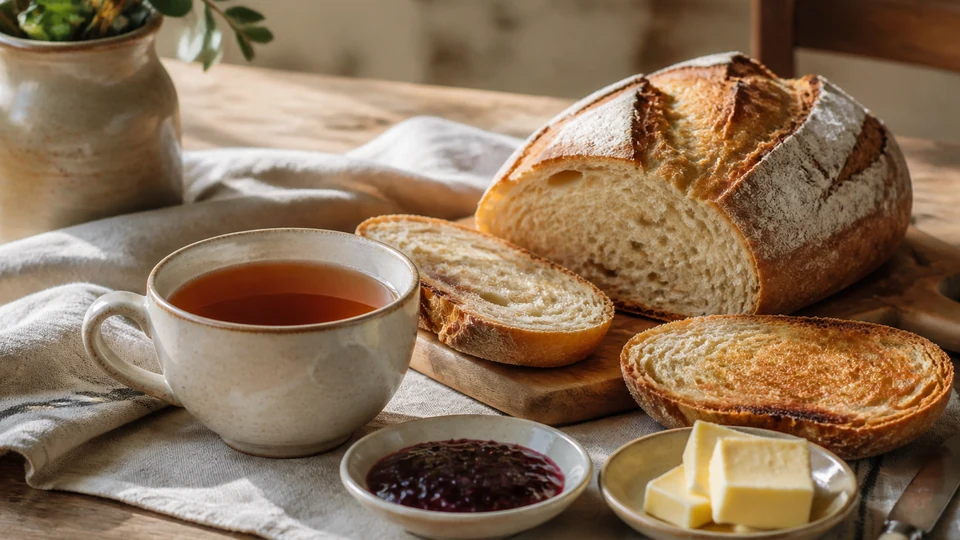
This page does not define one national breakfast tradition, certify a tea brand or claim a health effect. It is a practical serving guide without a project-tested recipe. Pancake World is the only verified contextual link in the article body.
| Guide sections |
|---|
| Start with the morning you have |
| Match tea strength to the plate |
| Choose bread by structure |
| Butter, spreads and preserves |
For broader context, continue with American Breakfast: Pancakes, Diner Plates and Brunch.
Start with the morning you have
A rushed weekday may need one toast, one spread and a straightforward cup. A slower breakfast can compare breads, offer two toppings or include eggs, fruit or vegetables. A shared table needs enough kettle and toaster capacity, clean spread utensils and a clear place for hot items.
Choose the tea and bread before collecting extras. If the bread is sweet and fruit-filled, the cup may not need a sweet accompaniment. If the toast carries a rich savoury topping, a brisk or aromatic tea may provide contrast. These are sensory directions, not universal rules.
Follow the product or complete source for water, quantity and brewing. Tea type, leaf size, bag format and desired strength differ; this article does not invent one steep time.
Match tea strength to the plate
A robust black tea can stand beside buttered toast, cheese, eggs or a strongly flavoured preserve. A lighter black tea, green tea, herbal infusion or another preferred cup may suit a delicate bread and simple topping. Use the tea's current brewing directions and adjust a future cup from observation rather than extending the brew randomly.
Milk, plant beverage, lemon, sweetener and spices change the drink. Add them intentionally and verify packaged products when dietary or nutrition details matter. Lemon and dairy can interact in ways the drinker may not enjoy, so treat additions as separate choices rather than a mandatory “breakfast tea” formula.
Serve hot water safely. Place the kettle where cords, steam and pouring do not cross the toast station or children's reach. Warm cups only by an appropriate method. A cosy or insulated pot helps table service, but it does not authorize indefinite holding or replace product instructions.
For a tasting breakfast, brew fewer teas well instead of many cups at once. Label each pot, provide a discard or water option if needed, and arrange from lighter to more assertive flavours. The purpose is comparison, not a claim that one tea is best.
Choose bread by structure
Soft sandwich bread, crusty sourdough, rye, seeded bread, rolls, fruit bread, flatbread and crumpet-style products carry toppings differently. A wet tomato topping needs a firmer or protected base. A dense rye slice can support a thin savoury spread. A tender fruit bread may be more pleasant with minimal topping.
Use the bread fresh, toasted or warmed according to its product or recipe. Toasting cannot repair stale flavour, and aggressive heat can make a thin slice too brittle for spreading. Cut slices evenly so they reach a similar result.
Gluten-free and alternative breads may toast, crumble or dry differently. Follow product directions and use a clean separate toaster or another controlled method when cross-contact boundaries require it. “Wheat-free,” “gluten-free,” “seeded” and “wholegrain” are separate label questions.
Keep bread covered until the toaster or table is ready. Pre-toasting a large batch may create a cold, hard result unless the menu was designed for it. For a group, toast in waves and let guests know when the next rack is coming.
Butter, spreads and preserves
Butter, margarine and plant-based spreads differ in ingredients, salt and behaviour on warm bread. Choose the exact product and give it a dedicated knife. Vegan status, dairy-free status and allergen information must be checked independently.
Jam, marmalade, honey and other sweet spreads vary in sweetness, bitterness and texture. Start with a thin layer and taste with the bread before adding more. This is portion control for flavour, not dietary advice.
Nut and seed butters can make a substantial topping, but allergies and shared-jar cross-contact matter. Label the vessel and keep its utensil separate. Do not describe a spread as a universal protein solution or health food without exact evidence.
Savoury tea-and-bread plates
Tomato on toast
Choose ripe but structurally sound tomato, cut it close to service and drain or blot excess surface liquid. Toast the bread enough to carry the topping, then season at the table. A cheese, egg, bean spread or tofu component can be served separately when wanted.
Rye with soft cheese or a verified alternative
Use a thin spread that does not crush the slice. Add cucumber, radish, herbs or pepper for contrast. Check the exact dairy or plant-based product; alternatives are not automatically equivalent in ingredients or nutrition.
Egg and toast
Prepare eggs by a complete method and serve them when the toast is ready. Avoid cooking eggs early merely to hold them beside a delayed kettle. Butter, sauce and salt remain visible additions.
Hummus or bean spread with vegetables
Use a documented spread or a current labelled product. Keep juicy vegetables separate until eating. Chickpea or bean presence does not prove that every prepared spread meets vegan, allergen or carbohydrate requirements.
Warm flatbread with a dip
Warm the bread as directed, place the dip in its own bowl and provide a spoon rather than repeated double-dipping. This format suits a shared table when service and temperature control are planned.
Sweet and fruit-led pairings
Fruit bread may contain dried fruit, spice and sweetener already. Taste it warm or at room temperature before adding preserve. A small amount of butter or verified alternative may be enough. Strong marmalade can overwhelm a delicate loaf but can complement a plainer toast.
Fresh fruit can sit beside bread rather than on it. That keeps toast crisp and lets the eater alternate flavours. Banana with nut or seed butter forms a different texture from berries with soft cheese or a plant-based spread. These are menu ideas, not tested nutrition formulas.
For French-toast-style or griddled bread, use a complete tested recipe rather than improvising from this pairing guide. Eggs or replacements, soak, pan heat and bread type work together. This route publishes no such formula.
Sweetened tea and sweet bread can become monotonous. Decide where sweetness belongs. A plain or unsweetened cup may sharpen a fruit loaf; a lightly sweetened tea may suit plain toast. Individual preferences and medical needs take priority over editorial pairing.
Bread boards for a shared breakfast
Offer two or three genuinely different breads: perhaps a plain toast, a dark or seeded loaf and a soft roll or fruit bread. Cut small tasting portions and replenish so the board does not dry out. Keep gluten-free or allergen-controlled bread in its required separate system rather than placing it on a shared board.
Group toppings by type. Put butter and alternatives together with labels, sweet preserves together, then savoury spreads. Use one utensil per vessel. Place juicy tomato and cucumber on a separate plate so liquid does not reach the bread.
Tea belongs away from the cutting and toaster queue. Give the pot or kettle a stable pouring space and keep milk, plant beverage, lemon and sweetener labelled. A crowded table is a spill risk and makes dietary information harder to follow.
Run the kettle and toaster without a queue
Count the cups, toaster slots and safe pouring capacity before inviting everyone to build at once. For two people, tea can brew while the first toast finishes. For a larger table, prepare cups, spreads and cold sides first, then toast in labelled waves. Do not fill a walkway with extension cords or move a hot kettle between guests.
Assign one person to hot drinks and another to toast when the group is large. The tea person follows product directions, watches water and manages additions. The toast person checks bread type, desired browning and cross-contact boundaries. This simple division protects temperature and reduces wrong orders.
Keep a small plate for used tea bags or strainers and a separate tray for toast tools. Refill hot water safely rather than reaching over food. Wipe wet surfaces promptly. These details matter more to a pleasant breakfast than decorative matching jars.
If tea or toast must wait, choose which quality loss is more acceptable. Bread can sometimes remain untoasted until the eater is seated, while tea can be brewed in a pot sized for the immediate table. Do not promise that either stays perfect for an unsupported holding period.
Pack tea and bread for travel
Carry tea in a suitable closed vessel and bread in a separate dry container. Pack wet spreads, tomato and fruit away from toast. If dairy, eggs, soft cheese, hummus or another perishable topping travels, maintain appropriate temperature control for the whole journey.
For an office breakfast, consider the actual appliances and shared-kitchen rules. A communal toaster may not support a strict allergen boundary. A kettle queue may make a pre-brewed plan tempting, but holding and safety should follow the chosen equipment and product.
Label toppings and keep small utensils with them. Do not use an unmarked plant beverage or spread when another person needs reliable ingredient information.
Store bread and leftovers by item
Bread storage depends on the loaf or product. Follow package or recipe directions and protect it from drying or condensation. Toast is best planned around service rather than stored as if it were fresh bread.
Prepared toppings each have their own requirements. A jarred preserve, cut tomato, egg, dairy spread and homemade bean spread cannot share one generic rule. Refrigerate and use them according to reliable guidance. Unknown preparation dates are a reason to discard or choose something else.
Tea additions also require attention. Return milk or plant beverage to its supported storage promptly. Do not top up an old serving jug with a new product and lose its identity.
Troubleshoot pairing problems
If the cup tastes harsh, return to the tea's water and brewing directions before adding more sweetener or milk. If it tastes weak, check quantity and vessel rather than leaving the same leaves indefinitely. Record the preferred adjustment for that exact tea.
If toast becomes soggy, separate the wet topping, toast closer to eating or use a bread better able to carry the chosen topping. If the slice shatters, reduce browning or select a thicker/softer format under its directions.
If the plate feels too rich, remove one spread or creamy side and add a fresh, sharp or plain element. If everything tastes sweet, move sweetness to either the cup or the bread rather than both. If flavours fight, simplify; more toppings rarely solve an unclear pairing.
Keep cultural claims modest
Tea and bread appear in many breakfasts around the world, but one search phrase does not authorize a universal history or an “authentic” menu. Name the actual tea, bread and topping being served. When discussing a regional tradition, use a route-specific authoritative source rather than generalizing from a household preference.
A packaged product using words such as English breakfast, Irish breakfast or another geographic label does not prove that every person in that place drinks it the same way. Follow the product directions and describe the cup honestly. Avoid venue, brand-superiority and celebrity claims.
The same restraint applies to bread. Rye, sourdough, flatbread and rolls have multiple traditions and formulas. This page groups them by table function, not cultural ownership.
Check nutrition and dietary labels separately
If nutrient values are needed, use the exact bread slice, spread portion, tea additions and sides. USDA FoodData Central can support ingredient research, while a current Nutrition Facts panel supports packaged product comparison. The resulting numbers do not establish a health outcome.
Vegan, vegetarian, gluten-free and allergen boundaries require a complete build review. A plant beverage does not make a buttered dairy toast vegan; a gluten-free loaf can still meet a shared toaster; a nut-free bread can be served with a nut-contaminated knife. Plan the environment as well as the labels.
Do not describe tea as detoxifying, fat-burning, disease-preventing or guaranteed to improve alertness. This page offers no medical or performance claim. Caffeine questions, pregnancy and medication interactions belong with appropriate professional guidance.
A concise morning checklist
Choose the cup, choose the bread and decide sweet or savoury emphasis. Read the relevant packages. Set out cups, plates and separate spread utensils. Prepare cold toppings. Start the kettle and toaster only when the table is nearly ready. Serve hot elements together, then store perishables promptly.
For a group, add labels, a second toast wave and a safe kettle owner. For travel, add dry/wet separation and cold-chain planning. For strict dietary needs, add verified products and controlled equipment.
The checklist is intentionally short. A good tea-and-bread breakfast depends on timing and contrast, not a long ingredient list.
Compare six bread roles at the table
Plain sandwich toast
Its mild flavour accepts sweet or savoury toppings, but a thin slice can soften quickly under tomato or a wet spread. Toast it close to service and use a restrained layer. Check whether the loaf's softness or sweetness already shapes the pairing.
Sourdough-style bread
A firmer crust and pronounced flavour can carry egg, cheese, beans or tomato. Slice so the piece remains comfortable to bite. The word sourdough covers different formulas; describe the actual loaf without making fermentation health claims.
Rye or dark bread
Dense slices often suit thin savoury toppings, pickled accents or soft cheese. Their assertive flavour can compete with delicate preserves. Check seeds and allergens and do not infer wholegrain content from colour alone.
Seeded bread
Seeds add texture and may make a topping less necessary. They also introduce allergen questions. Keep the package and use a clean knife. If the loaf crumbles when toasted, reduce the browning or serve it fresh according to preference.
Soft rolls
Rolls work for butter, preserves, egg or a compact sandwich. Warm them as directed and split only when the table is ready. A juicy filling can collect in the soft crumb, so keep wet ingredients controlled.
Fruit or spiced bread
Serve it plain, lightly toasted or with a simple spread. Pair it with an unsweetened or less sweet cup when contrast is wanted. Dried fruit, nuts and spice blends need their own ingredient review.
Adjust the pairing through one variable
When the breakfast is almost right, change one feature. Brew the same tea according to a documented stronger or lighter path, alter the toast level, reduce the spread, or replace one topping with a sharper/fresher accent. Changing tea, bread and topping at once makes the lesson impossible to interpret.
Keep household notes specific: exact tea, bread, topping, brew directions and observed result. “Black tea works with toast” is too broad. “This tea was pleasant with lightly toasted rye and a thin savoury spread” is a preference note, not a universal claim.
For the next breakfast, repeat only the useful parts. There is no need to transform a simple cup and slice into a tasting event every morning.
Frequently asked questions
Which bread is best with breakfast tea?
The bread whose texture and flavour fit the topping and cup. Plain toast is flexible; dense rye supports savoury spreads; fruit bread may need little added sweetness.
Should tea be brewed stronger for milk?
Follow the selected tea's directions and adjust from the cup you observe. This article does not give a universal brew rule.
Can I prepare toast ahead?
Usually the quality question is better solved by toasting closer to eating. Use a product-specific method if advance service is required.
Is tea and bread a complete breakfast?
That depends on the exact foods, portion and individual's overall needs. This page does not prescribe nutrition adequacy.
Is Recipe schema used here?
No. There is no project-owned tested recipe with exact ingredients, yield, time and instructions; the page uses Article fallback.
When serving several people, offer the tea first and keep the bread components modular. One person can choose a mild spread, another a savoury topping, and a third plain toast without requiring three complete breakfasts. Put wet toppings in bowls instead of dressing every slice in advance. Bread stays crisp longer, preferences remain visible, and leftovers are easier to store safely.
The simplest repeatable ritual is a tray with the pot, cups, sliced bread, one spread and one fresh accompaniment. A tray is not necessary for style; it prevents repeated trips while the tea cools. On a hurried day, remove the optional accompaniment rather than abandoning the entire breakfast.
For loose-leaf tea, use a strainer large enough for the leaves to move and remove it at the intended time. Leaving leaves in a communal pot makes later cups progressively stronger. Tea bags are simpler for mixed preferences because each cup can be timed separately.
Match the bread preparation to the pace of tea
Soft fresh bread suits a breakfast where slices are passed immediately and dressed at the table. Toast suits a slower meal because each person can take a crisp piece in turn, although it should not wait under a tight cover. Rolls can be split as needed and reduce the problem of exposed cut surfaces.
Decide whether the first cup or the first toast should lead. If tea needs several minutes to infuse, start it before the bread enters the toaster. If individual tea bags are used, let guests time their own cups while bread is served. The goal is to avoid a cold cup beside burnt toast.
For a family table, bring bread in two rounds. The second basket stays covered in the kitchen and replaces the first only when needed. This preserves texture and limits waste.
Use water and teaware deliberately
Start with fresh potable water and equipment suited to the tea. Follow the producer's directions for water temperature, amount and infusion rather than assuming every leaf requires boiling water. A delicate green tea, robust black tea and herbal infusion can have different instructions.
Warm cups only when that is part of the household method and can be done safely. Keep kettle cords away from table edges, place the pot on a stable heat-resistant surface and point the spout away from children. Use a lid that fits.
For loose tea, give leaves enough space to infuse and remove or strain them at the chosen point. For a pot that remains on the table, prevent ongoing extraction from making later cups unexpectedly strong. A second pot of hot water can be useful only when handled safely and actually wanted.
Serve spreads without turning the table into a condiment shelf
Choose one sweet spread and one savoury or creamy option, plus butter or an appropriate alternative if the household uses it. Add fresh fruit or tomato as the contrasting component. Six open jars slow decisions and collect crumbs.
Transfer modest amounts into clean bowls when presentation matters, but retain product labels for ingredient and allergen questions. Give each spread its own knife. Replenish rather than returning used table portions to the original jar.
Wet toppings should reach toast after it is served. Sliced tomato, cultured products and fruit preserves can soften bread quickly. A small plate beside each person gives space to assemble one slice at a time.
Make a tea-and-bread breakfast for one
Use a small pot, mug infuser or single tea bag so the amount matches one person. Choose one bread form and one topping combination. A boiled egg, piece of cheese, cultured product or fruit may complete the plate according to preferences and dietary needs.
Set everything on one tray: cup, tea, bread plate, spreading knife, topping and napkin. The tray prevents repeated trips and creates a defined stopping point. It should remain light enough to carry safely.
Store the remaining bread immediately rather than leaving the loaf open through breakfast. Close spread containers and return perishable items to refrigeration. The elegance of this meal lies in the quiet sequence, not in a large display.
Pack tea and bread for work
Carry dry toast, bread or a roll separately from wet filling. A small sealed container can hold spread, sliced vegetable or another suitable topping. Assemble after arrival. If perishable components are included, use appropriate cold control.
Tea can travel in a clean insulated vessel designed for hot drinks. Do not seal a vessel beyond its instructions or fill it so high that opening becomes hazardous. Check the lid before placing it in a bag.
Alternatively, carry the tea bag or leaves and prepare the drink where safe hot water is available. This preserves aroma and prevents the bread from sharing a bag with a leaking flask.
Restore stale bread through an appropriate use
Bread that is dry but still wholesome may be toasted, used in an established baked breakfast or made into crumbs under a complete method. Staleness is a quality condition, not proof of safety. Bread showing mould or other spoilage should be handled according to appropriate guidance rather than trimmed optimistically.
Plan purchases around household use. Freeze suitable sliced bread in portions if the product and method allow, then remove only what is needed. A large artisanal loaf is not economical when half is regularly discarded.
Keep bread storage separate from strong odours and moisture. Use the producer's instructions when available, especially for packaged specialty products.
When tea is shared, ask before refilling a cup. Some guests prefer a fresh infusion, a weaker second cup or no more caffeine. Keep hot water and the pot within the safe reach of the person serving, not at the crowded centre where sleeves can catch handles.
Explore related Pancakes World guidance on American Pancakes, Maple Syrup, and Maple Syrup Pancakes.
Sources and editorial references
- USDA FoodData Central, ingredient identity and composition records:
https://fdc.nal.usda.gov/ - U.S. Food and Drug Administration, using the Nutrition Facts label:
https://www.fda.gov/food/nutrition-facts-label/how-understand-and-use-nutrition-facts-label - FoodSafety.gov, food-safety charts:
https://www.foodsafety.gov/food-safety-charts