Breakfast tapas
At Pancakes World, breakfast tapas is a small-plate serving style: choose four to six distinct bites that can be eaten neatly, share a few ingredients without tasting identical, and arrive in a controlled sequence. A useful spread has one egg or plant-based bite, one bread item, one vegetable or fruit plate, one warm pan item and a simple sweet finish.
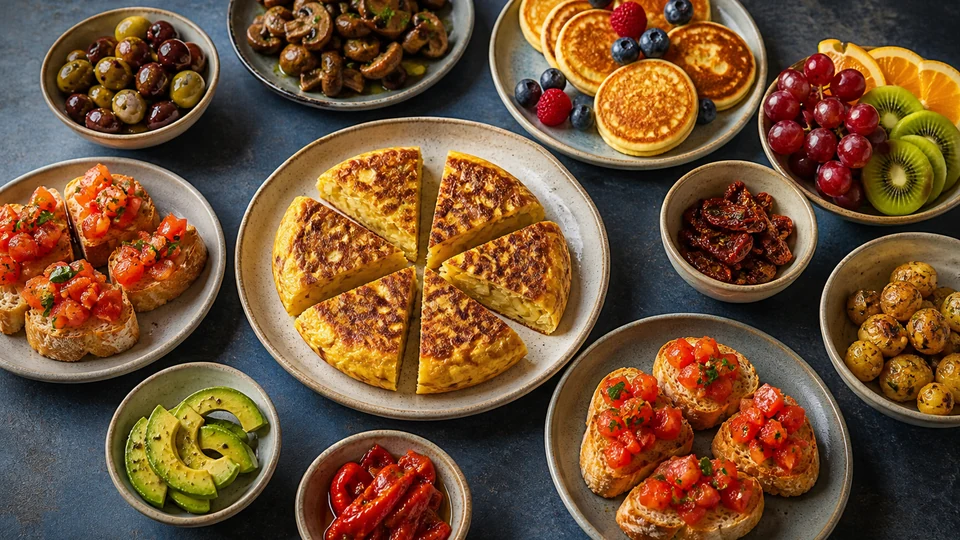
The term describes an editorial breakfast format here. It does not claim cultural authenticity, venue affiliation or a fixed traditional menu. Exact recipes require complete tested sources; this route has no project test record and uses Article schema. Pancake World is the main editorial collection.
| Guide sections |
|---|
| Think in bites, not reduced dinner portions |
| Limit the menu to one hot pan |
| Build the egg or plant-based bite |
| Give bread one clear job |
For broader context, continue with American Breakfast: Pancakes, Diner Plates and Brunch.
Think in bites, not reduced dinner portions
A small plate should be complete at its scale. One piece of toast with a defined topping, one egg portion, a few well-seasoned vegetables or a small pancake roll can each work. A full omelette cut into random fragments usually does not; neither does a large bowl placed among tiny dishes.
Plan how the guest will eat each item. Can it be lifted with fingers, a fork or one small spoon? Will sauce drip across the table? Does it require cutting on an overcrowded side plate? Neatness matters because several dishes compete for space.
Vary the shape as well as flavour. Combine a toast, a skewer or forkable piece, a small bowl and a warm cake. Six round croquettes may contain different ingredients but still feel repetitive.
Limit the menu to one hot pan
The host should not be frying eggs, pancakes, potatoes and fritters simultaneously. Select one item that must leave the pan close to service. Prepare the others cold, baked from complete recipes, or capable of a safe short hold.
A pan item could be small savoury pancakes, a tortilla-style egg portion, mushrooms, potatoes or another established preparation. Its supporting plates should already be arranged before heat begins. Bring the hot bite out in two small rounds rather than letting one full tray cool.
If the meal is served as a sequence, make the hot pan item the middle plate. Guests begin with cold fruit or toast, receive the warm savoury course, and finish with a sweet bite. This turns a small kitchen into an advantage.
Build the egg or plant-based bite
Egg can appear as a wedge from a baked preparation, a small scrambled portion on toast, a carefully cooked half egg with garnish or a component of a savoury pancake. Use a full method for doneness and holding. Do not invent a universal time or temperature here.
For an egg-free menu, use a bean spread, tofu preparation, pulse cake or vegetable bite designed by a reliable recipe. It does not need to imitate egg. Give it a distinct texture and seasoning, and name the actual ingredient.
Keep rich bites small. A cheese-heavy egg portion plus buttery toast and fried potatoes makes every plate dense. Balance it with tomato, cucumber, greens, herbs or fruit according to the menu and guests.
Give bread one clear job
Bread can support a topping, provide a crisp dipping element or become a miniature sandwich. Choose one function. If every dish sits on bread, the spread becomes a toast flight rather than breakfast tapas.
For topped toast, cut bread before toasting so edges brown and portions remain neat. Add wet toppings close to service. For dipping, serve crisp bread separately from sauce. For sandwiches, keep filling thin and secure with a pick only when picks can be managed safely.
Offer a verified alternative for guests who need one, with separate preparation controls. A different-looking bread is not proof of allergen safety. Label it clearly and keep its serving tool distinct.
Use vegetables as more than decoration
One plate should make vegetables central: roasted pepper strips, seasoned tomatoes, mushrooms, cucumber with herbs, or a small cooked-vegetable dish can provide freshness and colour. Choose an established preparation and suit it to the season and equipment.
Warm vegetables should be cooked and held under the correct plan. Cold vegetables can be cut close enough to serving that they remain crisp. Salt juicy tomatoes at an appropriate moment so they do not flood the plate.
Avoid sprinkling the same chopped herb and tomato over every bite. Shared ingredients are useful, but each dish needs a different purpose. Tomato may be a fresh plate, not also the toast topping, egg garnish and pancake filling.
Make fruit a composed plate
Fruit can open the meal, reset the palate between savoury dishes or supply the sweet finish. Use two or three fruits with different texture rather than a huge mixed bowl. Cut them into pieces suited to the small plate and remove inedible parts.
A citrus salad, melon and berry plate, or sliced stone fruit with a suitable accompaniment can work. Keep perishable accompaniments cold. If skewers are used, consider sharp points and children's access.
Colour should come from the fruit itself, not an artificial theme imposed on every plate. When fruit is excellent, restrained handling is enough.
Include one pancake bite
Pancakes fit the format when sized or cut for one or two bites. A thin pancake can be rolled around a modest filling and sliced. A thick pancake can be cooked small and served with a controlled topping. A savoury grain or pulse pancake can act as the warm pan item.
Use a complete formula for the chosen pancake. Changing the size may change cooking behaviour, so validate it in the actual kitchen. Do not claim a tested mini-pancake recipe from this overview.
Keep syrup in a dipping cup or apply a restrained amount. Sticky sauce across a shared board makes other dishes difficult to handle.
Create a sweet finish that does not restart breakfast
The last plate should be small: fruit with a cultured component, one miniature muffin from a tested formula, a filled pancake slice or a piece of baked item. It should feel like closure, not a second main course.
Use sweetness in one place. If the opening fruit, toast and drinks are already sweetened, choose a plain final bite with spice or fruit. Coffee and tea can accompany it, with additions clearly available rather than mixed for everyone.
No nutrition or portion outcome follows from the small-plate label. Multiple small dishes can still amount to a substantial meal; guests should control what they take.
Plan by contrasts
Write five headings before naming dishes: hot and soft, cold and crisp, bread-based, plant-forward, and gently sweet. Place one candidate under each. If two candidates rely on the same cooking method or sauce, change one. This builds variety from sensory function rather than from an arbitrary number of recipes.
Contrast temperature carefully. A cold tomato plate can sit beside a warm egg wedge; toast should remain crisp; a pancake bite should leave the pan late. Do not hold every item lukewarm merely so they arrive together.
Contrast seasoning as well. Use smoky flavour on one plate, herbs on another and bright acid on a third. Avoid carrying the same garlic, chilli or sweet glaze through the entire breakfast. Guests should discover a new emphasis with each bite.
A five-plate vegetarian example
Begin with cucumber and tomato dressed close to service. Follow with crisp toast carrying a bean or cheese spread according to dietary needs. Make a small egg portion or tofu bite the warm centre. Add a miniature savoury pancake with herbs. Finish with fruit and a spooned cultured product or suitable alternative.
This is a menu pattern, not a tested set of recipes. Each cooked component needs its own complete source. The value lies in workload: only one or two elements need last-minute heat, while the cold plates can be arranged before guests sit.
Keep the bean spread off the pancake if it already appears on toast. Use the pancake's own grain or herb flavour. Let the fruit finish remain fresh rather than adding another bread.
A make-ahead morning menu
Choose a baked egg or plant-based slice prepared under a verified method, a chilled fruit plate, bread to toast, roasted vegetables served at an appropriate temperature, and a small baked sweet. Most work moves earlier, leaving toast and plating for the morning.
Make-ahead does not mean room-temperature storage. Cool, cover, refrigerate and reheat each item according to its recipe and official guidance. Label containers so components do not disappear into an event refrigerator.
At service, cut baked items into tidy portions with a clean knife. Reheat only what will be served in the first round. Bring a second tray later if guests are still eating.
A pancake-led small-plate menu
Use one established neutral pancake batter in two service forms only if the method remains reliable: small plain pancakes with savoury topping, and a later pancake with fruit. Alternatively, choose one pancake form and let other plates use different bases.
A stronger spread might be a savoury mini pancake, tomato-herb salad, egg or tofu bite, crisp potato and fruit cup. The pancake provides the soft griddle element while potato supplies a different edge and shape.
Do not run separate sweet, chocolate, vegetable and filled pancake batters. The kitchen loses control, and the theme turns from tapas into a pancake tasting. Focus on one good batch.
Serve on individual plates or a shared table
Individual courses create the clearest pace. Place one or two bites per guest, clear the dishes, and bring the next. This works for a small group and lets the cook protect temperature. It also uses more plates and attention.
A shared table is more relaxed. Arrange each item on its own platter with a dedicated utensil and let guests choose. Keep platters modest and replenish. Large boards look abundant at first but expose food longer and make allergy boundaries harder to see.
A hybrid works well: cold plates and bread are shared, while the hot pan item is brought to each person. The host avoids an unsafe hot pan on the table and every guest receives the warm bite promptly.
Design the table for small dishes
Use a dinner plate or a clear place mat as the personal landing area, even when food arrives on saucers. Guests need somewhere to set a fork, bread and cup. Overfilling the centre with decor leaves no place for platters.
Put water and glasses out before food. Create a separate hot-drink corner to prevent coffee pouring over shared plates. Supply small forks and spoons, but avoid so many specialized utensils that no one knows which to use.
Label dishes at eye level with plain names. “Mushrooms with herbs” is more helpful than a whimsical title. Include allergen communication through the event's proper system.
Use one ingredient in genuinely different ways
Shared ingredients reduce shopping, but repetition should not be obvious. A lemon can season a tomato plate and provide zest to a sweet bite without making both dishes sour. Herbs can finish eggs while stems flavour a cooked vegetable preparation where appropriate. Yogurt or an alternative can become one sauce and not also appear in dessert.
Bread offcuts can become crisp crumbs for a vegetable plate if handled safely, while the main slices hold a topping. Fruit trim may flavour water only when prepared and stored appropriately. Do not force reuse when it makes the second dish inferior.
Record which ingredient is reserved for which plate. Using all the herbs on the first dish is a common small-menu failure.
Schedule ninety minutes of final preparation
At the start, check refrigerated components, preheat the one necessary appliance and set dishes. Prepare the cold vegetable or fruit plate and return perishable parts to cold storage until the service window. Arrange bread and dry garnishes.
Next, portion make-ahead items and prepare the hot batter or pan component according to its full recipe. Set dedicated utensils beside the destination platters. Clear the sink and counter before cooking begins.
In the final phase, toast bread, dress juicy vegetables, cook the hot bite and bring out the first small plates. Leave the sweet finish covered or chilled as appropriate. A written order prevents the host from garnishing dessert while the griddle item cools.
Manage dietary needs through modules
Ask about needs before choosing the menu. Then design one meaningful route through the meal. A gluten-free guest needs more than fruit while everyone else receives four plates; an egg-free guest needs a substantial alternative to the central bite.
Use naturally suitable dishes where practical, then one verified alternative. Prepare and serve it with the cross-contact controls appropriate to the individual and kitchen. Do not rely on a decorative separator on a shared board.
Keep sauces optional and labels visible. Modular service lets guests skip an ingredient, but it does not solve allergies when tools or surfaces are shared.
Prevent waste in a many-plate breakfast
Small plates encourage hosts to make too many different foods. Estimate demand from the actual guest list and serve tasting portions first. Keep uncut bread, whole fruit and unopened products in reserve rather than preparing everything.
Replenish according to what disappears. If the savoury pancake is popular and the sweet bite remains, cook a second pancake round instead of opening more dessert. Preserve unused components only under their correct storage rules.
After breakfast, separate clean untouched food from items that have sat on the table. Label usable leftovers by dish and date. Do not scrape several platters into one unidentified box.
Keep the cultural wording modest
Tapas has specific cultural contexts that a generic international breakfast article cannot exhaust. This page uses the familiar small-plate idea as an editorial service format. It does not rename a collection of unrelated foods as an authentic Spanish menu.
When serving a specific Spanish dish, retain its name and use knowledgeable sources. When serving avocado toast, mini pancakes or fruit cups, call them what they are. A theme does not require false provenance.
The most respectful table is transparent: accurate dish names, clearly stated inspiration, and no claim that one modern menu represents an entire culture.
Questions about breakfast tapas
How many plates are enough?
Four to six distinct bites usually communicate the format without overwhelming a home kitchen. Guest count, appetite and event length still matter. Start with fewer dishes executed well.
Must everything be finger food?
No. One small bowl or forkable plate adds useful variety. Avoid dishes that require complex cutting or leak across the table.
Can all plates be made ahead?
Many components can, but crisp toast, cut avocado, dressed vegetables and hot pan items may need late attention. Follow each complete recipe and safety plan.
Is a large grazing board the same thing?
Not exactly. A board is one service option. Controlled small platters or sequential courses preserve identity, temperature and allergy communication more effectively.
Can children join the format?
Yes, with age-appropriate pieces, supervised hot items and no unsafe picks. Offer recognizable components and avoid forcing every bite to contain a complex garnish.
Are these authentic tapas recipes?
No. They are breakfast small-plate planning patterns. Specific traditional dishes require their own reliable cultural and culinary sources.
Choose serving vessels by the bite
Flat saucers work for toast, pancake pieces and egg wedges. Small bowls contain yogurt-style dishes, beans, fruit with juice and sauces. Narrow boards can hold dry bread but should not become the only surface for wet or allergen-sensitive foods.
Use vessels that stack, wash and fit the table. A collection of decorative mini pans may retain heat unpredictably and crowd the dishwasher. Never place a pan on the table unless it is designed for service and the surface is protected.
Match utensils to the food. Small tongs should grip without crushing; a spoon should reach the bottom of a bowl; a fork should lift a vegetable piece without chasing it. Put a separate utensil with every shared plate.
Run a sequential breakfast for four
Start with a cool tomato-cucumber plate already at the table. While guests eat, toast bread and add its topping. Bring an egg, tofu or bean bite next, followed by the freshly cooked pancake or potato item. Finish with fruit.
This rhythm requires the host to cook only one element at a time. The table never holds more dishes than it can support, and each bite arrives at its intended temperature. Keep portions small so the sequence does not become a long tasting dinner before noon.
Tell guests the approximate number of plates. They can pace themselves and mention a dietary question before the relevant course. Keep water available throughout and bring coffee or tea at the preferred stage.
Create a self-service bar for a larger group
For eight or more, sequential plating may be unrealistic. Use four distinct stations on one table: cold fresh plate, bread and spread, substantial savoury bite, and sweet finish. Bring the hot pan item on a separate platter in short rounds.
Keep each station compact and leave empty space between them. Labels should remain with the correct food when trays are changed. Drinks belong on another surface.
This is still small-plate service when portions and identities remain distinct. It becomes an ordinary crowded buffet when every ingredient is placed in one unstructured line.
Build a menu without eggs
Choose a small pulse or grain pancake, seasoned mushrooms or potatoes, bean-topped toast, a vegetable plate and fruit. A cultured plant product may provide a cool sauce when its label and suitability have been checked.
Do not call every component an egg replacement. The menu can be fully plant-based in its own culinary language. Use a substantial bean, tofu, pulse or grain item so the table is more than bread and garnish.
Check packaged bread, spreads and sauces because animal-derived ingredients or allergens may appear where guests do not expect them. Vegan wording does not answer every allergy question.
Offer a no-cook version
A no-cook small-plate breakfast might use fruit, labelled cultured products, bread or crispbread, a bean or vegetable spread, sliced vegetables and one packaged or previously prepared suitable item. It works when refrigerator access is reliable and the foods are served within their controls.
Vary texture through crisp bread, cucumber, seeds or another checked topping. Keep juicy items off bread until the guest builds a bite. Use separate knives for spreads.
No-cook does not mean no planning. Produce still needs safe handling, cold food still needs refrigeration, and a previously cooked item needs known storage history.
Decide what guests can assemble
Assembly is engaging when the choice is simple: select one toast, add one spread and one garnish. It becomes slow when guests must build six intricate bites from twenty bowls. Pre-compose the dishes whose balance or structure matters.
Let guests assemble pancake toppings, toast or a fruit-and-yogurt cup. Have staff or the host portion hot egg, fragile rolls and allergen-aware plates. Put a sample plate near the station only if it accurately represents the available ingredients.
Keep the assembly path one-directional. Clean plates first, base next, topping next, garnish last. Guests should not reach backward with used utensils.
Rehearse the one unfamiliar item
If the menu includes a new savoury pancake, rolled thin pancake or baked egg bite, make the normal recipe once before the gathering. Observe whether it portions neatly and how it behaves over the expected service interval.
Do not call that household rehearsal a project test record. Its purpose is to protect the event from choosing a bite that tears, leaks or requires constant heat. Record practical notes for the host.
Keep the other dishes familiar during rehearsal. Testing an entire five-plate menu at once makes it difficult to see which component caused delay.
Control cost through a shared shopping spine
Choose one bread, one fruit group, one vegetable group, one substantial protein or plant component and one pancake or baked formula. Season them differently rather than buying a speciality ingredient for every saucer.
Use current local prices and actual package sizes. This article does not identify a cheapest menu. Buying twelve tiny retail portions may simplify service but increase packaging; buying one large tub may create storage and utensil needs.
Reserve a modest amount of uncut or unopened food. Finished decorated bites have fewer reuse options. A host can always assemble another toast plate if demand is strong.
Pair drinks with the sequence
Water belongs from the beginning. Coffee and tea can arrive with bread or the final sweet bite, depending on the guests. A small fruit-based or savoury drink can be offered, but it should not duplicate the fruit plate and create another complex preparation.
Alcohol is not required for brunch identity. If a host chooses to serve it, legal, age, health and safe-hosting responsibilities apply outside this article's scope. Provide appealing non-alcoholic choices and never pressure guests.
Use small glasses only when refills are easy. A table filled with tasting cups, coffee mugs, water glasses and sauce bowls quickly becomes unstable.
Keep a one-page service map
Draw the table and number the dishes in arrival order. Write each destination vessel, utensil and final garnish. Note which item stays refrigerated, which uses the pan and which is held covered.
This map allows another person to help without moving a plate to the wrong location. It also exposes when the menu requires more bowls than the household owns.
After the meal, annotate the map with practical observations: crowding at the bread, fruit served too early, hot item needed smaller batches. Keep those notes local and descriptive.
Do one final table walk from a guest's perspective. Confirm there is a place to set a cup, every bite has a tool, hot dishes cannot burn a reaching hand and labels face the correct plate. Small-plate service succeeds through usable space, not the number of saucers.
Explore related Pancakes World guidance on American Pancakes, Maple Syrup, and Maple Syrup Pancakes.
Sources and editorial references
- USDA FoodData Central, ingredient identity and composition records:
https://fdc.nal.usda.gov/ - U.S. Food and Drug Administration, food allergen and label guidance:
https://www.fda.gov/food/food-labeling-nutrition - FoodSafety.gov, safe holding and storage charts:
https://www.foodsafety.gov/food-safety-charts