Breakfast taco
At Pancakes World, a breakfast taco is easiest to control when each warm tortilla receives one hot filling, one fresh finish, and one sauce. Warm tortillas just before assembly; cook eggs, potatoes, beans, or meat as separate components; and drain wet fillings so the taco stays flexible rather than soggy. For a small group, offer two filling paths instead of a large buffet. Follow the complete source recipe you choose, verify safe temperatures for egg dishes and meats, keep salsa and avocado chilled until service, and assemble only the tacos that will be eaten immediately.
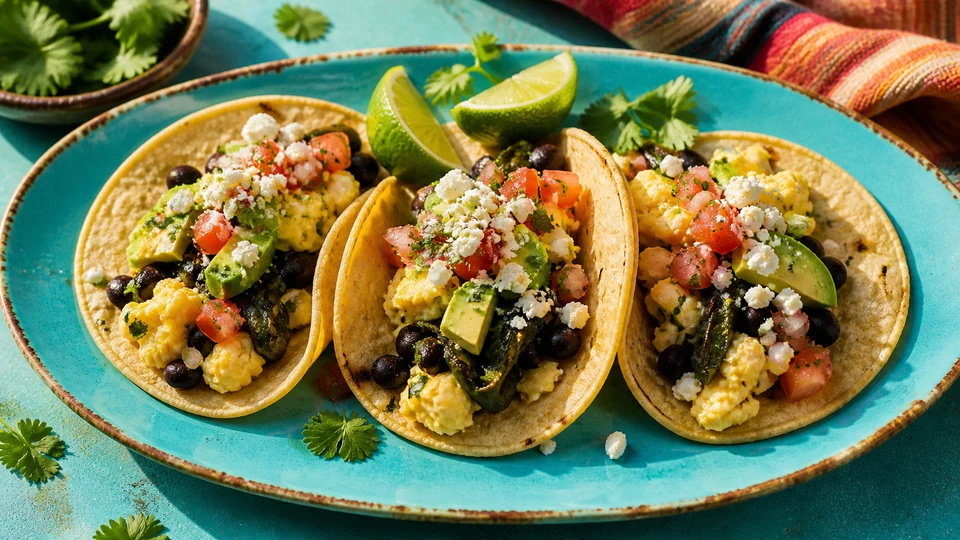
The breakfast hub covers other morning formats, while Pancake World connects this practical method to the wider collection.
| Guide sections |
|---|
| The breakfast-taco structure |
| Choose the tortilla first |
| Egg filling: soft texture with a verified endpoint |
| Potato filling: cook through, then seek browning |
For broader context, continue with American Breakfast: Pancakes, Diner Plates and Brunch.
The breakfast-taco structure
A breakfast taco is a small tortilla folded around morning ingredients. The useful method is modular: prepare each component correctly, then combine compatible amounts at service. This page does not claim one culturally definitive taco and does not invent a Pancake World formula. The cited Food Network Kitchen recipe is one complete culinary example; its quantities and timing remain with that source.
Use this four-layer model:
- a warm corn or flour tortilla;
- one cooked base, such as eggs, potatoes, beans, sausage, or chicken;
- one fresh or crisp finish;
- a controlled amount of sauce or cheese.
More layers are not necessarily better. Heavy, wet tacos split, cool quickly, and hide the texture of the tortilla. For a first batch, build one taco and check whether it folds without tearing before filling the rest.
Choose the tortilla first
Tortilla size determines how much filling the taco can hold. Follow the selected recipe’s type and diameter. Substituting a very small corn tortilla for a larger flour tortilla without reducing filling creates breakage; substituting a large flour tortilla can turn the portion into a burrito rather than a taco.
Corn tortillas
Corn tortillas generally become more flexible when heated. Warm them using the source method—such as a dry skillet, griddle, or covered microwave stack—and keep the batch covered briefly so it remains pliable. Do not leave a damp covered stack at room temperature through a long service.
Some corn tortillas can crack when cold or stale. Warm one first. If it still breaks, use two small tortillas only if the complete recipe expects that structure, or choose a different package rather than soaking the tortilla with extra sauce.
Flour tortillas
Flour tortillas are often more elastic, but they can dry at the edges or become gummy under wet filling. Warm them shortly before service and keep the stack protected from moving air. Check package labels for wheat and possible milk, soy, sesame, or other ingredients.
Do not oil the tortilla automatically. A recipe written for dry warming may behave differently when fat is added, especially on a hot griddle.
Warming a batch
For a group, warm a small stack close to assembly. Keep the next unopened package at room temperature only as its label permits. A towel used to hold tortillas must be clean and dedicated to food. Replace it if it becomes wet from steam or filling.
Egg filling: soft texture with a verified endpoint
Choose a complete scrambled-egg or egg-taco method. FDA advises cooking eggs until the yolk and white are firm and cooking egg dishes thoroughly; FoodSafety.gov lists 160°F for egg dishes. A source may provide a specific safe texture and endpoint, but shiny raw liquid should not be accepted as a style choice for a group service.
For even cooking, use a pan large enough for the selected batch. A large volume in a small skillet cooks slowly and creates dry edges around a wet center. Cook in separate complete batches rather than doubling a formula blindly.
Remove eggs from the cooking pan according to the source before they become dry. A hot pan continues transferring heat. Place cooked eggs in a clean vessel, not the bowl that held raw beaten egg.
If adding cheese, chiles, vegetables, or meat, follow a formula designed for them or cook and drain those ingredients separately. Raw vegetables release water; cold cheese lowers temperature; raw meat introduces a separate safety endpoint. “Stir it in” is not a universal substitution rule.
Potato filling: cook through, then seek browning
Potatoes offer substance but are a common source of delay. Select a complete method that states cut size and whether the pieces are par-cooked, roasted, or cooked entirely in a skillet.
Cut pieces to a consistent size so the source’s timing is meaningful. Rinse or soak only when directed; added surface water must be drained and dried before browning. Crowding traps steam, so divide the batch rather than increasing heat until the outside scorches.
Season within the complete recipe. Salt, spice blends, cheese, cured meat, and bottled salsa can all contribute sodium; this article does not provide a nutrition total. If potatoes wait before assembly, use the recipe’s holding guidance and preserve their safe temperature.
Beans as a separate filling path
Beans can be mashed, left whole, or cooked with seasoning according to a full recipe. Canned beans must be handled according to the label; drain or rinse only if the recipe and product allow. Wet beans should not be spooned directly from excess liquid into a tortilla.
For a vegetarian path, use a dedicated clean spoon and a separate pan if meat cross-contact matters. Vegetarian does not mean vegan or allergen-free: cheese, crema, tortillas, sauces, and prepared beans may contain animal ingredients or major allergens.
Keep the bean option visually distinct. A labeled vessel and its own utensil are more reliable than relying on the cook’s memory during a busy assembly line.
Sausage, bacon, and chicken
Animal proteins need identity-specific controls. FoodSafety.gov lists 160°F for ground beef and pork, 165°F for poultry, and 165°F for leftovers. Whole cuts have other endpoints and rest requirements. Use a thermometer at the thickest part and follow the complete recipe.
Sausage
Identify whether sausage is raw, partially cooked, or fully cooked. Cook raw ground pork or beef sausage to 160°F and poultry sausage to 165°F. Crumble size does not replace measurement. Drain excess fat according to the recipe so it does not soak the tortilla.
Bacon
Use a complete bacon method and avoid transferring its fat to ready-to-eat garnishes. Move cooked pieces to a clean plate. Bacon is a flavor addition, not evidence that the rest of the taco has reached a safe endpoint.
Chicken
Cook poultry to 165°F. If using leftover cooked chicken, reheat it to 165°F. Do not warm an assembled taco just until the tortilla is hot and assume cold chicken in the center has reheated adequately.
Raw-meat boards, knives, plates, and hands must not contact tortillas, salsa, cheese, avocado, or cooked fillings until cleaned.
Fresh finishes and moisture control
Fresh ingredients create contrast but also add water. Add them after hot components are cooked.
Salsa
Use a complete fresh or cooked salsa recipe, or a labeled commercial product. Drain a very liquid salsa with the method the recipe provides, or serve it on the side. Never save salsa that has been touched by a spoon used in raw egg or meat.
Avocado
Cut avocado near service. If a complete recipe specifies citrus or seasoning, follow its amount. Keep cut avocado chilled when it is not being served. Browning is a quality observation, not a food-safety measurement.
Onion, cilantro, cabbage, and radish
Wash produce under running water before cutting. Use a clean board. Slice consistently so each taco gets a small amount and still folds. Cilantro and raw onion are optional flavor choices, not requirements.
Cheese and crema
Add modest amounts so the hot base remains the main filling. Retain labels for milk and other allergens. Use a clean spoon or squeeze bottle, keep chilled products under the conditions on their labels, and do not leave the whole container beside a warm griddle.
A controlled two-path taco bar
For six to eight people, two filling paths are easier than an unlimited buffet. One example is eggs and potatoes on one side, beans and vegetables on the other. This is a service model, not a recipe.
Arrange the line in assembly order:
- warm tortillas;
- hot filling A;
- hot filling B;
- cheese;
- cabbage or onion;
- salsa;
- avocado;
- plates and napkins at both ends if traffic flows in two directions.
Place raw ingredients nowhere on this line. Keep backup garnishes refrigerated and hot fillings in verified hot holding. Give each container its own utensil. If an allergen-controlled option is required, assemble it in the kitchen before opening the shared line, cover it, and label it.
Avoid an oversized topping bar. Five small bowls can consume more refrigerator space and utensils than the two core fillings. Choose toppings that create a distinct role: one crisp, one creamy, one acidic or spicy.
Cooking and assembly sequence
Step 1: read all complete sources
Confirm tortilla type, filling yields, pan size, appliance settings, storage, and safe endpoints. Do not merge the egg timing from one recipe with the filling amount from another.
Step 2: prepare cold toppings
Wash and cut produce on a clean surface. Cover and refrigerate. Grate cheese with clean equipment. Set out labels, but keep the actual food cold.
Step 3: cook the longest filling
Potatoes usually take longer than eggs. Raw sausage or chicken needs its own complete cooking path and thermometer check. Finish and transfer each component to a clean vessel.
Step 4: cook eggs last
Eggs have a short quality window. Cook a correctly sized batch, verify the endpoint, and move it from the hot pan. Do not add cold ingredients after the safety check without considering the resulting temperature.
Step 5: warm tortillas
Warm only the number likely to be used immediately. Hold them briefly according to the source method. Replace a damp towel or holder.
Step 6: build one test taco
Use a measured spoonful of filling, one fresh finish, and one sauce. Fold it. If it breaks or leaks, reduce filling or moisture before assembling more.
Step 7: serve in small waves
Build tacos close to eating. For a buffet, let guests assemble from controlled containers. Do not pre-build a full tray that will soften while waiting.
Make-ahead breakfast tacos
Use a complete make-ahead recipe with explicit cooling, wrapping, refrigeration or freezing, and reheating instructions. A freshly cooked breakfast taco cannot be turned into a freezer recipe by intuition.
Moisture is the central design issue. Fresh salsa, avocado, and crema are generally better added after reheating unless the tested source says otherwise. Cool fillings as directed before wrapping so steam does not condense inside the tortilla.
Label each package with the filling and date. Keep an allergen-controlled batch physically separate. Remove foil or packaging before microwaving unless it is explicitly microwave-safe.
Reheat leftovers to 165°F, checking the center of the thickest taco. A hot tortilla edge does not prove the egg, potato, or meat center is hot. If reheating from frozen, use the source’s staged method; do not improvise a universal time because microwave power, taco thickness, and filling moisture vary.
Food safety and storage
Keep shell eggs refrigerated. FDA advises buying clean, uncracked eggs and preventing cross-contamination between raw eggs and other foods. Wash hands, utensils, and surfaces after raw egg contact.
FoodSafety.gov gives these relevant endpoints:
- egg dishes: 160°F;
- ground beef and pork: 160°F;
- all poultry: 165°F;
- leftovers: 165°F.
Use the full chart for other foods. The taco’s name does not decide the temperature; the filling does.
Refrigerate perishable ingredients and leftovers promptly. Consult the cold-storage chart for the correct category. Divide large filling batches into shallow containers when appropriate so they cool efficiently. Do not store an unmarked mixed filling whose age cannot be established.
For service, put out small quantities and replace vessels rather than topping them up. Keep salsa, avocado, crema, cut produce, eggs, and cooked meats under safe control. When time or storage history is uncertain, discard rather than attempting to rescue the food with extra heating.
Allergen and dietary checks
Breakfast tacos can contain egg, milk, wheat, soy, and sesame. Corn tortillas may be produced in facilities handling other grains; sausage and sauces can include less obvious ingredients. Read every label.
A corn tortilla does not by itself make the complete taco gluten-free. Cross-contact, seasoning, processed meat, sauces, and shared griddles all matter. Similarly, a bean taco may contain lard, cheese, or dairy sauce and is not automatically vegan.
Use separate covered containers and clean tools for a verified alternative. Prepare it before crumbs and raw egg spread across the workspace. Do not make medical or allergen-safety promises beyond the documented ingredients and process.
Troubleshooting by symptom
Tortilla cracks when folded
Warm it using the source method, reduce the filling, and check package freshness. Do not soak it in sauce. Test a new batch before filling several tacos.
Tortilla becomes gummy
The filling may be too wet or the stack may be trapped in excessive steam. Drain salsa and vegetables, use less sauce, and warm smaller batches.
Potatoes are pale and soft
The pan may be crowded or the potatoes wet. Follow the complete recipe’s cut size, drying, and batch guidance. Finish potatoes before combining with eggs.
Eggs are dry
Use the correct pan and batch size, follow the source heat, and remove cooked eggs from the hot pan when the specified endpoint is met. Do not compensate with excess sauce.
Meat is browned but below temperature
Continue cooking and verify again with a clean thermometer. Surface color is not a substitute for internal measurement.
Taco falls apart on the plate
Use less filling, reduce liquid, and place the driest hot component against the tortilla. Serve sauce on the side. The fold should close before garnish is added.
The bar develops a long queue
Offer two fillings, not six. Pre-portion cheese and crisp toppings, place drinks elsewhere, and warm tortillas in small stacks from a second position.
Leftover tacos reheat unevenly
Use the make-ahead source’s method, separate components if directed, and measure the center. A lower-power staged microwave process may suit one source, but there is no universal setting.
Frequently asked questions
What is the difference between a breakfast taco and a breakfast burrito?
A taco is usually smaller and folded rather than fully enclosed. This route focuses on immediate assembly and a modest filling. A burrito method must manage a larger tortilla, closed fold, denser center, and often make-ahead reheating.
Are corn or flour tortillas better?
Neither is universally better. Use the tortilla the complete recipe expects and that fits the guest’s ingredient needs. Warm it correctly and match filling volume to diameter.
How many tacos per person?
Use the selected recipe’s yield and the rest of the menu. Tortilla size and filling amount vary too much for one number to cover every event. Make a test taco and record its portion.
Can breakfast tacos be vegetarian?
Yes, with a complete bean, egg, potato, or vegetable filling. Check cheese, prepared beans, tortillas, sauces, and shared equipment. Vegetarian is not the same as vegan or allergen-free.
Can eggs and raw sausage cook in one pan?
Only if a complete tested recipe explicitly manages the sequence and safe endpoints. Otherwise cook raw sausage separately, verify its temperature, move it to a clean vessel, and cook eggs without raw-meat cross-contamination.
Is this a tested Pancake World recipe?
No. It is a source-faithful method and decision guide. Use a complete cited recipe for quantities, timing, pan size, and yield.
Final taco checklist
- Tortilla type and size match the selected recipe.
- One hot filling, one fresh finish, and one sauce define each path.
- Eggs, meats, and leftovers have category-specific endpoints.
- Potatoes cook through before assembly.
- Wet toppings are drained or served on the side.
- Cold toppings remain refrigerated until needed.
- Raw-food tools never enter the service line.
- One test taco folds without leaking.
- Tacos are assembled close to eating.
- Make-ahead tacos follow a complete cooling and reheating method.
- The center, not the tortilla edge, is checked during reheating.
- Ingredient and allergen labels remain available.
The dependable breakfast taco is not the one with the longest ingredient list. It is the one whose tortilla stays flexible, whose filling is safely cooked and drained, and whose fresh finish is added at the moment of service.
Explore related Pancakes World guidance on American Pancakes, Maple Syrup, and Maple Syrup Pancakes.
Sources and editorial references
- U.S. Food and Drug Administration, “What You Need to Know About Egg Safety” —
https://www.fda.gov/consumers/consumer-updates/what-you-need-know-about-egg-safety - FoodSafety.gov, “Safe Minimum Internal Temperatures” —
https://www.foodsafety.gov/food-safety-charts/safe-minimum-internal-temperatures - FoodSafety.gov, “Cold Food Storage Chart” —
https://www.foodsafety.gov/food-safety-charts/cold-food-storage-charts - USDA FoodData Central —
https://fdc.nal.usda.gov/ - Food Network Kitchen, “Breakfast Tacos” —
https://www.foodnetwork.com/recipes/food-network-kitchen/breakfast-tacos-recipe-2106061