Breakfast smoothies for diabetics
At Pancakes World, a person with diabetes should treat a breakfast smoothie as a measurable meal choice, not as a universal prescription or a promised way to control blood glucose. Begin with the individual eating plan agreed with a health-care professional, define an actual serving, and account for every ingredient—including juice, milk, yoghurt, fruit, powders and sweeteners. Read labels against the amount poured, keep a written formula, and change only one component at a time. The examples here are planning patterns, not medical advice, nutrient calculations or tested recipes.
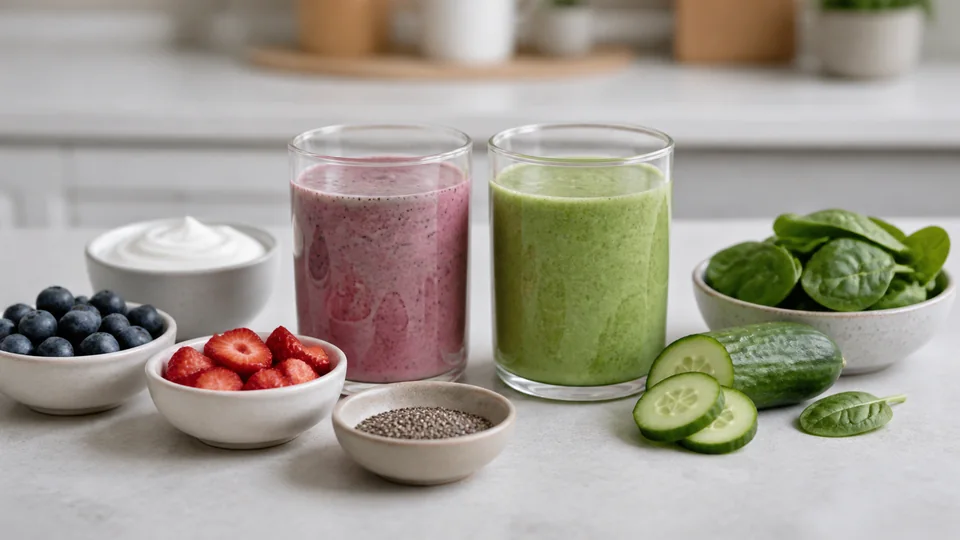
The Breakfast hub covers other morning formats. Pancake World is the main editorial library.
| Guide sections |
|---|
| Why a smoothie needs an individual plan |
| Write the serving before selecting ingredients |
| Read labels from the amount you use |
| Use ingredient records accurately |
For broader context, continue with American Breakfast: Pancakes, Diner Plates and Brunch.
Why a smoothie needs an individual plan
Diabetes management is individual. The National Institute of Diabetes and Digestive and Kidney Diseases advises people with diabetes to work with their health-care team on what, when and how much to eat. Medication, activity, other conditions, personal targets and the rest of the meal can affect that plan. A generic web article cannot safely replace it.
The word “smoothie” also hides substantial variation. A small blend made from measured ingredients is different from a large café-style drink with several juices, sweetened yoghurt and toppings. Even two home blends that look alike can use different amounts and food forms. No claim should be inferred from colour, thickness, the presence of greens or a label such as natural.
Use this article to organise questions and measurements. If a clinician or registered dietitian has given you a carbohydrate amount, ingredient restriction or timing instruction, that individual direction takes priority. If you do not know how a smoothie fits your plan, bring the proposed ingredient list, package labels and serving size to that professional before making it routine.
Write the serving before selecting ingredients
Choose the vessel you will actually use and measure its practical fill line. A blender jug can hold several servings, while a travel cup can conceal how much was poured. Decide whether the batch is one serving or multiple servings before blending. If it is shared, specify how the batch will be divided.
Record ingredients by an unambiguous measure or weight appropriate to your plan. “One banana” varies; “a handful” is not reproducible; pouring juice directly from the carton prevents an honest record. This page supplies no target quantities because those belong to the person's plan and a complete evaluated formula.
Do not forget additions that appear small. Syrups, honey, sweetened powders, flavoured creamers, nut or seed butters, sweetened plant beverages and granola toppings all belong in the ingredient record. Ice and water also affect volume and texture, even though they are not interchangeable with nutrient-containing liquids.
After blending, pour only the planned serving. Refrigerate any reserved portion promptly in a clean, covered container if the formula's ingredients permit storage. Label it instead of assuming the remaining jug will be remembered accurately.
Read labels from the amount you use
FDA explains that a Nutrition Facts label identifies serving size and servings per container. The serving size on a carton is not necessarily the amount that fits your glass. If you use twice the labelled amount, the declared information cannot simply be read as though you used one serving.
Turn each package around and inspect the current label. Note the serving basis, the amount used, and information relevant to the individual's plan. Check the ingredient statement and allergen declaration where applicable. Similar front-of-package words do not mean two products have the same composition.
Sweetened and unsweetened versions can differ, as can plain and flavoured yoghurt, dairy and plant-based beverages, or powders sold for different purposes. This article does not rank those products. It asks the reader to compare the exact package with the personal criteria supplied by a health-care professional.
If a package changes, repeat the check. Do not preserve an old calculation or clinician-approved formula while silently substituting a new product. Keep a photograph or written transcription only for personal planning and verify it against the current container.
Use ingredient records accurately
USDA FoodData Central contains data for many foods and food forms. A record for raw fruit differs from a sweetened product, canned fruit in syrup, juice or a branded prepared item. Select the record matching the ingredient as used. An approximate search result is not a substitute for an exact package label when the package is available.
No nutrient numbers are reproduced on this page. A smoothie calculation requires exact ingredients, forms, amounts, retained portions and final yield. It also requires interpretation against an individual plan. Publishing generic totals beside adaptable ideas would suggest a precision the article does not have.
When an ingredient lacks clear information, pause rather than guess. Ask whether it is essential. A smoothie with fewer documented components is easier to discuss with a clinician than a blend containing several unlabeled scoops.
A neutral smoothie-building worksheet
Create five rows: liquid, main produce, secondary flavour, texture component and optional finish. Fill only the rows needed by the chosen formula. Beside each ingredient, write the amount, label source and whether it is part of the individual eating plan.
The liquid could be water, milk or another labelled beverage. Main produce might be one measured fruit or a fruit-and-vegetable combination. Texture could come from yoghurt, oats or another ingredient the plan permits. The finish might be spice, herbs or a measured topping. These are culinary categories, not recommendations about glucose response.
Leave a row blank when an ingredient does not serve a clear purpose. Multiple fruits, juice and a sweetened base can accumulate unnoticed because each is described separately. A concise worksheet makes the whole drink visible.
Add a final line for what is eaten beside the smoothie. The drink may be the entire breakfast or one component; that distinction affects how it should be assessed within the personal plan. Do not analyse the glass in isolation if toast, eggs or another food is also present.
Planning pattern: berry and plain base
A measured berry smoothie can be discussed as a pattern: a labelled plain base, a specified berry form, enough permitted liquid for blending, and an optional flavour such as cinnamon. Fresh and frozen berries are not automatically identical in a record; choose the actual form.
Keep the combination plain until the individual plan is checked. Do not add juice for blending convenience without recording it. If a commercial yoghurt is used, read its current serving basis and ingredient statement. If a clinician has recommended an accompaniment, treat that as part of breakfast rather than adding it invisibly to the blender.
This is not a recipe and contains no quantities or nutrient claim. It is a way to arrive at a short ingredient list that a professional can evaluate.
Planning pattern: peach, yoghurt and spice
Peach and yoghurt can create a thick drink when their forms and quantities are defined. Fresh peach, frozen unsweetened slices and canned peach have different records and handling. Canned fruit may be packed in different liquids, so read the package instead of using the category name as a calculation.
Choose plain or flavoured yoghurt only after checking the label and the individual plan. Vanilla, ginger or cinnamon can change aroma without disguising what is in the cup. Measure every addition; a casual drizzle or scoop weakens the record.
If the blend is too thick, adjust with the permitted liquid in a recorded amount. Do not correct texture by alternating unmeasured liquid and fruit until the original formula is lost.
Planning pattern: green produce without a health halo
A green smoothie can combine a measured fruit, a leafy vegetable and a documented liquid. The colour does not establish lower carbohydrate, better glucose control, detoxification or any other medical result. It simply describes visible ingredients.
Wash produce under running water. FDA advises against soap, detergent or commercial produce wash. Remove damaged areas as appropriate, use clean utensils and keep ready-to-eat produce away from raw animal foods.
Blend only a quantity that fits the planned serving and equipment. Fibrous pieces may require a different blending order, but the complete formula should supply that instruction. Do not assume longer blending changes the drink's role in the eating plan.
Planning pattern: cocoa and a labelled milk choice
An unsweetened cocoa flavour can be paired with a labelled milk or plant-based beverage and another measured ingredient for body. Cocoa powders and beverage products are not interchangeable; some are sold sweetened or as drink mixes. Read the ingredient statement.
Powders create a common recording error because scoops differ. Use the package measure or an appropriate scale, and level the measure consistently. If a protein or supplement powder is considered, discuss it with the relevant health-care professional, especially when medication or kidney considerations exist. This page does not recommend supplements.
Avoid calling the result a milkshake alternative or guilt-free treat. Those phrases obscure the actual formula. Name the measured ingredients and let the individual plan decide whether the drink fits.
Planning pattern: oats for texture
Oats can thicken a smoothie, but the amount and form must be recorded. Rolled oats, quick oats and cooked oats do not occupy the same state. Use a complete formula that addresses safe blending and texture, then compare its exact food record with the personal plan.
Do not add oats merely because a recipe calls them “slow” or “healthy.” Those words do not calculate the finished drink. If the smoothie becomes too thick, note the liquid used to adjust it. If prepared in advance, follow the storage requirements of all components.
An oat pattern may be more spoonable than drinkable. That is a presentation choice, not a medical advantage. Select a bowl or cup that makes the planned serving clear.
Planning pattern: avocado for a creamy texture
Avocado can create body with a small number of visible ingredients. Define the amount and record the exact food form. Pair it with a measured fruit, vegetable or flavour only if the complete plan permits. Adding several creamy ingredients can make the serving difficult to assess.
Cut avocado should be handled with clean tools and incorporated promptly. Colour change during holding is not itself a nutrient or safety calculation. Prepare the amount needed and follow appropriate refrigeration for any leftover blend.
Do not market the pattern as blood-sugar friendly. Only the person's health-care plan can determine suitability in context.
Planning pattern: a smoothie bowl
A smoothie bowl uses less free-flowing liquid or more frozen material and is eaten with a spoon. The bowl can make toppings visible, but toppings still count. Portion granola, fruit, coconut, nuts, seeds or spreads before adding them rather than decorating without measurement.
The larger vessel can encourage a larger batch. Establish the serving first and transfer only that amount. Keep remaining blend refrigerated promptly if it will be used safely, and record whether the formula was divided.
Use a topping for a defined texture or flavour, not to create a social-media appearance. One or two measured finishes keep the meal easier to document.
Juice requires the same accounting as every other ingredient
Juice is not neutral blending liquid. If it is part of the formula, read its label, measure it and include it in the plan. A splash poured from the carton can become a substantial undocumented amount.
Water and ice can adjust flow without adding another labelled food, but they change yield. Record them so the serving division remains clear. If a frozen ingredient supplies enough liquid as it thaws, follow the formula rather than adding liquid pre-emptively.
Avoid statements that whole fruit always produces a specific glucose result compared with juice. Individual response and medical guidance are beyond this evidence set. The safe editorial point is simply that the forms differ and should be recorded accurately.
Sweeteners and flavourings
Honey, maple syrup, table sugar, dates, sweetened syrups and flavoured powders belong in the ingredient record. “Natural” does not make an addition invisible. If a sweetener is permitted in the individual plan, use the planned amount. If it is not needed, leave it out rather than adding it by habit.
Spices, extracts, citrus zest and herbs can add aroma, but check packaged extracts and blends for their own ingredients. A strongly flavoured smoothie can still contain a complex formula. Keep the name descriptive rather than assigning a health effect.
Non-sugar sweeteners also require package review and individual consideration. This article does not recommend one, claim a metabolic effect or supply conversion ratios.
Portioning a blender batch
Mark the batch yield only after all ingredients are in the jug. If the formula is designed for two servings, divide it evenly into identical measured containers rather than estimating by eye between mismatched glasses. Scrape and distribute retained thick mixture if that is part of the yield.
Do not top one serving heavily and then claim both servings have the same composition. Record toppings separately. If one portion is stored, label it with contents and time prepared.
A family blender may retain residue from nuts, dairy or other allergens. Clean equipment appropriately for the person's needs. A quick rinse is not an adequate cross-contact plan where a serious allergy exists.
Questions to bring to a clinician or dietitian
Ask how a liquid or blended breakfast should fit the personal meal plan, which ingredient information matters, what serving is appropriate, and whether medication timing changes the decision. Bring the exact formula rather than asking whether “smoothies” are allowed.
If monitoring has been recommended, ask how and when to use those results and what range requires action. Do not invent an experiment from online advice. A single response cannot prove that an ingredient is universally good or bad.
Ask about supplements, protein powders and meal-replacement products before using them routinely. Their labels and intended uses vary, and an individual's kidney health, medications or other conditions may matter.
Shopping and label capture
Choose the formula before shopping. Photograph current labels for ingredients that will be discussed with the care team, making sure serving size, nutrients, ingredient statement and product identity are legible. Do not rely on an online image that may represent another version.
Buy only the produce amount likely to be used safely. Fresh, frozen and canned options can support different schedules, but their exact forms must be recorded. Preserve cartons and labels until the formula has been prepared and entered accurately.
At home, store foods as their packages direct. Keep frozen ingredients frozen, refrigerate opened beverages and yoghurt, and date transferred containers.
Preparation and blender safety
Wash hands and clean the blender, lid, gasket and utensils. Residue can remain around blades and seals. Assemble equipment with the power disconnected where the manufacturer's directions require, and never reach into a connected blender.
Wash fresh produce under running water before cutting. Use clean boards and knives. Place liquids and solids in the order required by the blender and recipe; not every machine handles frozen pieces in the same way. Follow the appliance instructions for maximum fill and hot liquids.
Stop and scrape only after the blades have completely stopped and the equipment is safe to open. If the motor struggles, do not force it with an unapproved utensil. Adjust according to the appliance manual and documented formula.
Serve promptly or refrigerate. A smoothie that separates can often be stirred, but separation does not reveal whether it was stored safely. When its time or temperature history is unknown, do not taste it to decide.
What this page deliberately does not claim
It does not call any ingredient diabetic-safe, low-glycemic, glucose-lowering or insulin-balancing. It does not calculate carbohydrate, fibre, protein, fat, calories or exchanges. It does not prescribe a meal frequency, serving size or monitoring routine.
It also does not rank fruits, milks, yoghurts, powders or commercial products. Product suitability depends on the current label and individual care plan. Brand availability, price and endorsement are outside scope.
Finally, it does not claim the ideas were tested by Pancake World. They are editorial planning patterns. Recipe schema is withheld because there is no project-owned test record with fixed quantities, instructions, yield and timing.
Frequent planning errors
Counting only the fruit
The liquid, yoghurt, powder, spread, sweetener and topping also belong in the formula. Write the entire drink and any side food.
Treating a blender jug as one serving
Define yield and division before pouring. A large jug may contain multiple planned portions.
Copying a number from a different food form
Match the record to fresh, frozen, canned, prepared or branded food as actually used. Do not use a generic value simply because the ingredient name is similar.
Changing several ingredients at once
Multiple changes make it difficult to review the formula with a professional. Retain a stable base and alter one documented component when appropriate.
Using colour as evidence
Green, purple or pale smoothies do not disclose their quantities or medical effects. Colour is a visual description only.
Frequently asked questions
What is the best breakfast smoothie for diabetes?
There is no universal best choice in this evidence set. The appropriate formula, amount and timing should be coordinated with the individual's health-care professional and current eating plan.
Can fruit go in the smoothie?
Ask how the exact fruit, form and quantity fit your plan. Record it rather than treating “fruit” as one interchangeable ingredient.
Is an unsweetened product always suitable?
No conclusion follows from that word alone. Read the full current label and assess the planned amount with the care team.
Should I add protein powder?
This page does not recommend supplements. Discuss the exact product and label with a qualified professional who knows your conditions and medications.
Can I prepare the smoothie the night before?
Only if the chosen formula and ingredients support refrigerated storage. Use a clean covered container, label it and keep it cold. Do not infer safety from smell or appearance.
Why are no quantities provided?
Quantities would imply a single recipe and medical suitability. This page instead provides a documentation framework for a formula selected within an individual plan.
A one-page record
Write the date, purpose, final serving, complete ingredient list, package serving basis, amount used, food record source and any food eaten beside the smoothie. Attach current labels where useful. Add preparation and storage times.
Take that record to the relevant health-care appointment. A precise proposed breakfast is easier to evaluate than a broad question about smoothies. Keep any approved changes with the record so the next preparation does not drift.
Explore related Pancakes World guidance on American Pancakes, Maple Syrup, and Maple Syrup Pancakes.
Sources and editorial references
- National Institute of Diabetes and Digestive and Kidney Diseases —
https://www.niddk.nih.gov/health-information/diabetes/overview/diet-eating-physical-activity - U.S. Food and Drug Administration —
https://www.fda.gov/food/nutrition-facts-label/how-understand-and-use-nutrition-facts-label - USDA FoodData Central —
https://fdc.nal.usda.gov/ - U.S. Food and Drug Administration —
https://www.fda.gov/food/buy-store-serve-safe-food/selecting-and-serving-produce-safely