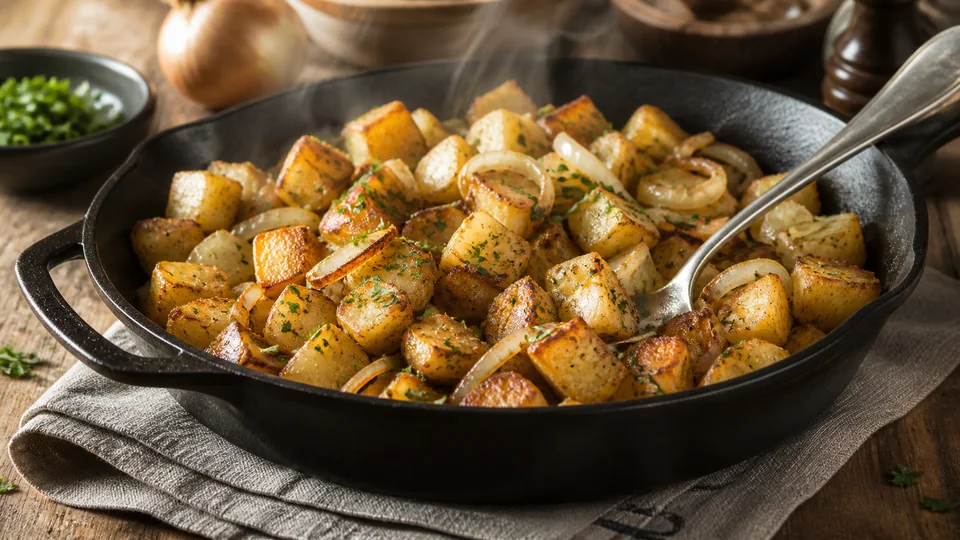
Breakfast potatoes with onions
At Pancakes World, for crisp breakfast potatoes with onions, choose one controlled route: cook small raw potato cubes covered until nearly tender and then uncover to brown; par-cook larger cubes before they enter the skillet; or start with cold cooked potatoes for the quickest crust. Dry the potato surfaces, use a broad pan, and avoid crowding. Add onions according to the result you want—early for soft, integrated onions or later for firmer pieces with clearer edges. Turn only after the potatoes release from the pan. Season at the end, verify the centers are tender, and refrigerate leftovers promptly rather than leaving the skillet out through brunch.
This is a technique and decision guide, not a tested Pancake World recipe. For other ways to assemble a morning plate, use the breakfast hub; Pancake World connects the wider collection.
For broader context, continue with American Breakfast: Pancakes, Diner Plates and Brunch.
Decide which potato path fits the morning
“Breakfast potatoes” can describe several different results: crisp cubes, soft home fries, a vegetable hash, or reheated potatoes with browned edges. The right method depends less on a universal recipe than on the state of the potatoes when you begin.
| Starting point | Best reason to choose it | Main challenge | Control that matters most |
|---|---|---|---|
| Raw small dice | one-pan preparation and no advance cooking | exterior may brown before center softens | small even pieces plus a covered tenderizing phase |
| Par-cooked chunks | reliable tender centers and flexible piece size | wet surfaces can steam | drain, let steam escape, then dry before browning |
| Cold cooked potatoes | fastest morning cooking and strong crust potential | pieces may break during handling | cold firm pieces and restrained turning |
| Frozen diced potatoes | convenience and consistent cut | surface ice and package-specific directions | follow the package and avoid crowding |
Choose the path before heating the pan. Changing methods halfway—adding water after crisping begins, or covering a pan full of already tender potatoes—usually sacrifices texture.
Potato type changes the result
University of Minnesota Extension distinguishes dry or mealy potatoes such as russets from waxy or moist-fleshed potatoes. Russets suit frying and can create a dry, fluffy interior, but their edges can break when boiled or stirred aggressively. Waxy potatoes hold their shape more readily in soups, frittatas and salads, and they can be pan-fried after boiling without falling apart as easily. All-purpose potatoes such as Yukon Gold sit between those ends.
Colorado State University Extension similarly notes that red and gold potatoes hold together better when boiled than russets. Use those characteristics as selection guidance, not as a rigid rule:
- choose russets when a rough, crisp exterior and fluffy center matter more than perfectly intact cubes;
- choose red or other waxy potatoes when neat pieces and repeated turning matter;
- choose Yukon Gold or another all-purpose type when you want a middle path;
- use the potatoes already available when convenience matters, then adjust handling to their texture.
Variety names do not replace observation. Potatoes of different ages, sizes and storage histories lose moisture differently. Cut one and check the flesh. If pieces crumble after par-cooking, handle them with a wide spatula and turn fewer times. If they remain very firm, allow more tenderizing before trying to brown them.
Cut size is your cooking clock
Even pieces cook more predictably than a mix of tiny fragments and large chunks. Small dice shorten the raw-skillet path but require more cutting. Larger cubes provide a stronger potato bite but benefit from par-cooking.
Aim for consistency rather than a particular fractional-inch measurement. Place the first few cuts beside the remaining potato and use them as a visual guide. Remove very thin slivers; they can burn while the central cubes remain firm. If using several potato shapes, separate them into batches or accept that the smallest pieces will become crisper.
Onions should also be cut for their intended role. Thin slices soften quickly and wind between potato pieces. Medium dice produce more distinct bites. Thick wedges need more time and can block potato contact with the pan. Green onions are generally a finishing ingredient; their tender green sections do not need the long cooking used for bulb onions.
Preparation and produce safety
FDA advises washing all produce thoroughly under running water before preparing it, including produce that will be peeled. Do not use soap, detergent, or commercial produce wash. Washing before peeling helps avoid transferring soil or contaminants from the surface with the knife.
Use this sequence:
- wash hands and clean the board, knife and colander;
- rinse potatoes and onions under running water as appropriate;
- scrub firm potato surfaces with a clean produce brush;
- cut away damaged areas and remove green areas from potatoes;
- peel only if the desired texture requires it;
- cut the potatoes evenly and keep the work area separate from raw meat or eggs.
If cut potatoes must wait briefly, prevent discoloration with cold water, then drain and dry them thoroughly before the skillet. Water protects the color but works against browning, so the drying step cannot be skipped.
Method one: raw potatoes in one skillet
The raw-potato method is useful when you want one pan and have no cooked potatoes ready. It needs two distinct phases: tenderize, then brown.
Begin with small, even cubes and a pan large enough to hold them in a shallow layer. Heat the pan, add the cooking fat appropriate to your recipe, and distribute the potatoes. A short initial contact can begin color, but the centers still need heat and moisture. Lower the heat as needed and cover the pan so trapped steam helps cook the interior.
Check a representative piece with a thin knife or fork. It should be approaching tender before the browning phase. Remove the lid carefully so condensation does not fall back across the surface. Allow moisture to evaporate, then spread the pieces and let them make undisturbed contact with the pan.
Do not assign a universal number of minutes. Cube size, pan material, burner output, potato type, starting temperature and batch volume all change the timing. Use the center texture and surface dryness as the transition signals.
When to add onions in the raw method
Adding onions at the beginning makes them very soft and integrated, but it also adds moisture while potatoes are trying to brown. Adding them after the potatoes are nearly tender gives the onions time to soften without spending the entire cook in the pan.
A third option is a two-zone approach. Push nearly tender potatoes to one side, add onions to the open side with the necessary fat, cook until softened, then combine. This preserves more potato-pan contact. It only works when the pan is large enough; a crowded skillet has no real open zone.
Method two: par-cook, dry, then brown
Par-cooking separates center tenderness from surface browning. It is particularly helpful for larger pieces or a bigger batch.
Use a complete source method for exact quantities. The general workflow is:
- cut potatoes evenly;
- simmer or otherwise par-cook until the centers are partly tender but the pieces still hold together;
- drain thoroughly;
- let surface steam escape;
- spread on a tray or towel-lined surface as appropriate and dry;
- brown in a preheated broad skillet;
- cook onions separately or add them at the chosen stage;
- combine and season.
Oregon State University Extension Food Hero publishes Potato Sauté with Onions and Bell Peppers. Its complete formula par-cooks halved russets to a crisp-tender stage, then cuts them and browns them with sautéed onion and bell pepper before other additions. The source explicitly presents the dish as suitable for breakfast or dinner. That recipe is useful evidence for the par-cook sequence; its yield, ingredients and nutrition apply only to its exact formula.
Par-cooked potatoes can be prepared in advance only with a safe cooling plan. Do not leave a deep bowl of warm potatoes on the counter to cool for hours. Divide and refrigerate promptly under USDA guidance, then use the cold-potato method the next morning.
Method three: cold cooked potatoes
Cold cooked potatoes are often the most efficient breakfast option. Refrigeration firms the pieces and removes the need to tenderize the centers during morning service. The skillet’s job becomes reheating and browning.
Cut cold potatoes before the pan heats. Pat away visible condensation. Add them in a shallow layer and let the first side set before turning. Because the centers are already cooked, frequent stirring is unnecessary and can break the pieces.
Cook onions in the same pan only if there is enough room. Otherwise, soften onions first, move them to a plate, brown the potatoes, and return the onions near the end. This extra plate is often a better trade than a crowded pan that steams both ingredients.
USDA FSIS says refrigerated leftovers should generally be used within three to four days and reheated to 165°F. That safety endpoint matters when the potatoes are leftovers, particularly when they were previously combined with meat, eggs, gravy or other perishable ingredients. Do not rely only on a crisp exterior; verify reheating through the food.
Control the pan, not just the timer
Four pan conditions determine whether potatoes brown.
Surface area
Each piece needs contact with hot metal or a similarly effective cooking surface. A mound of potatoes cooks in trapped vapor. Use a larger pan, reduce the batch, or cook in rounds.
Surface moisture
Wet potato pieces use pan energy to evaporate water before browning can progress. Drain par-cooked potatoes and let steam escape. Thaw or cook frozen products according to their package instead of assuming they behave like dry fresh cubes.
Heat recovery
A pan cools when a large cold batch enters. Preheating helps, but maximum heat throughout is not the answer; onions and small potato fragments can burn. Adjust the burner so the food sizzles steadily without smoking.
Movement
Turning exposes new surfaces, but constant stirring prevents a crust from forming. Wait until pieces release more easily. Lift and turn with a thin spatula rather than scraping every few seconds.
The visual goal is not uniform dark brown on every face. A useful breakfast potato can have several crisp golden areas, a tender center and a few softer sides. Chasing total coverage may overcook onions or dry the potato.
Onion timing: four different results
Onion is not merely seasoning; its cut and timing change the structure of the dish.
Soft and integrated
Add diced onion during the tenderizing stage or cook it first over moderate heat. It will blend into the potatoes and distribute sweetness, but it will contribute less crisp texture.
Golden and distinct
Cook onion separately until softened and lightly colored, then fold it into browned potatoes. This gives the most control and protects the potato crust.
Firm-edged pieces
Add medium dice late enough to retain shape. Make sure they cook to the texture you intend; “late” does not mean raw unless raw onion is deliberately wanted.
Fresh finish
Use sliced green onion or chives after the pan comes off heat. This is a garnish role and should not be confused with the cooked bulk onion in classic home fries.
Avoid adding sugar to force browning. Onion develops color through heat and moisture loss. If it remains pale, the pan may be crowded, the heat too low, or water may still be present.
Complete breakfast paths from authoritative recipes
Potatoes and onions can remain a side, or they can become the base of a documented complete breakfast.
University of Illinois Extension’s breakfast recipe collection includes a breakfast burrito in which diced potatoes cook before onions and peppers are added; beaten eggs enter after the vegetables. That order prevents raw potato centers from being hidden inside a finished egg mixture. Use the source’s complete quantities, freezing directions and reheating steps if making that burrito.
Illinois Extension also publishes a kale and artichoke frittata. In that formula, potatoes and onion sauté before kale, artichoke, eggs, milk and cheese move into a baking dish. It demonstrates a second useful sequence: firm vegetables first, tender greens next, egg mixture last. The source supplies its own pan size, yield and endpoint.
These precedents support a planning rule: complete the slowest component before adding an ingredient that cooks quickly or obscures the potatoes. They do not authorize mixing the burrito quantities with the frittata bake time.
Flavor directions without losing the potato
Choose one flavor direction rather than adding every available spice.
- Pepper and herb: black pepper, parsley, chives or dill.
- Smoky: smoked paprika with roasted pepper.
- Southwestern: cumin, chile, bell pepper and cilantro, with exact amounts from a complete recipe.
- Garden: zucchini or mushrooms cooked separately so their water does not steam the potatoes.
- Breakfast hash: potatoes and onions paired with a fully cooked meat, bean or egg component under the appropriate safety guidance.
- Simple diner style: onion, pepper, salt and restrained cooking fat.
Add fresh herbs after cooking to preserve their texture. Add dry spices when there is enough fat to distribute them but before they can scorch. Taste before adding salt if the dish includes cured meat, cheese, seasoning blends or a salty sauce.
Adding eggs or meat safely
Potatoes can be tender and browned before eggs or meat are safe. Keep those judgments separate.
If eggs are added, follow a complete egg recipe and its doneness guidance. A browned potato surface does not indicate that pooled egg between cubes is set. If using raw sausage, bacon, poultry or another meat, prevent raw juices from contaminating cooked potatoes, utensils and serving plates. Use the applicable federal safe-temperature guidance for the specific animal product.
The cleanest home workflow is often to cook the animal protein in a separate controlled step, remove or drain it as the source directs, brown the potatoes, then recombine only when each component is ready. Never use the color of onion or potato as a proxy for the meat’s internal temperature.
Scaling for two, four, or a crowd
Doubling ingredients does not double pan surface. A skillet that holds one batch in a shallow layer may steam a doubled batch. For more people, choose among three options:
- use two skillets with equal batches;
- cook potatoes in rounds and hold them briefly in an appropriate hot oven setup;
- move to a complete sheet-pan or casserole recipe designed for the larger yield.
Do not keep the first batch lukewarm on the counter while several more cook. If the hold will be extended, use proper hot holding rather than an improvised warm spot. Add onions separately so each batch receives a consistent amount.
For a brunch buffet, replenish small portions. This protects texture and makes time control easier. Record when perishable combinations leave temperature control, particularly if eggs, meat or dairy are present.
Make-ahead plan
The safest practical make-ahead strategy is to cook potatoes, cool them rapidly, refrigerate in shallow covered containers, and brown a measured portion the next morning. USDA FSIS advises refrigerating leftovers within two hours of cooking, or within one hour when the temperature is above 90°F. Refrigerated leftovers generally keep three to four days.
Do not seal a very large, deep container that will hold heat in the center. Divide the potatoes so they cool promptly. Label the date. If potatoes were already leftovers before being used in a new breakfast, the new dish does not restart the original storage clock.
Reheat leftover potatoes and any combined leftovers to 165°F. When using a microwave, cover and rotate or stir for more even heating, then check more than one place because cold spots can remain. A final skillet step may restore surface crispness after safe reheating.
Troubleshooting breakfast potatoes with onions
The potatoes are pale and soft
Likely causes are crowding, wet surfaces, low heat after loading, or too much stirring. Reduce the batch, dry the pieces, let the pan recover, and wait before turning.
The outside is dark but the center is firm
The pieces are too large for the raw method, or browning began before tenderizing. Lower the heat and use a controlled covered phase if the method allows. Next time cut smaller or par-cook.
The onions burn before potatoes cook
They entered too early for their cut and the selected potato path. Remove any burned pieces, lower the heat, and cook onions separately in the next batch.
The potatoes fall apart
They may be a mealy type, over-par-cooked, warm and fragile, or stirred too often. Cool cooked potatoes before cutting, use a waxier type, and turn with a broad spatula.
Everything sticks
The pan may not have been preheated, there may be too little cooking fat for that surface, or the crust has not released yet. Avoid forcing pieces immediately. Check that the pan and utensil suit the method.
The dish tastes oily
Oil cannot compensate for crowding or moisture. Use enough for surface contact according to the complete recipe, but solve steaming through batch size and drying rather than continually pouring in more.
The onions disappear
Use a larger cut, cook them separately, or add them later. If a soft integrated result was intended, disappearing into the potato may be a feature rather than a failure.
A route-selection checklist
Before starting, answer these questions:
- Are the potatoes raw, par-cooked, leftover, or frozen?
- Do you want fluffy rough edges or intact waxy cubes?
- Can the pan hold the pieces in a shallow layer?
- Are potato and onion pieces consistent in size?
- Should onions be soft, golden, firm-edged, or fresh?
- Is every washed or par-cooked surface dry enough to brown?
- Are eggs or meat being cooked under their own safety controls?
- Is there a plan to cool, store and reheat leftovers promptly?
The most dependable breakfast potatoes with onions come from separating three jobs: tenderize the potato centers, brown dry surfaces, and cook onions to the chosen texture. Pick the starting path, protect pan contact, and use a complete authoritative recipe whenever eggs, meat, a casserole, or exact quantities enter the plan.
Explore related Pancakes World guidance on American Pancakes, Maple Syrup, and Maple Syrup Pancakes.
Sources and editorial references
- FDA, “Selecting and Serving Produce Safely.”
https://www.fda.gov/food/buy-store-serve-safe-food/selecting-and-serving-produce-safely - USDA FSIS, “Leftovers and Food Safety.”
https://www.fsis.usda.gov/food-safety/safe-food-handling-and-preparation/food-safety-basics/leftovers-and-food-safety - University of Minnesota Extension, “Growing Potatoes in Home Gardens.”
https://extension.umn.edu/vegetables/growing-potatoes - Colorado State University Extension, “How to Use Potatoes.”
https://extension.colostate.edu/resource/how-to-use-potatoes/ - Oregon State University Extension Food Hero, “Healthy Latino Recipes Made with Love.”
https://foodhero.org/sites/foodhero-prod/files/resources/Healthy-Latino-Recipes.pdf - University of Illinois Extension, “Kale and Artichoke Frittata.”
https://eat-move-save.extension.illinois.edu/eat/recipes/kale-and-artichoke-frittata - University of Illinois Extension, “Breakfast Recipes.”
https://extension.illinois.edu/sites/default/files/breakfast_recipes.pdf