Breakfast Potatoes Recipe
One reproducible crispy breakfast potato recipe, moisture control, pan capacity, scaling and observable doneness.
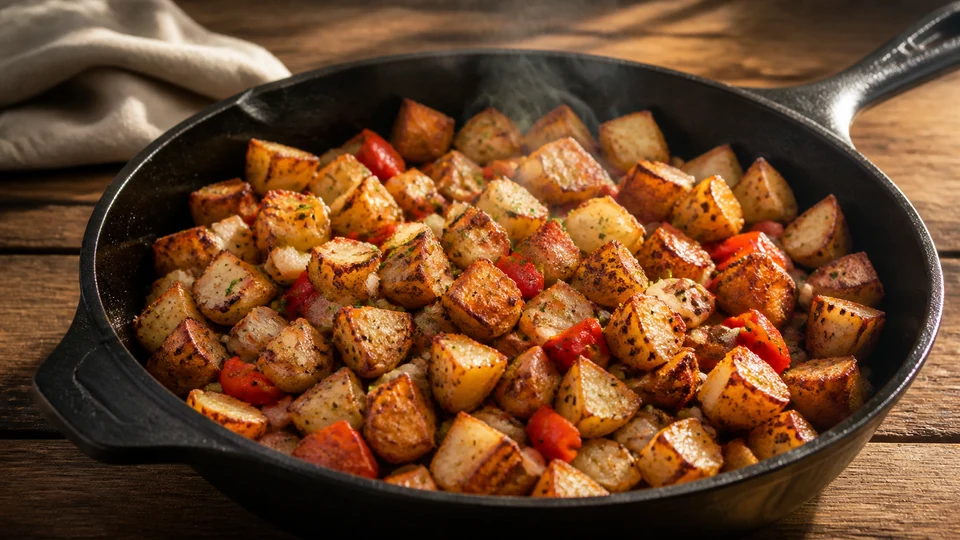
The Pancakes World guide begins this Breakfast Potatoes Recipe discussion with a practical decision: For breakfast potatoes with browned faces and tender centres, cut raw potatoes into similar one-inch pieces, dry them thoroughly and roast in one uncrowded layer. This recipe uses 600 g potatoes at 425°F/220°C, with a first doneness check after 30 minutes. Judge a piece from the centre of the tray as well as the edge.
The exact formula below is an untested editorial recipe; its timing is a planning range, not a verified Pancake World result.
This page provides one oven method, with quantities, capacity limits and practical corrections. It does not combine skillet, frozen-potato and par-boiled methods under one cooking time. The parent American breakfast guide supplies wider menu context; here the priority is getting the potatoes ready when the rest of breakfast needs them.
Oven breakfast potatoes: the complete starting recipe
This is a new editorial formulation, not an adaptation claimed to have been tested by another publisher. Illinois Extension’s mixed root-vegetable recipe supports the general approach of roughly one-inch pieces, space between them, 425°F roasting and a 30–40-minute starting range. The potato-only quantities, tray size and serving plan here are editorial choices.
Yield: 4 side portions, each based on 150 g prepared raw potato. The cooked weight will vary with water loss; these are accompaniments, not four complete breakfasts.
Planning time: about 15 minutes preparation, 30–40 minutes roasting and 2 minutes uncovered rest: approximately 47–57 minutes overall if the oven preheats during preparation. Allow more time if your oven needs longer or the centres remain firm.
Equipment: conventional oven, one rimmed metal baking sheet about 33 × 45 cm/13 × 18 inches, bowl, kitchen scale, measuring spoons, clean towel, knife, board, flat spatula and oven gloves. Use the middle rack. The tray starts at room temperature; this method does not require handling a preheated empty tray.
Ingredients
- 600 g yellow-fleshed potatoes, weighed after washing and any trimming, skin on
- 2 tablespoons/30 ml olive oil
- 3 g fine salt, approximately ½ teaspoon; use the weight if your salt has a different crystal size
- ¼ teaspoon ground black pepper
- 1 tablespoon chopped fresh parsley, optional, added after roasting
Numbered method
- Preheat the conventional oven to 425°F/220°C with a rack in the middle. Wash and scrub the potatoes under running water, trim as needed, then weigh 600 g. Do not use the chopping board or utensils from raw breakfast meat without washing them first.
- Cut into pieces about 2.5 cm/1 inch across. Aim for similar thickness, including the tapered end pieces, rather than a mixture of tiny chips and large chunks. Pat the cut surfaces dry with a clean towel.
- Toss the potatoes with the measured oil, salt and pepper. Spread over the room-temperature metal tray in a single layer, leaving visible gaps. Place a cut face against the metal where practical. If the tray is smaller and the pieces cannot fit without touching extensively or overlapping, divide the batch between trays or cook in separate batches.
- Roast for 30–40 minutes as a starting range. At 15–20 minutes, use the spatula to turn the pieces and redistribute them across the tray. Work with oven gloves and return the tray promptly; do not stir continuously.
- At 30 minutes, examine several pieces, including a larger one from near the centre and one from an edge. Look for golden contact faces and test the centre with a small knife. If the centre is resistant, keep cooking and check again after a few minutes. Remove pieces that are ready if others need longer.
- Leave the cooked potatoes uncovered for 2 minutes, then add the optional parsley and serve. Keep sauces on the side when a dry exterior matters. Do not pile the potatoes into a covered bowl while waiting for the rest of breakfast.
Doneness: a knife passes into the centre without a hard or chalky-feeling core, while several flat faces are golden and the exterior feels dry rather than wet. Browning can be uneven across a home oven. Check more than one piece; colour at the tray’s edge does not establish tenderness everywhere.
Choose the potato and surface deliberately
Illinois Extension identifies yellow-fleshed potatoes as suitable for roasting. That makes them a reasonable baseline here, but the name is not a promise of identical results from every bag. Keep the same variety and cut when learning the method.
The skin-on instruction assumes clean potatoes whose skins you want to eat; peeling is possible, but weigh the prepared potato afterward so the batch remains 600 g.
Cut size controls more than appearance. A narrow sliver can darken while a neighbouring large piece remains firm. When a potato has an awkward shape, divide it to match the thickness of the other pieces instead of trying to produce perfect cubes.
The objective is a comparable path from the hot exterior to the centre.
Drying is a separate step from washing. Water still clinging to cut faces must leave before those faces can dry and brown well. If preparation is interrupted, inspect the potatoes again before oiling; a damp bowl or wet towel can undo the drying step.
This recipe has no soaking or par-boiling stage. Adding either changes the starting condition and requires a different, complete method.
The specified metal sheet provides a broad contact surface. A deep casserole dish, crowded roasting tin or insulating liner changes that contact and the movement of moisture. Do not expect the stated timing to transfer unchanged.
If you use a liner for easier cleaning, follow its temperature rating and record the change; a different underside is a useful observation, not evidence that the potatoes need more seasoning.
Scale the ingredients and the available tray space
| Batch | Potatoes and oil | Seasoning | Capacity plan |
|---|---|---|---|
| 2 side portions | 300 g potatoes; 1 tablespoon/15 ml oil | 1.5 g salt; ⅛ teaspoon pepper | One tray with ample gaps; keep the same piece size |
| 4 side portions | 600 g potatoes; 2 tablespoons/30 ml oil | 3 g salt; ¼ teaspoon pepper | One approximately 33 × 45 cm sheet |
| 8 side portions | 1.2 kg potatoes; 4 tablespoons/60 ml oil | 6 g salt; ½ teaspoon pepper | Two equally sized sheets, 600 g on each, or two successive batches |
These are arithmetic versions of the same formula, not separately tested recipes. Keep the cubes at one inch; halving the batch does not mean halving the roasting time. Optional parsley scales from half a tablespoon for two portions to two tablespoons for eight. With a lighter tray load, watch the colour before the usual first check because the changed spacing can alter browning.
For two simultaneous trays, use rack positions that leave room for air movement. Turn the potatoes and exchange the trays’ upper and lower positions around the halfway check, then assess each tray separately. A crowded oven can need longer than the single-tray range. There is no verified extra-minute allowance for every oven, and doubling the food does not justify doubling the temperature.
If only one suitable rack or tray is available, two successive roasting batches take roughly 60–80 minutes of oven time, plus handling and preparation. That makes a different breakfast schedule from one 30–40-minute batch. Either serve in waves or use a safe holding and storage plan; do not promise eight equally crisp portions at once from one small tray.
Pale and soft, but already tender
Look for overlapping pieces, visible water or a deep layer trapping steam. Safely spread the current batch onto more surface area if available and continue watching the colour. Do not keep adding unmeasured oil. For the next batch, change the tray load first while keeping potato size, oil quantity per gram and oven setting consistent.
Dark outside, firm in the middle
Check whether the darkest pieces are also thinner, closer to an edge or sitting on a different pan material. Move ready pieces off the tray and let firm pieces finish, moderating excessive browning if needed. Record any heat adjustment. Next time, choose either a more even cut or a heat change to investigate, not several simultaneous corrections.
Sticking or breaking during turning
Use a flat spatula to lift beneath the contact face rather than prodding repeatedly with a spoon. Check whether the measured oil coated all the pieces and whether you tried to move them before a surface had formed. Excessive turning can break tender potatoes; it does not improve a crowded tray’s capacity.
Good at first, disappointing at the table
Inspect the holding method before changing the recipe. A stack, lid or wet sauce can soften a dry surface. Serve a smaller wave and keep sauce separate. If the food’s storage history is uncertain, discard it as appropriate; an extra blast of heat cannot make an unsafe holding history acceptable.
Make the next comparison useful
Record the potato variety, prepared weight, approximate cube size, tray dimensions, rack position and the oven’s actual selected mode and setting. A dial reading is a reproducible appliance setting, not a measurement of every spot on the tray. Compare pieces from the same centre and edge areas in successive batches, and taste after the same two-minute uncovered rest.
Also note whether the cut potatoes waited wet, whether liquid collected before loading and whether the finished batch waited under a cover. Those observations separate preparation moisture, cooking exposure and service delay. A useful note is “keep everything else unchanged, use two trays instead of one crowded tray, compare the centre pieces after two minutes.” “More oil, hotter oven, smaller cubes” may produce a different result but will not explain which change helped.
Add flavour without replacing the cooking method
Parsley is the measured optional finish in the recipe. Illinois Extension lists several herbs that pair with potatoes, including rosemary and thyme, and its root-vegetable recipe uses those herbs. If changing the seasoning, begin with a modest amount and note it.
Tender fresh herbs can be added at serving so their handling does not become another full-oven variable.
Onion and pepper are more substantial changes: they contribute their own water, bulk and cooking time. For the first comparison, cook them separately and combine with the finished potatoes. Fresh garlic can brown quickly when exposed on the tray; cooking it separately or using a complete garlic-potato recipe avoids assigning it the potato cubes’ entire roasting time.
A skillet method needs active control of a smaller contact surface. A par-cooked method adds boiling, draining and another handling stage. Frozen prepared potatoes may already contain oil, seasoning or a coating and require their package’s instructions.
None is a gram-for-gram swap into this raw-potato schedule.
The base ingredients contain no egg or dairy, but check oil, seasoning, accompaniments and preparation surfaces for the actual dietary requirement. For a plant-based menu, the vegan brunch spread gives related serving context. “Vegan,” “organic” or “breakfast” does not establish a health benefit, an allergen-free result or a nutrition calculation for this dish.
Cool promptly and reheat for both safety and texture
Keep clean cooked-food utensils separate from raw meat and egg equipment. FDA guidance calls for prompt refrigeration of perishables within two hours, or within one hour above 90°F/32°C, with the refrigerator at 40°F/4°C or below. Divide leftovers into shallow containers instead of leaving a deep bowl out until completely cold.
Label the food and date.
Illinois Extension advises using refrigerated leftovers within three to four days and reheating to at least 165°F/74°C. Use the shorter applicable limit if the potatoes have been mixed with another ingredient whose label requires it. The plain potatoes’ texture may soften during storage; this recipe does not claim a tested freezer life or guarantee restored crispness.
For reheating, spread the portion in one layer on a suitable oven tray or use another safe reheating method, checking that the food reaches 165°F/74°C. The time depends on portion size, starting temperature and equipment, so no fixed warming timer is supplied. A golden surface is a quality cue, while the reheating temperature and storage history address safety.
Keep the first attempt simple: the specified raw potatoes, measured oil, even cut and adequate tray space. Once that baseline is understandable, change one useful thing. The aim is a breakfast side you can reproduce in your kitchen, with an honest record of what the untested editorial recipe does and does not establish.
Sources and editorial references
- Illinois Extension, Preparing Potatoes: variety selection and herb pairings. https://extension.illinois.edu/gardening/preparing-potatoes
- Caitlin Huth, Illinois Extension, Cooking Solution: Roasting Veggies: mixed root-vegetable method, one-inch pieces, tray spacing, 425°F and 30–40 minutes. https://extension.illinois.edu/blogs/live-well-eat-well/2015-04-06-cooking-solution-roasting-veggies
- Illinois Extension, Roasting Your Favorite Root Vegetables: rosemary and thyme in a separate mixed-vegetable recipe. https://extension.illinois.edu/blogs/simply-nutritious-quick-and-delicious/2019-11-15-roasting-your-favorite-root-vegetables
- U.S. Food and Drug Administration, Safe Food Handling. https://www.fda.gov/food/buy-store-serve-safe-food/safe-food-handling
- Illinois Extension, Leftovers. https://extension.illinois.edu/food-safety/leftovers
Sources retrieved and reviewed 28 August 2026. The 600 g potato-only formula, portion definition, tray assignment and comparison workflow are editorial design choices, not source-tested or Pancake World kitchen-tested results.