Breakfast pizza recipes
At Pancakes World, breakfast pizza works best when you choose the base and egg method before choosing the toppings. For a relaxed weekend bake, use a complete dough-based recipe with a sauce, cooked toppings, cheese, and the egg treatment specified by its author. For a fast breakfast, use pita or another fully formed flatbread and add cooked scrambled egg, vegetables, and cheese. For meal preparation, make components ahead but assemble close to baking so the crust does not become wet. Whatever style you choose, crust colour cannot prove that eggs or sausage are safely cooked; verify those components separately.
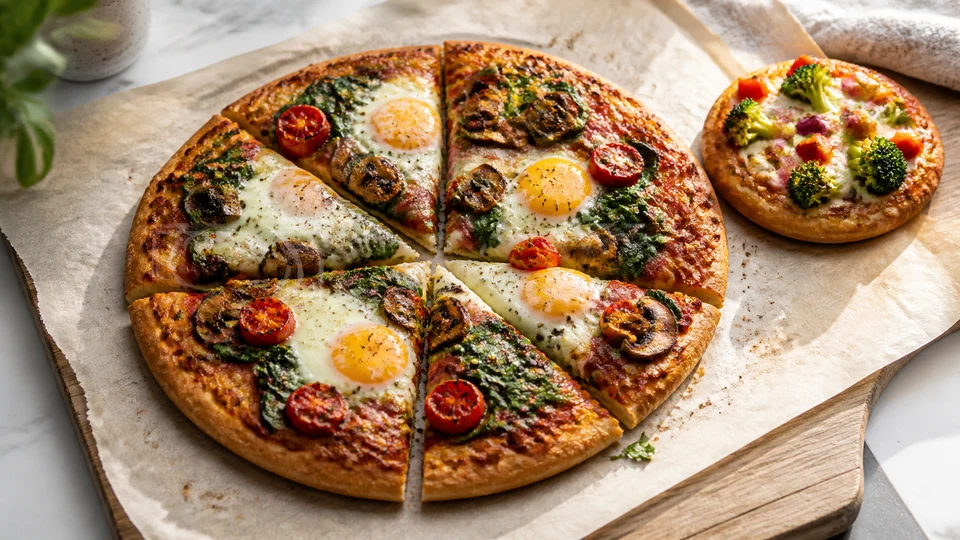
This guide compares workable breakfast-pizza formats and helps you decide which one fits your time, equipment, and diners. It does not combine several publishers’ recipes into an untested formula. Visit the breakfast hub for other morning formats, or explore Pancake World for the wider collection.
For broader context, continue with American Breakfast: Pancakes, Diner Plates and Brunch.
Direct answer: which breakfast pizza should you make?
Choose a dough pizza when texture and a bakery-style crust matter most and you have time for dough preparation. Choose a pita or flatbread pizza when speed and portion control matter most. Choose a scrambled-egg topping when you want the easiest control over egg doneness. Choose an egg-based sauce or oven-finished egg method only when you are following a complete, tested recipe that specifies how the egg cooks. Choose a vegetable-first pizza when meat is unnecessary, but still manage moisture before it reaches the crust.
The most reliable decision is not “which topping sounds best?” It is “which structure can I execute without improvising its critical timing?” A thin pita and a risen dough do not bake on the same schedule. Fully cooked scrambled egg and raw egg do not need the same handling. Pre-cooked sausage and raw sausage are not interchangeable toppings.
Four useful breakfast-pizza formats
1. Full dough with a sauce and layered toppings
This is the closest format to a conventional pizza. The cook prepares or buys a pizza dough, shapes it, adds a controlled amount of sauce, distributes cooked or suitably prepared toppings, adds cheese, and bakes according to one complete formula.
King Arthur Baking’s breakfast pizza documents one specific version built with dough, a creamy egg sauce, cooked sausage, vegetables, and cheese. Its value here is architectural: it shows that “breakfast pizza” can use egg within a sauce rather than placing whole eggs on top. Follow the publisher’s quantities, temperatures, and sequence if making that recipe. Do not extract its egg method and attach it to a different crust with a different bake time.
Choose this style when:
- you can allow time for the dough process required by the selected recipe;
- the oven and pan can accommodate a full pizza;
- diners want slices with a substantial crust;
- you are prepared to cook and cool moisture-heavy toppings before assembly.
The main risks are an underbaked centre, excess moisture, and overloaded dough. More toppings do not automatically produce a better breakfast. A restrained layer usually gives heat and steam a clearer route out of the pizza.
2. Pita or flatbread with cooked scrambled egg
A formed flatbread removes dough mixing, fermentation, and shaping from the morning workflow. Egg Farmers of Canada’s Eggs.ca publishes an “Eggs-Press Pizza” using pita, scrambled egg, vegetables, and cheese. That is a documented quick architecture: the egg is cooked in a pan, then combined with the base and toppings for finishing.
Choose this style when:
- breakfast needs to be assembled in a short window;
- individual portions are useful;
- you want to control egg texture before the pizza enters the oven;
- the cook is serving a small group rather than managing one large pie.
Use the complete Eggs.ca recipe for its exact amounts and timing. Other pitas vary in thickness, diameter, ingredients, and tendency to crisp, so the source timing is not automatically correct for every packaged flatbread. Watch the base and use the package directions as additional context.
3. Oven-finished whole or cracked eggs
Some breakfast pizzas are designed around eggs that finish in the oven. This style can look simple, but it has the narrowest timing window: the base needs enough heat to bake, the white must cook appropriately, and the yolk preference must remain compatible with the diner’s food-safety needs.
Only use this format with a tested recipe written for that method. Do not add raw eggs to an otherwise finished pizza and guess from appearance. A pale white, a firm-looking yolk, and a brown crust are visual observations, not temperature measurements. If a diner needs fully cooked egg, choose a source formula and verify the centre using current Canadian guidance.
This format is a poor choice for a crowded topping surface because raw egg can run off high ingredients or pool in a low spot. It is also less convenient for make-ahead service. Scrambled egg or an egg sauce offers more predictable distribution.
4. Vegetable-first breakfast flatbread
A breakfast pizza does not require meat. A vegetable-first version can use a verified crust or flatbread formula with cooked mushrooms, peppers, onions, greens, tomatoes, or another source-backed combination. Egg and cheese can be included or omitted according to the chosen recipe and dietary need.
The practical problem is water. Mushrooms, leafy greens, fresh tomato, and some frozen vegetables can release enough liquid to soften the base. Cook watery vegetables first, drain them when appropriate, and cool them before assembly. Avoid making medical or nutritional promises merely because the pizza contains vegetables.
For a vegan breakfast flatbread, select a fully vegan formula and check the bread, sauce, and toppings. Removing visible egg does not make ordinary cheese vegan, and some breads or sauces can contain dairy, egg, or other ingredients that matter to the diner.
Compare the formats before shopping
| Decision | Full dough pizza | Pita or flatbread | Whole-egg finish | Vegetable-first version |
|---|---|---|---|---|
| Morning time | Longest unless dough is ready | Usually shortest | Moderate, but timing-sensitive | Depends on vegetable preparation |
| Egg control | Follow the recipe’s sauce or topping method | Scrambled egg is controlled before finishing | Requires precise recipe and temperature check | Egg is optional |
| Crust character | Most customizable | Thin and convenient | Depends on the underlying crust | Works with dough or flatbread |
| Make-ahead value | Dough and cooked toppings can often be prepared separately | Components can be portioned | Limited after raw egg is added | Cook and drain vegetables ahead |
| Best use | Weekend meal or shared table | Fast individual breakfast | Immediate service from a tested recipe | Flexible meat-free meal |
The table is a planning aid, not a cooking formula. Once you choose a format, follow one complete recipe rather than mixing the dough from one publisher, egg timing from another, and temperature from a third.
Build the pizza in the right order
Start with the base
Read the selected recipe from beginning to end. Determine whether the crust is raw dough, par-baked dough, pita, naan-style bread, tortilla, or another base. These products respond differently to moisture and heat.
Raw dough may need a hot surface and sufficient bake time to set the centre. A formed flatbread is already baked and generally needs heating and crisping rather than a complete bread bake. A tortilla produces a very thin result and cannot carry the same topping load as a thicker dough.
If the source calls for preheating a stone, steel, pan, or oven, include that time in the schedule. Moving a heavily topped raw pizza is harder than moving a bare crust, so prepare the work surface and transfer method before assembly.
Choose a moisture layer, not a flood
Breakfast pizza may use tomato sauce, a white sauce, egg-based sauce, soft cheese, pesto, or no spread at all. Use the quantity and consistency specified by the complete recipe. A wet sauce plus wet vegetables and soft scrambled eggs can overwhelm a thin base.
Keep the sauce inside a small border and spread it evenly. If using a commercial sauce, check the label for allergens and ingredients relevant to the diners. Do not assume every pesto is dairy-free or every white sauce is gluten-free.
Prepare toppings before they reach the crust
Cook sausage according to the recipe and Canadian safety guidance before using it when the formula calls for cooked sausage. Break large pieces into a size that can heat evenly and remain on a slice. Drain excessive rendered fat rather than pouring it onto the dough.
Cook mushrooms and other watery vegetables until much of their released moisture has evaporated. Wilt greens and squeeze or drain them if needed. Thaw and drain frozen vegetables according to their package. Cool hot toppings briefly so they do not start melting cheese or softening the base while the rest of the pizza is assembled.
Keep ready-to-eat cheese, herbs, and vegetables away from utensils and boards used for raw sausage or raw egg. Wash hands and clean work surfaces after handling shell eggs or raw meat.
Treat the egg method as part of the recipe
For scrambled-egg pizza, cook the eggs to the point specified by the selected formula; remember that oven finishing may continue cooking them. For an egg sauce, follow that source’s method and bake schedule. For eggs cracked onto the pizza, use a formula designed around raw egg and check doneness with an appropriate thermometer where required.
Health Canada’s current safe-temperature chart lists egg dishes at 74°C (165°F). The same page lists 74°C (165°F) for ground poultry and 71°C (160°F) for ground beef, veal, lamb, and pork. Because breakfast sausage can contain different meats, identify what you bought and follow the applicable guidance. Do not use one generic “sausage temperature” for every product.
Add cheese with the final texture in mind
Cheese helps bind small toppings, but an excessive layer can trap steam and fat. Use a melting cheese named by the source or a substitution that the recipe publisher explicitly supports. If changing cheese, expect differences in salt, oil release, browning, and melt.
For dairy-free service, use a verified dairy-free formula or a product whose label fits the diner. A plant-based label is not a substitute for an allergen check.
How to prevent a soggy breakfast pizza
Begin with the source’s recommended base and preheating method. Then control every wet component before assembly.
- Cook and drain watery vegetables.
- Drain excess fat from cooked meat.
- Avoid adding more sauce than the crust can support.
- Do not leave a topped raw crust standing while the oven heats.
- Keep scrambled egg moist but not surrounded by loose liquid.
- Move the finished pizza to a rack briefly if the recipe permits, so steam does not remain trapped under the base.
Par-baking can help some doughs, but only do it when the chosen formula calls for it. Par-baking changes the final timing and may make a thin crust overcook before its toppings finish.
Food-safety decisions for Canadian kitchens
Use a clean digital food thermometer in the thickest or coolest practical part of the relevant component. On a pizza, that may mean checking more than one place because toppings are uneven. The oven setting is not the food’s internal temperature.
Health Canada advises using clean equipment, keeping raw and cooked foods separate, and cooking eggs and egg dishes thoroughly. Cracked eggs should not be used when the shell condition makes contamination a concern. Hands, utensils, and surfaces that contacted raw egg need cleaning before they touch ready-to-eat ingredients.
For sausage, read the meat type and cooking status on the package. “Smoked,” “brown,” or “breakfast” does not by itself tell you whether the product is ready to eat. If it is raw, cook it according to its complete instructions and the applicable safe internal temperature. If it is pre-cooked, heat and use it as directed without treating the label as permission for indefinite room-temperature holding.
Serve the finished pizza promptly. For leftovers, Health Canada’s storage chart places cooked egg, meat, and vegetable dishes in the refrigerator for three to four days and the freezer for two to three months. Refrigerate promptly in clean, shallow containers; discard food that has been held unsafely rather than trying to rescue it by reheating. Reheat leftovers to 74°C (165°F), using current guidance.
Make-ahead plan
The safest quality strategy is component preparation, not storing a fully assembled raw pizza.
The day before, you can prepare dough if the selected recipe has a refrigerated schedule, cook sausage, cook and drain vegetables, grate cheese, and mix a sauce whose source permits advance storage. Cool cooked components promptly and refrigerate them in separate covered containers.
In the morning, preheat the oven and baking surface, shape or unwrap the base, assemble only the quantity you will bake, and add egg according to the selected formula. Keep reserve ingredients refrigerated. If serving several small flatbreads, work in batches rather than leaving all egg and meat toppings on the counter.
For packed breakfasts, a fresh pizza may not retain its crisp texture. Cool leftovers safely before packing, transport them cold with adequate refrigeration, and reheat to the applicable temperature at the destination. Do not pack a warm slice into a sealed container and leave it at room temperature for hours.
Common problems and better decisions
The crust is dark but the centre is soft
The oven or pan may be delivering strong surface heat while the middle remains wet. Reduce topping moisture and load, use the source’s rack position and pan, and verify that the dough thickness matches the recipe. Do not simply add more time if eggs or cheese are already overcooking; choose a better-matched base next time.
The egg turned rubbery
The egg may have been fully cooked before a long oven finish. Use a recipe that accounts for carryover cooking, or select the pita-and-scrambled-egg format with a brief finishing step. Do not deliberately undercook egg when a diner requires fully cooked egg.
Toppings slide off each slice
Pieces may be too large, the sauce layer too wet, or the pizza cut immediately from the oven. Use smaller, evenly distributed toppings and allow the rest specified by the recipe. A modest cheese layer can help bind ingredients, but it cannot correct a flooded base.
One diner has an allergy or dietary restriction
Check every packaged base, sauce, sausage, cheese, and substitute. Wheat, egg, milk, soy, sesame, and other allergens can appear in breakfast-pizza components. Separate utensils and surfaces as required; merely removing a topping from a finished pizza does not remove cross-contact.
A practical serving plan
For a shared breakfast, choose one pizza architecture and add simple sides rather than baking several incompatible formats at once. Fruit, a dressed salad, or a separately served yogurt can round out the table without adding moisture to the crust. Label meat-free, vegan, and allergen-managed portions accurately.
Cut only after the pizza has had the brief rest stated by its recipe. Use a clean cutter and board. Put a smaller first batch out, keep remaining perishable food controlled, and replenish as needed. This preserves texture and makes time at room temperature easier to manage.
Choose one of the complete recipes when you need exact amounts and baking directions. Use this comparison to select the format, organize the work, and recognize the decisions that cannot safely be guessed.
Explore related Pancakes World guidance on American Pancakes, Maple Syrup, and Maple Syrup Pancakes.
Sources and editorial references
- Health Canada: safe internal cooking temperatures —
https://www.canada.ca/en/health-canada/services/general-food-safety-tips/safe-internal-cooking-temperatures.html - Health Canada: egg safety —
https://www.canada.ca/en/health-canada/services/meat-poultry-fish-seafood-safety/eggs.html - King Arthur Baking: Breakfast Pizza —
https://www.kingarthurbaking.com/recipes/breakfast-pizza-recipe - Egg Farmers of Canada: Eggs-Press Pizza —
https://eggs.ca/recipes/eggs-press-pizza/ - Health Canada: safe food storage —
https://www.canada.ca/en/services/health/publications/food-nutrition/infographic-leftovers.html