Breakfast options indian
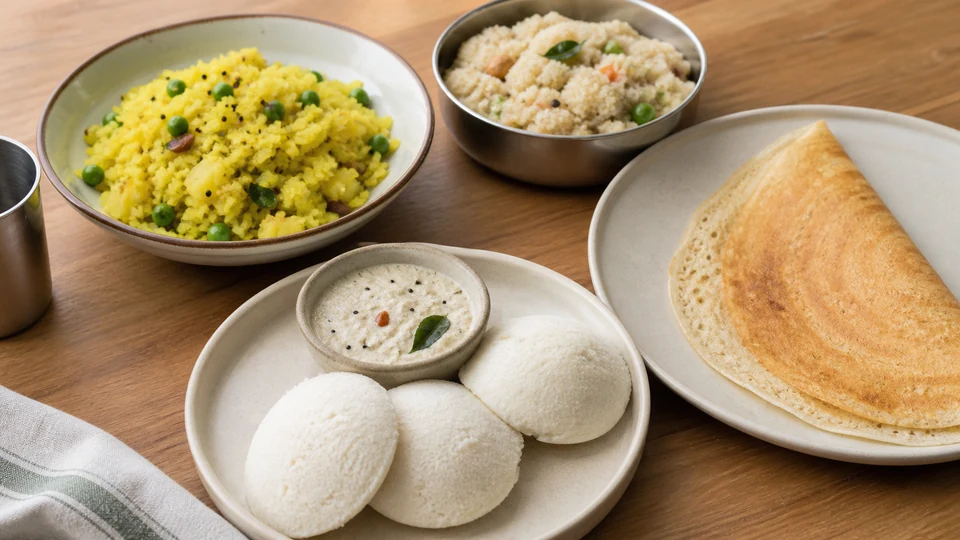
At Pancakes World, indian breakfast options range from quick poha and upma to steamed idli, griddled dosa or chilla, stuffed or plain flatbreads, millet preparations, eggs, fruit, and leftovers assembled into a morning meal. Choose by the time, batter preparation, equipment, and dietary requirements you actually have. For a fast weekday, use poha, semolina upma, besan chilla, or an egg dish from a verified recipe. For planned mornings, prepare idli or dosa batter, paratha filling, or soaked millet components ahead. India has many regional food traditions, so no single list is the universal “Indian breakfast.”
| Guide sections |
|---|
| Direct answer: choosing an Indian breakfast |
| A practical map of the options |
| Choose by time available |
| Choose by equipment |
For broader context, continue with World Pancakes: Dishes and Traditions.
Direct answer: choosing an Indian breakfast
Start with the preparation style. Pick poha or upma when you want one-pan cooking; idli or dhokla when steaming suits the kitchen; dosa, adai, or chilla when a griddle is available; paratha, roti, or toast when bread is the anchor; and fruit, yogurt, nuts, eggs, pulses, or tofu as optional supporting components according to dietary needs. Use a complete source recipe for quantities and fermentation, not a generic category description. Check packaged ingredients and allergens, keep cooked and raw foods separate, and serve or store perishable items using current food-safety guidance.
The breakfast guide is the parent resource for other morning meal formats. Here, the goal is not to rank dishes but to help a US-market reader choose, source, and schedule Indian breakfast options responsibly.
A practical map of the options
Flattened-rice dishes
Poha commonly refers to flattened rice and also to cooked dishes made from it. A practical breakfast version may combine rinsed or soaked flattened rice with aromatics, spices, vegetables, peanuts, herbs, and citrus, depending on the source formula. Ingredient lists differ, and regional labels can carry more specific expectations than this high-level category.
Choose poha when you want a pan-cooked dish without a fermented batter. Check how the selected recipe handles the rice: aggressive soaking can make some products mushy, while insufficient hydration can leave another product firm. Use the package and source recipe rather than one universal soak time.
Peanuts are a major allergen in US labeling, and some poha versions use them. They are not required to explain the category and should not be hidden under garnish. Keep them separate or choose a verified peanut-free formula when the diner requires it.
Semolina or grain upma
Upma describes a savory preparation often made by cooking roasted semolina with water, aromatics, spices, and optional vegetables. Millet, vermicelli, bread, and other versions exist. The ingredient named before “upma” matters because it changes hydration and cooking.
This category suits a one-pan breakfast when the grain or semolina is available and the cook can control liquid addition. Use a recipe specific to that base. Do not substitute millet for semolina cup for cup and retain the same water assumptions.
Eat Right India’s millet campaign presents official examples including foxtail millet upma. That supports millet upma as a documented option, not a claim that it is preferable to every other breakfast or traditional in every household.
Steamed idli and related batters
Idli is a steamed batter preparation that can require soaking, grinding, and fermentation, although quick and ingredient-specific versions also exist. The preparation schedule is often the deciding factor. A fermented batter is not a spontaneous five-minute option unless it was made or purchased earlier.
Sanjeev Kapoor’s poha idli page supplies one concrete architecture: pressed rice, rice rawa, and split black gram are soaked, ground, combined, fermented, and steamed. Use the primary recipe for its amounts and timings. It documents one poha-idli method, not all idli.
Choose idli when a steamer and advance planning are available. Confirm fermentation and storage directions from the source, and do not extend room-temperature holds based only on appearance. The finished idli can be served with a source-faithful chutney or sambar, with allergens and storage checked separately.
Dosa, adai, and chilla
These are griddled batter categories with different bases. Dosa may use fermented rice-and-lentil batter or another named grain. Adai commonly uses a pulse-heavy batter. Chilla can use gram flour, moong dal, millet, or another specified base. Similar round shapes do not make their formulas interchangeable.
Eat Right India’s official millet examples include kodo millet adai, millet chilla, millet dosa, and ragi dosa. This demonstrates the breadth of bases. For actual cooking, select one complete recipe and follow its soaking, grinding, consistency, and pan instructions.
Choose a quick gram-flour chilla when the formula requires no fermentation. Choose soaked dal or fermented dosa only when the preparation window fits. A nonstick or well-managed griddle can help with release, but pan material does not repair incorrect batter hydration.
Flatbreads and paratha
Roti, chapati, paratha, and stuffed flatbreads can anchor breakfast, particularly when dough or filling is prepared in advance. These words refer to distinct methods and regional practices; do not use them as decorative synonyms.
A plain flatbread with a savory accompaniment creates a simpler workflow than several stuffed varieties. Stuffed paratha requires a filling dry enough to enclose, dough with suitable hydration, and controlled rolling. Overfilled dough tears; excessive dry flour can scorch on the pan.
Wheat is a major allergen under US packaged-food labeling, and ordinary atta or all-purpose wheat flour is not gluten-free. Millet or chickpea flatbreads need their own formulas rather than a direct wheat substitution.
Eggs and savory pans
Egg bhurji, masala omelet, boiled eggs with accompaniments, or a source-backed egg curry can be breakfast options when eggs fit the diner. Add vegetables, herbs, and spices according to the chosen recipe instead of claiming one mixture is nationally standard.
Cook eggs thoroughly according to applicable guidance and personal requirements. Keep shell contact and raw egg utensils away from ready-to-eat foods. Egg is a major allergen in US labeling, and an egg breakfast is vegetarian under some practices but never vegan.
Pulses, beans, and tofu
Moong, chana, other pulses, beans, and tofu can support savory breakfasts. They may appear inside a chilla, as a side, or in a bowl. Soaking and cooking requirements vary. Dried kidney beans, chickpeas, and lentils do not share one preparation time or safety process.
Use a recipe and package guidance for the exact pulse. Canned options can shorten preparation but bring a current label, sodium, flavoring, and allergen review. Tofu can work in a scramble or filling; soy is a major allergen for US readers.
Fruit, yogurt, and lighter assemblies
Fresh fruit, plain or flavored yogurt, nuts, seeds, and grain porridge can be combined into a quick breakfast. These are flexible components, not automatically complete or superior. Dairy yogurt is not vegan; plant alternatives vary in ingredients and allergens.
Cut fruit is perishable and should not remain uncontrolled for an open-ended buffet. Prepare a modest quantity, keep the reserve cold, and use clean utensils. Nuts and seeds require explicit labels when serving others.
Choose by time available
Ten-to-fifteen-minute assembly
The realistic options are foods already prepared, very quick cooked batters, fruit and yogurt assemblies, reheated leftovers, or simple eggs. A complete poha or upma may take longer once chopping and pan heating are counted. Treat “quick” as the cook’s workflow, not a universal promise.
Keep a small readiness kit: flattened rice, semolina or another chosen base, a verified spice combination, frozen vegetables, cooked pulses, and labeled toppings. The kit is useful only if the cook already knows the source recipe and storage rules.
Thirty-minute cooking window
This window can accommodate many poha, upma, chilla, egg, and flatbread options when ingredients are ready. It may also suit reheating pre-made idli or dosa batter products according to package instructions. Do not include the prior soaking or fermentation in a misleading “30-minute recipe” claim.
Write a two-column schedule: preparation and pan. Chop while the pan heats, but avoid multitasking that leaves spices burning. Set out serving plates and accompaniments before the final batch.
Overnight preparation
Use this window for fermented batters, soaked pulses, dough resting when sourced, or make-ahead fillings. Label the start time and container. Follow the recipe’s temperature and fermentation cues rather than assuming every kitchen needs the same hours.
A warm kitchen can move batter faster than a cool one. Fermentation guidance should come from the formula, and food-safety storage should come from an authoritative source. If the planned window cannot be controlled, select a non-fermented breakfast.
Weekend spread
Choose one anchor, one accompaniment, fruit, and drinks. Dosa plus sambar and chutney is already a multi-component service. Adding idli, poha, paratha, eggs, and several sweets turns breakfast into a production line.
Use small batches and label allergens. Keep hot and cold foods controlled under relevant guidance. A spread should reflect actual guests and equipment rather than trying to represent all Indian breakfast traditions at once.
Choose by equipment
One saucepan or sauté pan
Poha, upma, a pulse dish, egg bhurji, or porridge can fit. Select a formula whose preparation stays within one vessel. Toasting, tempering, and simmering may still require sequential heat control.
Griddle or frying pan
Dosa, chilla, adai, paratha, roti, omelet, and some patties fit. A single pan can serve only one batter efficiently at a time. Preheat and manage heat between rounds; the surface may become hotter as service continues.
Steamer
Idli and some dhokla methods fit. Confirm the mold size, water level, steam setup, and source doneness cue. Do not open repeatedly if the source warns against interrupting steam.
Pressure cooker or electric cooker
These can prepare potatoes, pulses, porridges, or some steamed dishes using device-specific methods. Follow the appliance manual and a recipe developed for the model or cooking mode. Do not improvise pressure release or fill limits.
Blender or wet grinder
Fermented and soaked batters may require grinding. Household blenders have capacity and heat limits. Work in source-sized batches and add water deliberately. A batter made hot during prolonged blending may behave differently.
Dietary decision points
Vegan
Poha, upma, dosa, idli, chilla, and flatbread can be made vegan in some formulas, but the dish name does not guarantee it. Ghee, butter, dairy yogurt, paneer, milk, and other animal-derived ingredients may appear. Check the actual recipe and packaged products.
Gluten-free
Rice, millet, lentil, and chickpea bases can be naturally free of gluten-containing grains, but cross-contact, hing formulations, semolina, wheat flour, packaged spice blends, and shared griddles require attention. Use ingredients represented appropriately for the diner and a purpose-built formula. Ordinary semolina upma and wheat paratha are not gluten-free.
Nut- or peanut-aware
Peanuts, cashews, coconut, and other nuts or seeds can appear in tempering, chutneys, garnish, or fillings. Coconut classification and individual allergy needs should be clarified rather than generalized. Keep garnishes visible and avoid transferring utensils.
Lower-spice preference
“Spicy” can refer to chile heat or aromatic seasoning. Reduce chile through a source-supported adjustment, but do not strip all flavor and still claim a specific regional preparation. Serve a cooling accompaniment only if it fits the dietary requirements.
Individual nutrition goals
This guide does not rank poha, idli, dosa, paratha, eggs, or millet as universally healthiest. Portion, ingredients, cooking fat, accompaniments, and individual needs differ. Use a qualified professional for medical or personalized nutrition advice.
Food-safety boundaries
FSSAI’s Pink Book is designed for Indian home kitchens and covers buying, storing, preparation, cooking, serving, leftovers, hygiene, and waste. Its value here is a process framework: safety begins before the pan and continues after service.
FSSAI’s “Food Safety at Home” guidance advises thorough cooking, eating cooked food promptly, controlling advance-prepared food under appropriate hot or cold conditions, and preventing contact between raw and cooked foods. Follow the current official document and any stricter instructions for the exact ingredient.
Use safe water for washing, soaking, grinding, and cooking. Clean hands, boards, knives, blender jars, and cloths. Keep raw egg surfaces separate. Refrigerate perishable batter and leftovers as the source requires. A sour smell alone cannot prove a fermented batter is safe, and bubbling alone cannot define successful fermentation.
When serving a group, put out smaller portions and replenish from controlled storage. Label dairy, egg, wheat, soy, peanuts, nuts, and sesame where present. Do not promise an allergen-free kitchen without controls that justify the claim.
A seven-day option matrix
This is a planning example, not a prescribed diet.
- Monday: quick vegetable poha from a verified recipe; prepare chopped vegetables the night before.
- Tuesday: besan chilla with one simple accompaniment; mix close to cooking if the formula is quick.
- Wednesday: idli made from prepared batter; manage fermentation and storage according to the source.
- Thursday: semolina or millet upma; use the water ratio for that exact base.
- Friday: egg bhurji or tofu scramble with flatbread; keep the two dietary versions clearly distinct.
- Saturday: dosa or adai with one chutney; reduce menu complexity so the griddle can keep up.
- Sunday: paratha or another planned flatbread with fruit and yogurt or a suitable alternative.
Repeat ingredients across days only when storage permits. Chopped vegetables, cooked pulses, batter, and sauces have different safe lives. Write dates on containers and do not use a weekly plan as permission to keep every preparation for seven days.
Common mistakes
Calling one dish the standard Indian breakfast. India’s regional and household practices are too varied for that shortcut. Name the actual dish.
Ignoring preparation time. Fermentation and soaking occur before the visible cook time. Include them in planning.
Swapping grain bases without changing water. Semolina, millet, flattened rice, and lentil batter absorb differently.
Using region labels without a source. Avoid invented origin stories and universal authenticity claims.
Assuming vegetarian means vegan. Ghee, dairy, and egg may appear depending on the dish.
Assuming rice-based means gluten-free. Check every ingredient, seasoning, package, and shared surface.
Hiding allergens in garnish. Peanuts, nuts, sesame, soy, dairy, wheat, and egg need clear communication.
Overloading the weekend menu. One anchor and two supporting components are easier to serve well.
Leaving batter out by habit. Follow the exact formula’s fermentation and storage guidance.
Ranking dishes as healthy without a metric. Describe ingredients and methods instead.
Copying a recipe from a list article. Use the primary culinary or official source for quantities and instructions.
Step-by-step selection checklist
- Confirm available time, including soaking and fermentation.
- Choose pan, griddle, steamer, or cooker based on real equipment.
- Select one dish category, then one complete source recipe.
- Check whether the source formula fits vegan, vegetarian, gluten-free, and allergen requirements.
- Buy or prepare the exact grain, flour, pulse, and leavener named.
- Read package and appliance instructions.
- Prepare only the accompaniments the schedule can support.
- Keep raw and cooked foods and utensils separate.
- Cook using source doneness cues, not color alone.
- Serve promptly or hold under current official guidance.
- Cool and label leftovers appropriately.
- Record which process worked before attempting substitutions.
Shopping matrix by breakfast style
The shopping list should follow the selected dish, not the other way around. Buying poha, semolina, several millets, three lentils, atta, idli rawa, and multiple chutney ingredients for one week can create waste before the cook has chosen a formula.
Poha kit
Start with the exact flattened-rice type named in the source. Add only the aromatics, vegetables, spices, acid, herbs, and garnish the recipe requires. If peanuts appear, decide whether they fit every diner before buying them. Do not treat peanuts as invisible seasoning.
Check the package for cooking or rinsing notes. Thick and thin flattened rice can hydrate differently. If the source and package conflict materially, choose a recipe written for the product in hand rather than averaging their instructions.
Upma kit
Buy the exact base: semolina, a named millet, vermicelli, bread, or another ingredient. “Upma” alone does not tell the water ratio. Gather the specified tempering ingredients and vegetables. Some recipes use ghee; replace it only through a supported vegan variation if needed.
Store semolina and grains dry and inspect them before use. Pre-roasted and unroasted products may have different recipe steps. Do not repeat a roasting stage merely because another upma formula includes it.
Idli or dosa kit
Follow the source list for rice, rawa, urad dal, poha, fenugreek, millet, or other components. Similar white grains and ground products are not interchangeable. Label soaking bowls so ingredients do not merge before their prescribed grinding stage.
Confirm the blender or grinder can handle the batch. Buy salt and oil suitable for the recipe, and plan clean containers with room for batter expansion. A sealed container filled to the top is poor fermentation planning.
Chilla or adai kit
Choose gram flour for a besan formula, whole or split moong for a moong formula, or the exact pulse-and-grain combination for adai. Flour-based and soaked-pulse batters require different preparation. Check whether hing, packaged spice blends, or toppings meet gluten-free and allergen needs.
For a quick weekday chilla, a shelf-stable flour formula is operationally easier than a whole-pulse batter that still needs soaking and grinding. This is a time comparison, not a quality ranking.
Flatbread kit
Buy the flour specified by the dough recipe and only one planned filling. Potato, cauliflower, paneer, lentil, greens, or another filling changes moisture and preparation. Paneer is dairy; tofu is not a direct flavor or handling equivalent unless the source develops that variation.
Keep rolling flour separate from the measured dough flour. Unrecorded dusting can add substantially to a batch. If gluten-free flatbread is needed, select a method developed for the named flour because wheat dough elasticity cannot be assumed.
Make-ahead matrix
Safe tasks the evening before
Read the recipe and FSSAI framework first. Common low-risk operational tasks can include measuring dry shelf-stable ingredients into covered containers, washing whole produce before storage, preparing labels, assigning equipment, and making source-approved fillings or batters under their stated refrigeration or fermentation conditions.
Do not chop every ingredient merely because it saves minutes. Cut herbs, onions, tomatoes, fruit, and potatoes have different storage behavior. Follow an authoritative food-safety source and the recipe. Keep raw egg, unwashed produce, and ready-to-eat components separated.
Fermentation tasks
Record the time the batter was combined, the vessel, approximate room conditions, and source cues. Do not use smell alone. A batter can become sour without meeting every process requirement, and visible bubbles do not guarantee a safe or successful fermentation.
After the source-defined fermentation, refrigerate or cook as instructed. Do not leave a large batch at room temperature for the entire week. Portion before storage when that fits the recipe and avoids repeatedly warming the whole container.
Morning finishing tasks
Set out only the quantity needed. Stir, thin, season, or add leavener at the stage named by the source. For idli, prepare the steamer before filling molds. For dosa or chilla, preheat the griddle and make one small round to assess spread. For poha or upma, have measured liquid and tempering ingredients ready before heating oil.
Prepare chutney or another accompaniment only if its timing fits. A simple dish served hot is preferable to a cold anchor waiting for three unfinished sides.
Substitution matrix with stop conditions
Grain substitution
Switching semolina to millet, rice to millet, or atta to a gluten-free flour changes hydration and structure. Stop the direct substitution and choose a recipe written for the new grain. Eat Right India’s separate millet examples demonstrate this principle: millet upma, millet dosa, and millet chilla are named formulas, not one universal millet swap.
Pulse substitution
Urad dal, moong dal, chana dal, and whole chickpeas differ in soaking, grinding, and cooking. Stop if the named pulse is unavailable. Use a formula for the available pulse instead of preserving timing from another.
Dairy substitution
Ghee, yogurt, milk, paneer, and butter perform different roles. Oil can replace cooking fat in some formulas, but plant yogurt does not automatically culture or acidify batter like dairy yogurt. Tofu does not behave like paneer in every filling. Continue only when the source supports the selected alternative.
Gluten-free substitution
Stop if the base is wheat or semolina and the recipe does not provide a gluten-free path. Choose rice-, millet-, chickpea-, or lentil-based options whose complete ingredient list fits the diner. Check packaged hing and spice blends, not just the main flour.
Nut and seed substitution
Peanut, coconut, cashew, sesame, and other garnishes or chutney bases are not mutually safe replacements. Remove an optional garnish only when the dish remains coherent, or choose a different source accompaniment. Never move a shared spoon between allergen-containing and other dishes.
Heat adjustment
Chile quantity can sometimes be reduced without changing structure, but use the source as a baseline. Whole dried chile, fresh green chile, powdered chile, black pepper, mustard seed, and aromatic spices are not one scale. Taste adjustments belong to the cook; claims about a dish’s regional identity require evidence.
Service plan for four people
Choose one anchor and one accompaniment. For example, prepare a source-sized idli batch with one chutney, or one poha pan with fruit, or chilla with one cooked vegetable filling. Use the source yield rather than assigning an invented number of pieces per person.
Count cooking rounds. If a griddle holds two chilla and the source yields eight, four rounds are required. Begin service only when the first batch can be held appropriately or when diners are comfortable eating in sequence. Steamed idli can be released together, while dosa often arrives one at a time.
Put reserve cold food in the refrigerator and reserve hot food under suitable control. Use separate serving utensils. Announce allergens and dietary ingredients plainly: “contains wheat and dairy,” “contains peanuts,” or “made with soy” is more useful than “special breakfast.”
After eating, record how much of each component was actually used. Reduce the next batch before adding another dish. This creates a household plan without turning one family’s appetite into a public serving recommendation.
Intent and duplication check
This route is a selection guide across Indian breakfast methods. It does not replace a poha recipe, idli recipe, dosa recipe, or paratha recipe; each requires its own evidence and complete directions. It also avoids splitting spelling variants or regional dish names into unsupported duplicate pages.
The unique value is the decision sequence: choose time, equipment, preparation architecture, and dietary constraints, then select a primary recipe. Safety comes from FSSAI, culinary specifics come from the named source, and US allergen-label context comes from FDA. No source is asked to establish facts outside that remit.
Before acceptance, confirm the opening gives concrete options, every regional or nutrition generalization has been removed, all safety facts remain attributed, and no competitor instructions are copied. Article schema is appropriate; Recipe schema is not, because this page intentionally contains no complete tested formula.
Pancake World treats Indian breakfast as a choice among documented dishes and methods, not a single stereotype: select one source, respect its preparation, and fit the meal to the actual kitchen and diners.
Explore related Pancakes World guidance on American Pancakes, American Breakfast: Pancakes, Diner Plates and Brunch, and Maple Syrup.
Sources and editorial references
- FSSAI Pink Book —
https://fssai.gov.in/book-details.php?bkid=348 - Eat Right India Monday Millets —
https://eatrightindia.gov.in/millets2023/mondaymillets.html - FSSAI Food Safety at Home —
https://www.fssai.gov.in/flipbook.php?bookid=31 - Poha Idli by Sanjeev Kapoor —
https://www.sanjeevkapoor.com/Recipe/Poha-Idli-KhaanaKhazana.html - Food Allergies —
https://www.fda.gov/food/nutrition-food-labeling-and-critical-foods/food-allergies