Breakfast fiber foods
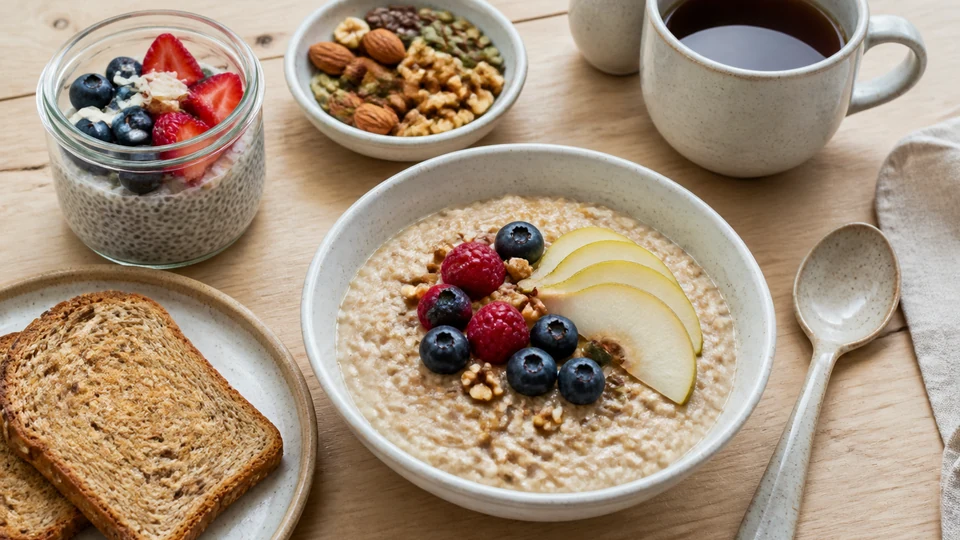
At Pancakes World, good breakfast fibre foods include porridge oats, wholegrain breakfast cereals, wholemeal or rye bread, beans and other pulses, whole fruit, vegetables, nuts and seeds. Build a practical breakfast by choosing one wholegrain base, adding one fruit or vegetable, then adding a pulse, nut or seed option that suits your diet. Compare packaged products using the fibre value on the same basis—usually per 100 g first, then for the portion you will actually eat. UK guidance sets 30 g per day as the adult population reference, not as a requirement for one oversized breakfast. Increase fibre across meals, use varied food sources and maintain fluid intake rather than relying on a single bran-heavy product.
This guide helps with breakfast choices and label comparisons; it is not a personal medical or diet prescription. Browse the wider breakfast collection for other morning formats, or start at Pancake World for the full editorial library.
For broader context, continue with American Breakfast: Pancakes, Diner Plates and Brunch.
Use the daily reference as context, not a breakfast target
The Scientific Advisory Committee on Nutrition defines dietary fibre around carbohydrate components that are not digested or absorbed in the small intestine, subject to its technical criteria, and set an adult population reference value of 30 g per day. The current NHS public guidance uses that 30 g figure as part of a balanced diet and says fibre should come from varied sources.
“Per day” matters. It does not mean every adult should force 30 g into one bowl before work. Fibre can come from breakfast, lunch, dinner and snacks. It also does not mean that a child should use the adult figure: the NHS and the National Diet and Nutrition Survey report lower age-specific amounts for children. Individual advice can differ for gastrointestinal conditions, surgery, medication, swallowing difficulties or a clinician-directed diet.
The 2019–2023 National Diet and Nutrition Survey shows why breakfast can be a useful opportunity. Mean fibre intake in the reported adult age groups was around the mid-16 g range, below the population recommendation, and cereals and cereal products were the largest contributor across age groups. Vegetables were the next major contributor, while fruit made a smaller but still relevant contribution. Those are population observations, not a scoring system for one person’s plate.
A sensible morning decision is therefore: add a reliable fibre source without making breakfast nutritionally or practically unmanageable. A repeatable bowl of oats and fruit may contribute more over a month than an elaborate high-bran breakfast that a person abandons after two days.
The six useful breakfast fibre families
Breakfast foods become easier to compare when they are grouped by role. The families below overlap—bread and cereal are both grain foods, while nuts and seeds also contribute other nutrients—but the structure prevents every suggestion from turning into porridge with more toppings.
1. Oats and other wholegrain cereals
Oats can appear as porridge, overnight oats, unsweetened muesli or part of a wholegrain cereal. The NHS explicitly names porridge and plain wholewheat or shredded wholegrain cereals as higher-fibre breakfast options. The British Dietetic Association also uses oats, wholegrain cereal and lower-sugar product selection in its breakfast guidance.
The word “cereal” is not enough. A breakfast cereal can be wholegrain and higher in fibre, or mostly refined starch with more sugar and little fibre. Read the ingredient list and nutrition panel. The BDA advises looking for wholegrain ingredients high in the list and choosing options with less added sugar and salt.
Practical formats include:
- hot porridge topped with a whole fruit;
- overnight oats with yoghurt or a suitable fortified alternative;
- a plain wholegrain cereal with fruit and milk or an alternative;
- muesli whose grain, fruit, nut and seed ingredients meet the eater’s needs;
- a modest layer of higher-fibre cereal mixed with a familiar lower-fibre cereal during a gradual transition.
That last option is a bridge, not a nutrition claim. Some people prefer a staged texture change instead of replacing a familiar breakfast overnight.
2. Wholemeal, wholegrain and rye breads
Toast is an efficient fibre decision because the base can be changed without redesigning breakfast. NHS guidance recommends wholemeal, granary or higher-fibre white bread in place of lower-fibre choices. Its starchy-food guidance also names seeded, wholemeal and granary breads.
Product names can be misleading if read without the ingredients. “Multigrain” may describe the presence of several grains without showing that most of the flour is wholegrain. Colour is also weak evidence: a dark loaf is not automatically wholemeal. Look for wholegrain or wholemeal ingredients and compare the fibre declaration.
Useful topping paths include:
- peanut or another nut butter, where safe;
- beans on wholemeal toast;
- hummus with sliced vegetables;
- mashed avocado with tomatoes;
- eggs or tofu alongside a fruit or vegetable;
- yoghurt or cottage cheese with fruit on the side, if those foods suit the diet.
The topping does not need to supply all the fibre. The loaf already establishes a grain source, and fruit, vegetables, pulses, nuts or seeds can add variety.
3. Whole fruit
Apples, pears, berries, oranges, bananas and other whole fruits can sit beside toast, on porridge or in a yoghurt bowl. The exact choice can follow season, availability, texture and preference. “Whole” is important when the purpose is fibre comparison: juice is not nutritionally interchangeable with intact fruit.
The NHS offers a concrete breakfast illustration—two slices of wholemeal toast with peanut butter and a medium orange at around 8.3 g of fibre—but labels it as an example, and notes that fibre values depend on product, preparation and amount eaten. Use the example to understand combination, not as a guaranteed calculation for every loaf, spread and orange.
Dried fruit is more concentrated and sticky. NHS guidance suggests having it as part of a meal rather than as a between-meal snack because of dental considerations. A spoonful within porridge is a different decision from repeatedly grazing on a large bag.
4. Pulses
Beans, lentils and chickpeas are often treated as lunch foods, yet they work in savoury breakfasts. The NHS names pulses as a way to increase fibre, and the BDA breakfast guide points to baked beans as a breakfast option contributing fibre and protein.
Practical pulse-based breakfasts include:
- baked beans on wholemeal toast;
- chickpea or bean mash with vegetables in a wholemeal wrap;
- leftover lentil and vegetable mixture served with toast, provided it was stored and reheated safely;
- hummus on rye crispbread with tomato or cucumber;
- a breakfast bowl combining beans, vegetables and a wholegrain.
Packaged beans and hummus vary in salt, sugar, oil and serving size. Compare the full label rather than treating the presence of pulses as proof that every version is equivalent.
5. Vegetables
Vegetables add a second fibre family to a grain- or pulse-based breakfast. Tomatoes, mushrooms, spinach, peppers, courgette, peas and leftover cooked vegetables can support savoury formats. The breakfast does not need to imitate a full cooked breakfast; a handful of tomatoes beside toast or vegetables folded into eggs or tofu is still a meaningful design choice.
If using leftovers, check storage and reheating safety. Fibre content does not override food-safety rules. A vegetable that sat at room temperature for an unsafe period is not rescued by being nutritionally useful.
6. Nuts and seeds
Nuts, nut butter and seeds can add texture and fibre to oats, cereal, yoghurt or toast. NHS and BDA guidance both include nuts and seeds among breakfast or snack options. Choose unsalted versions without unnecessary added sugars when following the public guidance.
Portion awareness matters because “more fibre” does not mean an unlimited topping. A small measured addition is easier to reproduce and label-check. Whole nuts can be unsuitable for young children because of choking risk, and nut or seed allergies require strict product and cross-contact decisions. Ground seeds change texture and may be easier to incorporate, but a clinical need should be discussed with an appropriate professional.
Build a breakfast by format
The following frameworks avoid invented recipes. They are assembly decisions using established food groups; exact products and amounts should be selected from current labels, appetite and any personal advice.
Porridge framework
- Start with oats prepared according to the packet.
- Add intact fruit, cooked fruit without unnecessary added sugar, or berries.
- Choose one nut or seed topping if appropriate.
- Use milk, yoghurt or a suitable alternative according to dietary needs.
- Compare sweetness before adding syrup, sugar or a sweetened topping.
Why it works as a decision: oats establish the grain family, fruit adds a second plant source, and an optional nut or seed broadens texture. The framework does not promise a specific fibre total because oat quantities, products and toppings vary.
Cold-cereal framework
- Compare cereals per 100 g using the fibre line.
- Check the ingredient list for wholegrain placement.
- Compare sugars and salt separately; a higher-fibre claim does not answer those questions.
- Calculate or read the fibre for the portion you actually pour.
- Add whole fruit rather than assuming juice provides the same fibre.
The NHS says a food with at least 6 g of fibre per 100 g is considered high-fibre. That threshold can help filter products, but it does not make the whole breakfast automatically balanced or suitable for every person.
Toast framework
- Choose wholemeal, wholegrain, rye or a labelled higher-fibre loaf.
- Select a topping from pulses, nuts, vegetables, eggs, fish, tofu, dairy or an alternative as appropriate.
- Add fruit or vegetables if they are not already part of the topping.
- Check packaged spreads for portion, sugar, salt and allergens.
This is often the easiest conversion for someone who dislikes cereal. The change occurs in the loaf and side, while the familiar toast routine remains.
Yoghurt-bowl framework
- Choose yoghurt or a suitable alternative.
- Add oats or a wholegrain cereal rather than relying on yoghurt for fibre.
- Add intact fruit.
- Use nuts or seeds only where safe.
- Check flavoured yoghurt, granola and dried fruit for added sugars and serving size.
Yoghurt itself is not the fibre anchor. The grain, fruit, nuts and seeds are doing that work. Keeping the roles visible makes substitutions easier.
Savoury pulse framework
- Pick a pulse: beans, lentils, chickpeas or hummus.
- Add a wholegrain bread, wrap or grain.
- Add at least one vegetable.
- Season within personal and label-guided limits.
- Handle cooked leftovers safely.
This framework is useful when sweet breakfasts are unappealing. It also spreads fibre across different plant families rather than concentrating it in cereal alone.
Portable framework
Portable breakfast requires more label discipline because bars, muffins and bottled smoothies can be marketed with broad wellness language. A clear approach is:
- use whole fruit as the portable fruit component;
- choose a wholegrain bread, oatcake or cereal product whose fibre is declared;
- add a sealed yoghurt, suitable alternative or other protein food if desired;
- carry nuts or seeds only where allergy policies permit;
- compare the full product label, not the front-of-pack name.
A homemade-looking package is not evidence of high fibre. Likewise, “oat” in a product name does not tell you the proportion of oats.
Compare labels in the right order
Fibre claims become confusing when one cereal uses a 30 g serving, another uses 45 g and a loaf gives values per slice. Standardise the comparison.
Step 1: use per 100 g for like-for-like density
The per-100-g column lets you compare fibre concentration across two cereals or two breads without being distracted by different suggested servings. It is especially useful for identifying whether a “high fibre” front claim corresponds to the NHS threshold of 6 g or more per 100 g.
Do not compare a dry cereal directly with prepared porridge on the same basis without understanding water. Cooking changes weight through added water, so the comparison question must be explicit.
Step 2: calculate the portion you will eat
A product can be fibre-dense yet contribute little if the eaten amount is tiny. Conversely, a realistic bowl can contribute more than a promotional serving implies. Use the label’s per-portion value only if your portion matches it. Otherwise calculate from the per-100-g figure or weigh once to understand your usual pour.
This is arithmetic, not a personal intake target. If precise tracking is medically important, use the product label and professional advice rather than a generic online table.
Step 3: read the ingredient list
Look for whole oats, whole wheat, whole rye, bran, nuts, seeds, fruit or pulses, depending on the product. Ingredient order can help explain the nutrition panel. Added isolated fibre may raise the declared number, but SACN’s evidence and public guidance emphasise obtaining fibre from varied foods rather than using one engineered product as the whole strategy.
Step 4: check the rest of the label
High-fibre does not mean low-sugar, low-salt, low-fat, gluten-free, vegan or allergen-free. Those are separate attributes. The FSA recommends using labels to compare products, including the traffic-light fields for fat, saturates, sugars and salt where available. Fibre may be listed elsewhere on the nutrition panel.
Step 5: remember data limitations
The UK Composition of Foods Integrated Dataset is an authoritative consolidated source used for nutrient composition of the UK food supply. It is valuable for research and generic-food comparisons, but a current branded cereal can change formulation. For a purchase decision, the package in hand is more specific than a generic database entry.
Make the increase tolerable and repeatable
The BDA advises increasing fibre gradually and maintaining adequate fluid. A sudden move from a low-fibre pattern to a very large bran, seed and pulse breakfast can cause discomfort for some people. Gradual change also makes it easier to identify which food or portion is associated with a problem.
A simple progression could be:
- Replace a lower-fibre loaf with a wholemeal or higher-fibre option.
- Add one whole fruit to the existing breakfast.
- Introduce oats or a higher-fibre cereal in a mixed bowl.
- Add a measured nut or seed topping if appropriate.
- Try a savoury pulse breakfast on one day.
- Review fibre across the rest of the day rather than continuing to enlarge breakfast.
The sequence is an editorial implementation plan, not a clinical protocol. Pause and seek professional advice if symptoms are significant or if a medical condition affects fibre tolerance.
Fluid matters because the public guidance does not treat fibre as an isolated powder. The NHS balanced-diet page advises regular fluid intake, while individual needs vary with circumstances. Do not use coffee, juice or a specific volume claim from this article as a personalised hydration prescription.
Breakfast comparisons by real decision
Fastest hot option
Porridge made from packet-directed oats is usually the simplest fibre-led hot base. Add fruit after cooking and keep toppings measured. Instant flavoured sachets need label comparison because sugar and fibre vary.
Fastest cold option
A higher-fibre wholegrain cereal with whole fruit requires little preparation. The decisive work happens during shopping: compare fibre per 100 g, check serving reality and review sugar and salt.
Best no-cereal option
Wholemeal toast with beans, hummus, nut butter or vegetables can deliver variety without a bowl. Choose a topping compatible with allergies and dietary preferences.
Best savoury make-ahead direction
A stored pulse-and-vegetable mixture can be paired with wholegrain bread if it was cooled, refrigerated and reheated safely. Do not publish a storage period unless it comes from a specific recipe or authoritative food-safety guidance.
Best option for texture control
Toast separates crisp base, smooth topping and intact fruit or vegetables. Porridge can be made thicker or thinner according to packet instructions. A person sensitive to mixed textures may find separation more acceptable than a multi-ingredient bowl.
Best way to use labels rather than estimates
Packaged cereal and bread usually declare fibre. Weighing the ordinary portion once makes the per-portion calculation more realistic. Whole fruit does not need a front-of-pack claim to be part of a varied fibre strategy.
Seven breakfast lanes without invented nutrition totals
These lanes show variety across a week. They are not a prescribed meal plan and do not claim a particular fibre count.
| Lane | Wholegrain or pulse base | Fruit or vegetable | Optional addition | Main check |
|---|---|---|---|---|
| Oat bowl | Porridge oats | Apple, pear or berries | Seeds or nuts | Packet directions and topping allergens |
| Wholegrain cereal | Higher-fibre cereal | Banana or berries | Milk or suitable alternative | Fibre per 100 g, portion, sugars and salt |
| Bean toast | Wholemeal toast and beans | Tomato or mushrooms | Seasoning | Bean label and bread ingredients |
| Yoghurt bowl | Oats or wholegrain muesli | Intact fruit | Nuts or seeds | Yoghurt and muesli sugar; allergen status |
| Hummus toast | Rye or wholegrain bread with hummus | Cucumber, tomato or pepper | Seeds if suitable | Sesame and gluten allergens |
| Savoury grain bowl | Wholegrain plus pulses | Cooked vegetables | Egg or tofu if wanted | Leftover safety and current labels |
| Portable breakfast | Wholegrain oatcake or bread | Whole fruit | Sealed yoghurt or alternative | Actual serving, ingredient list and storage |
Repeating two or three preferred lanes is acceptable. Variety refers to the overall source pattern, not a requirement to eat a novel breakfast every morning.
Important boundaries
Children
Children have lower age-specific fibre guidance than adults. Portion size, choking risks from whole nuts, energy needs and growth all matter. Do not apply the 30 g adult population figure to a child. Parents and carers should use age-appropriate NHS advice and seek professional guidance where needed.
Irritable bowel syndrome and other gut conditions
The BDA notes that some people with IBS can experience bloating, gas or diarrhoea with larger amounts of fermentable fibre. Other gastrointestinal conditions or procedures can also require tailored advice. A general list of high-fibre breakfasts cannot replace a clinician or registered dietitian’s plan.
Coeliac disease and wheat allergy
Wholemeal wheat bread, bran cereals and ordinary oats are not automatically suitable. Gluten-free status depends on the exact product, handling and individual diagnosis. Use certified or specifically advised products and read cross-contact statements.
Nut and seed allergy
Nuts and seeds are optional, not mandatory. Fruit, vegetables, wholegrains and pulses provide other routes. Check cereals, breads, plant-based drinks and spreads for precautionary allergen statements.
Diabetes and other medically managed diets
Fibre can be one consideration, but carbohydrate amount, medication and personal targets may require coordination. Do not replace a medical plan with a “high-fibre” product swap based on this article.
Audit the breakfast cupboard in ten minutes
An audit converts broad advice into a shopping decision without throwing away usable food. Put the ordinary cereal, bread, oats, bars, spreads and packaged toppings on the table. For each item, write down the fibre per 100 g, the labelled serving, the amount you normally use and the first three ingredients. Mark allergens and precautionary statements separately.
Sort the products into four groups:
- Clear fibre base: a wholegrain or pulse food with a useful declared fibre value and an amount you realistically eat.
- Supporting food: fruit, vegetables, nuts, seeds, yoghurt or another item that complements the base but does not need to carry the whole breakfast.
- Needs comparison: a product with wholegrain language on the front but an unclear ingredient order, serving or fibre declaration.
- Preference item: a lower-fibre food you enjoy and may keep while adding fibre elsewhere.
The fourth group prevents an all-or-nothing response. A preferred cereal can be combined gradually with a higher-fibre one, or served with whole fruit. White toast can remain on one day while beans, vegetables and wholegrain foods appear elsewhere. The aim is a workable overall pattern, not a moral ranking of pantry items.
Next, choose one replacement only. Compare two breads against each other, or two cereals against each other, on the same per-100-g basis. Then check the portion, sugars, salt, ingredients, cost and allergens. A product that wins on fibre but is unaffordable, disliked or unsafe is not the best practical choice for that household.
Finally, create a fallback breakfast from shelf-stable items. Oats, a suitable wholegrain cereal, rye crispbread, canned beans or a sealed nut or seed product can reduce the temptation to treat fibre as something available only when fresh berries are in the fridge. Check dates and packaging, and keep the fallback compatible with household allergy rules.
Repeat the audit when formulations change. A familiar brand can alter its serving or recipe, so the current package remains the most specific evidence for a branded-food comparison.
Frequently asked questions
What breakfast food has the most fibre?
There is no single useful winner without defining the product and portion. Compare similar foods per 100 g, then calculate the amount actually eaten. A varied breakfast built from wholegrain, fruit, vegetables, pulses, nuts or seeds is more defensible than chasing one maximum number.
Is porridge high in fibre?
The NHS names porridge oats as a good higher-fibre breakfast option. The exact contribution depends on the amount and product. Read the packet and add fruit, nuts or seeds if appropriate rather than inventing a universal bowl value.
How much fibre should breakfast contain?
UK sources provide a 30 g adult population reference for the whole day, not a mandatory breakfast quota. Distribute fibre in a pattern you can tolerate and sustain. Personal targets should come from an appropriate health professional.
Is a product labelled “high fibre” automatically a good breakfast?
No. The NHS threshold is 6 g or more per 100 g, but sugar, salt, portion, ingredients, allergens and the rest of the meal still need review. “High fibre” is one claim, not a complete verdict.
Does blending fruit remove all fibre?
Do not use that absolute claim. Processing changes food structure, and a smoothie is not identical to eating intact fruit. For a simple breakfast-fibre decision, use whole fruit unless a personal or clinical reason requires another texture.
Can I add fibre powder to breakfast?
This article prioritises varied food sources in line with NHS and SACN guidance. Supplements and isolated fibre can interact with symptoms, medicines or fluid needs. Discuss them with a pharmacist, doctor or registered dietitian when relevant.
Why increase fibre gradually?
The BDA recommends a gradual increase with adequate fluid. It can improve tolerance and makes it easier to understand which change affects symptoms. A sudden maximum-effort breakfast is not necessary to follow the public guidance.
Are nuts required?
No. They are one optional source and may be unsafe for allergies or young children. Wholegrains, pulses, fruit and vegetables provide alternative routes.
Explore related Pancakes World guidance on American Pancakes, Maple Syrup, and Maple Syrup Pancakes.
Sources and editorial references
- NHS — How to get more fibre into your diet:
https://www.nhs.uk/live-well/eat-well/digestive-health/how-to-get-more-fibre-into-your-diet/ - UK Government — National Diet and Nutrition Survey 2019 to 2023:
https://www.gov.uk/government/statistics/national-diet-and-nutrition-survey-2019-to-2023/national-diet-and-nutrition-survey-2019-to-2023-report - Scientific Advisory Committee on Nutrition — Carbohydrates and Health:
https://assets.publishing.service.gov.uk/government/uploads/system/uploads/attachment_data/file/445503/SACN_Carbohydrates_and_Health.pdf - British Dietetic Association — Fibre:
https://www.bda.uk.com/resource/fibre.html - British Dietetic Association — Healthy breakfast:
https://www.bda.uk.com/resource/healthy-breakfast.html - NHS — Starchy foods and carbohydrates:
https://www.nhs.uk/live-well/eat-well/food-types/starchy-foods-and-carbohydrates/ - Public Health England — Composition of foods integrated dataset:
https://www.gov.uk/government/publications/composition-of-foods-integrated-dataset-cofid - UK Food Standards Agency — Check the label:
https://www.food.gov.uk/safety-hygiene/check-the-label