Breakfast Dessert
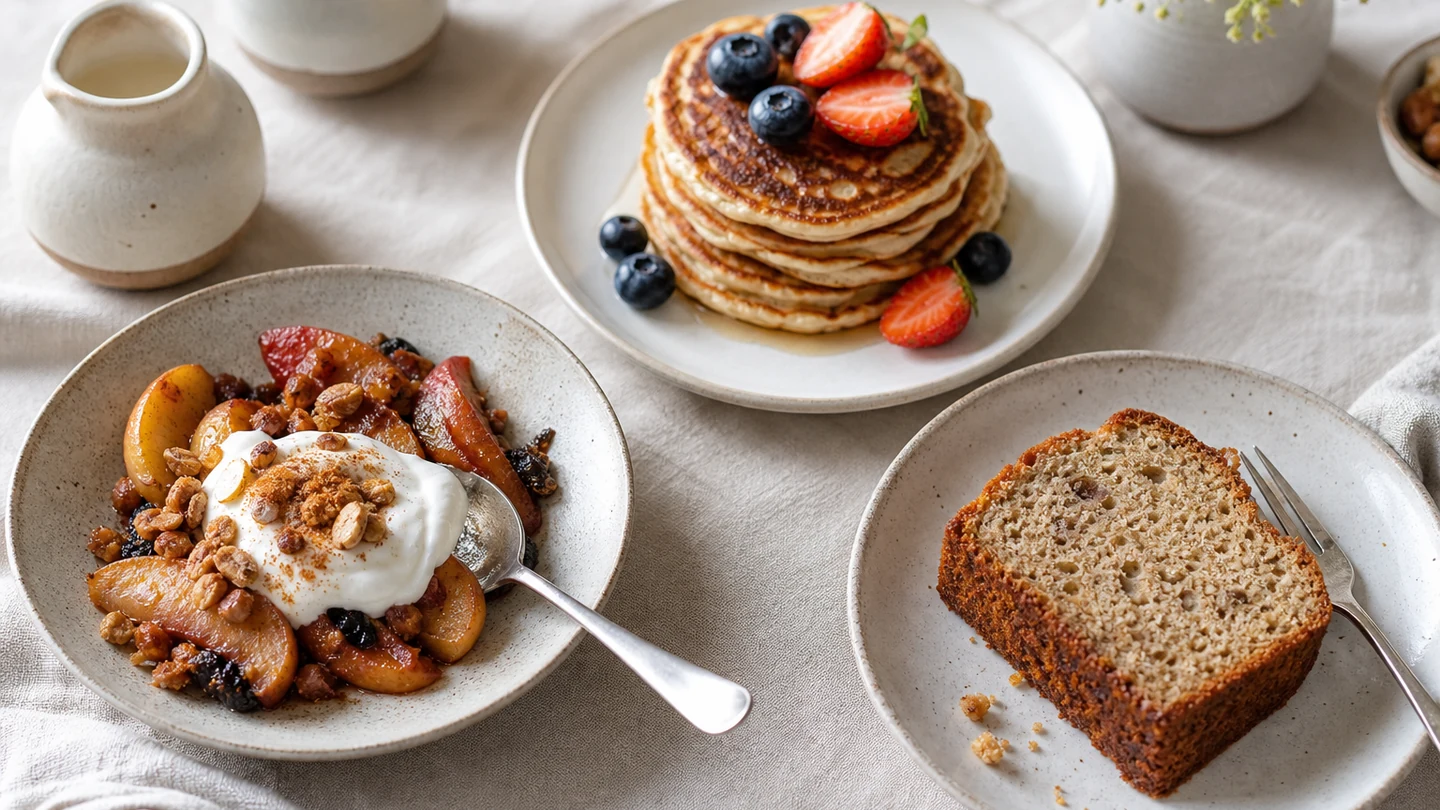
A breakfast dessert is a sweet, dessert-like dish served as part of breakfast: for example, warm fruit with yogurt, a small pancake stack, or a baked oat dish. It works best when one sweet item is the centrepiece and the rest of the meal stays simple. This guide owns the boundary between a breakfast with a dessert note and a dessert that has merely been moved to morning. Pancake World keeps this route focused on understand the category boundary and decide when a sweet dish still works at breakfast.
Where the category starts—and stops
“Breakfast dessert” is not a nutrition category or a promise about how a food will suit every eater. It is a menu decision. A dish belongs here when sweetness, a spoonable or baked texture, and a finishing element are prominent, but the portion and companions still make sense in a morning meal. A plated slice of layer cake is dessert; baked apples with oats and a cold topping can be a breakfast dessert because the fruit is the centrepiece and the plate can be completed without more sweet courses.
Use one sweet centrepiece
The easiest way to keep the idea coherent is to name one centrepiece before shopping: fruit, a pancake, a baked grain dish, or toast. Do not combine a sweet drink, pastry, syrup, and a second baked item by default. MyPlate’s planning guidance is useful here as a variety prompt, not as a scorecard: make the other components quieter and choose them deliberately.
Choose the format by the morning you have
| Format | Best use | Watch for |
|---|---|---|
| Baked fruit with a cold topping | Warm, make-ahead centrepiece | Fruit releasing too much liquid |
| Small pancakes with fruit | Cook-and-serve breakfast | Too many sweet toppings |
| Baked oat portion | Sliceable shared table | Serving a dessert-sized square by habit |
| Ricotta-style toast with roasted fruit | Fast, contrast-led plate | Toast softening before service |
Worked example: baked apples, not apple pie
Halved baked apples with oats, cinnamon and a chilled spoonful of yogurt-like topping read as breakfast dessert when the apple remains the main form. The decision changes when a pastry shell, thick filling and a large scoop of ice cream take over: then the meal is better described as dessert served at breakfast. This is a useful boundary because it prevents “breakfast dessert” from becoming a vague catalogue of sweets.
Worked example: pancakes with a finish, not a topping pile
Make a modest pancake stack the sweet centrepiece, then choose fruit for brightness and one finishing element. If the plate already has a packaged sauce, check the label’s serving information instead of treating the package as a single serving; FDA label guidance explains that serving size is the reference point for the listed nutrition information. This is a label-reading step, not a claim that one topping is universally better than another.
Quick misconception check
- Sweet means complete: no; the rest of the meal still needs a planned role.
- Fruit automatically makes any dessert breakfast: no; structure and portion still matter.
- “Dairy-free” or “gluten-free” on a recipe title covers every ingredient: no; check each current packaged ingredient and its label.
Texture fixes before service
If baked fruit is watery, serve the fruit with its juices rather than trying to hide them under extra crumble. If toast collapses, keep roasted fruit separate until the last moment. If the plate tastes uniformly sweet, add a plainly seasoned companion rather than another sweet garnish. These are service corrections, not recipe tests or health advice.
Allergen and storage boundaries
For packaged ingredients, the FDA identifies milk, egg, wheat, soy, sesame, peanuts, tree nuts, fish and crustacean shellfish among the major allergens that require specific label treatment in the United States. A recipe title cannot establish suitability for an individual. For leftovers, cool and store promptly, then use the food-safety instructions that apply to the prepared dish; do not leave a cold topping at the table as an all-morning garnish.
Actionable summary
For a breakfast dessert, choose one sweet centrepiece, give it a clear texture contrast, check every packaged component at the current label, and make the rest of the plate deliberately plain. If the centrepiece needs a full baking formula or exact safety control, use a complete tested recipe rather than improvising from a dessert description.
Sources and editorial references
- USDA MyPlate — Meal Planning: https://www.myplate.gov/sites/default/files/2024-06/TipSheet-24-Meal-Planning.pdf
- U.S. FDA — How to Understand and Use the Nutrition Facts Label: https://www.fda.gov/food/nutrition-facts-label/how-understand-and-use-nutrition-facts-label
- U.S. FDA — Food Allergies: https://www.fda.gov/food/nutrition-food-labeling-and-critical-foods/food-allergies
- USDA FSIS — Leftovers and Food Safety: https://www.fsis.usda.gov/food-safety/safe-food-handling-and-preparation/food-safety-basics/leftovers-and-food-safety