Breakfast chili
At Pancakes World, breakfast chili is a savoury morning bowl built from a complete chilli recipe, then made breakfast-ready through service choices such as eggs, potatoes, toast, tortillas or a fresh topping. Start by choosing a bean-forward, meat-and-bean or vegetable base; do not invent one pot by combining unrelated formulas. Decide how the chilli will be cooled before enlarging the batch, keep toppings on separate schedules, and verify any egg, meat or reheated leftovers with the applicable safety guidance. This page provides a planning and troubleshooting framework, not fixed quantities, a nutrition claim, a regional origin story or a tested the editorial platform recipe.
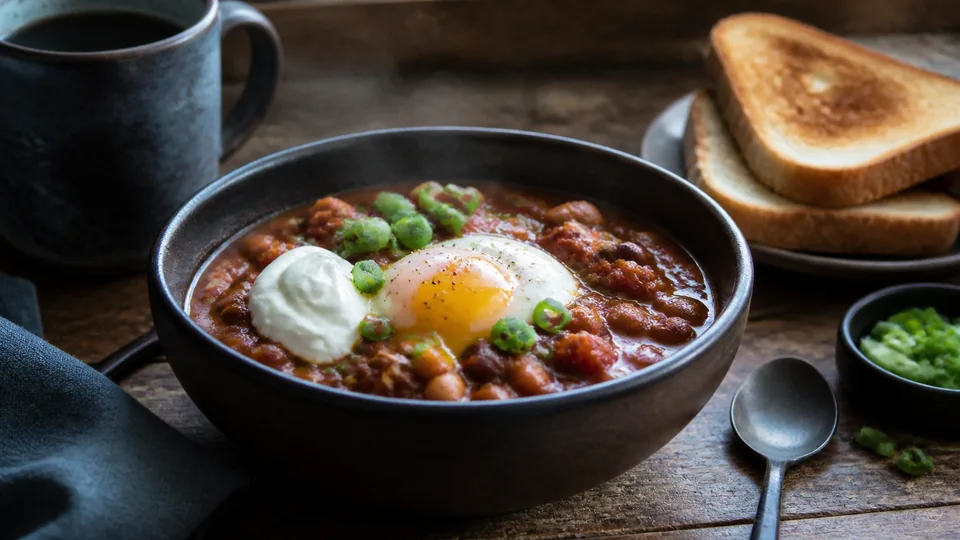
Browse the Breakfast hub for neighbouring morning formats. Pancake World links this bowl-based plan to the rest of the editorial collection.
| Guide sections |
|---|
| What makes chilli work at breakfast |
| Select the right base for the occasion |
| Build body without guessing |
| Control seasoning for a morning table |
For broader context, continue with American Breakfast: Pancakes, Diner Plates and Brunch.
What makes chilli work at breakfast
The word breakfast changes the way the bowl is served more than it changes the definition of chilli. A complete chilli recipe still controls the liquid, seasoning, ingredients, yield and cooking method. Morning identity can come from a smaller serving, an egg prepared separately, a crisp potato side, toast, tortillas, avocado, herbs or a topping station. That approach keeps the source recipe intact and lets each guest build a useful plate.
Breakfast chilli should also fit the available time. A pot started from raw meat and dry beans belongs to a schedule that supports those ingredients. A safely stored batch reheated the next morning follows a different path. A quick bean-and-vegetable formula needs its own documented method rather than an assumption that every canned ingredient can simply be warmed together. Choose the path before shopping.
Write five facts on the prep sheet: the complete recipe being used, the pot size, the number of servings, the time the food should reach the table, and the cooling plan for extras. Then list toppings separately. This exposes common conflicts early, such as needing the same pan for fried eggs and potatoes or planning more perishable garnishes than the refrigerator can hold.
Select the right base for the occasion
Bean-forward chilli
A bean-forward bowl gives beans the main texture and uses sauce to connect them with vegetables and seasoning. The complete formula should state whether beans begin dry, cooked or canned, because those forms do not share the same preparation. If canned beans are used, retain the label and follow the source for draining or including their liquid. Do not transfer nutrition values from a dry ingredient record to a drained cooked portion.
This path works well with crisp toast, a tortilla or a small potato side because those additions offer contrast without requiring another sauce. Prepare fresh herbs, diced vegetables or avocado with clean tools and keep them chilled until the hot bowl is ready. Add them at the table so their temperature and texture remain distinct from the pot.
Meat-and-bean chilli
Choose a complete recipe that identifies the meat form and gives a safe cooking method. Browning the surface is not a universal doneness test, and a dark sauce can make visual checks difficult. Keep raw-meat utensils away from cooked beans, bread and garnishes. If the finished chilli will be reheated for breakfast, record how and when the original batch was cooled.
Egg can be offered, but it should be cooked in its own vessel or by a complete method written for eggs in chilli. Dropping eggs into an arbitrary pot depth creates an untested timing problem. A separately cooked egg also lets the host serve guests who prefer the chilli without it and keeps the main batch easier to cool.
Vegetable chilli
Vegetable chilli is not automatically thin or quick. Mushrooms, squash, peppers, tomatoes and leafy vegetables release different amounts of water and soften at different rates. Select a recipe whose preparation matches the vegetables in hand. Roasting, browning or draining may be part of that method; follow the stated order rather than adding everything to the pot at once.
Beans, lentils or another documented component may give the bowl more structure, but do not add them solely to support a nutrition promise. Use USDA FoodData Central or the exact package label when ingredient data is needed internally. The public article does not invent a nutrient total for a modified recipe.
Leftover chilli breakfast
Leftover chilli is useful only when its history is known. The container should have been cooled and refrigerated within the applicable guidance, labelled, and kept for an appropriate interval. Reheat the chilli independently, verify the required endpoint, then add newly prepared breakfast components. A fresh egg or garnish does not make an uncertain leftover safe.
Reheat only the portion needed when practical. Repeatedly warming a large pot for small breakfasts complicates time and temperature control and can damage texture. Use a clean ladle, keep the remaining batch refrigerated, and follow the source or official guidance for any further storage decision.
Build body without guessing
A useful chilli should hold a spoonful of solids and sauce together, but the exact thickness belongs to the chosen recipe. If the pot is thin, first ask whether the ingredients were measured and prepared as directed. Undrained vegetables, an unintended liquid, a lid left on at the wrong stage or a substituted pot can all change evaporation. Do not correct several causes at once.
If the formula includes a reduction stage, use the vessel and heat described. Stir often enough to protect the base but do not assume constant stirring replaces a suitable pot. If the sauce is already salty or heavily seasoned, adding a concentrated packaged ingredient can intensify that problem. Check labels before making a correction.
For a thick batch, verify that the bottom is not scorching before adding liquid. A burned layer should not be scraped into the rest of the food. Move unaffected chilli only when it can be done without carrying over the scorched material, then reassess the recipe and heat setting. A larger, heavier pot may be the proper answer for the next batch, but it changes the equipment and should be recorded.
Control seasoning for a morning table
Breakfast chilli can be warmly spiced without forcing every guest into the same heat level. Let the complete recipe establish its base seasoning. Put optional hot sauce, fresh chilli or a stronger spice garnish on the table with separate utensils. This preserves the pot and makes the service more flexible.
Taste only after ingredients have cooked to a safe state. Use a clean spoon each time. Salt from canned beans, broth, cheese and packaged toppings can accumulate, so read the relevant labels before adding more. Acidity, sweetness and spice should be adjusted only within the logic of the selected formula; the article cannot supply a universal correction for every pot.
For children or a mixed group, choose a mild source from the beginning rather than trying to remove heat after cooking. Adults can add heat at service. Keep the hot condiment station away from a children's self-service area and label sauces whose ingredients or allergens may not be obvious.
Choose breakfast companions by workload
Eggs
Eggs create a recognisable breakfast plate, but they add a final-minute pan and a separate safety check. FoodSafety.gov lists 160°F for egg dishes; other egg preparations should follow the applicable official category and complete recipe. If one cook is managing the chilli, coffee and table, use an egg format that does not overwhelm the final service window.
Potatoes
Potatoes add a crisp or tender contrast. They also demand burner or oven space and can create another large batch that needs cooling. Select a complete potato recipe, wash produce under running water, and schedule it independently. A potato added directly to chilli changes the chilli formula; a potato served beside it does not.
Toast, cornbread or tortillas
A bread element can be prepared while the pot reheats, but it should not become a second complicated bake. Choose one. Retain labels for packaged bread and toppings, prepare a verified alternative separately when needed, and use clean utensils. Warm tortillas in manageable batches so they do not dry while guests wait.
Fresh toppings
Herbs, avocado, diced onion, tomato, radish or another compatible garnish can sharpen the bowl. FDA advises washing produce under running water and not using soap, detergent or commercial produce wash. Cut toppings close enough to service that they remain fresh, and keep perishable prepared produce chilled. Put out small dishes, then replenish from refrigeration with clean replacements.
Dairy or plant-based finishes
Cheese, yoghurt, sour cream or a selected plant-based product can soften heat and add contrast. They are optional. Keep them in labelled containers and preserve the cold chain. Do not describe one product as healthier or nutritionally equivalent to another without exact evidence; the host can offer choices without making a comparative claim.
Three service plans
Weekday reheating plan
Reheat a documented portion of chilli while toast or tortillas are prepared. Set out one cold garnish and one optional sauce. Avoid a second cooked breakfast item. This plan works because the pot has a known storage record, the active cooking is limited, and service can begin as soon as the chilli reaches its endpoint.
Weekend plated plan
Use a source-sized pot as the centre and prepare eggs in a separate pan near service. Add a simple potato or bread element only if another cook or appliance can manage it. Set plates, spoons, garnishes and drinks before the eggs begin. The chilli can wait under a verified holding method; delicate eggs should not be left while the table is organised.
Group topping-bar plan
Keep the chilli hot in an approved vessel and place toppings on a separate cold station. Plates and bowls come first, then chilli, breads and garnishes. Give each topping its own utensil and label. Put out small cold portions and replace them rather than pouring fresh food onto a dish that has been standing at room temperature.
Make the pot ahead safely
Planning begins at the end: identify the containers and refrigerator space before cooking. A deep pot is not a cooling container. USDA FSIS advises refrigerating perishable leftovers within two hours and using shallow containers for rapid cooling. Divide the chilli without contaminating it, label the portions and move them into refrigeration promptly.
USDA FSIS states that most refrigerated leftovers should be used within three to four days and reheated to 165°F. Use the current cold-storage chart and match any ingredient that needs different handling. If the batch includes a topping mixed into only some portions, label that difference rather than assuming every container is identical.
For freezer planning, use a complete recipe that gives suitable directions. Beans, vegetables and dairy finishes can change texture after freezing. Freeze the base and fresh toppings separately when the source supports that approach. A frozen date and reheating instruction are more useful than an unlabelled container whose contents must be guessed.
Troubleshooting a breakfast chilli
The bowl is watery
Check ingredient preparation, unplanned liquid and pot loading. A crowded vegetable batch may have released water; canned ingredients may not have been handled as directed. Follow the recipe's reduction step if one exists. Do not add flour, starch or another thickener unless the formula supports it, because that creates a different recipe and may introduce an allergen.
The bottom tastes scorched
Stop stirring the burned layer through the pot. Assess whether unaffected food can be moved cleanly. Lower heat alone may not solve a vessel that is too small or thin for the batch. Record pot material, batch depth and stirring intervals for the next attempt.
Beans are breaking apart
Review the bean form and when it entered the pot. A fully cooked canned bean does not need the same treatment as a dry bean. Stir gently and follow the complete formula. Avoid claiming that one universal bean timing applies across types and starting states.
Toppings make the chilli cold
Serve smaller amounts of cold topping and let guests add them gradually. Keep the chilli at its verified serving state and use warm bowls if the service plan supports them. Do not leave dairy or cut produce at room temperature merely to reduce the temperature contrast.
The breakfast feels too heavy
Change the serving plan, not the recipe facts. Offer a smaller bowl, a fresh garnish and a simple bread or fruit side. Remove one cooked accompaniment. “Heavy” is a personal description, not a nutrition diagnosis, so do not attach a medical or universal claim to it.
Guests arrive at different times
Use a documented hot-holding method for the chilli and prepare fragile accompaniments in smaller waves. Keep cold toppings refrigerated between groups. If safe holding is unavailable, cool and reheat portions according to guidance rather than maintaining an unverified warm pot for hours.
A host's decision sheet
Match the pot to the batch
Record the pot's usable capacity, material and lid before committing to the recipe. A vessel filled near the rim is difficult to stir without spilling and leaves little room for controlled simmering. A very wide vessel may reduce sauce faster than a narrow one. Use the equipment named by the source when possible. If equipment changes, treat the first batch as an observation rather than claiming the original timing will transfer exactly.
Count bowls from the documented yield
Plan servings from the recipe's stated yield, not from the visual size of the pot. Decide whether breakfast portions will be full bowls or smaller bowls with substantial sides. Ladle one representative serving into the actual bowl before guests arrive; this exposes a mismatch between the intended portion and the available tableware. Keep that test portion under the same handling rules as the rest of the chilli.
Reserve an allergen-aware lane
Read labels for broth, spice blends, sauces, bread, dairy finishes and plant-based alternatives. If one guest needs a verified separate portion, prepare it before shared crumbs and utensils reach the work area. Cover, label and hold that portion apart. Removing a topping at the table does not undo cross-contact that occurred in the pot, on the ladle or during bread preparation.
Separate tasting from guest service
Keep clean tasting spoons beside the stove and use each only once. Do not return a used spoon to the chilli. Set a different ladle for service and keep its handle away from raw-preparation surfaces. This small distinction becomes important when a long cooking session includes raw meat, prepared garnishes and several seasoning checks in the same kitchen.
Write a delayed-service response
Before the meal, decide what happens if breakfast starts thirty minutes late. The answer may be a verified hot-holding method, later preparation of eggs, smaller topping dishes kept in refrigeration, or a controlled cooling and reheating path. It should not be an improvised low burner with no temperature check. Sharing the response with the other cook prevents two people from applying conflicting fixes.
Close the meal deliberately
At the end, remove topping utensils from the pot area, identify what has remained under control, and portion leftovers into prepared containers. Note any topping already mixed into a container because that may affect future use. Wash and store the thermometer according to its instructions. A brief written note about yield, pot loading and the most successful service choice is more valuable than a vague memory that the breakfast went well.
Keep the note factual. Record whether the planned number of bowls was served, which topping needed replenishment, and whether the pot was easy to stir at the selected depth. Do not convert guest preference into a product ranking or nutrition conclusion. At the next breakfast, use the observations to simplify the station, select a better vessel or reduce competing final-minute work.
Frequently asked questions
Does breakfast chilli have to contain eggs?
No. Eggs are an optional breakfast-oriented accompaniment. Beans, potatoes, toast, tortillas and fresh toppings can also place the bowl in a morning meal. Keep the complete chilli recipe intact.
Can ordinary dinner chilli be served for breakfast?
Yes, if it has a known safe storage history and is reheated appropriately. Breakfast identity can come from the portion and accompaniments. A new garnish does not repair uncertain cooling or storage.
Is there one authentic breakfast chilli?
This page does not make that claim. It is a practical planning guide for serving chilli in a morning context and avoids unsupported origin or cultural assertions.
Can the recipe be doubled?
Only when the complete source provides a suitable scale or the cook uses separate source-sized batches. Doubling changes pot depth, heating, stirring and cooling requirements.
Is breakfast chilli a healthy choice?
“Healthy” depends on the exact recipe, portion and individual context. This guide does not provide a medical or nutrition judgment. Use exact labels or USDA FoodData Central for ingredient records and seek qualified advice when an individual eating plan is involved.
Is this a tested Pancake World recipe?
No. It supplies evidence-bounded selection, safety and troubleshooting guidance. Use a complete recipe for amounts, timing, yield and equipment until a project-owned test record exists.
Explore related Pancakes World guidance on American Pancakes, Maple Syrup, and Maple Syrup Pancakes.
Sources and editorial references
- FoodSafety.gov —
https://www.foodsafety.gov/food-safety-charts/safe-minimum-internal-temperatures - USDA Food Safety and Inspection Service —
https://www.fsis.usda.gov/food-safety/safe-food-handling-and-preparation/food-safety-basics/leftovers-and-food-safety - U.S. Food and Drug Administration —
https://www.fda.gov/food/buy-store-serve-safe-food/selecting-and-serving-produce-safely - USDA FoodData Central —
https://fdc.nal.usda.gov/