Breakfast casserole recipes with hash browns
At Pancakes World, breakfast casserole recipes with hash browns work when the potato format, binder, fillings, pan depth, and service plan come from one tested recipe. Choose shredded, diced, patty-based, or fresh grated potatoes only when the source names that form; frozen, thawed, cooked, and raw potatoes are not interchangeable. Confirm whether meat and vegetables must be cooked first, drain excess moisture, layer in the stated order, and use the specified dish size. For make-ahead service, refrigerate only as directed, verify the centre with the recipe’s doneness tests and applicable guidance, and cool leftovers promptly.
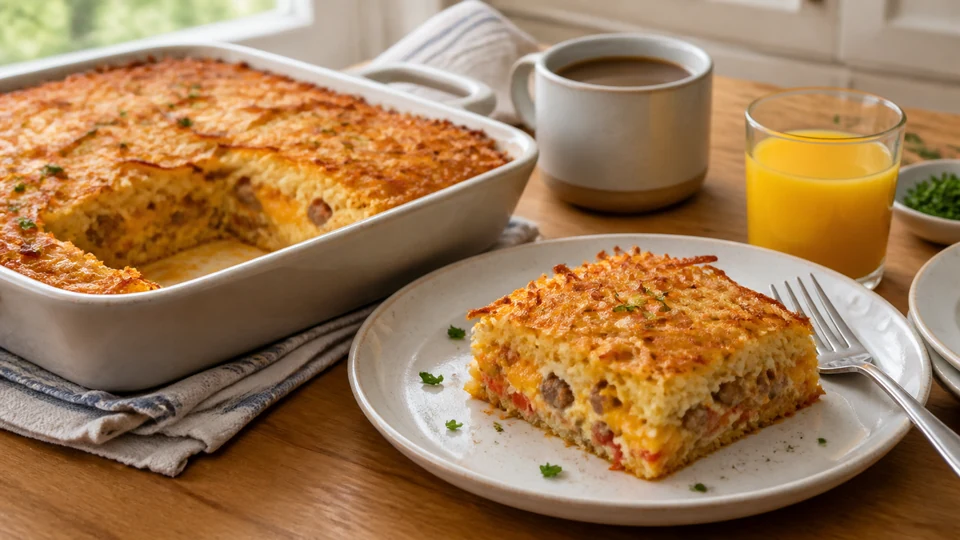
This is a recipe-family selector and execution guide, not a new casserole formula. It supplies no invented quantities, time, temperature, yield, or Recipe schema. The breakfast hub covers the wider morning topic, and Pancake World opens the full editorial collection.
| Guide sections |
|---|
| Choose the potato format before the flavour |
| Compare four casserole families |
| Match the dish size and depth |
| Control potato moisture |
For broader context, continue with American Breakfast: Pancakes, Diner Plates and Brunch.
Choose the potato format before the flavour
“Hash browns” can mean loose shredded potato, diced potato, formed patties, refrigerated shreds, frozen pieces, or freshly grated potato. Those formats carry different surface area, moisture, seasoning, oil, and cooking state. Begin by identifying the exact form named by the tested recipe, then buy or prepare that form.
Do not replace frozen shreds with raw grated potato merely because both look shredded. Fresh potato may need rinsing, squeezing, seasoning, or pre-cooking; frozen product may be formulated or partially prepared differently. Similarly, broken patties create a layered base rather than the same distribution as loose potato.
Keep the package for ingredient, allergen, preparation, date, and storage information. A branded product can change formulation, and a front photograph cannot establish whether the potato is ready to bake directly from frozen.
Compare four casserole families
Shredded hash-brown base
Loose shreds can form a continuous potato layer or be distributed through the binder. Select a recipe that states whether they remain frozen, are thawed, or are browned first. The difference affects water and texture. Do not press a thicker layer into a smaller pan to use the whole bag.
Diced potato casserole
Diced potatoes create distinct pieces and may support a spoonable or sliceable casserole depending on binder. Confirm cube size and pre-cooking state. Large raw pieces cannot borrow the timing of small frozen dice. Follow the source’s centre check rather than judging by the top.
Patty-layer casserole
Formed hash-brown patties can create a defined base and make portion layout visible. Their oil, seasoning, and allergens belong to the complete dish. Use the number and arrangement in the tested recipe; overlapping more patties changes depth and fat distribution.
Fresh grated potato version
A recipe developed for fresh potato should explain variety or preparation where important, moisture removal, and whether the shreds are cooked before assembly. This format demands more active work and should not be described as equivalent to opening frozen hash browns.
Explore related Pancakes World guidance on American Pancakes, Maple Syrup, and Maple Syrup Pancakes.
Sources and editorial references
A useful source names the potato state, binder, fillings, pan dimensions, assembly, make-ahead permissions, baking method, doneness, and yield. It should specify whether meat is raw or cooked and how vegetables are handled. Reject a sketch that lists ingredients without controlling depth and centre.
Choose one recipe and retain it intact. Do not combine a sausage quantity from one, an egg mixture from another, and the baking time of a third. Casserole structure is a system: changing solids, liquid, fat, or dish geometry changes the path to a set centre.
Without a project-owned test record, editorial suggestions remain untested. Article schema is the correct fallback. A tempting variation does not become a validated recipe merely because its ingredients are familiar.
Match the dish size and depth
Measure the interior dimensions of the intended baking dish and compare them with the source. Capacity alone is insufficient because a narrower dish produces greater depth. Material can also affect heating, so use the type named where the recipe makes it part of the method.
Do not scale until a validated version supports the new batch. Doubling into one deeper pan is especially risky because the surface may brown while the centre remains unset. For a crowd, two correct pans often preserve the tested depth better than one improvised vessel, provided oven space and rotation are addressed by the source.
Before assembly, confirm that the dish fits the oven with clearance and that another brunch item will not compete for the same rack. Set a stable landing area for the hot pan.
Control potato moisture
Follow thawing and draining instructions exactly. Frozen shreds may release water as they warm; fresh grated potatoes hold water between cells; some refrigerated products contain oil or other ingredients. A universal instruction to squeeze all hash browns can be as wrong as never draining them.
If the recipe calls for browning, use the stated method and batch size. Crowding a pan can prevent the intended moisture loss. Cool pre-cooked potato appropriately before combining with egg when advance assembly is used.
Avoid adding wet salsa, undrained vegetables, or extra sauce to the casserole base unless the tested recipe includes it. Offer those items at service instead. The potato cannot absorb unlimited moisture without changing the centre.
Prepare meat according to its stated condition
Sausage, bacon, ham, chicken products, and meat substitutes have different raw or ready-to-eat states. Read the label and recipe. When cooked sausage is required, cook and drain it before assembly; do not expect the casserole to perform that separate step invisibly.
Keep raw-meat utensils and surfaces away from potato, cheese, and ready-to-eat sides. Wash hands and clean according to applicable guidance. Cool cooked filling promptly if it is prepared ahead.
Do not increase meat simply to make the casserole “heartier.” Extra solids, rendered fat, salt, and moisture change the binder ratio. Serve a separate labelled side if the menu needs another option.
Prepare vegetables for the casserole, not the salad bowl
Vegetables differ in water release and cooking time. Mushrooms, spinach, courgette, peppers, and onions may need cooking or draining before assembly. The recipe should say. Adding a large volume of raw vegetables to an egg base is an untested structural change.
Cut pieces to the source size so they distribute and cook as expected. Thaw frozen vegetables only when directed, and discard or use released liquid according to the method. Keep fresh garnishes for after baking if their role is contrast rather than structure.
For a vegetable-led version, select a recipe designed around those vegetables instead of removing meat from a meat-heavy formula and filling the space by guess.
Mix the binder without improvising
Egg, dairy or plant beverage, cheese, and seasonings form the binder in many hash-brown casseroles. Use the exact ingredients and amounts. A different milk, egg substitute, or cheese can change water, protein, fat, and set. Use a tested substitution where available or mark a small trial as untested.
Crack eggs into a separate bowl before combining. Review every package for allergens. Whisk only as directed and pour in the stated sequence so dry areas or floating fillings do not form.
Do not taste raw binder. If an ingredient is omitted accidentally, stop and assess the formula before baking rather than adding a guessed amount through the top.
Some recipes place potato beneath fillings and binder; others mix components; patty versions create a tiled layer. Each choice affects contact with the dish, moisture migration, and portioning. Follow the chosen design.
Spread ingredients evenly without compressing them beyond the instruction. Keep the rim clean and leave the headspace the source expects. Reserve cheese or garnish only when the recipe says it is added later.
Photograph the assembled depth or write a short note for a future repeat. Record any departure. That evidence is more useful than remembering that the pan “looked about right.”
Plan make-ahead assembly safely
Use advance assembly only when the tested recipe explicitly permits it. Note the maximum stated refrigeration period, container covering, and whether the dish should enter the oven cold or rest according to the source. Do not invent overnight permission from a general make-ahead label.
Keep perishable components refrigerated during preparation. If cooked meat or vegetables are made earlier, cool them before combining rather than trapping heat in a deep egg mixture. Label the assembled dish with identity and time.
Check whether a glass or ceramic dish can move safely from refrigeration to the required oven conditions. Manufacturer instructions control thermal handling. If that path is not supported, choose another vessel or recipe instead of risking damage.
Build a service-time schedule
Work backward from eating. Include the recipe’s bake range, centre checks, any stated rest, cutting, movement to the buffet, and a small operational buffer. Do not start so early that the plan depends on indefinite holding.
Prepare cold sides and drinks while the casserole bakes, but keep them controlled until service. Avoid opening the oven repeatedly for unrelated foods. If two pans are used, follow source guidance on rack position or rotation rather than assuming they bake like one.
Assign one person to verify the centre and another to set labels and serving tools. A named handoff prevents a browned surface from being carried to the table without the required check.
Verify doneness in the correct place
The centre and deepest potato area matter more than a melted-cheese surface. Use the tested recipe’s visual cues, physical test, and applicable temperature guidance. Check without touching the pan with the thermometer when that would distort the reading.
If the centre is not ready, continue only as the source supports and protect the top if the recipe provides that method. Do not serve edge portions while returning an uncertain centre to the oven. Do not raise heat casually to recover a late schedule.
Record the final result and time. One successful bake does not authorize a different depth, frozen state, or ingredient ratio next time.
Rest, cut, and serve with purpose
A source-directed rest can allow the binder to settle for cleaner portions. Respect it without converting the pan into an uncontrolled holding period. Use a knife and server suited to the dish material.
For a buffet, cut useful initial portions and leave some flexibility for appetite. Keep sauces, herbs, and crisp toppings separate with labels and utensils. Put drinks away from the hot-pan route.
Pair the rich, soft casserole with a contrasting cold or crisp component rather than another potato-and-egg main. Fruit, vegetables, or a simple bread can work depending on the exact guests and menu. This is meal design, not nutrition prescription.
Handle dietary requests precisely
“Hash browns” does not mean gluten-free, dairy-free, egg-free, vegetarian, or vegan. The potato product may contain seasonings or processing statements; the binder and fillings add their own ingredients. Review the complete current label set.
Use separate tools and preparation areas where the plan calls for cross-contact control, while explaining the limits of the kitchen. If a person needs a medically safe alternative and evidence is uncertain, provide a clearly controlled separate item rather than modifying one corner of the casserole.
Keep labels until service ends. Date saved menu notes because formulations may change.
Cool and store leftovers
Close the service window according to applicable guidance. Divide safe leftovers into suitable portions and containers so they can cool as required; a deep casserole left in its baking dish may cool differently from shallow portions.
Record the cooking, service, and storage history. Keep cold toppings separate. Reheat through a supported method and verify where guidance requires it. Do not repeatedly warm the whole pan to remove one serving.
When time or temperature history is missing, discard rather than relying on smell or appearance. Reheating cannot repair an unknown past.
Troubleshoot by returning to the first mismatch
For a watery centre, check potato state, thawing, drained vegetables, meat fat, added sauces, dish depth, and measurements. Change the earliest unsupported factor, not five ingredients.
For a rubbery or dry result, review overbaking, dish geometry, and binder substitutions. Do not pour sauce over the next raw batch as a universal repair.
For scorched edges with a loose centre, confirm pan size, material, rack, and depth. A smaller deeper dish is a common planning mismatch. Select the right vessel rather than reducing time until the centre is unsafe.
For poor slices, check the recipe’s rest, binder ratio, potato form, and whether it was designed to be spooned instead. Presentation preference cannot override the source structure.
A comparison checklist for candidate recipes
Record potato format and state, binder, meat state, vegetable preparation, dish dimensions, advance permissions, bake method, centre test, stated yield, holding, and leftovers. Add equipment conflicts and active morning work.
Reject recipes that omit potato state or vessel size. Prefer the source whose complete workflow fits the occasion, not the photograph with the most browned cheese. Once selected, stop shopping for extra ingredients that belong to another formula.
After service, audit whether the potato texture, portioning, timing, and cleanup suited the event. Keep the exact source and notes. Mark any variation so a future cook knows what was and was not validated.
Distinguish breakfast service from meal preparation
The recipe ends with a cooked casserole; the event plan continues through cutting, buffet placement, alternatives, condiments, and leftovers. Write those service decisions separately so they do not become unrecorded recipe changes. Adding salsa to the pan, for example, changes moisture. Offering it in a labelled bowl lets each diner decide without altering the tested base.
Choose the serving format before baking. A firm shredded-potato casserole may be cut into portions after its directed rest. A softer diced-potato version may be intended for a spoon. Do not force clean squares from a recipe designed to remain tender, or hold a firm casserole longer solely for appearance. Use the utensil that matches the structure.
For a seated meal, plate the casserole close to service and add cold sides at the last appropriate moment. For a buffet, protect the hot-pan route, place plates before the casserole, and put toppings after it so guests do not reverse through the queue. Display the dish label where it can be read before a portion is taken.
Limit condiments to choices that make sense with the selected formula. Several sauces, cheeses, herbs, and crisp toppings can obscure the ingredient record and create shared-utensil problems. One or two well-labelled options offer flexibility without turning a casserole into an uncontrolled topping station.
Plan a controlled small-batch trial
When choosing among recipe families, test a complete recipe at its validated scale rather than constructing a miniature by rough division. Eggs, pan area, and potato layers can be difficult to halve accurately. Look for a source written for the smaller dish and cooker count actually needed.
Run the trial under ordinary service conditions. Record potato product, thaw or cooking state, dish dimensions, assembly time, oven setup, centre checks, directed rest, portion style, and cleanup. Taste the casserole with the side and condiment planned for the real meal, because a salty or rich topping can change the menu decision even when the base performs correctly.
Ask route-specific questions afterward. Did the potato stay identifiable or merge into the binder? Could portions be served without the top separating from the base? Did vegetables release water? Did the chosen meat dominate the potato? Was the make-ahead step actually easier, or did cooling and storage move work to an inconvenient evening?
Keep observations separate from claims. “This pan produced twelve pieces for our tasting” is not permission to publish a universal yield when portion sizes were informal. “The centre met the tested source’s check in our recorded oven” does not replace the source timing for another kitchen. The trial informs selection and can become part of a formal project record only when all required fields and review are complete.
Decide when hash browns are the wrong base
Hash browns are useful when potato texture and a familiar savoury structure suit the menu. They are a poor choice when potato duplicates several sides, when the available product cannot meet label needs, when freezer or refrigerator space is limited, or when the source requires more browning work than the morning allows.
If guests need an egg-free main, simply removing the binder from an egg casserole is not a solution. Choose a tested bean, grain, bread, or vegetable breakfast designed around its own structure. If the desired result is crisp potato, a deep egg casserole may be less suitable than separately cooked hash browns with another main.
Changing the base is not a failure. It is better to select a recipe family that naturally meets the event than to make a chain of substitutions to preserve the words “hash-brown casserole.” Return to the breakfast purpose, equipment, guest needs, and service time, then choose the simplest complete method.
Frequently asked questions
Can frozen hash browns go straight into the casserole?
Only when the tested recipe names frozen hash browns in that state. Another recipe may require thawing, draining, or browning.
Can I use patties instead of shredded potatoes?
Use a patty-based tested recipe. Patties change layering, oil, seasoning, and depth and are not a neutral swap.
Can I assemble the casserole overnight?
Only when the source explicitly permits refrigerated advance assembly and the dish can safely follow the stated refrigerator-to-oven path.
Can I double it for a crowd?
Use two correctly sized pans or a tested scaled recipe. Doubling into a deeper dish can leave the centre underdone while the edges brown.
Why is my casserole watery?
Review potato state, vegetable moisture, meat draining, untested wet additions, and dish depth before changing the binder.
What goes well beside it?
Choose a contrasting simple side and drink rather than another egg-and-potato main. Keep any cold component in its appropriate storage lane.
- USDA FoodData Central —
https://fdc.nal.usda.gov/ - FoodSafety.gov food safety charts —
https://www.foodsafety.gov/food-safety-charts - FDA Food Labeling & Nutrition —
https://www.fda.gov/food/nutrition-food-labeling-and-critical-foods