Breakfast burger
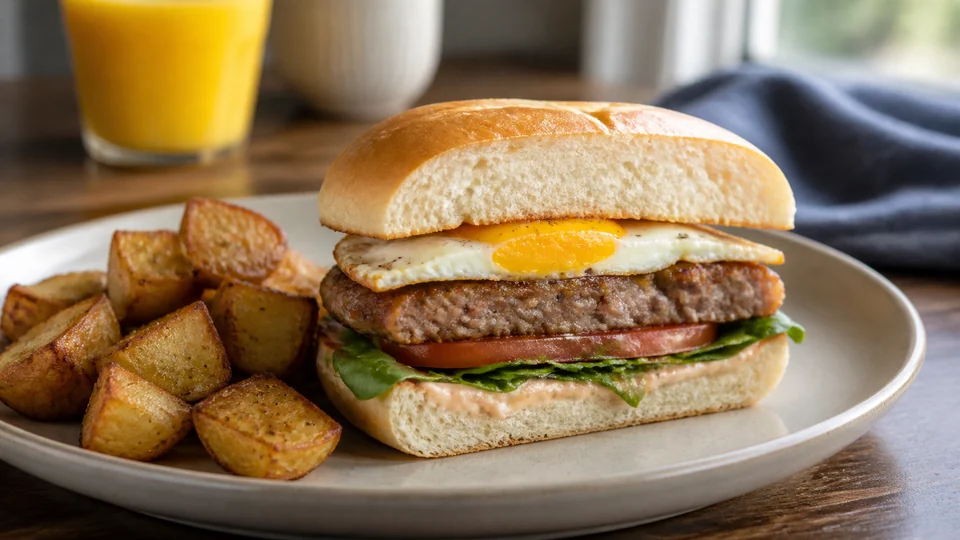
At Pancakes World, a breakfast burger needs a compact patty, a fully cooked egg or egg layer, a dry fresh element and a bun sturdy enough to hold them without becoming oversized. Build from the bottom up: toasted bun, sauce used sparingly, patty, cheese if wanted, egg and a drained vegetable component. Cook ground meat and eggs to the applicable safe endpoint, using a thermometer rather than bun colour or melted cheese as proof. See the editorial platform .
Breakfast, Pancake Troubleshooting, Storing and Reheating Pancakes, Pancake Toppings and Sides.
| Guide sections |
|---|
| What this brunch needs to accomplish |
| Menu formats that fit the intent |
| Build a workable sequence |
| Current-batch troubleshooting |
For broader context, continue with American Breakfast: Pancakes, Diner Plates and Brunch.
What this brunch needs to accomplish
The target is a handheld breakfast with controlled height, moisture and safe doneness. This is an assembly framework, not a tested formula or a universal claim about burger style.
Menu formats that fit the intent
Beef breakfast burger
Shape without excessive compression and use safe ground-meat temperature guidance. Size Beef breakfast burger for a clean handheld stack and keep raw-meat, cooked-egg and fresh-topping stations separate.
Sausage patty burger
Check the package meat type because required handling may differ. Size Sausage patty burger for a clean handheld stack and keep raw-meat, cooked-egg and fresh-topping stations separate.
Bean patty sandwich
Use a tested patty that sets firmly enough to turn. Size Bean patty sandwich for a clean handheld stack and keep raw-meat, cooked-egg and fresh-topping stations separate.
Folded egg layer
Match the egg diameter to the bun and cook it fully for the intended guest. Size Folded egg layer for a clean handheld stack and keep raw-meat, cooked-egg and fresh-topping stations separate.
Crisp potato layer
Keep it thin and drain surface fat before assembly. Size Crisp potato layer for a clean handheld stack and keep raw-meat, cooked-egg and fresh-topping stations separate.
Tomato or greens
Dry fresh components so they do not wet the bun. Size Tomato or greens for a clean handheld stack and keep raw-meat, cooked-egg and fresh-topping stations separate.
Build a workable sequence
- Choose the patty and verify its handling guidance.
- Prepare cold toppings before raw meat is opened.
- Toast buns on a clean surface.
- Cook patties in uncrowded batches.
- Cook eggs in a dedicated pan or after full sanitation.
- Assemble only when every layer is ready.
Current-batch troubleshooting
The burger slides apart
Reduce sauce and dry the fresh layer. Verify the next burger layer before rebuilding the whole service round.
The bun collapses
Toast it and reduce stack height. Verify the next burger layer before rebuilding the whole service round.
The patty bows
Shape evenly and use the method appropriate to the meat. Verify the next burger layer before rebuilding the whole service round.
The egg overhangs
Cook it in a ring or fold it to the bun. Verify the next burger layer before rebuilding the whole service round.
Service stalls
Hold cooked components safely and assemble in a fixed sequence. Verify the next burger layer before rebuilding the whole service round.
Safety and evidence boundary
For Beef breakfast burger, keep its label, raw tools and ready-to-eat utensils separate. Never taste its raw-flour batter. Measure the applicable endpoint, refrigerate perishable portions, and require an exact formula before publishing nutrition or yield.
Frequently asked questions
Can a burger be prepared the night before?
Raw patties require strict refrigeration; assemble the bun only near service.
Is melted cheese proof the meat is done?
No. Verify the patty itself under official safe-temperature guidance.
How can it be vegetarian?
Use a complete tested plant-based patty and check cheese, sauce and bun labels.
What keeps the bun from getting wet?
Toasting, drained toppings and restrained sauce all help.
How tall should it be?
Low enough to bite cleanly without the filling being forced out.
Explore related Pancakes World guidance on American Pancakes, Maple Syrup, and Maple Syrup Pancakes.
Sources and editorial references
- U.S. Food and Drug Administration — Food Allergies —
https://www.fda.gov/food/nutrition-food-labeling-and-critical-foods/food-allergies - FoodSafety.gov — Safe Minimum Internal Temperatures —
https://www.foodsafety.gov/food-safety-charts/safe-minimum-internal-temperatures - USDA FSIS — Leftovers and Food Safety —
https://www.fsis.usda.gov/food-safety/safe-food-handling-and-preparation/food-safety-basics/leftovers-and-food-safety - U.S. Food and Drug Administration — Handling Flour Safely —
https://www.fda.gov/food/buy-store-serve-safe-food/handling-flour-safely-what-you-need-know