Breakfast buffet ideas for a large crowd
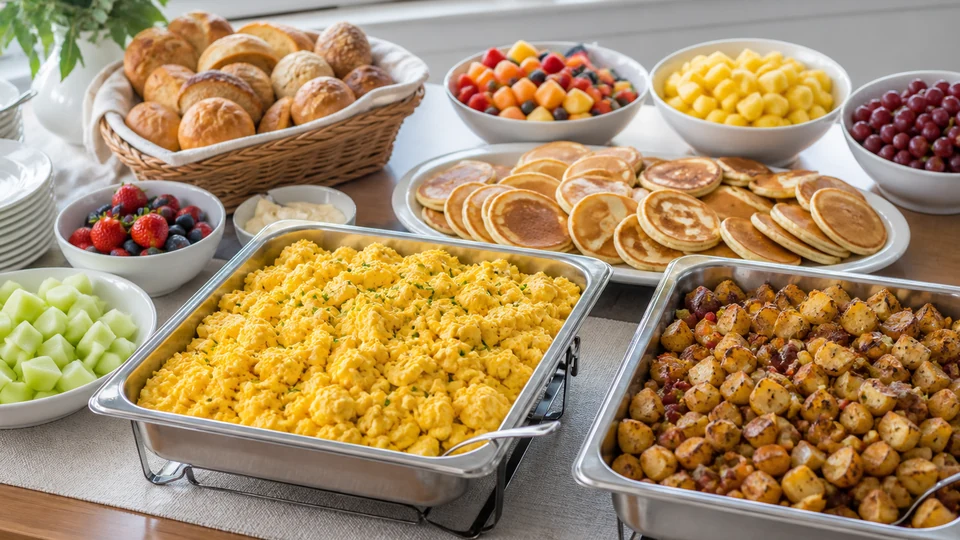
At Pancakes World, a breakfast buffet for a large crowd needs fewer, sturdier dishes rather than more variety: one hot anchor, one cold anchor, bread or grain, fruit or vegetables, drinks, and clearly labelled alternatives. Calculate service capacity from pans, electrical outlets, refrigeration, serving utensils and refill labour before finalising the menu.
This guide provides operational planning, not universal serving quantities, venue claims, prices or an assurance that food remains safe without an event-specific control plan. Exact large-batch recipes require tested sources. Pancake World is the main editorial collection.
| Guide sections |
|---|
| Count service capacity before choosing dishes |
| Choose one hot anchor |
| Add a cold anchor |
| Use bread as stable capacity |
For broader context, continue with American Breakfast: Pancakes, Diner Plates and Brunch.
Count service capacity before choosing dishes
Write down the usable cooking and holding equipment: oven shelves, burners, griddle area, refrigerators, insulated carriers, serving tables and safe electrical circuits. A menu requiring four hot appliances is not feasible when the room has one suitable outlet and a domestic oven.
Next count hands. One person can monitor only a limited number of heat-sensitive tasks. Separate production, buffet replenishment, drink service and clearing where possible. If staffing is small, reduce made-to-order food.
Finally map time. Identify when the room opens, when guests are expected, how long service lasts and when cleanup must finish. A sturdy baked anchor may fit a long arrival window better than delicate pancakes that decline while waiting.
Choose one hot anchor
The hot anchor should carry much of the meal and tolerate planned batch service. An egg bake, breakfast potatoes with a separately prepared substantial item, baked oats, a savoury grain dish or another complete large-format recipe can work. Select according to the guests, equipment and safe holding plan.
Do not combine an egg bake, made-to-order omelettes, waffles and fried potatoes merely because each appears on a buffet list. Every additional hot system needs heat, utensils, staff and replenishment. A second warm item should be simple and use different equipment only when capacity clearly exists.
Cut or portion the anchor consistently before it reaches the line. Guests move faster when they can lift one piece or use one defined scoop. Keep a replacement tray ready under correct control rather than piling food into one deep vessel.
Add a cold anchor
A cold anchor provides a complete alternative when hot food is delayed. Yogurt or an appropriate alternative with toppings, overnight oats from a tested large-batch method, a composed grain salad, or a substantial fruit-and-cereal station may fit. It needs refrigeration and dedicated utensils.
Keep toppings limited. Two fruits, one crisp component and one optional sweetener or sauce are easier to label and refill than twelve jars. Place the base first, bowls second if not already supplied, and toppings in the order they are used.
For allergen control, do not let one spoon travel between granola, nuts, seeds and dried fruit. When a severe allergy is present, a separate prepared portion may be safer than a shared station. Follow the event's proper controls.
Use bread as stable capacity
Bread, rolls, bagels, muffins from a tested formula or other baked items can add dependable volume without another burner. Offer a restrained range: one neutral bread, one special item and one verified alternative if needed. Too many similar bakery items create leftovers and slow decisions.
Decide whether to toast. Self-service toasters cause queues, electrical load and crumbs. Pre-toasting a large quantity can produce dry bread. For many events, fresh bread with spreads is the more stable solution.
Place spreads after bread and give each a dedicated utensil. Keep perishable spreads cold or replenish in small vessels. Label major allergens plainly.
Make fruit easy to take
Whole fruit is robust and minimizes preparation, while cut fruit is easier to eat but requires labour, utensils and temperature control. A mix can work: bananas or apples beside one chilled cut-fruit tray. Choose items that hold their shape during the planned service.
Cut pieces large enough that they do not collapse under serving tongs. Avoid an enormous deep bowl where the lower fruit is crushed. Shallow trays refilled from controlled backup preserve quality.
Seasonal colour is welcome, but the fruit should be selected for ripeness and handling, not solely decoration. This page makes no price or local availability claim.
Give drinks their own station
Coffee, tea, water and one cold drink can serve most mixed events. Locate them away from the food line so a person preparing tea does not block the hot anchor. Provide cups, lids only when needed, stirrers, napkins and waste collection at the station.
Hot-water equipment and coffee urns require safe placement, suitable power and monitoring. Keep cables protected and handles away from children. Refill by trained staff rather than asking guests to lift heavy hot vessels.
Label milk, plant drinks and sweeteners. Keep perishable additions under their required temperature control and use modest containers replenished often.
Draw the buffet line on paper
The usual sequence is plates, hot anchor, secondary savoury item, cold or bread components, fruit, condiments and cutlery at the exit. Drinks belong elsewhere. The exact order can change, but guests should not cross back through the line for syrup or forks.
Create access from both sides only when serving vessels, labels and staff can support it. A double-sided line increases throughput but doubles utensil positions and makes replenishment harder. One well-spaced line may be safer in a narrow room.
Leave room for mobility devices and guests who need assistance. Put labels where they can be read before a guest reaches for food. Do not use tiny handwritten cards hidden behind trays.
Replenish small, not spectacular
A large opening display looks abundant but exposes more food and allows quality to decline. Put out a controlled first round and hold backup under suitable conditions. Replenish when a vessel is low, replacing it cleanly rather than pouring new food over old.
Assign each replenisher a zone. One watches hot food, one cold and bread, one drinks if staffing allows. Use a written tray count so the team knows what remains. Keep the route from kitchen to buffet clear of guests and empty crates.
When demand is lower than expected, slow production. Do not cook the final batch merely because it appeared on the prep sheet. Safe unopened or unprepared ingredients are more flexible than excess finished food.
Three buffet patterns
The baked pattern uses one savoury egg or plant-based bake, one tray of potatoes or vegetables, bread, fruit and drinks. It suits an oven-led kitchen and allows portions to be cut before opening. Its constraint is oven capacity and the safe hold between batches.
The bowl pattern uses hot porridge or another tested grain anchor, a refrigerated yogurt-style option, fruit, toppings and bread. It reduces griddle work but creates ladle, bowl and topping traffic. Keep the hot and cold stations far enough apart that guests can choose without crossing.
The sandwich pattern uses prepared fillings, bread or rolls, a warm side, fruit and drinks. It can be robust for packed departures, but assembly labour is substantial. Build in small rounds and protect bread from wet fillings.
Choose one pattern and solve it fully. Combining all three multiplies vessels and guest decisions without necessarily improving breakfast.
Serve pancakes only with an explicit production plan
Pancakes attract attention but are a serious throughput constraint. Count how many fit on the griddle with turning space and how long a complete batch takes under a tested recipe. Compare that output with the arrival rate. If the calculation does not work, choose sheet-pan pancakes, a baked anchor or no pancakes.
A staffed pancake station needs batter control, raw-ingredient separation, hot equipment protection, clean tools and a queue location. Toppings should sit after pickup so guests do not decorate plates at the griddle. Keep the selection small.
Pre-cooked pancakes may be reheated only under an appropriate method and safety plan. A long covered hold can damage texture. Do not advertise made-to-order food when the staffing model cannot deliver it.
Plan for arrival waves
Many crowds do not appear evenly. A bus, meeting break or ceremony can send most guests at once. Ask the organizer for the schedule and identify likely peaks. Have the first replacement trays ready before that moment.
During a peak, simplify choices. Open a second plate stack, place a staff member at the hot anchor and direct guests to the separate drink station. Refill from the back when possible so staff do not push through the queue.
After the peak, reduce exposed food and consolidate only when safety and allergen identity remain controlled. Do not combine two partially used vessels if their histories or serving utensils differ.
Assign production zones
The hot zone handles cooking, controlled holding and replacement trays. The cold zone portions fruit, cultured products and alternatives under refrigeration. The dry zone manages bread, labels, napkins and backup utensils. The beverage zone monitors hot and cold drinks.
Write a short handoff for each zone: what opens first, what backup exists and who makes the stop decision. A volunteer should not improvise whether an unlabeled tray is gluten-free or whether a warm dairy product can return to the refrigerator.
Use distinct carts or shelves for outgoing and returning items. Dirty utensils and empty trays should not pass through the clean assembly area.
Provide alternatives as complete routes
A clearly identified alternative should contain enough components for breakfast, not merely remove the main dish. If the hot anchor contains egg and dairy, the alternative may need a substantial plant-based or otherwise suitable item plus bread or grain and fruit. Determine this from known guest needs.
Package or plate special-diet portions separately when shared buffet controls cannot protect them. Record the exact products and preparation area. Labels such as “healthy,” “free from” or “allergy friendly” are too vague.
Staff should know where alternatives are and who may answer ingredient questions. Never guess. When evidence is incomplete, state the uncertainty and offer a sealed labelled product if appropriate.
Protect the power and heat plan
Coffee urns, kettles, induction units, warmers and toasters can overload an unsuitable circuit. Confirm venue capacity with the responsible person. Do not daisy-chain extension leads or hide cables under unstable rugs.
Create physical distance between guests and hot backs of appliances. Use heat-safe surfaces and keep combustible decor away. Steam paths from lids and urns must not face the queue.
If power fails, the menu needs a stop rule. Cold bread, suitable packaged items and whole fruit may offer a limited fallback, but food that has left safe control cannot be rescued by relabelling it as room-temperature service.
Make labels operational
Every label should state the dish name and the information required by the event's allergen system. Put the card at the front-left or another consistent position. When a tray changes, change the label at the same time.
Colour coding can help staff, but guests should not have to memorize a colour legend to know what food contains. Use words. Keep backup label cards with the replacement trays so an empty vessel is not refilled under the wrong sign.
For self-built bowls, label each topping. For coffee, label dairy and plant products by exact type. For bread, retain package information where staff can consult it even if slices are moved to baskets.
Estimate from evidence, then build a stop rule
Use confirmed registrations, event history and organizer information rather than a universal servings-per-person number. Account for whether breakfast is the primary meal, how long it runs and what other food is available. Children and adults do not form one predictable unit.
Produce in documented batches. A stop rule might consider remaining guests, food already exposed, backup ingredients and time left. The person responsible should be named before opening.
Do not chase a zero-leftover photograph by running out early, and do not chase abundance by cooking every backup tray. The appropriate balance is event-specific and should be recorded for the next occurrence.
Reduce congestion around condiments
Place popular condiments in more than one small vessel when the line permits. Keep them after the food they accompany. Syrup should not sit before pancakes; spreads should not sit before bread.
Avoid pump bottles that guests cannot operate easily or open bowls with unsuitable spoons. Provide drip trays where pours are likely. Wipe the station during service and replace contaminated utensils.
Salt, pepper and hot sauce can sit on dining tables when that reduces queue time, subject to the event plan. This leaves the main line focused on receiving food.
Prepare for accessibility and assistance
Ensure table height, aisle width and plate handling work for the expected guests. Offer assistance without requiring someone to explain a disability in the queue. Seating should be available near, but not blocking, the buffet.
Use light plates that remain stable, utensils with usable handles and cups that can be filled without lifting a heavy urn. Place at least some food within comfortable reach rather than constructing tall tiered displays.
Print labels with strong contrast and readable type. Verbal descriptions should be available from staff. Accessibility is part of capacity, not a decorative afterthought.
Close the buffet in stages
Announce the final service window, stop new cooking, and reduce replacement volume. Remove empty vessels instead of leaving a trail of crumbs and labels. Keep drinks available for the planned period where safe.
At close, separate unopened stock, controlled backup, exposed food and waste. Apply the correct disposition to each category. Record temperatures or times when the event plan requires them. Label recoverable food promptly.
Count unopened products, finished leftovers and major shortages. Note which station queued, which tray moved fastest and which equipment was idle. These observations inform the next event without pretending this buffet was a formal experiment.
Questions for a large breakfast buffet
How many hot dishes should be served?
Usually one strong anchor and, only when capacity allows, one simple secondary item. The exact number follows equipment, staff and safe holding capability rather than guest expectations alone.
Are waffles or pancakes practical for a large crowd?
Only when griddle or iron output matches arrival rate and trained staff can run the station. Otherwise use a baked format or another anchor that portions together.
How can the buffet look abundant with less food exposed?
Use shallow clean vessels, complete labels and frequent small replenishment. Backup kept under proper control can replace trays before they look neglected.
Should drinks be in the same line?
No in most layouts. A separate drink station prevents coffee and tea preparation from blocking food pickup and reduces spill risk near hot trays.
What is the best make-ahead breakfast for a crowd?
There is no universal winner. Choose a complete tested bake, grain dish or cold anchor that matches the venue's oven, refrigeration, holding and guest needs.
Does this article provide serving quantities?
No. Quantities require event-specific attendance, menu and service evidence plus tested yields. This guide explains how to build that calculation without inventing a fixed ratio.
Decide whether food is cooked on site or transported
On-site production gives the team immediate access to ovens, sinks and cold storage, but only if those facilities are confirmed and available at the right time. A venue kitchen may have restricted access, unfamiliar appliances or another event using part of the space. Inspect through the responsible venue contact rather than assuming a listed kitchen is production-ready.
Transported food needs containers, loading space, travel-time control and a receiving plan. The person meeting the vehicle should know where hot and cold items go, which tray opens first and what cannot wait on the floor while tables are moved. Keep allergen-aware portions clearly separated and documented through the handoff.
Do not transport hot and cold food together in an improvised box. Use suitable equipment and the controls in the event plan. Record departure and arrival information where required. If a delay exceeds the plan, the responsible person makes the safety decision before service.
Create a receiving table behind the buffet
A receiving table holds replacement trays, clean utensils, labels, towels and the service log. It should be out of guest reach but close enough for quick replenishment. Hot and cold backup still need their proper holding equipment; the table is an organization point, not storage.
Mark spaces for “ready next,” “empty return” and “needs decision.” This prevents an empty dirty pan from being placed beside fresh bread. Keep waste bins and cleaning chemicals in their own zone.
Before opening, the lead checks every dish against its label and serving tool. A pan without a name does not enter the line. A product package can remain nearby for staff reference without becoming decorative clutter.
Use registration information intelligently
Ask the organizer for confirmed attendance, the number of children when relevant, known dietary requests and whether guests have eaten elsewhere. Distinguish registrations from invitations. Note whether attendance tends to arrive in one wave.
Translate that information through actual recipe yields. If a tested bake yields a documented number of portions at the selected cut size, determine how many full batches the equipment can produce. Do not scale solely from a generic internet ratio.
Keep a reasonable controlled reserve suited to the event rather than preparing for every invited person plus an arbitrary extra percentage. Unopened bread, whole fruit and sealed suitable items can provide flexible capacity without exposing another hot tray.
Plan a breakfast-sandwich line carefully
Sandwiches look portable but can become a labour bottleneck. Decide whether they are preassembled, built by staff or self-built. Preassembled sandwiches move quickly but soften and lock guests into one ingredient set. Staff-built sandwiches allow choice but require a production counter. Self-build creates a longer buffet line and more shared utensils.
For a crowd, a limited staff-built menu can work: one standard sandwich and one verified alternative, with condiments after pickup. Use a complete recipe and safe hot-holding or cold-service method for fillings. Keep bread protected from steam until assembly.
Wrap only when transport or queue management requires it. A closed wrapper can trap condensation. Label different versions directly and place them in distinct trays rather than relying on memory.
Prevent the last ten metres from failing
Map how food travels from production to the serving vessel. Narrow doors, stairs, elevators and guest queues can slow replacement. Use carts suitable for the floor and trays that one trained person can handle safely. Heavy deep pans filled to the rim increase spill and burn risk.
Keep doors unlocked and routes unobstructed under venue rules. Assign someone to open doors during the first replenishment peak. Avoid carrying hot food through a children's activity area or across the drink queue.
At the buffet, make a clear landing space before lifting the old vessel. Swap cleanly; do not hover with a hot pan while another staff member searches for gloves and a label.
Give staff a short pre-service briefing
Identify the lead, safety decision-maker, allergen contact, hot-zone operator and person authorized to stop production. Review the menu order, backup location, guest peak and close time. Each person should know who answers questions outside their role.
Demonstrate how replacement trays are labelled and where dirty tools go. Point out emergency exits, handwashing facilities and hot surfaces. Confirm that phones and personal drinks stay away from production areas.
The briefing should be concise enough to remember. A complex manual no one reads is not a control. Keep written reference at the receiving table for exact product or recipe details.
Respond to predictable buffet failures
If plates run low, pause entry briefly and refill the plate stack rather than handing loose plates across food. If a serving utensil falls, remove and replace it immediately. If a label becomes wet or unreadable, replace it before the next guest serves.
If the hot anchor is delayed, direct guests to the cold anchor, bread and fruit; do not invent a new cook time. If coffee runs out, communicate the refill wait and keep water visible. If a dietary portion is missing, offer only an alternative whose suitability can be verified.
If weather or a building issue changes the room, stop moving food until the new safe layout is clear. Operational calm comes from having authority to simplify, not from pretending the original plan is still working.
Audit guest flow after the first fifteen minutes
Watch where the queue stops. A bottleneck at the hot anchor may mean portions are difficult to serve; a bottleneck at toppings may mean too many choices; a bottleneck at the exit may mean cutlery is misplaced. Move only items that can be relocated safely and relabelled correctly.
Check whether guests can see alternatives before reaching the main dish. Ensure the drink station has not expanded into an aisle. Ask staff for concrete observations rather than general impressions.
Make one layout change at a time. After the peak, record the effect for the event report. These observations are local operational evidence, not a claim that the same arrangement fits every venue.
Treat cleanup as a scheduled service phase
Before opening, reserve carts, food-storage containers, waste bags and washing capacity. Assign one person to collect empties during service so tables do not become cluttered. Keep dirty items away from backup food.
At close, the lead confirms which controlled food may be stored, what must be discarded and who records it. Staff remove labels only after vessel identity is no longer needed. Unused packaged products return to an inventory area.
Clean beverage equipment, serving surfaces and transport containers according to their instructions. Finish by recording shortages, leftovers, equipment problems and any safety deviation. The next buffet begins with that evidence, not with a larger menu copied from memory.
Place a clock where service staff can see it. The opening, peak, last replenishment and close times should not depend on someone checking a personal phone with food-service gloves on. Time awareness makes the stop rules usable.
Explore related Pancakes World guidance on American Pancakes, Maple Syrup, and Maple Syrup Pancakes.
Sources and editorial references
- FoodSafety.gov, safe cooking, holding and storage charts:
https://www.foodsafety.gov/food-safety-charts - U.S. Food and Drug Administration, retail and food-service safety resources:
https://www.fda.gov/food/retail-food-industryregulatory-assistance-training - U.S. Food and Drug Administration, food allergen guidance:
https://www.fda.gov/food/food-labeling-nutrition/food-allergies