Best plant milk for pancakes
At Pancakes World, the best plant milk for pancakes depends on what the liquid needs to do. Unsweetened soy milk is often a neutral starting point when more protein and body are wanted; oat milk can add mild sweetness and a fuller pour; almond milk is usually lighter; coconut products vary sharply between carton and canned formats; and rice milk is comparatively thin. Choose an unflavoured product first, compare added sugar and allergens on the current label, and judge batter by appearance rather than blindly replacing every liquid. Make one small test pancake before adjusting flour or liquid.
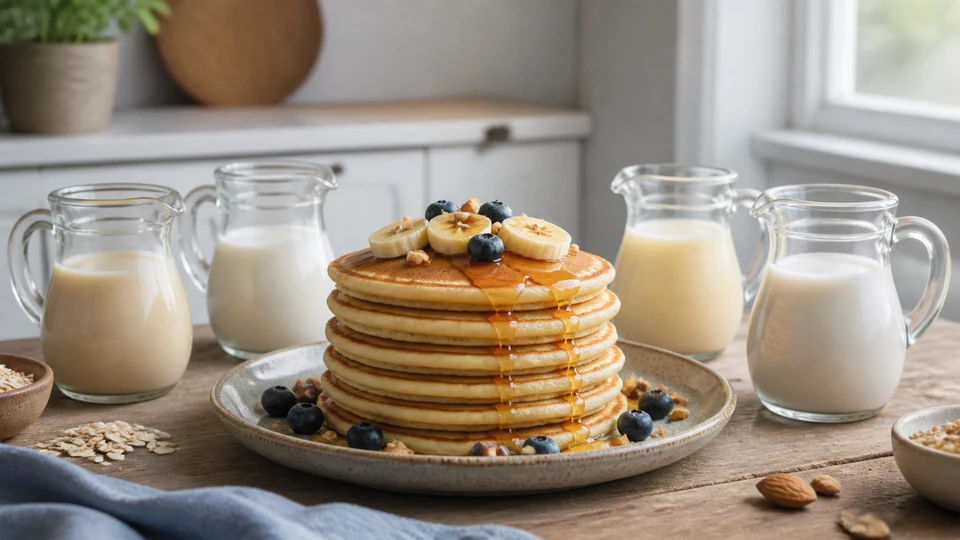
This guide compares functional categories, not brands, nutrition outcomes, or medical suitability. Formulations vary, and the current product label and tested pancake recipe control. The pancake science hub covers the wider batter topic, while Pancake World opens the full editorial collection.
| Guide sections |
|---|
| Start with the recipe’s job for milk |
| Read the carton before comparing categories |
| Soy milk: a structured first trial |
| Oat milk: watch sweetness and thickness |
For broader context, continue with American Breakfast: Pancakes, Diner Plates and Brunch.
Start with the recipe’s job for milk
Do not choose by plant name alone. First read the complete pancake recipe and identify the liquid it was developed with. Milk can contribute water, dissolved solids, protein, fat, sugar, flavour, acidity, and colour potential in different proportions. A plant beverage changes several of those variables at once, and two cartons made from the same plant can have different ingredient lists.
If the recipe explicitly names a plant milk or offers a tested substitution, use that instruction. If it does not, treat the swap as an editorial trial rather than a validated recipe change. Preserve every other ingredient and step so the test answers one question. Do not alter flour, leavening, fat, and cooking heat at the same time.
Clarify the intended pancake. A thin, delicate pancake, a thick fluffy pancake, a whole-grain batter, and a banana-heavy batter may respond differently to the same beverage. This page cannot supply a universal replacement ratio beyond the recipe’s own method. It can help select a sensible first candidate and observe what happens.
Read the carton before comparing categories
Check whether the product is sweetened or unsweetened, plain or flavoured, refrigerated or shelf-stable before opening, and whether it requires shaking. Read the ingredient list, allergen declaration, Nutrition Facts panel, opened-storage directions, and date marking. Note gums, starches, oils, sweeteners, flavourings, and fortification only as current label facts; do not turn them into unsupported performance or health claims.
Compare products on the same labelled basis. A larger serving can make values appear larger without the formula necessarily being more concentrated. Use the units and serving size printed on each package. If a nutrient comparison matters for an individual plan, qualified advice may be needed; pancake performance and personal nutrition are different decisions.
The word “plant” does not certify vegan suitability, allergen safety, or absence of cross-contact. Soy, tree nuts, coconut, oats, pea, and other sources raise different label questions. Read every package used in the complete meal, including mix, toppings, and cooking fat.
Soy milk: a structured first trial
Unsweetened, unflavoured soy milk is a practical starting candidate when the cook wants a pour with some body and protein rather than a very thin beverage. That is a category-level selection rationale, not a promise that every soy product will match dairy milk or produce a particular rise. Current formulations can vary in solids, oil, sugar, stabilisers, and flavour.
Shake when directed, measure using the recipe’s method, and keep the remaining recipe unchanged. Observe the mixed batter, the rest period if one is specified, the first pancake’s spread, edge setting, turning, and centre. If the batter differs from the source expectation, recheck measurement before changing it.
Soy is a declared allergen in relevant labelling contexts, so a soy swap may solve one person’s dairy preference while making the pancakes unsuitable for another eater. Do not describe the final food simply as allergy-friendly. Label the actual beverage and all other ingredients.
Oat milk: watch sweetness and thickness
Oat beverages often appeal when a mild grain flavour and fuller-looking pour fit the recipe. Some products are quite thin; others contain oil, gums, enzymes, flavour, or added sugars. A “barista” version may be formulated differently from the standard carton. Read rather than infer.
Begin with plain unsweetened oat milk when the goal is to isolate the liquid substitution. A sweetened or flavoured version changes both flavour and sugar at the same time. With an already sweet mix or recipe, that can affect surface colour and sticking, so use a conservative first pancake and keep the pan preparation source-faithful.
Oat products also need a complete allergen and suitability review. A cereal name or a front-label claim is not enough for someone with a medical need. Use the current declaration and manufacturer information where necessary.
Almond and cashew beverages: lighter is not universal
Many almond beverages pour lightly, which can make them a reasonable candidate for a batter that already has structure from other ingredients. Cashew beverages may appear creamier, but category expectations are unreliable because product formulas differ. Choose by the physical carton and label, not a remembered brand experience.
Tree-nut allergens make these poor default choices for a mixed group unless needs are known and controlled. Even when the person choosing the milk can eat nuts, another guest, shared utensil, or topping station may change the decision. Keep the package visible through service.
Nut flavour can also be noticeable in a plain pancake. That may be welcome or distracting depending on toppings and recipe. The first piece should be tasted in the intended meal context before committing the batch; no universal “neutral” ranking can replace that preference.
Carton coconut beverage and canned coconut milk are different
Do not treat every coconut product as the same liquid. A refrigerated or shelf-stable carton beverage may be diluted and formulated for drinking. Canned coconut milk can be much richer and may separate in the container. Coconut cream is another category again. The recipe’s liquid requirement cannot be matched by a name alone.
For an ordinary one-for-one editorial trial, a plain carton beverage closer in pour to the recipe’s original liquid is usually the clearer starting format. Canned coconut milk may require a recipe specifically designed for its concentration. Do not dilute it by guesswork or assume that shaking creates the same composition as a carton beverage.
Read coconut allergen and storage information on the exact package. After opening, transfer or cover only as directed and refrigerate where the label requires it. Do not save an unidentified remainder without its package record.
Rice milk: plan for a thinner pour
Rice beverages are often comparatively thin and mildly sweet, so they can be a candidate when a light liquid is acceptable. The same trait can make a batter spread more than expected if the original recipe relied on a thicker milk. This is precisely why a small first pancake matters.
Do not pre-emptively add flour. Mix according to the recipe, allow any stated rest, and compare the batter with the source description. If adjustment is genuinely needed and the recipe offers no guidance, mark it as untested, make one small change, and record it. Adding flour can affect tenderness, hydration, and leavening balance, not merely thickness.
Check added sugar and flavouring because rice products can vary. A thin pour does not establish lower calories, greater suitability, or any health outcome.
Pea, hemp, and other less familiar beverages
Pea-based drinks may offer more protein than some plant beverages, while hemp drinks can bring a distinctive flavour. Those broad tendencies are only starting questions. Product formulation, sweetener, fat, gums, and fortification still come from the label.
Use an unfamiliar beverage first in a plain, small test rather than a full flavoured batch. Smell and taste the drink before mixing if the package is sound and the product is intended for direct consumption. An assertive flavour may work with some toppings and conflict with others. That is an editorial preference, not a factual ranking.
For any less familiar base, verify allergens, cross-contact statements, and storage. Do not assume a novel plant source is automatically suitable for a restricted diet.
Homemade plant drinks require a separate decision
Homemade drinks lack a regulated product label and can vary with raw material, water, straining, storage, and settling. That makes them poor tools for a controlled comparison unless the exact method is documented. They may also lack the emulsifiers or fortification present in commercial beverages, but no performance conclusion follows without testing.
If using one, record its ingredients, preparation time, storage history, and visible separation. Stir or shake only when the method supports it. Use applicable safety guidance and do not assign the shelf life of a commercial carton. When repeatability matters, a clearly labelled commercial product is the easier reference.
Run a one-pancake comparison
Choose the recipe, beverage, and pan before mixing. Record the product name, whether it was shaken, and the measured amount. Follow the recipe’s mixing sequence and rest. Observe batter flow from the spoon or ladle without chasing an imagined perfect thickness.
Cook one modest pancake on the source-specified surface. Note spread, bubbles or other turning cue named by the recipe, release, colour, centre, and flavour. Do not use raw batter as a taste test. Keep heat, portion, and pan preparation the same for the next trial.
If the result is workable, continue without improvement experiments. If it is not, name one failure. Excess spread points first to measurement and liquid behaviour; poor release points first to pan preparation and timing; early colour raises sugar and heat questions. Change only the closest variable, or choose another beverage.
Avoid the most common substitution errors
Choosing vanilla by accident
Vanilla-flavoured milk changes the flavour of the full recipe and may be sweetened. Plain unflavoured is the cleaner comparison unless the tested recipe requests otherwise.
Treating barista and standard cartons as equivalents
Barista products can use different oils, stabilisers, or solids. Compare their labels and retest rather than assuming the same batter.
Confusing canned and carton coconut products
Their concentration and use can differ sharply. Use the format named by a tested recipe or begin with a carton beverage for a cautious ordinary-liquid trial.
Correcting consistency before the rest
Some batters change as flour hydrates. Follow the stated rest before deciding the milk made the batter wrong.
Adding flour and liquid back and forth
Repeated correction loses the original formula. Return to the recorded measurement, then make one supported change or restart a small batch.
Calling the result allergen-safe
One substitution does not evaluate mix, cooking fat, toppings, utensils, or cross-contact. Use exact labels and individual guidance.
Match the beverage to the rest of the pancake
A neutral batter served with assertive savoury toppings may favour a plain beverage with little sweetness. A sweet breakfast may not need a sweetened milk in both batter and topping. A whole-grain recipe might suit an oat flavour, while a delicate recipe might reveal a nut or hemp note more strongly. These are menu judgments to test, not categorical rules.
Consider the cooking fat and topping labels alongside the milk. Switching dairy milk to a plant beverage does not make pancakes dairy-free if the mix, butter, yogurt, chocolate, or shared equipment introduces dairy. Likewise, a soy beverage can change the allergen profile even when it removes one ingredient.
Keep the initial test simple. Plain pancakes reveal spread, colour, texture, and beverage flavour more clearly than a batter crowded with fruit, spices, and chips. Add extras only after the base substitution earns a repeat.
Store the open carton and batter correctly
Shelf-stable before opening does not mean shelf-stable after opening. Follow the carton’s refrigeration, closing, shaking, and use-after-opening directions. Mark the opening date when that helps execute the label. Keep the identifying package until the beverage is finished.
Hydrated pancake batter containing plant milk still needs a clear safety plan. The recipe and FoodSafety.gov govern relevant preparation, cooking, holding, and leftover decisions. Do not leave batter near a warm griddle through a long service or invent overnight storage because the beverage is plant-based.
Cool and store cooked leftovers under applicable guidance. Record whether toppings or sides were added because an assembled pancake plate can have different storage consequences from plain pancakes.
A practical selection order
First choose the exact tested pancake recipe. Second, state why the original liquid is being changed. Third, eliminate products that do not meet label or allergen requirements. Fourth, prefer plain unsweetened candidates for the cleanest trial. Fifth, compare pour, protein, fat, sugar, flavour, and stabilisers only as the current labels present them.
Select one carton, shake if directed, and measure exactly. Mix and rest according to the recipe. Cook one calibration pancake with all other variables fixed. Retain the choice if it works for the intended meal; revise one variable if the cause is clear; replace it if the beverage creates more adjustment than value.
Write the successful beverage identity beside the recipe rather than recording only “plant milk.” On the next purchase, compare the new carton because formulations can change.
Use a side-by-side test only when it answers a real question
A direct comparison can be useful when two beverages both satisfy the label and allergen requirements and the cook wants to choose between them. Keep the experiment small. Divide one consistently mixed dry base only if the tested recipe permits that handling, or prepare separate reduced batches from a validated scaling method. Do not casually halve ingredients such as eggs when the recipe offers no reliable way to do so.
Label the bowls and cartons before liquid is added. Use the same pan, heat, portioning tool, rest, and turning method. Cook the samples in an alternating order so one beverage is not always tested on a pan that is still warming or coated with residue. Record observable differences: batter spread, release, surface colour, centre condition, flavour, and how the pancake changes during the intended serving delay.
Avoid scoring nutrition claims, “cleanliness,” or universal quality. The result applies to the exact recipe, products, equipment, and preference tested. One person may value a mild flavour; another may prefer fuller body. Select the beverage that solves the stated recipe question with the least correction.
If the two samples fail in different ways, do not combine the milks to average them unless that blend is separately treated as an untested third formula. Return to the source recipe and consider whether a plant-milk-specific tested recipe would be clearer than repeated adaptation.
Troubleshoot the finished pancake, not the category label
When a pancake spreads excessively, verify the liquid measure, flour measure, mixing order, rest, pan state, and portion before blaming the plant source. When it barely spreads, check the same factors and whether the batter stood longer than intended. A remembered statement that oat is thick or rice is thin cannot diagnose a particular carton.
For sticking, confirm the source’s pan preparation, turning cue, and heat. Added sugars or solids may contribute, but changing sweetener, fat, and temperature together obscures the cause. Clean the pan appropriately between tests so residue from one sample does not determine the next.
For weak browning, do not chase colour by extending cooking until the interior dries. Confirm the recipe’s doneness cue and use permitted heat adjustments one at a time. For rapid darkening, consider whether the beverage is sweetened or flavoured and whether the pan is too hot. Replace the carton with a plain version before rewriting several recipe ingredients.
For an unwanted flavour, taste the beverage itself and review the complete pancake meal. Strong toppings may mask it, but that does not make the base a good neutral choice. The simpler repair is often a different plain product rather than additional vanilla, sugar, spice, or salt.
Keep a substitution record that can be repeated
Record the recipe title and version, beverage brand and exact product name, date opened, measured amount, whether the carton was shaken, batter rest, equipment, and the single change tested. Add observations and a decision: repeat unchanged, retest one variable, choose another beverage, or return to the original liquid.
Avoid notes such as “oat worked” or “almond too thin.” They lose the formulation, recipe, and method that made the observation meaningful. A useful note lets another cook reproduce the trial without inventing details and reminds the original cook to recheck the label when the product changes.
Frequently asked questions
Which plant milk is most neutral in pancakes?
Plain unsweetened products are the clearest starting point, but neutrality varies by formula and eater. Soy, oat, and lighter nut beverages each require a small test.
Does barista plant milk work?
It can, but its fat, stabilisers, solids, or sweetness may differ from a standard version. Read the label and recalibrate.
Can I replace dairy milk one for one?
Only when the recipe provides that substitution or as an explicitly untested trial. Use the recipe’s original measured amount, then observe one pancake before adjusting.
Is soy milk always the best option?
No. It is a useful structured candidate for some recipes, but flavour, allergens, formulation, and the desired pancake all matter.
Can I use canned coconut milk?
Use it when a tested recipe is designed for that concentrated format. Do not assume it behaves like carton coconut beverage.
Does plant milk make pancakes vegan?
Not by itself. The recipe may contain egg, dairy-derived mix ingredients, cooking fat, or toppings. Review the complete ingredient set and cross-contact needs.
Explore related Pancakes World guidance on American Pancakes, Maple Syrup, and Maple Syrup Pancakes.
Sources and editorial references
- USDA FoodData Central —
https://fdc.nal.usda.gov/ - FoodSafety.gov food safety charts —
https://www.foodsafety.gov/food-safety-charts - FDA Food Labeling & Nutrition —
https://www.fda.gov/food/nutrition-food-labeling-and-critical-foods