Best pancake syrup
At Pancakes World, the best pancake syrup is the one whose flavor strength, ingredient identity, flow and sweetness fit the pancakes and the people eating them. Choose pure maple syrup when you want maple sap as the single defining ingredient; within USDA Grade A, choose Golden for delicate flavor, Amber for rich flavor, Dark for robust flavor or Very Dark for strong flavor. Choose a formulated pancake or table syrup when you prefer its familiar, consistent profile, but read the product name, ingredient list, serving size and added-sugars line instead of assuming it is maple syrup. Refrigerate pure maple syrup after opening, and discard it if mold appears.
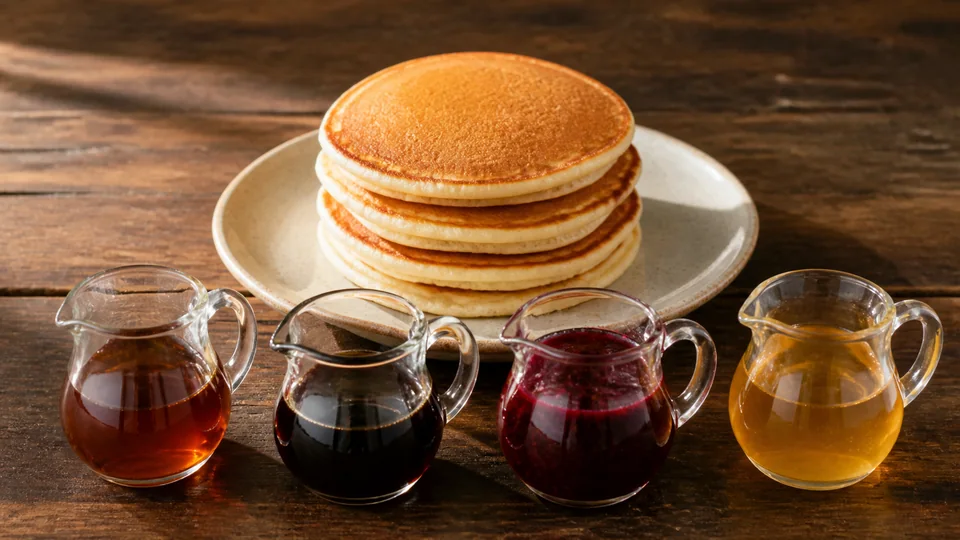
“Best” therefore describes a match, not a universal bottle or a brand winner. This guide gives you a repeatable way to make that match without invented rankings. Explore the pancake toppings hub for other finishing options, or return to Pancake World for the broader collection.
For broader context, continue with American Breakfast: Pancakes, Diner Plates and Brunch.
Start with the decision you actually need to make
A syrup choice becomes easier when you replace one vague question with four specific ones:
- Do you want the flavor of maple sap, a familiar maple-style table syrup, or a different fruit or caramel direction?
- Should the topping stay in the background or remain noticeable beside butter, fruit, nuts or spices?
- Will the syrup be poured at the table, held for a brunch group, packed in portions or used as one component of a plated dessert?
- Are ingredient identity, serving size, allergens, sodium or added-sugars information important to this particular eater?
Add one more constraint when the syrup will be used beyond breakfast: decide whether the bottle must also work in baking, drinks or savory glazes. A strong maple class may remain evident when mixed with other ingredients, while a delicate table choice may be reserved for direct pouring. Keep those uses separate from safety and nutrition judgments. Suitability in a recipe depends on that recipe's tested quantities, and replacing one syrup with another can change sweetness, water and flavor. Follow the recipe rather than treating every pourable sweetener as a one-for-one technical substitute.
Answer those before comparing packaging. A decorative bottle, dark color or the word “breakfast” does not resolve composition. The front name tells you what the maker calls the food; the ingredient statement tells you what it contains; the Nutrition Facts panel lets you compare declared servings. All three matter.
If your only question is which pure maple flavor will remain detectable on a strongly flavored pancake, move directly to the USDA color classes. If the household specifically likes a formulated table syrup, there is no need to turn the purchase into a purity contest. Choose transparently and serve it well.
Understand what pure maple syrup means in this guide
Maple syrup begins as maple sap that is concentrated. University of Minnesota Extension explains that heat concentration develops the characteristic color and flavor associated with the finished syrup. That production fact is useful because it separates maple syrup from a maple-flavored table syrup assembled from other sweeteners and flavoring ingredients.
For a shopper, the practical evidence is on the container. Look at the product name and then verify the ingredient statement. A single-ingredient pure maple product should not need a list of unrelated sweeteners to create its identity. A pancake or table syrup may use corn syrup, other sugars, flavorings, colors, preservatives or additional ingredients. Exact formulas vary, so do not describe the whole category from one bottle.
Neither category automatically wins every breakfast. Pure maple supplies a distinct agricultural flavor that changes with its official color class. A formulated syrup may offer the texture and familiar flavor a household expects, and its label makes the composition available for comparison. The honest choice is the one made with the label visible.
Avoid using “natural,” a rustic picture or a maple leaf graphic as a substitute for the ingredient statement. Marketing imagery is not a composition test. Likewise, dark color by itself does not prove that a product is pure maple or that it belongs to a particular official maple class.
Use the USDA maple classes as a flavor map
The USDA Grade A standard recognizes four maple color and flavor classes. They are not a staircase from bad to good. All four can meet Grade A requirements; the useful difference for a pancake eater is intensity.
| USDA Grade A class | Flavor language in the standard | Practical starting point |
|---|---|---|
| Golden | delicate taste | lightly flavored pancakes, restrained fruit, or a quiet maple finish |
| Amber | rich taste | a versatile table choice when maple should be clear but balanced |
| Dark | robust taste | whole-grain, toasted-nut, pumpkin or spice-led pancakes |
| Very Dark | strong taste | applications where maple needs to remain prominent among bold flavors |
Those pairing suggestions are editorial starting points, not the result of a Pancake World sensory trial. Personal preference and the actual bottle still decide the result. A delicate syrup can be exactly right on a dark pancake if the eater wants contrast rather than matched intensity. A strong syrup can dominate a plain pancake if poured heavily.
USDA’s standard also describes Grade A syrup as clean, uniform in color, characteristic in flavor and odor for its class, and free of disqualifying cloudiness, sediment and off flavors. “Processing Grade” is a separate category intended for manufacturing and cannot be packaged in consumer-size retail containers under that standard. Do not confuse “Very Dark, Strong Taste” within Grade A with processing grade. Darker Grade A is a flavor class, not a defect.
Match intensity to the pancake
Think of the pancake as the base layer in a flavor system. The syrup can reinforce it, contrast with it or overwhelm it. Use the following matrix to choose a sensible first bottle, then adjust from experience.
| Pancake style | Syrup direction to try first | Why the match can work | What to watch |
|---|---|---|---|
| plain buttermilk-style | Amber maple or a familiar table syrup | both are easy to notice without requiring a bold base | a large pour can hide butter and browning |
| thin, delicate pancake | Golden maple | lighter intensity can preserve subtle egg and dairy notes | strong toppings may make delicate maple disappear |
| whole-wheat or oat | Dark maple | robust maple can stand beside toasted grain flavor | dense pancakes absorb syrup quickly |
| pumpkin or warm spice | Dark or Very Dark maple | stronger maple remains present beside cinnamon-like spice profiles | taste the spice level before choosing the strongest class |
| banana-led | Amber or Dark maple | richer maple can balance ripe fruit sweetness | already-sweet batter may need a smaller pour |
| chocolate or cocoa | Very Dark maple or a non-maple dessert sauce | a strong topping has a better chance of registering | do not assume every diner wants two intense sweet flavors |
| berry-topped | Golden or Amber maple | moderate maple can support rather than bury tart fruit | juicy fruit already contributes liquid |
| savory corn or cheese pancake | a restrained dark maple drizzle, hot sauce, or no sweet syrup | contrast may work when kept deliberate | full table-style pours can erase savory balance |
This table is a planning aid. It does not claim that one combination is objectively superior. When serving a mixed group, put one moderate option on the table and offer a stronger or non-syrup alternative separately. That is more useful than forcing every plate into one pairing.
Compare pure maple and pancake syrup without loaded language
The most useful comparison concerns function and information, not virtue.
Pure maple syrup
- The maple character comes from concentrated maple sap.
- USDA Grade A color classes give a standardized vocabulary for flavor intensity.
- The label of a single-ingredient syrup has special FDA treatment for added-sugars declaration, so read the full panel rather than expecting it to look identical to a multi-ingredient product.
- Opened syrup requires refrigerated storage according to University of Maine Cooperative Extension guidance.
- Flavor can be the central reason to buy it.
Formulated pancake or table syrup
- Composition varies by product and must be read from the ingredient statement.
- Flavor, color and viscosity may be designed for consistency rather than for expressing a maple grade class.
- The Nutrition Facts panel and declared serving size allow product-specific comparison.
- Storage directions are product-specific; follow the container rather than borrowing pure-maple advice.
- Familiarity, pour behavior or household preference may be the central reason to buy it.
Do not call one category “healthy” and the other “unhealthy” based only on the front label. Syrups are concentrated sweeteners, and the FDA treats syrups and honey as added sugars in dietary guidance. Compare the exact serving information that is relevant to you. Ingredient simplicity and nutrition are different questions.
Read the label in a fixed order
Shelf comparison becomes faster when you always use the same sequence.
1. Read the statement of identity
Identify whether the package presents itself as pure maple syrup, maple-flavored syrup, pancake syrup, table syrup, fruit syrup or something else. Similar bottle shapes do not make these foods interchangeable.
2. Read every ingredient
Check the first ingredient and the rest of the list. Ingredients are evidence for composition, flavors and potential allergens; a picture is not. If a person has a food allergy, do not infer safety from category. Read the exact package each time and follow the person’s established allergy plan.
3. Match serving sizes before comparing numbers
Two panels cannot be compared fairly when their serving declarations differ. Convert to the same practical amount or compare equal labeled servings only when those amounts match. Do not copy a calorie or sugar number from one product into a general article about the category.
4. Inspect added sugars and sodium for the actual product
FDA guidance explains that packaged single-ingredient sugars and syrups, including maple syrup and honey, have a specific labeling approach: the percent Daily Value for added sugars is declared, while the gram presentation can differ from ordinary multi-ingredient products. This prevents the label from implying that extra sugar was added to a food that is itself a single-ingredient sugar.
The implication is simple: absence of an ordinary “Includes X g” line in the expected position does not make the syrup sugar-free. Read the complete panel and its footnote. If sodium matters, compare the declared sodium for equivalent amounts instead of assigning a category-wide value.
5. Read storage instructions
The producer’s label controls unopened shelf handling, refrigeration instructions and any use-by wording for that bottle. For pure maple after opening, use the refrigerated-storage rule discussed below. For a multi-ingredient syrup, follow its specific package directions.
Control the pour instead of chasing a perfect viscosity
Syrup temperature changes how readily it flows, while pancake structure changes how quickly it is absorbed. A cold, dense syrup can land in one spot. A warm thin syrup can run to the plate edge before the eater decides the amount. Neither behavior proves quality.
For table service, pour a small amount into a clean serving vessel rather than repeatedly warming the whole storage bottle. This lets you take the chill off a refrigerated portion while the main container returns promptly to the refrigerator. Do not heat a sealed bottle, and do not pour unused table syrup back into the original container after utensils or food may have contacted it.
Start with less than the final amount. Add syrup across several areas instead of flooding the center. For a tall stack, a small pour between selected layers creates more even distribution than one heavy pool on top. For thin pancakes, a narrow line or side portion helps the eater control each bite.
When hosting, offer a spoon, small pitcher or measured cup that does not dribble across the table. Wipe the neck before storage. Sticky residue outside a cap is a handling problem, not a reason to dilute the syrup with water. Dilution changes both quality and storage assumptions.
Build a balanced topping system
A syrup rarely appears alone. Butter adds fat and salt; fruit adds water, acid and its own sugar; toasted nuts add crunch and roasted flavor; yogurt adds tang and moisture. Plan the whole plate.
Use one of these structures:
- Maple-forward: pancakes, a modest amount of butter and one chosen maple class. Keep other toppings restrained.
- Fruit-forward: fresh or cooked fruit with a small pour of Golden or Amber maple so fruit remains identifiable.
- Texture-forward: toasted nuts or seeds, a moderate syrup and a pancake sturdy enough to carry them.
- Sweet-savory: a controlled dark maple drizzle beside salty or savory components, with the syrup served separately for adjustment.
- Choice service: plain pancakes with two clearly labeled syrup options and unsweetened toppings at the table.
Avoid stacking several sweet sauces just because they are available. If the batter, fruit compote and whipped topping are already sweetened, syrup may work best as an accent. The serving-size information on each packaged component remains the only safe basis for product-specific nutrition comparison.
Choose for a household, brunch or gift
The purchase context changes the definition of best.
For one household
Choose a size that can be handled according to its storage instructions after opening. A large container is not economical if it sits open beyond the household’s comfortable use pattern. Record which color class or flavor profile people actually finish rather than assuming the darkest or most expensive choice is preferred.
For a brunch table
One rich, middle-intensity maple option is broadly adaptable, but a mixed group may benefit from a second clearly different choice. Label decanted syrups so guests know whether each is pure maple, a formulated pancake syrup or another topping. Keep the original packages available for ingredient and allergen checks. Never rely on memory when a guest needs exact information.
Set out modest portions and refill clean vessels as needed. This limits prolonged table exposure and avoids returning contacted leftovers to a storage bottle. Place syrup near the pancakes but away from a crowded hot-cooking zone where the handle can become sticky or unsafe to grab.
For a gift
Flavor class is more useful than a vague premium claim. A recipient who likes subtle breakfasts may value Golden, while someone who bakes or enjoys assertive maple flavor may prefer Dark or Very Dark. Include no homemade storage promise. Leave the producer’s sealed label intact so the recipient has identity, ingredient, date and handling information.
Store pure maple syrup correctly
University of Maine Cooperative Extension directs users to refrigerate maple syrup after opening. It also says to discard syrup if mold develops. Do not skim visible mold and boil the remaining syrup in an attempt to rescue it. The Extension’s current consumer explanation notes that mold toxins can remain a concern after boiling.
Keep the cap and rim clean, close the container promptly and return it to refrigeration after serving. Pour through a clean vessel rather than inserting a used utensil into the main bottle. If cold syrup pours too slowly, warm only the portion you intend to serve on the stovetop in an appropriate open vessel. Never microwave a package unless its manufacturer says the container and closure are suitable.
Unopened handling depends on the way the syrup was commercially packed and the label directions. Extension production guidance describes hot packing and cool, dry storage in its specific process, but that is not permission to improvise home shelf-stable packaging. This article does not provide a canning method.
For formulated table or pancake syrups, use the storage statement on the exact product. Preservatives, water activity and packaging differ. Do not transfer the opened-pure-maple rule into a claim that every syrup has the same storage life, and do not transfer a pantry direction from one formulated bottle to pure maple.
Handle crystals, sediment and suspicious changes carefully
Crystals can form in concentrated sugar solutions, but a visible change should not be diagnosed from a web description alone. Check the producer’s instructions. Do not add water directly to the storage bottle; that changes concentration and can invalidate the original handling assumptions.
USDA Grade A maple requirements address cleanliness, turbidity, sediment and characteristic flavor at grading. A sealed bottle that appears damaged, leaking, swollen, unexpectedly cloudy or otherwise abnormal should be handled through the seller or producer rather than tasted as an experiment. After opening, visible mold means discard under the Maine Extension guidance.
Normal variation in maple color is not the same as spoilage. The official Grade A system deliberately spans Golden through Very Dark. Judge a bottle against its labeled class and condition, not against the idea that all pure maple must be pale and transparent.
Run a fair home comparison without pretending it is a laboratory test
If two candidates remain, conduct a small household preference check. This creates personal evidence without claiming a published ranking.
- Use pancakes from the same batch and keep sample size equal.
- Bring syrup portions to similar serving temperature.
- Code the cups A and B if packaging would influence the taster.
- Use the same measured amount on each sample.
- Ask separate questions: maple intensity, sweetness impression, texture, aftertaste and fit with the pancake.
- Record preference before discussing price or brand.
- Repeat on the pancake style you serve most often.
This method tells you what a particular group preferred under one setup. It does not prove a universal winner, shelf stability, nutritional superiority or freedom from allergens. Keep original labels attached to the comparison record if ingredient details affect the decision.
Common syrup-selection mistakes
Treating dark maple as lower quality
Dark and Very Dark can be Grade A flavor classes. Their robust or strong taste is useful when the pancake or topping system is bold.
Assuming every maple-looking bottle is pure maple
Verify the statement of identity and ingredient list. Color, shape and imagery do not establish composition.
Comparing nutrition panels with different servings
Normalize the amount first. A larger declared serving will naturally report more of many nutrients and sugars.
Calling pure maple “free of added sugar” in ordinary conversation
FDA labeling treats single-ingredient sugars and syrups carefully so the panel does not imply another sweetener was added to the container. It still shows how a serving contributes to the added-sugars Daily Value. Explain the label; do not turn technical formatting into a health claim.
Warming the entire bottle at every meal
Warm a small serving portion. Repeatedly moving the storage container between cold and warm environments adds handling and encourages residue around the cap.
Saving moldy syrup
Discard it. Skimming and boiling are not the current University of Maine Extension recommendation.
Publishing a “best brand” list without a controlled comparison
Availability, formulas, prices and packaging change. A useful evergreen guide teaches the reader to examine identity, class, ingredients, serving data and storage rather than inventing a winner.
A concise buying checklist
Before putting a bottle in the cart, confirm:
- the food identity matches what you intend to buy;
- the ingredient list is acceptable for the diners;
- a pure maple bottle shows the flavor class you want;
- compared Nutrition Facts use equivalent amounts;
- the package size fits realistic use after opening;
- storage directions fit available refrigerator or pantry space;
- the closure and pouring format suit the serving context;
- there is no reliance on a front-label health halo, unverified award or vague premium wording;
- anyone with an allergy can review the original package;
- the decision is based on flavor role and use, not color alone.
For a first pure maple purchase, Amber, Rich Taste is a practical middle point because its official intensity sits between delicate Golden and the more assertive Dark classes. That is a starting strategy, not a declaration that Amber is objectively best. If your pancakes are heavily spiced or you specifically want prominent maple, start darker. If subtle fruit or thin pancakes lead the plate, start lighter.
Frequently asked questions
Is pure maple syrup always the best syrup for pancakes?
No. It is the direct choice when maple sap flavor and a USDA-recognized maple class are what you want. A household may instead prefer the taste, texture or familiarity of a formulated pancake syrup. Read the label and choose for the actual use.
Which maple grade is sweetest?
The USDA class names describe color and maple-flavor intensity: Golden Delicate, Amber Rich, Dark Robust and Very Dark Strong. They should not be read as a simple sweetness ranking. Choose the class by desired maple presence.
Is darker maple syrup worse?
No. Dark and Very Dark are valid Grade A color and flavor classes when the syrup meets the standard. They are useful when strong maple flavor is desired.
Can I store opened pure maple syrup in the pantry?
University of Maine Cooperative Extension says to refrigerate maple syrup after opening. Keep the container closed and clean, and return it promptly after serving.
Can mold be removed from maple syrup?
Discard moldy syrup. Current Maine Extension guidance does not recommend skimming and boiling it for continued use.
Should syrup be served warm?
That is a preference and flow decision, not a quality requirement. If you want it less cold, warm only the portion you plan to serve in a suitable open vessel. Protect the labeled storage container from unnecessary warming.
How do I compare sugar information between bottles?
Match the serving amounts, read Total Sugars and Added Sugars information, and account for the special FDA label presentation permitted for single-ingredient sugars and syrups. Do not compare unmatched serving sizes.
What is the best syrup for a mixed brunch group?
Offer one moderate maple option and one clearly different alternative, retain the packages for ingredient review, and let diners control the pour. Variety and transparent labeling solve more problems than a universal ranking.
Final decision
Choose the best pancake syrup by moving through a clear order: identity, flavor intensity, pancake match, ingredient needs, comparable serving information, storage and service. For pure maple, use USDA Grade A classes as a flavor map rather than a quality ladder. For formulated pancake syrup, let the exact ingredient statement and label—not assumptions about the category—drive the choice.
Serve a small amount first, preserve access to original labels and store the bottle as directed. That produces a defensible answer to “best”: the syrup that performs the intended role for this pancake, this table and this eater.
Explore related Pancakes World guidance on American Pancakes, Maple Syrup, and Maple Syrup Pancakes.
Sources and editorial references
- USDA Agricultural Marketing Service, “Maple Syrup Grades & Standards”:
https://www.ams.usda.gov/grades-standards/maple-syrup-grades-standards - USDA Agricultural Marketing Service, “United States Standards for Grades of Maple Syrup”:
https://www.ams.usda.gov/sites/default/files/media/MapleSyrupStandards.pdf - U.S. Food and Drug Administration, “Added Sugars on the Nutrition Facts Label”:
https://www.fda.gov/food/nutrition-facts-label/added-sugars-nutrition-facts-label - U.S. Food and Drug Administration, “Types of Food Ingredients”:
https://www.fda.gov/food/food-additives-and-gras-ingredients-information-consumers/types-food-ingredients - University of Maine Cooperative Extension, “How to Tap Maple Trees and Make Maple Syrup”:
https://extension.umaine.edu/publications/7036e/ - University of Minnesota Extension, “Homemade maple syrup”:
https://extension.umn.edu/gathering-wild-grown-plants-and-fungi/homemade-maple-syrup