Best morning breakfast
At Pancakes World, the editorial platform presents this evidence-bounded guide for the exact route intent.
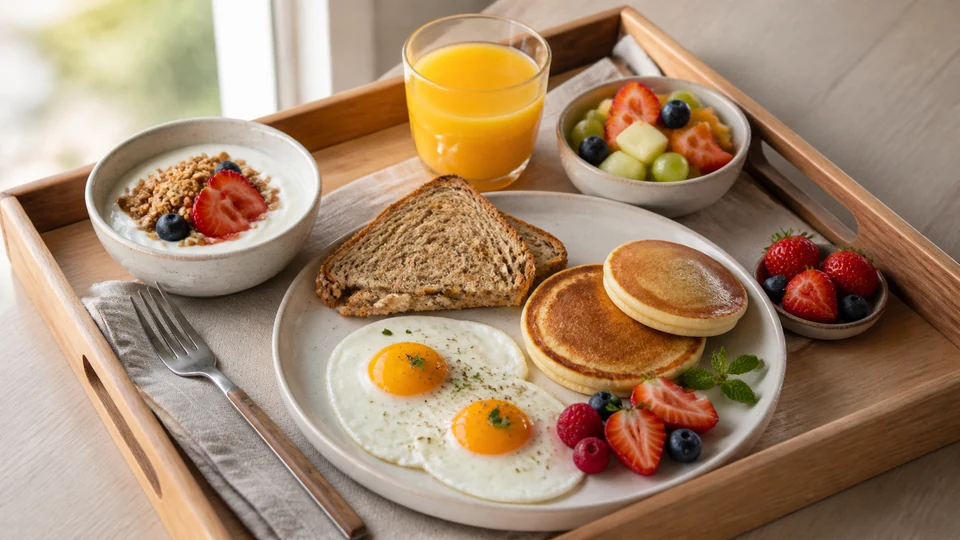

This guide belongs to Breakfast. The best morning breakfast is the one that fits today’s time, appetite, equipment, and eating situation. For a rushed departure, combine a portable grain or bread, a protein food, and fruit or vegetables. For a slower morning, use eggs, oats, pancakes, beans, or leftovers and add contrasting produce. There is no universal winner and no breakfast guarantees energy, concentration, weight change, or a medical outcome. Compare packaged choices at matching serving sizes, check allergens, and plan storage before cooking. A repeatable breakfast system is more useful than a ranking because it lets you change portions and ingredients without losing the structure of the meal.
For Best morning breakfast, the actual parent collection is Breakfast. Pancake World connects this exact intent with broader recipe, breakfast, and practical kitchen coverage.
| Guide sections |
|---|
| Choose the route that fits |
| Practical sequence |
| Failure modes and corrections |
| Route-specific diagnostics |
For broader context, continue with American Breakfast: Pancakes, Diner Plates and Brunch.
Choose the route that fits
The five-minute lane
Choose foods that are genuinely ready: fruit, unsweetened yogurt or a suitable alternative, nuts or seeds, and bread or oats prepared in advance. Pack cold foods with adequate chilling and read every package rather than assuming a familiar flavor has unchanged ingredients.
The hot savory lane
Eggs, beans, vegetables, toast, rice, and properly stored leftovers make a flexible plate when a burner is available. Start the slowest component first and keep raw egg tools away from ready-to-eat garnishes.
The warm-grain lane
Oats, other cooked grains, or a grain-and-fruit bowl suit mornings when gentle texture and batch preparation matter. Record the liquid ratio for the exact grain and reheat only the portion being served.
The portable lane
A sandwich, wrap, firm pancake, or sealed bowl should survive transport without leaking or becoming unsafe. Cool cooked fillings before packing and keep perishable components under temperature control.
Practical sequence
- List the minutes, equipment, and refrigeration actually available.
- Select one base, one substantial accompaniment, and one produce element.
- Check labels for serving size, added sugars, sodium, and allergens without turning the label into a medical prescription.
- Prepare one reusable component the night before, such as cooked oats, washed fruit, or a safe sandwich filling.
- Review what was eaten and wasted, then adjust quantity rather than rebuilding the entire plan.
Failure modes and corrections
- Correction 1: Calling one food universally best hides personal, cultural, and medical differences.
- Correction 2: A smoothie can be fast but becomes inconvenient when the blender, cleanup, or transport bottle is ignored.
- Correction 3: A packaged bar is not automatically equivalent to a complete breakfast; inspect the actual label and portion.
- Correction 4: Leaving cooked eggs or dairy-based foods on the counter turns convenience into a safety problem.
Route-specific diagnostics
Diagnostic 1: the five-minute lane
In a current best morning breakfast batch, inspect this control before changing ingredients or equipment: Choose foods that are genuinely ready: fruit, unsweetened yogurt or a suitable alternative, nuts or seeds, and bread or oats prepared in advance. The observable checkpoint is specific: Pack cold foods with adequate chilling and read every package rather than assuming a familiar flavor has unchanged ingredients. Write down the vessel or pan, portion, elapsed time, holding condition, and what the center or service line actually looked like. This creates a route-bound record; it does not pretend that an untested result is universal.
Current-batch fix. Calling one food universally best hides personal, cultural, and medical differences. Stop the batch at the first safe decision point. Compare the actual result with the selected source or current package direction, isolate one cause, and make one measured correction. If safety, allergen status, or product identity is uncertain, do not rescue the food through guesswork; set it aside and restart from verified inputs.
Next-batch prevention. Begin the next best morning breakfast attempt with this written action: List the minutes, equipment, and refrigeration actually available. Keep the successful equipment, quantity, and timing fixed while testing the next variable. A changed brand, appliance, pan, flour, filling, or serving scale is a changed input and must be recorded rather than silently treated as the same batch.
Diagnostic 2: the hot savory lane
In a current best morning breakfast batch, inspect this control before changing ingredients or equipment: Eggs, beans, vegetables, toast, rice, and properly stored leftovers make a flexible plate when a burner is available. The observable checkpoint is specific: Start the slowest component first and keep raw egg tools away from ready-to-eat garnishes. Write down the vessel or pan, portion, elapsed time, holding condition, and what the center or service line actually looked like. This creates a route-bound record; it does not pretend that an untested result is universal.
Current-batch fix. A smoothie can be fast but becomes inconvenient when the blender, cleanup, or transport bottle is ignored. Stop the batch at the first safe decision point. Compare the actual result with the selected source or current package direction, isolate one cause, and make one measured correction. If safety, allergen status, or product identity is uncertain, do not rescue the food through guesswork; set it aside and restart from verified inputs.
Next-batch prevention. Begin the next best morning breakfast attempt with this written action: Select one base, one substantial accompaniment, and one produce element. Keep the successful equipment, quantity, and timing fixed while testing the next variable. A changed brand, appliance, pan, flour, filling, or serving scale is a changed input and must be recorded rather than silently treated as the same batch.
Diagnostic 3: the warm-grain lane
In a current best morning breakfast batch, inspect this control before changing ingredients or equipment: Oats, other cooked grains, or a grain-and-fruit bowl suit mornings when gentle texture and batch preparation matter. The observable checkpoint is specific: Record the liquid ratio for the exact grain and reheat only the portion being served. Write down the vessel or pan, portion, elapsed time, holding condition, and what the center or service line actually looked like. This creates a route-bound record; it does not pretend that an untested result is universal.
Current-batch fix. A packaged bar is not automatically equivalent to a complete breakfast; inspect the actual label and portion. Stop the batch at the first safe decision point. Compare the actual result with the selected source or current package direction, isolate one cause, and make one measured correction. If safety, allergen status, or product identity is uncertain, do not rescue the food through guesswork; set it aside and restart from verified inputs.
Next-batch prevention. Begin the next best morning breakfast attempt with this written action: Check labels for serving size, added sugars, sodium, and allergens without turning the label into a medical prescription. Keep the successful equipment, quantity, and timing fixed while testing the next variable. A changed brand, appliance, pan, flour, filling, or serving scale is a changed input and must be recorded rather than silently treated as the same batch.
Diagnostic 4: the portable lane
In a current best morning breakfast batch, inspect this control before changing ingredients or equipment: A sandwich, wrap, firm pancake, or sealed bowl should survive transport without leaking or becoming unsafe. The observable checkpoint is specific: Cool cooked fillings before packing and keep perishable components under temperature control. Write down the vessel or pan, portion, elapsed time, holding condition, and what the center or service line actually looked like. This creates a route-bound record; it does not pretend that an untested result is universal.
Current-batch fix. Leaving cooked eggs or dairy-based foods on the counter turns convenience into a safety problem. Stop the batch at the first safe decision point. Compare the actual result with the selected source or current package direction, isolate one cause, and make one measured correction. If safety, allergen status, or product identity is uncertain, do not rescue the food through guesswork; set it aside and restart from verified inputs.
Next-batch prevention. Begin the next best morning breakfast attempt with this written action: Prepare one reusable component the night before, such as cooked oats, washed fruit, or a safe sandwich filling. Keep the successful equipment, quantity, and timing fixed while testing the next variable. A changed brand, appliance, pan, flour, filling, or serving scale is a changed input and must be recorded rather than silently treated as the same batch.
Batch review before service
For best morning breakfast, review the intended eater, portion count, equipment capacity, and dietary boundary together. Confirm that the article has not turned a planning example into a tested recipe, a label-reading step into a current product claim, or a practical option into a universal ranking. Keep the final decision tied to the exact source list below and to the package or recipe currently in hand.
Taste and appearance are quality observations, not substitutes for verified safety controls. A pale surface, thick center, soft base, loose filling, slow buffet, or changed label each points to a different control question. Record the observation in plain language, then use the relevant diagnostic above; do not compensate with several simultaneous changes that make the outcome impossible to interpret.
Storage, service, and safety
Use clean equipment, refrigerate perishable components promptly, and cook eggs until the chosen validated method reaches a safe endpoint. Leftovers need a dated container and a deliberate reheating plan. Anyone managing diabetes, kidney disease, allergies, pregnancy, eating difficulties, or another clinical concern should use individualized professional guidance instead of treating a general breakfast article as therapy.
Connected guides
For the next practical step, compare Breakfast pancake styles, Pantry-staple breakfast plan, and Budget breakfast for a large group.
Frequently asked questions
Is breakfast mandatory?
This guide does not prescribe meal timing. Choose a pattern that fits personal needs and professional advice. For this best morning breakfast decision, connect the answer to the five-minute lane: Choose foods that are genuinely ready: fruit, unsweetened yogurt or a suitable alternative, nuts or seeds, and bread or oats prepared in advance. Then verify the observable boundary rather than relying on the dish name: Pack cold foods with adequate chilling and read every package rather than assuming a familiar flavor has unchanged ingredients. Record what was actually used, what remained uncertain, and whether the current batch should proceed, be corrected at a safe checkpoint, or be replaced.
Are sweet breakfasts bad?
A name does not decide quality. Review the full plate, ingredients, portion, and frequency. For this best morning breakfast decision, connect the answer to the hot savory lane: Eggs, beans, vegetables, toast, rice, and properly stored leftovers make a flexible plate when a burner is available. Then verify the observable boundary rather than relying on the dish name: Start the slowest component first and keep raw egg tools away from ready-to-eat garnishes. Record what was actually used, what remained uncertain, and whether the current batch should proceed, be corrected at a safe checkpoint, or be replaced.
Can dinner leftovers be breakfast?
Yes when they were cooled, stored, and reheated safely and suit the eater. For this best morning breakfast decision, connect the answer to the warm-grain lane: Oats, other cooked grains, or a grain-and-fruit bowl suit mornings when gentle texture and batch preparation matter. Then verify the observable boundary rather than relying on the dish name: Record the liquid ratio for the exact grain and reheat only the portion being served. Record what was actually used, what remained uncertain, and whether the current batch should proceed, be corrected at a safe checkpoint, or be replaced.
What saves the most time?
A fixed decision sequence and one prepared component usually remove more friction than collecting more recipes. For this best morning breakfast decision, connect the answer to the portable lane: A sandwich, wrap, firm pancake, or sealed bowl should survive transport without leaking or becoming unsafe. Then verify the observable boundary rather than relying on the dish name: Cool cooked fillings before packing and keep perishable components under temperature control. Record what was actually used, what remained uncertain, and whether the current batch should proceed, be corrected at a safe checkpoint, or be replaced.
Explore related Pancakes World guidance on American Pancakes, Maple Syrup, and Maple Syrup Pancakes.
Sources and editorial references
- U.S. Food and Drug Administration, Nutrition Facts label —
https://www.fda.gov/food/nutrition-facts-label/how-understand-and-use-nutrition-facts-label - USDA FSIS, Shell Eggs from Farm to Table —
https://www.fsis.usda.gov/food-safety/safe-food-handling-and-preparation/eggs/shell-eggs-farm-table - USDA FSIS, Leftovers and Food Safety —
https://www.fsis.usda.gov/food-safety/safe-food-handling-and-preparation/food-safety-basics/leftovers-and-food-safety