Best healthy breakfast
At Pancakes World, a practical healthy breakfast is a meal you can repeat that matches your own needs and combines satisfying foods without relying on one wellness label. A useful starting pattern is a substantial base, a protein-containing food, fruit or vegetables, and a drink, adjusted for appetite, culture, allergies, and professional advice that applies to you. Compare packaged foods by the current Nutrition Facts panel and ingredient list rather than front-of-pack promises. This page offers meal-building choices, not treatment advice, weight-loss claims, or a universal prescription for every person and every morning.
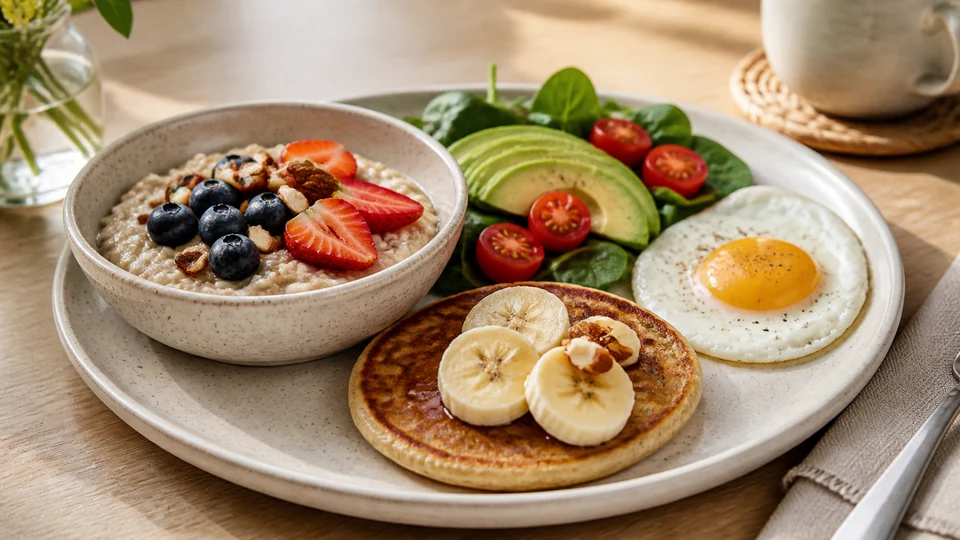
The word healthy is contextual. This guide supports neutral planning and label literacy while leaving diagnosis, treatment, and individual targets to qualified care. The breakfast hub covers the wider morning-food topic, and Pancake World opens the full editorial collection.
| Guide sections |
|---|
| Define healthy before choosing the menu |
| Use a flexible four-part pattern |
| Build the breakfast around context |
| Practical breakfast patterns |
For broader context, continue with Healthy Pancake Guides.
Define healthy before choosing the menu
“Healthy” can refer to very different goals: eating a more varied breakfast, finding a repeatable meal, including a particular food group, comparing packaged options, managing an allergy, or following individual advice from a clinician. Those goals cannot be collapsed into one winning plate.
Write the purpose in ordinary language. “I want a breakfast I can prepare on workdays and that includes fruit” is actionable. “I want the healthiest breakfast” is not. The first statement can be checked against time, ingredients, and appetite; the second invites unsupported rankings.
Some decisions require professional guidance. A person managing diabetes, kidney disease, food allergy, gastrointestinal symptoms, an eating disorder, pregnancy-related needs, medication interactions, or another health condition should use advice appropriate to that situation. An editorial breakfast guide cannot turn a general food pattern into treatment.
Use a flexible four-part pattern
The following pattern is a planning device, not a mandatory nutrient formula.
A substantial base
The base makes the meal feel like breakfast rather than a collection of garnishes. It might be oats, another grain, bread, potatoes, beans, eggs, yogurt, tofu, rice, pancakes, soup, or a planned leftover. Choose a base that matches the eater and the available cooking time.
Whole-food and minimally processed choices can be useful, but those descriptions do not automatically settle portion, allergen, cost, access, or individual suitability. Packaged bread, cereal, yogurt, or plant beverages can still be compared through their current labels rather than rejected or praised as a category.
A protein-containing food
Eggs, dairy foods, cultured alternatives, beans, lentils, tofu, fish, meat, nuts, seeds, and some grains or fortified products can contribute protein. The actual amount belongs to the current food record or label; this page does not publish a universal target.
Add this component when it makes the breakfast more satisfying or aligns with personal advice. Do not force several protein products into one meal to chase a marketing number. One clear component is easier to prepare, label, and repeat.
Fruit or vegetables
Fruit and vegetables can add flavour, colour, texture, and variety. Whole fruit is easy to carry. Berries can top porridge or yogurt. Tomatoes, mushrooms, peppers, greens, or leftover roasted vegetables can support a savoury breakfast. Cooked fruit can accompany pancakes or oats when made by a complete method.
Choose produce that genuinely fits the dish and household. A token garnish does not transform the whole meal, and no single fruit or vegetable creates a promised outcome.
A drink
Water, coffee, tea, milk, plant beverages, or another suitable drink may complete the practical routine. Read labels for sweetened or flavoured packaged drinks. A drink can accompany the meal without being asked to carry the entire breakfast.
Smoothies require special clarity because food and drink roles merge. Evaluate the actual ingredients, portion, and companion foods. Blending does not automatically make a meal complete or incomplete.
Build the breakfast around context
For a rushed weekday
Choose a base that is already prepared or needs one short action: overnight oats from a tested recipe, yogurt with separate toppings, toast with a substantial spread, a labelled cereal with milk or an alternative, or a stored breakfast item with a documented reheating method. Add whole fruit or prepared vegetables only when storage and transport are straightforward.
The healthiest-looking plan is not useful if it regularly goes uneaten. Put the repeatable choice first, then improve variety over several mornings rather than constructing a complicated bowl every day.
For a seated warm meal
Porridge, eggs with vegetables and toast, a tofu scramble, savoury rice, beans with tortillas, pancakes with fruit and yogurt, or soup with bread can all form coherent warm breakfasts. Use one active cooking station and prepare cold components beforehand.
Avoid treating warmth as proof of quality. A warm meal can still be poorly matched to the eater, while a cold meal can be varied and satisfying. Temperature is a preference and service decision.
For travel
Choose a format that closes securely and remains appropriate at the intended temperature. A sandwich with a known filling, yogurt in a cold container, a muffin paired with fruit and another suitable component, or a dry-topped grain bowl may work. Pack wet ingredients separately when they damage texture.
Travel convenience is part of health context because a meal that spills, warms unsafely, or cannot be eaten in the available setting is not a workable plan. Use official guidance for perishable foods.
For children and mixed-age households
Offer familiar components and let portions remain flexible. A family table might provide oats with labelled toppings, eggs and toast with fruit, pancakes with yogurt and berries, or beans with tortillas and vegetables. Avoid moral language around plates or bodies. Describe flavour, texture, ingredients, and choice instead.
Individual feeding concerns belong with appropriate professional advice. This page does not set age-specific portions or developmental rules.
For guests
Use a modular spread with visible ingredient information. One substantial base, one clearly labelled alternative, fruit or vegetables, and several optional toppings can serve varied preferences without producing unrelated mains. Keep original packages or ingredient records available and use separate utensils where cross-contact matters.
Practical breakfast patterns
These are editorial combinations, not tested recipes or prescribed diets.
Oats, fruit, and seeds
Use a complete porridge or overnight-oats method. Add fruit for brightness and seeds for texture when suitable. Keep toppings separate for guests. Compare sweetened packaged oat products by their labels rather than assuming every oat breakfast is equivalent.
Eggs, vegetables, and toast
Cook eggs by a tested method, add vegetables that fit the pan plan, and use toast as a crisp carrier or side. Cooking fat, bread, sauces, cheese, and meat additions all belong in the ingredient picture.
Plain yogurt with fruit and a dry topping
Choose a yogurt or cultured alternative by current label and personal suitability. Add fruit and keep granola, nuts, or seeds separate until eating. Flavoured products, sweetened toppings, and plain products differ; compare the actual combinations.
Beans with tortilla and salsa
Beans can create a savoury anchor. Use a documented method, warm tortillas as appropriate, and add salsa or vegetables. Check sauces, spice blends, and tortillas for relevant ingredients rather than focusing only on the beans.
Tofu and vegetable scramble
Use a complete recipe that accounts for tofu moisture, vegetables, seasoning, and cooking order. Serve with bread, potatoes, fruit, or another compatible side. Do not market the dish through unsupported claims about hormones, detoxification, or disease.
Rice, egg, and greens
This pattern can use freshly cooked rice or known, safely stored rice with an appropriate reheating method. Add egg and greens through a complete recipe. It is a coherent savoury breakfast, not an unusual exception requiring apology.
Lentil breakfast bowl
Cook lentils by a tested method and pair them with vegetables, grains, egg, yogurt, herbs, or sauce as suitable. A bowl format lets portions vary, but every topping still needs ingredient and storage control.
Cottage cheese or alternative with fruit
This cold pattern needs little preparation. Compare the current product label, choose fruit that travels or stores well, and add seeds, nuts, toast, or another component when suitable. Dairy-free alternatives are not nutritionally or allergenically identical by name; inspect the actual label.
Savoury porridge
Oats or another grain can carry mushrooms, greens, egg, beans, cheese, tofu, herbs, or spices. Use one complete method so liquid, texture, and cooking time remain controlled. Savoury does not automatically mean lower in any nutrient; the actual ingredients matter.
Pancakes with fruit and cultured side
Use a tested pancake recipe and treat pancakes as the base. Add fruit and yogurt or a suitable alternative for contrast. Syrup, spreads, butter, cooking fat, and toppings are part of the meal, so a health judgment cannot be made from the word pancake alone.
Whole-grain toast with nut or seed spread
Compare breads and spreads by current labels. Add fruit or vegetables if they fit the eater. Nut and seed spreads are important allergen considerations; use separate tools and clear labels for shared meals.
Soup with bread
Soup can be a practical warm breakfast. Choose a tested vegetable, bean, lentil, meat, fish, tofu, or grain soup and serve it with suitable bread. Manage hot service and leftovers under official guidance.
Smoothie with a chewable side
Build the smoothie from a complete recipe and evaluate all ingredients. Add toast, a boiled egg, whole fruit, a muffin, or another suitable solid component if the eater wants more texture. Do not assume that adding powders makes the drink more appropriate.
Planned leftovers with fresh contrast
Safely stored roasted vegetables, grains, beans, soup, meat, or fish can become breakfast. Reheat or serve them by an appropriate method and add fresh fruit, vegetables, toast, or yogurt as contrast. Unknown leftovers do not become safe because they are mixed with eggs.
Read labels without turning breakfast into arithmetic
Compare like serving bases
Two cereals, yogurts, breads, or drinks can use different serving sizes. Read the stated basis before comparing calories, protein, fibre, added sugar, sodium, fat, or other declared values. If personal advice uses a specific target, apply that advice to the real portion rather than copying a front-panel number.
Read the ingredient list and allergen declaration separately
The ingredient list shows what is in the product in its declared order. The allergen statement and cross-contact language answer different questions. A wellness phrase on the front does not replace either record.
Include required additions
A cereal label does not include the chosen milk unless the comparison explicitly accounts for it. A pancake mix may require egg, milk, or oil. Toast gains a spread; yogurt gains toppings; coffee may gain milk or sugar. Evaluate the prepared meal, not an isolated dry product.
Treat claims as defined terms, not promises
Words used in regulated labelling may have specific meanings, but they do not guarantee that a product suits every person. “Natural,” “wholesome,” or similar marketing language can be too vague to guide a meal. Use the actual panel, ingredients, and personal context.
Avoid common health-breakfast traps
The superfood trap
No berry, seed, powder, spice, or oil turns an otherwise unsuitable breakfast into a universal solution. Add an ingredient for flavour, texture, variety, or a documented nutrient contribution, not a promised cure.
The elimination trap
Removing gluten, dairy, carbohydrate, fat, sugar, or another broad category without a personal reason can make breakfast harder and less varied. People with diagnosed needs should follow appropriate advice; everyone else can evaluate actual foods rather than trends.
The homemade-is-always-better trap
Homemade food offers ingredient control, but a recipe can still be poorly matched to time, allergies, portion, or personal goals. Packaged food offers consistency and a label but still requires comparison. Use the format that supports the real plan.
The more-protein-is-always-better trap
Protein is one meal component, not a competition. Avoid stacking eggs, yogurt, powder, meat, and a fortified bar simply to create a large number. Individual targets and medical questions require appropriate guidance.
The low-calorie-is-best trap
A lower declared calorie value does not by itself determine satisfaction, nutrient mix, portion, or suitability. Do not turn breakfast into a moral score or weight-loss prescription.
The perfect-morning trap
One elaborate breakfast cannot compensate for a routine that is impossible to repeat. Keep a simpler backup: toast and spread with fruit, yogurt and oats, a stored sandwich, beans and tortilla, or another suitable combination.
Make a seven-day pattern without prescribing seven menus
Variety can be planned by changing the anchor rather than buying many toppings. For example:
- one warm grain morning;
- one egg or tofu breakfast;
- one yogurt or cultured-alternative bowl;
- one bean or lentil breakfast;
- one pancake, waffle, or bread-centred meal;
- one leftovers-based savoury breakfast;
- one flexible repeat of the easiest successful option.
This is an editorial rotation, not a required frequency. Repeat foods freely when that supports access, appetite, neurodivergence, culture, budget, or routine. The purpose is to reveal options, not create guilt.
Evaluate the whole prepared breakfast
A single label rarely describes the finished meal. Dry oats may be cooked with milk or a plant beverage, then topped with fruit, seeds, syrup, yogurt, or nut spread. Pancake mix may gain egg, oil, milk, cooking fat, and toppings. Toast gains bread-specific ingredients plus everything placed on it. Compare the assembled breakfast rather than praising or rejecting one package in isolation.
Use a plain worksheet with five columns: component, amount actually served, role in the meal, label or recipe source, and relevant personal consideration. The role might be substantial base, protein-containing addition, produce, drink, or optional flavour. A personal consideration might be an allergen, advice from a clinician, appetite, texture preference, cultural fit, or preparation limit. This keeps the analysis practical without turning the meal into a universal score.
When one component changes, review the whole row. Replacing dairy yogurt with a plant-based product can change protein, fat, sugar, fortification, allergens, and texture in different directions depending on the exact product. Replacing toast with a gluten-free bread does not answer egg, milk, nut, sesame, fibre, or personal tolerance questions. Current labels matter more than category assumptions.
Shop for a repeatable pattern
Build the shopping list from three breakfasts that share ingredients without becoming identical. For example, oats can appear as warm porridge, overnight oats, and a small addition to a smoothie or muffin recipe. Fruit can move between a yogurt bowl, pancake side, and portable whole-fruit option. Beans can support toast, tortillas, or a savoury grain bowl.
Shared ingredients reduce partly used packages, but they still need different preparation records. Do not assume a food stored for one breakfast remains suitable indefinitely for the next. Plan the sequence while shopping: which item opens first, which needs cooking, which can be frozen through a tested method, and which should remain whole until needed.
Keep one fallback that uses mostly stable ingredients and little equipment. The fallback is not a lesser meal. It protects the routine when fresh produce runs out, the cooker fails, or the morning becomes shorter than expected. Suitable examples depend on the household but might include labelled cereal and shelf-stable milk until opened, toast and a sealed spread with whole fruit, or a frozen tested breakfast item with a known reheating method.
Adapt the pattern without making unsupported substitutions
When dairy is not used
Choose the exact plant beverage, yogurt alternative, spread, or cheese alternative by its current label. Products based on soy, oat, almond, coconut, pea, rice, or other ingredients differ. A dairy-free front label does not automatically answer vegan, nut, gluten, protein, sugar, fortification, or cross-contact questions.
Use a recipe designed for the replacement when cooking chemistry matters. In pancakes, muffins, porridge, or casseroles, thickness, acidity, fat, and protein can affect the result. A cold bowl usually allows easier component exchange than a baked formula.
When eggs are not used
Select a complete egg-free recipe or choose a breakfast that does not rely on egg structure: beans and tortillas, tofu scramble, porridge, yogurt or an alternative, toast with suitable toppings, soup, or a grain bowl. An egg substitute for a baked recipe has a specific binding, moisture, and leavening job; no universal swap covers every dish.
When gluten is avoided
Use products and recipes appropriate to the individual's requirement. Oats, breads, cereals, sauces, spice blends, plant beverages, processed meats, and toppings all need the relevant label review. A naturally gluten-free ingredient can still be combined or processed in ways that matter.
When nuts are avoided
Do not replace every nut ingredient with seeds automatically. Seed suitability, cross-contact, and recipe function still require review. Choose a nut-free tested recipe and maintain separate tools or service zones where appropriate.
When added sugar is being compared
Compare like products on the same declared serving basis and include toppings, syrups, sweetened drinks, and required additions. Plain yogurt with a large sweet topping is a different prepared breakfast from the plain label alone. This page does not set an individual sugar target.
When sodium is being compared
Bread, cheese, processed meat, sauces, prepared beans, cereals, and packaged breakfast items can all contribute declared sodium. Compare actual labels and portions. Do not assume savoury always means high or sweet always means low.
Three decision examples
The desk breakfast
The eater needs something that can be carried, opened quietly, and eaten without a kitchen. Begin with a cold bowl, sandwich, muffin pairing, or overnight dish from a tested method. Add whole fruit or crisp vegetables when practical. Pack the spoon or napkin at the same time as the food. If cold control is not available, choose a format that does not depend on an unsafe assumption.
Health context here includes usability: a nutritionally interesting meal that leaks in a bag or cannot be eaten at the desk is not the best choice for this morning. Keep the ingredient and allergen record with a new packaged product until it becomes familiar.
The post-exercise breakfast
This page does not prescribe sports nutrition. Start with appetite, schedule, and any advice the person follows. A grain bowl with yogurt or an alternative, eggs and toast with fruit, beans and rice, pancakes with a suitable side, or a smoothie plus solid food can all be practical patterns.
Avoid converting a general workout into a claim that one powder, protein target, or timing window is necessary. Evaluate actual food, hydration, comfort, and professional guidance where performance goals require it.
The shared weekend breakfast
Choose one cooked anchor and modular components. A pot of porridge, pancake batch, egg dish, tofu scramble, or savoury grain base can work. Add fruit or vegetables and clearly labelled toppings. Keep a simple alternative separate when needed rather than trying to make every topping suitable for everyone.
The host should be able to sit down. Prepare labels, cold items, drinks, and serving tools before the live cooking starts. A calm meal with fewer coherent foods is more repeatable than a crowded table of health trends.
Review the pattern after eating
Use neutral observations: Was the portion appropriate for that appetite? Did the meal fit the available time? Was the texture enjoyable? Did it travel? Were labels clear? Did the cook create an inconvenient leftover? Would the eater choose it again?
Do not use the review to assign moral value to the eater. “The sandwich became soggy” leads to a packaging change. “The porridge did not keep me comfortable until lunch” can lead to a different portion or companion food. “I was bad for eating pancakes” provides no usable information and should be discarded.
Change one feature at a time. Add a side, choose a different base, adjust a tested recipe, or move the meal to another day. A stable breakfast pattern emerges from observable iteration, not a perfect first attempt.
Decide what to prepare and what to assemble
The healthiest-looking plan on paper can fail on an ordinary morning if every component demands attention at the same moment. Separate the work into two categories. Prepare-ahead components are the ones whose quality and safety remain appropriate after storage under the governing guidance. Assemble-later components are the ones that lose useful texture, become watery, or make another component soggy when combined too soon. Keep those categories visible on the plan instead of treating the complete breakfast as one storage unit.
For example, a grain base, a washed whole fruit, and a labelled packaged ingredient may each have different preparation and storage consequences. The practical question is not whether advance preparation is universally healthier. It is whether the chosen format makes the intended breakfast easier to repeat while every component remains within its own instructions. If an item has no clear storage plan, reduce the batch or choose a simpler alternative rather than relying on a vague promise to use it later.
This distinction also improves the morning sequence. Retrieve cold items only when they are needed, complete any heat-dependent step without competing assembly work, and add crisp or delicate components at service. The result is a breakfast whose nutrition pattern, texture, time demand, and food-safety history can all be reviewed separately.
Food safety, storage, and preparation
Use FoodSafety.gov as the controlling source in this brief for cooking, holding, storage, and leftovers. Separate raw animal foods from ready-to-eat items, clean hands and equipment, and apply current official guidance to eggs, dairy foods, cooked grains, cut produce, meat, fish, tofu dishes, and leftovers as relevant.
Prepare make-ahead food only through a method that includes storage and restart instructions. Keep cold food appropriately cold and hot food appropriately hot. Serve smaller portions while reserves remain controlled. Discard food when its identity or time-temperature history is uncertain.
Frequently asked questions
Is there one healthiest breakfast?
No. Health needs, allergies, appetite, culture, access, schedule, and the rest of the day's food all affect the decision.
Are pancakes compatible with a balanced breakfast?
They can be one component. The tested recipe, portion, toppings, cooking fat, and sides determine the actual meal.
Is cereal healthy?
The category is too broad for one answer. Compare the current Nutrition Facts panel, serving basis, ingredient list, allergen declaration, and the milk or alternative used with it.
Should breakfast be high in protein?
This page does not set an individual target. Include a suitable protein-containing food when it supports the eater and use professional advice where needed.
Is skipping breakfast unhealthy?
This guide cannot make an individual medical judgment. People with symptoms, health conditions, medication questions, or nutrition concerns should use appropriate professional advice.
Are plant-based breakfasts always healthier?
No universal outcome follows from that label. Evaluate the complete ingredients, preparation, portion, allergens, and personal context.
Explore related Pancakes World guidance on American Pancakes, American Breakfast: Pancakes, Diner Plates and Brunch, and Maple Syrup.
Sources and editorial references
- USDA FoodData Central —
https://fdc.nal.usda.gov/ - FoodSafety.gov food safety charts —
https://www.foodsafety.gov/food-safety-charts - FDA Food Labeling & Nutrition —
https://www.fda.gov/food/nutrition-food-labeling-and-critical-foods