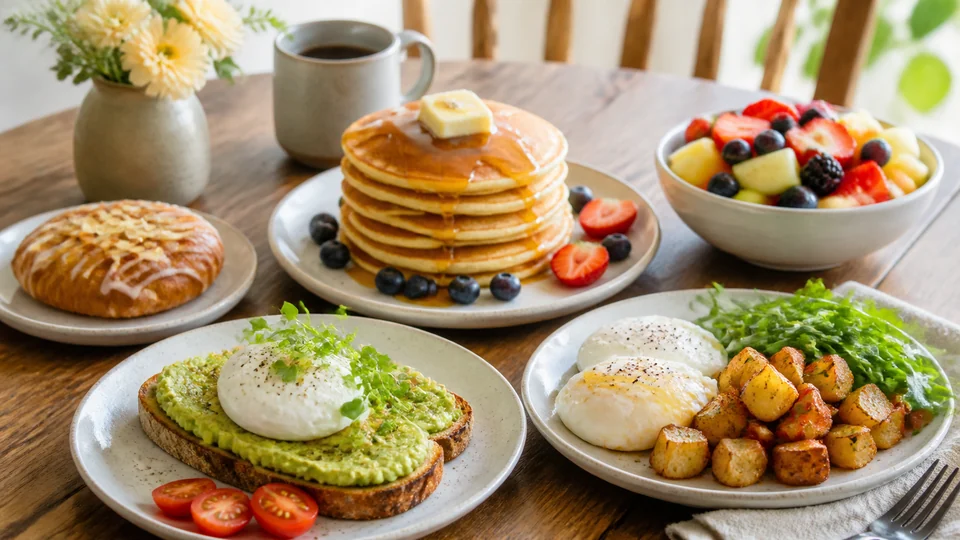
Best brunch items

Best brunch items prepared for Pancakes World.

For best brunch items—working note 1—The best brunch items are the ones that fit the guest list, kitchen and service window, not a universal top-ten ranking. A dependable menu has one substantial hot item, one fresh component, one bread or pancake, one savoury side and one optional sweet finish. Choose formats that can share equipment, expose allergens clearly and reach the table without long quality-damaging holds. See Pancakes World.

Route-specific preparation and decision guide

For best brunch items—working note 2—For a best-brunch-items shortlist, start by setting a practical constraint: time, equipment, guest count, dietary requirement, or the desired finished texture. Read the selected source from beginning to end before shopping or preheating. Separate ingredients that must be measured from optional toppings and service elements. This prevents a familiar route name from being treated as a complete method. Current package labels remain important whenever a commercial product, allergen concern, or dietary claim is involved.

For best brunch items—working note 3—Prepare a small controlled test whenever a result depends on heat, moisture, batch size, or holding time. Use the stated pan, tray, blender, or bowl process as the baseline, then observe a specific result such as spread, browning, tenderness, yield, or serving temperature. Change one variable at a time if something needs correction. A home observation can improve the next batch, but it is not a promise that another brand, kitchen, or diner will have the same result.

For best brunch items—working note 4—Plan service before the last cooking step. Put plates, drinks, utensils, and cold accompaniments in place, then prepare the component that loses quality most quickly. For a group, choose one item to finish hot and make other parts stable enough to wait briefly. Keep optional sauces, toppings, and garnishes separate where practical so guests can identify what is on the plate. This makes the meal easier to serve without presenting one arrangement as the only correct breakfast.

For best brunch items—working note 5—Use a safety and storage checkpoint after the meal. Follow the current source and official food-safety guidance for the ingredients actually used, especially for eggs, dairy, meat, or prepared foods that need refrigeration. Do not use a general article as a substitute for individual allergy, medical, or nutrition advice. Record the exact product, quantity, equipment, and timing if the version is worth repeating.

For best brunch items—working note 6—For the next batch, review the route-specific decision rather than recreating the meal from memory. Note which part created congestion, whether the portion matched the people eating, and whether a substitution changed the result. That record supports a transparent adaptation while preserving the original source context. It also keeps a sensible boundary between practical cooking guidance and unsupported health, safety, or cultural claims.

For best brunch items—working note 7—Brunch at Mr. Pancake: Meal Guide, World Pancakes: Dishes and Traditions, Storing and Reheating Pancakes, Pancake Equipment and Skillets.

Verdict criteria: comparison matrix, scenario, decision, how to choose, and trade-off

What this brunch needs to accomplish

For best brunch items—working note 8—The target is a decision framework for choosing a coherent brunch rather than collecting random favourites. Best is evaluated against practical criteria and does not claim a restaurant ranking, product endorsement or universal preference.

Menu formats that fit the intent

Pancakes or waffles

For best brunch items—working note 9—Pick one griddle format and plan batches rather than trying to hold both. Score Pancakes or waffles against the guest list, equipment map and service window instead of a universal best-food ranking.

Egg bake

For best brunch items—working note 10—Use a tested casserole or frittata as the oven anchor. Score Egg bake against the guest list, equipment map and service window instead of a universal best-food ranking.

Crisp potatoes

For best brunch items—working note 11—Give them tray space and a serving time close to the hot item. Score Crisp potatoes against the guest list, equipment map and service window instead of a universal best-food ranking.

Fruit or vegetable salad

For best brunch items—working note 12—Keep dressing and delicate pieces separate until service. Score Fruit or vegetable salad against the guest list, equipment map and service window instead of a universal best-food ranking.

Toast or pastry

For best brunch items—working note 13—Choose one bread format that does not compete for the same oven window. Score Toast or pastry against the guest list, equipment map and service window instead of a universal best-food ranking.

Yogurt or bean bowl

For best brunch items—working note 14—Provide a flexible cold option with clearly labelled toppings. Score Yogurt or bean bowl against the guest list, equipment map and service window instead of a universal best-food ranking.

Build a workable sequence

  1. Count guests and dietary constraints.
  2. Map each proposed item to equipment.
  3. Reject dishes with overlapping last-minute bottlenecks.
  4. Choose one texture from crisp, creamy, fresh and tender.
  5. Assign serving utensils.
  6. Write a reverse timeline from the seating time.

Current-batch troubleshooting

Every item needs the oven

For best brunch items—working note 15—Replace one with a cold or stovetop component. Re-evaluate the shortlist against equipment and guest access.

The menu has no fresh contrast

For best brunch items—working note 16—Add fruit, salad or raw vegetables. Re-evaluate the shortlist against equipment and guest access.

Too many short-order items

For best brunch items—working note 17—Keep only one griddle or egg-to-order station. Re-evaluate the shortlist against equipment and guest access.

Allergen information is unclear

For best brunch items—working note 18—Retain packages and label serving pieces. Re-evaluate the shortlist against equipment and guest access.

Food sits before guests arrive

For best brunch items—working note 19—Reduce the number of hot components. Re-evaluate the shortlist against equipment and guest access.

Safety and evidence boundary

For best brunch items—working note 20—For Pancakes or waffles, keep its label, raw tools and ready-to-eat utensils separate. Never taste its raw-flour batter. Measure the applicable endpoint, refrigerate perishable portions, and require an exact formula before publishing nutrition or yield.

Frequently asked questions

What single item anchors brunch?

For best brunch items—working note 21—Choose a substantial dish suited to your equipment and guests.

Are pancakes always necessary?

For best brunch items—working note 22—No, though they can be a useful shared centrepiece when batch service is planned.

How many dishes make a complete menu?

For best brunch items—working note 23—Five distinct roles can be enough; more items do not automatically improve the meal.

What should be made ahead?

For best brunch items—working note 24—Move cold sauces, washing, chopping and source-approved assembly earlier.

How is best judged?

For best brunch items—working note 25—By fit, execution, flavour contrast and guest access, not search popularity alone.

Current-batch observation

For best brunch items—working note 26—For best brunch items, observe one concrete point before changing the method: batter flow, crisping, vegetable moisture, oven set, portion size, or the time a dish can wait before serving. Write down the actual product and equipment used. This keeps a useful kitchen note tied to the route rather than to an assumption about similar foods.

Bounded correction

For best brunch items—working note 27—For best brunch items, make one safe correction at a time. Lower heat when colour advances too quickly, use the source-directed rest when moisture needs time to settle, or reduce the batch size when service is becoming crowded. Do not use a substitution to make a medical, allergy, or nutrition promise that the selected source and current label cannot support.

Next-batch prevention

For best brunch items—working note 28—For best brunch items, prevent the same fault by preparing tools and components in advance. Measure the intended portion, identify the last-minute step, and keep optional toppings separate. If the route includes a packaged food, recheck the current label rather than relying on an earlier box, jar, or mix.

Service and storage record

For best brunch items—working note 29—For best brunch items, record what reached the table, how long it held its intended texture, and which leftovers need ordinary food-safety handling. This record is a home planning aid. It does not replace the directions for the ingredients actually used or individual professional advice for a dietary condition.

Transparent adaptation note

For best brunch items—working note 30—For best brunch items, name any change made for availability, preference, or timing. Preserve the complete source method as the reference point and describe the result as an adaptation. Clear wording helps the next cook repeat the useful parts without presenting a household outcome as a tested universal result.

Final practical record

For best brunch items—working note 31—For best brunch items, make the next decision from the completed meal, not from a generic expectation. Note the exact route option used, the portion served, the equipment that controlled the result, and the moment at which the food was best for the table. If a component was changed, record why it changed and what that did to texture, timing, or service. Use current labels for packaged foods and retain the original source method as the reference point. This is a transparent household record, not a formal safety, nutrition, or performance claim.

For best brunch items—working note 32—When repeating best brunch items, prepare the slowest or least flexible step first, keep the final hot component for last, and make optional elements visible to diners. Review any leftovers using ordinary food-safety guidance appropriate to the ingredients used. A small, clear note prevents an accidental hybrid recipe and gives the next cook a practical starting point.

Last service note

For best brunch items—working note 33—For best brunch items, keep the final version simple enough to serve as planned. Set out the necessary utensils, finish the most time-sensitive component last, and note the actual portion and holding time for a future repeat. State adaptations clearly and use current ingredient information where dietary details matter.

Conclusion

Related reading

Practical review 1

For best brunch items—working note 34—For a brunch-items shortlist, review 1 focuses on a separate kitchen choice. Confirm the exact ingredients, equipment, and serving plan before changing the source method. Measure the stated portion, observe the result at controlled heat or storage conditions, and record only what can be seen in that batch. A clear record distinguishes a product change from a timing change and avoids an unsupported general claim.

For best brunch items—working note 35—Choose the next step by the constraint that matters most in this meal: speed, texture, guest service, dietary clarity, or ingredient availability. Keep toppings and optional components separate where possible, check current labels, and state any adaptation plainly. A smaller, well-managed breakfast is usually easier to serve than a complicated menu that cannot be finished in order.

For best brunch items—working note 36—After eating, note whether the portion, temperature, and timing worked for the actual diners. Follow food-safety guidance for the ingredients used, and use individual professional advice where health or allergy questions arise. This route-specific note supports the next attempt without treating a household observation as a formal test.

Practical review 2

For best brunch items—working note 37—For a brunch-items shortlist, review 2 focuses on a separate kitchen choice. Confirm the exact ingredients, equipment, and serving plan before changing the source method. Measure the stated portion, observe the result at controlled heat or storage conditions, and record only what can be seen in that batch. A clear record distinguishes a product change from a timing change and avoids an unsupported general claim.

For best brunch items—working note 38—Choose the next step by the constraint that matters most in this meal: speed, texture, guest service, dietary clarity, or ingredient availability. Keep toppings and optional components separate where possible, check current labels, and state any adaptation plainly. A smaller, well-managed breakfast is usually easier to serve than a complicated menu that cannot be finished in order.

For best brunch items—working note 39—After eating, note whether the portion, temperature, and timing worked for the actual diners. Follow food-safety guidance for the ingredients used, and use individual professional advice where health or allergy questions arise. This route-specific note supports the next attempt without treating a household observation as a formal test.

Practical review 3

For best brunch items—working note 40—For a brunch-items shortlist, review 3 focuses on a separate kitchen choice. Confirm the exact ingredients, equipment, and serving plan before changing the source method. Measure the stated portion, observe the result at controlled heat or storage conditions, and record only what can be seen in that batch. A clear record distinguishes a product change from a timing change and avoids an unsupported general claim.

For best brunch items—working note 41—Choose the next step by the constraint that matters most in this meal: speed, texture, guest service, dietary clarity, or ingredient availability. Keep toppings and optional components separate where possible, check current labels, and state any adaptation plainly. A smaller, well-managed breakfast is usually easier to serve than a complicated menu that cannot be finished in order.

For best brunch items—working note 42—After eating, note whether the portion, temperature, and timing worked for the actual diners. Follow food-safety guidance for the ingredients used, and use individual professional advice where health or allergy questions arise. This route-specific note supports the next attempt without treating a household observation as a formal test.

Practical review 4

For best brunch items—working note 43—For a brunch-items shortlist, review 4 focuses on a separate kitchen choice. Confirm the exact ingredients, equipment, and serving plan before changing the source method. Measure the stated portion, observe the result at controlled heat or storage conditions, and record only what can be seen in that batch. A clear record distinguishes a product change from a timing change and avoids an unsupported general claim.

For best brunch items—working note 44—Choose the next step by the constraint that matters most in this meal: speed, texture, guest service, dietary clarity, or ingredient availability. Keep toppings and optional components separate where possible, check current labels, and state any adaptation plainly. A smaller, well-managed breakfast is usually easier to serve than a complicated menu that cannot be finished in order.

For best brunch items—working note 45—After eating, note whether the portion, temperature, and timing worked for the actual diners. Follow food-safety guidance for the ingredients used, and use individual professional advice where health or allergy questions arise. This route-specific note supports the next attempt without treating a household observation as a formal test.

Sources

Analytics are optional and can be changed at any time.