Best breakfast foods
At Pancakes World, the best breakfast foods are the ones that fit the eater, schedule, kitchen, and appetite while making a coherent meal. Start with one substantial base such as oats, eggs, yogurt, beans, toast, rice, or pancakes; add fruit or vegetables where they suit the menu; then choose a drink and optional accent. A rushed weekday rewards portable, low-cleanup food, while shared brunch can justify hot dishes and several components. There is no universal winner, so compare preparation time, holding needs, dietary labels, portion flexibility, and how each food works with the others.
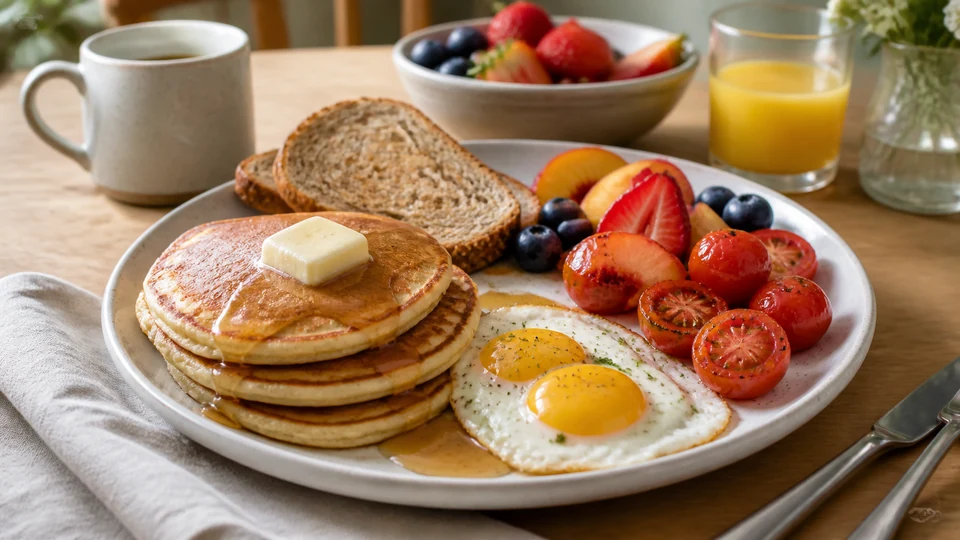
This guide is a practical catalogue and decision tool, not a nutrition prescription or an objective ranking of cuisines, products, or dishes. The breakfast hub covers the parent topic, while Pancake World opens the broader editorial collection.
| Guide sections |
|---|
| What makes a breakfast food useful |
| Start with the morning, not the food trend |
| Breakfast foods by practical role |
| Build contrast without adding clutter |
For broader context, continue with American Breakfast: Pancakes, Diner Plates and Brunch.
What makes a breakfast food useful
Calling one food “best” without naming a situation produces a list that cannot guide a real morning. A commuter choosing something to eat on a train has a different problem from a host serving ten people at a table. A person who likes savoury rice at breakfast does not need the same shortlist as someone seeking a warm sweet bowl. Equipment, time, appetite, culture, labels, and cleanup all belong in the decision.
A useful breakfast food normally does at least one clear job:
- forms the substantial centre of the meal;
- adds a different texture, temperature, or flavour;
- makes the meal easier to carry;
- can be prepared before the busiest part of the morning;
- lets several eaters adjust their own portions;
- uses leftovers deliberately rather than accidentally;
- fits the actual cooking and storage space.
Not every plate needs every job. One well-chosen anchor with one contrasting side can be more coherent than five small foods that all supply the same soft, sweet, or bread-like experience.
Start with the morning, not the food trend
A ten-minute weekday
The strongest candidates are foods with little active cooking and a clear stopping point: overnight oats prepared from a complete recipe, yogurt with separately stored toppings, toast with a substantial spread, a reheated item whose method is already known, or a portable sandwich assembled from safely stored components. Set out the bowl, spoon, mug, and travel container before opening the refrigerator. A short morning becomes difficult when three toppings, two pans, and an unplanned leftover all demand attention.
A slow seated breakfast
More time allows foods whose appeal depends on immediate cooking: pancakes, eggs, waffles, vegetable hash, porridge, or warm bread. Choose one live-cooking task. If pancakes occupy the griddle, let fruit, yogurt, or a prepared savoury side supply contrast instead of adding a second made-to-order pan dish.
A portable commute
Portability is a structural quality, not a food name. A breakfast sandwich travels well only when its filling is firm, its wrapper manages steam, and its temperature can be controlled. A smoothie travels in a sealed bottle but may not satisfy someone who wants to chew. Yogurt is portable with a cold plan and a leak-resistant container. Test the assembled format at home before relying on it during a journey.
A shared family table
Choose foods that scale in calm increments. Baked oatmeal, a tested casserole, a pot of porridge, a platter of sandwiches, or successive pancake batches can work when portions and holding are planned. Avoid multiplying choices simply because several people are present. One familiar anchor and modular sides usually provide more flexibility than unrelated mains.
A guest brunch
Guests need clarity as much as variety. Provide labels for dishes and toppings, keep package information available, and separate an alternative pathway where relevant. A buffet should reveal where plates begin, where hot and cold foods belong, and which utensil serves each dish. The best food for this setting is one that remains understandable after the host leaves the table.
Breakfast foods by practical role
Porridge and other hot cereals
Oats, rice porridge, millet porridge, and other cooked cereals offer a warm base that can be portioned by bowl. Their practical strength is modularity: fruit, nuts, seeds, spices, yogurt, savoury vegetables, or an egg can be offered separately when suitable. Their weakness is texture drift during long holding. Use a tested method, choose the serving window before cooking, and keep thickening adjustments tied to that recipe rather than improvising a universal ratio.
Porridge suits a seated breakfast better than a walking commute unless it travels in an appropriate container. For a group, keep wet toppings away from the main pot and give each topping its own clean spoon. Label allergens rather than assuming they are obvious from appearance.
Eggs
Eggs can be scrambled, fried, poached, boiled, baked, or used as a binder in a complete tested dish. The format changes the workflow. Boiled eggs can be prepared ahead under suitable handling guidance. Scrambled or fried eggs are more dependent on last-minute pan attention. A baked egg dish can serve several people but needs a verified centre and a plan for hot service and leftovers.
Choose eggs when their cooking slot fits the morning. Do not add them merely because a menu is called breakfast. If another dish already occupies the only pan, use a make-ahead egg format or choose a different substantial food.
Toast and other breads
Toast is quick for one or two people and becomes a bottleneck when many slices must emerge simultaneously. Its role depends on the topping: plain toast is a crisp side, while toast with beans, egg, cheese, nut or seed spread, avocado, fish, or another substantial topping can become the anchor. Ingredient and allergen information covers both bread and topping.
For a buffet, consider whether people can toast safely without blocking the line. Pre-toasted bread loses crispness, while live toasting needs equipment, power, and supervision. Rolls, flatbreads, muffins, or sliced loaves may serve the bread role with less last-minute work.
Yogurt and cultured alternatives
Yogurt creates a cold, spoonable base. Plain, flavoured, dairy, and plant-based products differ in ingredients, sweetness, texture, protein, allergens, and storage; the current label controls those facts. Dry toppings should stay separate until eating if crunch matters. Fruit can be served whole, cut, cooked, or as a tested compote, with the appropriate storage plan for each state.
A yogurt bowl travels more reliably when the topping compartment and cold source are prepared in advance. For guests, keep original containers or ingredient records available and do not treat a plant base as proof of suitability for every diet or allergy.
Beans and lentils
Beans can anchor a savoury breakfast with toast, tortillas, rice, vegetables, or eggs. They offer a useful alternative when the meal should not depend on sweet foods. Choose a complete preparation method and decide whether the beans will be hot, chilled in a composed bowl, or used as a spread. Each route changes serving and storage.
For a rushed morning, a safely stored cooked batch may be reheated by its documented method. For guests, label sauces and seasoning as carefully as the beans because those additions often carry the less visible allergens or heat level.
Rice and other grains
Rice breakfasts appear in many home traditions and can be sweet or savoury. Rice with egg and greens, a cold grain bowl, rice porridge, and leftover-based fried rice are different dishes with different methods. Use stored cooked rice only when its handling history is known and applicable official guidance has been followed.
Grains are useful when the household already cooks them for other meals. Plan the breakfast use during the original cooking and storage, not after an unlabelled container is discovered. Add contrast with crisp vegetables, fruit, seeds, herbs, or another suitable component rather than creating several soft starches.
Pancakes
Pancakes suit mornings that allow pan time or a documented batch method. They can be an anchor, especially with a substantial side, or a smaller bread-like component. Choose a tested recipe for quantities, timing, yield, and substitutions. Prepare toppings before the first pancake and use one calibration piece to settle portion and pan heat.
For groups, successive consistent batches are easier to diagnose than one oversized bowl. Keep the serving plate replenished rather than letting the whole batch wait. A pancake bar needs labels, dedicated utensils, and a plan for wet toppings so the table remains usable.
Waffles
Waffles create crisp texture and individual portions but depend on an appliance cycle. The maker's manual controls preheating, filling, opening, coatings, and cleaning. A recipe designed for waffles is a safer starting point than assuming every pancake batter produces the same result.
For several eaters, calculate service by appliance cycle rather than recipe yield alone. If one waffle emerges at a time, choose sides that can wait safely and comfortably. Toppings should be ready before the first cycle finishes.
Breakfast sandwiches and wraps
Sandwiches and wraps combine the anchor and carrying format. Their success depends on moisture management, filling thickness, wrapper, and temperature lane. Crisp bread softens against wet tomato or sauce; a very full wrap tears; a hot filling sealed immediately can create steam. Assemble in an order suited to the complete recipe and intended eating time.
For a make-ahead batch, use a tested method that covers cooling, wrapping, storage, and reheating. Label different fillings before freezing or refrigerating. A visually identical wrapper is not enough for a group with dietary needs.
Breakfast potatoes and vegetable hash
Potatoes, sweet potatoes, squash, onions, peppers, mushrooms, and greens can form a savoury skillet or tray. The challenge is synchronising pieces with different moisture and cooking rates. Use a complete recipe or preparation plan, cut consistently, and avoid crowding beyond the equipment's capacity.
A hash is attractive for using planned leftovers, but “use leftovers” is not a safety method. Only use components with a known storage history. For guests, offer sauces separately and label them.
Fruit
Whole fruit is the simplest fresh breakfast component because it travels easily and needs little serving equipment. Cut fruit offers easier sharing but creates preparation, cold-storage, and utensil needs. Cooked fruit can complement porridge, pancakes, or yogurt when made by a complete method.
Fruit usually works best as contrast, not as an obligation added to an already complex meal. Choose one or two forms that fit the season, kitchen, and eaters without making unsupported health promises.
Breakfast soups
Soup may be a normal morning food, a cold-weather choice, or a way to use a planned batch. It can combine vegetables, grains, beans, meat, tofu, or noodles in one bowl. Select a tested recipe and a serving container that suits the setting. Soup is comfortable at a table and less convenient during a walking commute.
For a group, a pot of soup reduces live pan work but needs controlled hot service, clean ladles, and suitable bowls. Bread or fruit can provide a simple contrast.
Cheese, fish, and cold savoury plates
A plate of bread, cheese, fish, vegetables, fruit, pickles, or spreads can create breakfast without live cooking. Its practical advantage is assembly; its challenge is ingredient clarity and cold control. Choose a small coherent selection rather than turning the refrigerator into an unplanned buffet.
Keep serving utensils separate, preserve labels for packaged foods, and return reserve portions to cold storage rather than placing every item on the table at once.
Smoothies
A smoothie can carry fruit, vegetables, yogurt, milk, plant beverages, oats, nut or seed spreads, or other ingredients according to a complete recipe. It is not automatically a complete breakfast, nor does its blended form create a universal health effect. Judge it by the actual ingredients, portion, eater, and companion foods.
Blend close to drinking when texture matters. For travel, use a sealed container and appropriate cold handling. Add a chewable side when the eater wants more texture rather than making the drink increasingly complicated.
Muffins and quick breads
Muffins and quick breads can be made ahead, portioned, and carried. Plain versions behave differently from products filled or topped with cheese, meat, custard, cream, or other perishable ingredients. Use a tested recipe and apply storage guidance to the finished food, not to the word muffin.
Pair a muffin with yogurt, fruit, egg, cheese, or another contrasting food when it otherwise feels like an isolated sweet bread. For groups, label varieties and keep serving pieces manageable.
Leftovers used deliberately
Breakfast can use last night's roasted vegetables, rice, beans, cooked meat, bread, or soup when those foods were cooled and stored safely. The key word is deliberately. Plan the breakfast use while putting dinner away, label the container, and select a reheating or serving method that fits the food.
Do not disguise an uncertain leftover in eggs or batter. If its identity, timing, or storage is unknown, choose a fresh breakfast component.
Build contrast without adding clutter
A coherent breakfast usually combines two or three different roles. Use contrast as the reason for each addition:
- hot porridge with cool fruit and a crunchy topping;
- crisp toast with soft beans and fresh vegetables;
- pancakes with fruit and a cultured side;
- savoury rice with egg and greens;
- a breakfast sandwich with whole fruit;
- yogurt with separately packed granola;
- soup with bread and a bright garnish;
- vegetable hash with a simple protein-containing side.
These are editorial meal directions, not tested recipes. The exact ingredients and methods come from the chosen source. If two additions perform the same role—three breads, several soft starches, or multiple sweet sauces—remove one before adding another category.
Choose by equipment
No-cook kitchen
Consider yogurt, labelled cold cereals, bread with a suitable spread, whole fruit, cheese or fish plates, prepared foods whose labels support cold service, or overnight dishes from tested recipes. Verify refrigeration and utensils. “No cook” does not mean “no safety plan.”
One pan
Choose eggs, pancakes, hash, fried rice, beans, or another single-pan anchor. Make the sides cold or room-temperature. Finish all chopping and measuring before heating the pan.
One oven
Baked oatmeal, muffins, a tested casserole, or a tray-based breakfast can serve several people. Select one oven anchor. Do not schedule several dishes at incompatible temperatures and expect them to finish together.
Slow cooker
Use a recipe specifically written or validated for the appliance. Match cooker capacity, start time, fill level, doneness, and holding. Never use the word slow as permission to improvise with perishable ingredients in an unpowered cooker.
Griddle or waffle maker
These appliances create repeated individual portions. Their practical capacity is cycles per serving window, not merely surface size. Read the manual, choose a suitable recipe, and prepare sides before live cooking.
Make breakfast food portable
First decide whether the food will be eaten immediately on arrival or carried for hours. Then choose the temperature lane and container. Firm sandwiches, wraps, muffins, whole fruit, and dry-topped bowls are easier to manage than runny eggs, tall pancake stacks, or uncovered cereal.
Pack wet sauces separately. Vent a hot item only according to the tested method, then wrap it for the intended eating time. Protect crisp and soft components from each other. Use a separate spoon for a yogurt cup and a napkin for handheld foods. The small details determine whether a theoretically portable breakfast is usable.
Plan a make-ahead breakfast
“Make ahead” should identify exactly which step moves earlier. It may mean measuring dry ingredients, baking a complete dish, chopping vegetables, cooking a grain, assembling a refrigerated casserole, or freezing finished sandwiches. Only move a step when the tested recipe supports the storage interval and restart method.
Write tomorrow's remaining work on the container. “Add fruit and eat cold” is different from “reheat fully, then add sauce.” Store toppings separately when they would soften the main item. Reserve refrigerator and freezer space before producing a large batch.
Serve several dietary pathways without making several breakfasts
Begin with a modular base. A porridge pot, grain bowl, pancake batch, toast station, or breakfast taco setup can accept separately labelled components. Modularity does not guarantee suitability; every base, topping, sauce, and cooking fat still needs the relevant label review.
Use dedicated utensils where cross-contact matters. Place a clearly labelled alternative before a shared topping zone only when the service layout protects it. Keep package records available and avoid promises such as safe for everyone.
Build a useful breakfast shortlist
A shortlist is more useful than a permanent ranking because it turns known household constraints into several ready choices. Create six slots and give each slot a different operational strength:
- a breakfast that is ready in about the time it takes to make a drink;
- a warm food for a seated morning;
- a firmly packed option for travel;
- a make-ahead choice with a documented storage and restart method;
- a savoury choice that does not depend on sweet toppings;
- a flexible guest option with separately labelled components.
One food may fill two slots, but the shortlist should not consist of six versions of the same bread or bowl. A household might choose toast with seed spread, porridge, a breakfast sandwich, baked oatmeal, beans with tortilla, and a pancake spread. Another might choose yogurt, rice with egg and greens, a firm wrap, frozen tested breakfast sandwiches, soup with bread, and a grain-bowl bar. Neither list is universally better; each is a set of practical fallbacks.
Keep the shortlist beside the shopping plan. When a required ingredient is unavailable, move to another complete slot rather than making an unsupported substitution inside the original recipe. Review the list when equipment, commute, household size, or dietary needs change.
Choose by texture and temperature
Texture can solve the common problem of a breakfast that feels monotonous even when it contains several foods. Identify the anchor's dominant quality, then add one contrast.
If the anchor is soft and warm, as with porridge, scrambled egg, or rice, add crisp toast, seeds, fresh vegetables, firm fruit, or another suitable textured component. If the anchor is crisp and dry, as with toast or a waffle, add yogurt, beans, cooked fruit, egg, or a carefully chosen spread. If a sandwich is dense and savoury, whole fruit or crisp vegetables can refresh the plate without another cooking task.
Temperature also creates contrast, but it must remain compatible with safe service. Cool yogurt beside freshly cooked pancakes can work because each component keeps its own lane until plating. A lukewarm casserole beside room-temperature egg is not intentional contrast; it is an unresolved holding problem. Choose hot, cold, or room-temperature presentation deliberately and use the source method that supports it.
Do not add contrast by default. A person may prefer a simple bowl with one texture, and a very rushed morning may reward uniformity. Texture is a selection tool, not a requirement or health claim.
Six complete planning examples
These examples show how foods can perform distinct jobs. They are editorial combinations; use tested recipes and current labels for the actual preparation.
Quick cold bowl
Use a labelled yogurt or cultured alternative as the cold anchor. Keep granola, seeds, or another dry topping separate until eating. Add whole fruit when travel is involved, or prepared fruit when cold storage and a spoon are available. This option avoids live cooking but still needs refrigerator space and allergen review.
Warm grain morning
Choose one porridge or cooked-grain method. Prepare a fresh, crisp, or cool contrast before the pot reaches its final stage. Set out individual toppings rather than stirring every preference into the whole batch. This works for varied appetites because each bowl can be portioned independently.
Savoury toast plate
Make toast the carrier, not the entire menu. Add beans, egg, fish, cheese, tofu spread, vegetables, or another substantial topping from a complete method. Choose one bright or crisp side. For several eaters, solve the toaster bottleneck before adding more toppings.
Portable sandwich breakfast
Select a firm bread or wrap and a filling that can be held safely. Put wet sauce or tomato where it will not soak the wrapper, or pack it separately. Add whole fruit and a closed drink. Label batches when fillings differ, and use a tested make-ahead method if the sandwich will be stored.
Pancake table
Use one tested pancake recipe and one cooking station. Prepare fruit, yogurt, spreads, or savoury sides before the first batch. Give wet toppings their own utensils and keep reserve ingredients controlled. Success depends more on batch flow than the number of topping bowls.
Savoury leftovers breakfast
Start only with a known, safely stored component such as cooked rice, roasted vegetables, beans, soup, or cooked meat. Choose a documented reheating or assembly method, add a fresh contrast, and prepare only the portion intended for breakfast. Do not repeatedly warm the whole storage container.
Prevent the most common selection mistakes
Choosing by aspiration instead of schedule
A long cooked breakfast may sound appealing on Sunday and fail on Tuesday. Keep at least one no-cook, one portable, and one reheatable option on the shortlist. Choose from the real morning rather than expecting the morning to expand around the food.
Treating every side as a new dish
Fruit, bread, yogurt, nuts, vegetables, and sauces can be simple components. They do not all need separate recipes. Spend active cooking attention on the anchor and let sides supply contrast with little conflict.
Forgetting the serving format
A food that works in a bowl may fail in a car. A buffet food may become awkward when plated for one. Decide container, utensil, table space, and eating position while selecting the food, not after cooking.
Keeping too many perishable options open
A refrigerator full of partly used yogurt, cut fruit, cooked grains, egg fillings, and opened sauces creates more decisions than convenience. Build successive breakfasts around compatible components, keep labels and dates clear, and open a new pathway only when the current one has a safe use plan.
Using “breakfast” as a nutrition claim
The time of day does not prove that a food is suitable for an individual. Evaluate the actual ingredients and labels, and leave medical or diet prescriptions to qualified advice appropriate to that person.
Food safety and leftovers
Use FoodSafety.gov as the controlling source in this brief for cooking, holding, storage, and leftovers. Separate raw animal foods from ready-to-eat items, use clean equipment, and apply current official guidance to cold and hot foods. Do not taste raw batter containing untreated flour or raw egg.
Serve perishable foods in smaller amounts while reserves remain controlled. At the end of breakfast, sort foods by their actual history. Promptly store suitable leftovers in appropriate containers and discard foods whose time or temperature history is uncertain. Reheating later does not repair unsafe handling earlier.
Frequently asked questions
What is a good everyday breakfast food?
Choose something repeatable that fits the available time, equipment, and appetite. One anchor plus one contrasting side is a practical starting point.
Does breakfast have to be sweet?
No. Beans, rice, eggs, vegetables, soup, fish, savoury porridge, sandwiches, and leftovers can all belong at breakfast.
Which foods travel most easily?
Firm, wrapped, low-spill foods and whole fruit are easiest. Perishable fillings still require an appropriate temperature plan.
What should be served to guests?
Offer one familiar substantial food, a clearly labelled alternative where needed, and modular sides. Keep the number of live-cooked dishes low.
Are smoothies the best breakfast?
There is no universal best. Judge a smoothie by its actual ingredients, portion, practicality, and whether it fits the eater.
Can dinner leftovers be breakfast?
Yes when their identity and safe storage history are known and the reheating or serving method is appropriate.
Explore related Pancakes World guidance on American Pancakes, Maple Syrup, and Maple Syrup Pancakes.
Sources and editorial references
- USDA FoodData Central —
https://fdc.nal.usda.gov/ - FoodSafety.gov food safety charts —
https://www.foodsafety.gov/food-safety-charts - FDA Food Labeling & Nutrition —
https://www.fda.gov/food/nutrition-food-labeling-and-critical-foods