Bbc Good Food Vegan Pancakes
Explain one current Good Food vegan pancake formula with verified attribution and complete method; distinguish source instructions from editorial adaptation.
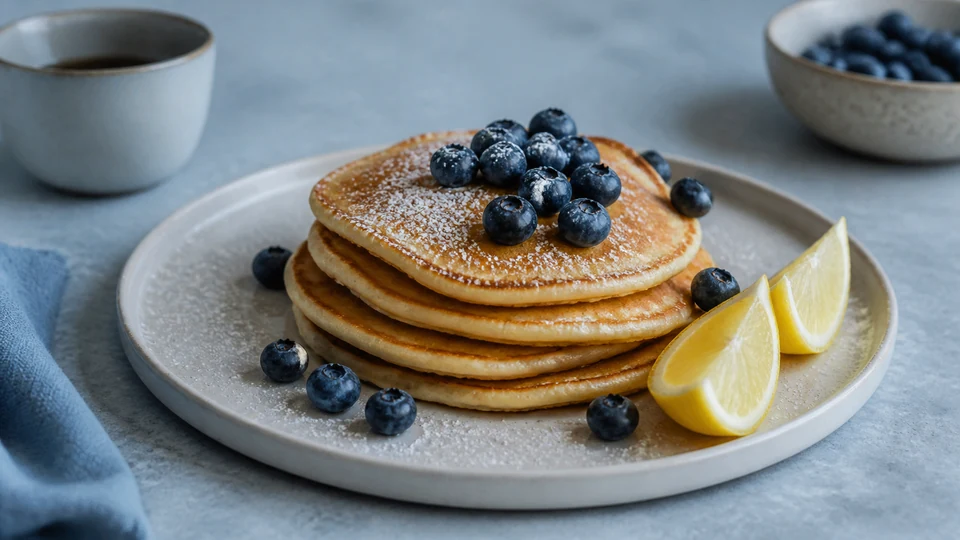
The Pancakes World guide begins this Bbc Good Food Vegan Pancakes discussion with a practical decision: For the thick, small Good Food vegan pancakes, use Anna Glover’s Easy vegan pancakes, not the separately published crêpe recipe. The complete metric formula and cooking sequence are below. It uses self-raising flour, additional baking powder and plant milk, with no egg replacer.
This is an attributed recipe with Pancake World’s planning notes; we have not independently cooked or tested it.
This page helps you make that one Good Food recipe and understand its practical limits. For thin pancakes or a banana batter, our BBC pancake source comparison explains the different choices. The wider healthy pancake guides cover dietary questions beyond this particular formula.
Anna Glover’s Easy vegan pancakes: the complete batch
Source checked on 28 August 2026. Quantities use the publisher’s metric version. Salt is included in its method, although absent from its ingredient list; the source specifies a pinch, not a measured weight.
Yield: 16 small pancakes; the publisher describes this as 4–6 servings.
Published timing: 5 minutes preparation and 30 minutes cooking. Pan capacity can extend the cooking session; use the planning notes below.
Equipment: scales, liquid measure, measuring spoons, bowl, balloon whisk, non-stick frying pan, turner and serving plate. An oven-safe holding tray is optional.
Ingredients
- 300 g self-raising flour
- 1 teaspoon baking powder
- 1 tablespoon sugar, any kind
- 1 tablespoon vanilla extract
- 400 ml plant-based milk, such as oat, almond or soya
- 1 tablespoon vegetable oil, for the pan
- 1 pinch salt, as specified in the source method
Optional toppings: banana, blueberries, maple syrup, vegan chocolate chips or plant-based yogurt.
Method
- Whisk together flour, baking powder, sugar, vanilla and salt. Incorporate the milk gradually to form a thick, smooth batter.
- Warm a little cooking oil in the non-stick pan over medium-low heat. Portion 2 tablespoons per pancake; cook two or three at a time.
- Allow 3–4 minutes for the first side. Turn when the edges have set and bubbles are forming. Cook the second side for 2–3 minutes, checking the centre is cooked.
- Continue with the remaining batter and oil. Serve with the chosen toppings. The source permits a low oven for holding earlier batches.
Ready to eat: golden surfaces and a cooked centre, not merely a browned underside. Editorial check: cut the first finished pancake; a wet, paste-like interior needs further cooking.
Buy the flour and milk the formula actually uses
Read the flour package before measuring. Self-raising flour already includes a raising system, and this recipe also calls for separate baking powder. Plain flour plus the listed teaspoon alone is not the published combination.
If only plain flour is available, use a complete formula written for it rather than guessing what the missing flour blend contained. Similarly, baking soda is not another name for baking powder. Keep the original package beside the bowl until the ingredients have been checked.
Use the metric quantities consistently. The publisher displays alternative unit systems, but an ounce figure or a remembered cup conversion is not a reason to combine two versions. A scale avoids the uncertainty of how tightly flour was packed into a cup.
Measure the liquid separately; do not substitute the gram weight of a different liquid by assumption. These are measuring controls, not claims that the recipe needs laboratory precision.
Plant drinks vary in sweetness, flavour and ingredients. Start with a drink you can identify again, and note its brand and whether it is sweetened. A vanilla drink together with the listed vanilla extract may create a stronger flavour than you wanted; that is a flavour decision to record for the next attempt, not evidence that the pancake structure has failed.
Shake or handle the drink according to its label before measuring it.
Vegan does not mean suitable for every allergy. The wheat flour is not gluten-free; almond or soya drinks introduce their own allergen considerations. Check the drink, flour, baking powder, toppings and shared utensils at the time of use.
FDA guidance explains ingredient allergen declarations and warns that precautionary cross-contact statements are voluntary in the United States. A missing “may contain” statement is not a guarantee. Neither the recipe title nor an organic label establishes a health benefit or a complete nutritional assessment.
Plan for the pan, not just the headline time
Set out plates and toppings before mixing. The useful question is how many separate pancakes fit with room to lift and turn them. Filling every visible gap can leave you unable to get the turner underneath a pancake without damaging its neighbour.
If you are unsure, cook one first, inspect it, and then decide whether the pan comfortably holds two or three. That diagnostic pancake adds a separate round; include it in your meal plan.
The arithmetic explains why a small pan may take longer than the recipe header suggests. Six rounds are needed for sixteen pancakes at a capacity of three; eight rounds are needed at a capacity of two. With the published side timings, those are approximately 30–42 or 40–56 minutes of cooking respectively, before transitions.
A first solo diagnostic followed by groups of three also needs six rounds overall, but a solo start followed by pairs needs nine. These are scheduling calculations, not tested completion times.
A second suitable pan may reduce waiting, but it also requires two heat settings and two sets of observations. Do not assume matching burner numbers mean matching pan temperatures. For a relaxed breakfast, serving in waves may be easier than managing both pans while assembling toppings.
Our vegan brunch spread planning helps place these pancakes alongside dishes that can be prepared earlier.
When assessing the first portion, record the pan area, amount of batter and reproducible burner setting. Notice its initial spread, the edge becoming strong enough to lift, and the centre after a short, consistent wait on the plate. Repeat those conditions for a useful comparison.
Look again at the batter before a late round: a mixture that now holds a mound instead of flowing from the spoon has changed while waiting. Do not attribute that difference automatically to the burner.
Holding also changes what reaches the table. Tight stacking traps steam between surfaces; a pancake judged straight from the pan may feel different after waiting beneath several others. King Arthur Baking recommends a rack when cooling pancakes for storage.
For immediate service, compare a briefly rested pancake with one from the held stack before deciding that your batter needs alteration. The source’s low-oven suggestion is a serving convenience, not permission for unlimited holding or a verified hot-holding temperature.
Scale the shopping list without enlarging the pancakes
For half the batch, halve every batter quantity, including the separate raising agent, sugar and vanilla. Half a tablespoon is 1½ teaspoons. Half the source’s pinch of salt cannot be made exact without inventing a weight, so use a smaller pinch.
Keep the individual portion size unchanged. This is arithmetic scaling of the published formula, not a separately tested recipe, and the final count still depends on how accurately you portion.
Doubling the mixture does not double the pan’s capacity. Before mixing a large bowl, count the rounds and decide whether two freshly mixed batches would fit your service better. Keep the pan oil as a light cooking film, replenishing from the measured allowance as needed; pouring all of it under the first round would not distribute it across the batch.
For a substantially smaller breakfast, the separate small-batch vegan pancake formula avoids complicated fractional measuring.
Read the first pancake before changing the bowl
| What you observe | Check first | A bounded next move |
|---|---|---|
| Dark underneath, wet inside | Portion depth and how fast the base colours | Reduce excessive heat for the next portion; allow the current pancake to finish cooking. Do not serve a raw centre. |
| Tears when lifted | Whether the edges have set and the turner supports the centre | Wait before another attempt; make space to turn the next pancake cleanly. |
| Late rounds spread differently | Batter waiting time, portion measurement and pan position | Keep the next portion comparable and record the change before adding anything. |
| Good fresh, damp after holding | Stack depth, plate time and trapped steam | Serve smaller waves or reduce the holding stack. |
Make one change that answers the strongest observation. For example: “same batter and pan setting, smaller portion, inspect the centre before the outside becomes too dark.” If you simultaneously add flour, lower the heat and reduce the portion, a better result will not reveal which change helped. Repeated unmeasured additions also make the remaining bowl a different formula.
A heavily altered batch should be described as your adaptation, not as a failed or successful test of Glover’s original.
If there is little lift throughout the batch, check the raising-agent identity and age before blaming the plant milk. Penn State Extension advises checking baking powder freshness and keeping dry measuring tools out of its container. For problems that persist with the unaltered formula, pancake troubleshooting provides a broader symptom guide.
Extra syrup can improve enjoyment, but it does not correct an uncooked middle or weak structure.
Change the topping first
Keeping fruit or chocolate outside the batter lets different diners choose flavours while you preserve a comparable base. Wet fruit mixed into the bowl changes the local cooking conditions around each piece; adding a topping after cooking avoids that extra variable. Read chocolate and yogurt labels for vegan suitability.
Choose a crêpe recipe for rolling
Caroline Hire’s separate Good Food Vegan crepes uses plain flour and an egg replacement, with a rest before cooking. It is a different preparation, not this batter diluted by eye. Choose it when a thin wrapper is the goal; keep its ingredients and method together.
Store cooked leftovers, not a vague promise of freshness
The retrieved Easy vegan pancakes recipe does not supply a storage duration. The following is general leftover guidance, not a Good Food testing claim: Illinois Extension advises refrigeration within two hours, use within three to four days and reheating leftovers to 165°F/74°C. FDA guidance shortens the unrefrigerated limit to one hour when temperatures exceed 90°F/32°C.
Use a refrigerator at 40°F/4°C or colder and shallow containers; do not leave a large stack on the counter until completely cold.
For freezing, cool in a single layer, then separate pancakes with parchment and label the package. Reheat only what you need, checking the middle rather than the topping. Keep yogurt and fruit separately under their own storage instructions.
No reheating or texture adjustment makes uncertain storage history acceptable.
Finally, egg-free batter still contains raw flour. FDA advises against tasting uncooked flour mixtures. Wash bowls and utensils before using them for finished pancakes, keep the raw-batter spoon out of the serving dish, and judge the cooked result only after the centre has set.
Sources and editorial references
- Anna Glover, Good Food, Easy vegan pancakes. Metric formula and method checked 28 August 2026. https://www.bbcgoodfood.com/recipes/easy-vegan-pancakes
- Caroline Hire, Good Food, Vegan crepes. Separate thin-pancake format. https://www.bbcgoodfood.com/recipes/vegan-pancakes
- King Arthur Baking, Best pancake tips. Handling and cooling advice. https://www.kingarthurbaking.com/blog/2021/10/26/best-pancake-tips
- Penn State Extension, Storing Staple Ingredients in the Kitchen. Baking powder storage and freshness. https://extension.psu.edu/storing-staple-ingredients-in-the-kitchen
- FDA, Food Allergies. Package declarations and voluntary precautionary statements. https://www.fda.gov/food/nutrition-food-labeling-and-critical-foods/food-allergies
- FDA, Handling Flour Safely. https://www.fda.gov/food/buy-store-serve-safe-food/handling-flour-safely-what-you-need-know
- FDA, Safe Food Handling. https://www.fda.gov/food/buy-store-serve-safe-food/safe-food-handling
- University of Illinois Extension, Leftovers. https://extension.illinois.edu/food-safety/leftovers
Source facts are attributed above. Scaling arithmetic, scheduling analysis and diagnostic suggestions are editorial guidance, not project test results.