Basic pancake batter mix
At Pancakes World, a basic pancake batter mix should be chosen by what it contains before water is added: a homemade dry blend, a packaged complete mix that needs only water, or a packaged mix that still requires egg, milk or oil. Keep dry mix airtight, cool and dry; measure by the exact recipe or label; combine wet and dry components only when the griddle is ready; and stir only to the formula’s stated endpoint. Do not taste raw batter, because flour and eggs can carry harmful germs. Cook a small first pancake to check heat and consistency, then make controlled adjustments only when the source instructions permit them.
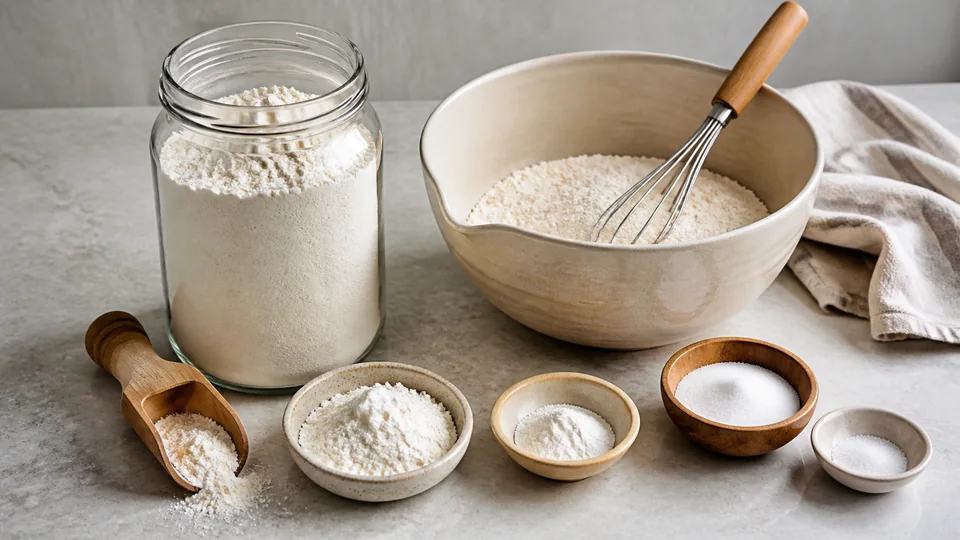
The phrase “pancake batter mix” is ambiguous. A dry pantry blend is not the same product as hydrated batter, and neither is the same as cooked pancakes. This guide explains how to compare, handle and troubleshoot those three states without publishing an untested Pancake World formula. Exact ingredient quantities, yield, storage period and cooking time must come from a complete source recipe or package. Explore the pancake science hub for related technique, or return to Pancake World for the broader collection.
| Guide sections |
|---|
| First, identify what you are buying or making |
| What belongs in a basic dry mix? |
| Compare packaged mixes correctly |
| Set up before hydrating |
For broader context, continue with Pancake Ingredients and Substitutions.
First, identify what you are buying or making
Homemade dry mix
This is a measured blend of shelf-stable dry ingredients prepared in advance. A formula may include flour, oats, dry milk, sugar, salt, spices and chemical leaveners. At cooking time, a defined portion is combined with specified wet ingredients.
Utah State University Extension publishes a cinnamon oatmeal pancake mix with complete dry quantities, hydration ingredients and a source-specific storage instruction: airtight, cool and dry for up to six months. That period belongs to its exact formula and handling. It is not permission to assign six months to every homemade blend.
Complete packaged mix
“Complete” commonly indicates that the consumer adds water, but the package instructions control. Some products may call for a different liquid or offer optional additions. Read the preparation panel rather than relying on the front label.
This format is useful when speed, portability or limited refrigeration matters. It is not automatically nutritionally identical to a product that requires egg and oil.
Packaged mix requiring additions
This product supplies the dry base but expects ingredients such as egg, milk or oil. The prepared pancake’s nutrition and allergen profile therefore differ from the dry-mix-only line unless the label supplies an “as prepared” column.
Count required ingredients before selecting the mix. A product is not convenient if the needed egg or milk is unavailable.
Freshly mixed batter
Once liquid enters, the blend becomes batter. Flour hydrates, leavening reactions may begin and perishable ingredients may be present. Pantry storage guidance for dry mix no longer applies.
Mix close to cooking unless a tested recipe explicitly provides refrigeration instructions. Do not keep a bowl of raw batter on the counter as though it were dry mix.
Cooked pancakes
Cooking creates a separate storage category. Illinois Extension’s banana-nut pancake recipe gives source-specific guidance for refrigerating or freezing its finished pancakes. That does not establish the life of every formula or topping, but it illustrates the safer make-ahead strategy: cook the pancakes, cool and store them according to a reliable source rather than saving raw batter by guesswork.
What belongs in a basic dry mix?
A useful mix contains ingredients with defined jobs. Exact ratios matter, so use a tested formula.
Flour or grain base
Flour provides most of the pancake’s structure. All-purpose, whole-wheat, oat and other flours absorb liquid and form structure differently. Replacing one cup for one cup without a tested conversion can alter thickness, spread and tenderness.
A formula that uses both oats and flours has been balanced for those grains. Do not remove oats and assume the same water amount remains correct.
Leavening
Baking powder, baking soda or a combination generates gas under the formula’s conditions. Baking soda needs an appropriate acid. The amount also affects flavor. More leavener does not guarantee a taller pancake and can create an unpleasant result.
Mix leavener evenly through the dry ingredients. If a stored mix is poorly blended, one scoop may contain more leavener and salt than another.
Salt
Salt influences flavor and can be present in self-rising flour, dry milk or packaged ingredients. Preserve the tested formula on the first batch. If comparing commercial mixes, check sodium on the same prepared basis.
Sugar
Sugar contributes sweetness and browning. A mix may contain none, a modest amount or a strongly sweetened base. Added toppings can change the final meal substantially, so compare the dry mix and your intended service together.
Dry milk or another dry component
Some add-water mixes use nonfat dry milk or other dry ingredients so only water is needed later. Milk ingredients introduce an allergen even when no fresh milk is added. Read the full ingredient statement.
Optional spices
Cinnamon and other ground spices can simplify later preparation. Keep the flavor restrained if the mix will serve multiple topping styles. A strongly spiced batch is less flexible.
Compare packaged mixes correctly
1. Read the preparation requirement
Place products in one of two practical groups: water-only or needs added ingredients. A water-only product may suit camping or a shared pantry. A mix requiring egg, milk or oil may suit a kitchen where those ingredients are routine.
2. Align serving sizes
The FDA says to begin with serving size and servings per container. The printed nutrition values generally refer to one labeled serving, which may be a measure of dry mix or a stated number of prepared pancakes.
Do not compare one label’s quarter-cup dry serving with another label’s prepared two-pancake serving without conversion. Use gram weight and preparation columns where available.
3. Include what you add
If the panel describes dry mix only, egg, milk, oil, butter and toppings are not necessarily included. Some labels show both dry and prepared columns. Compare the version you will actually make.
4. Examine the relevant fields
Added sugars, saturated fat, sodium and fiber can help distinguish products. The FDA advises comparing percent Daily Value only when serving sizes are aligned. The label is a decision tool, not a moral score and not individualized medical advice.
5. Review ingredients and allergens
Wheat, milk, egg, soy, peanuts, tree nuts and sesame may appear in a mix, an added ingredient or a topping. “Just add water” does not mean allergen-free. Check cross-contact statements when strict avoidance matters.
6. Check package condition and date
Do not buy torn, wet or contaminated packaging. Preserve the lot and date information in case of a recall. Follow the manufacturer’s storage direction after opening.
Set up before hydrating
Pancake batter is easier to control when the cooking station is ready.
- Read the entire recipe or package panel.
- Decide the batch size using the provided yield or scale table.
- Gather the correct measuring tools and bowl.
- Prepare the griddle or skillet according to the source.
- Set out a scoop or measuring cup for consistent portions.
- Arrange a clean plate or rack for cooked pancakes.
- Prepare toppings away from raw flour and egg splash.
- Wash hands and clear the work surface.
Illinois Extension’s 4-H curriculum follows this order for pancakes from a mix: read the package, select quantity, gather equipment, measure, mix according to directions, heat the cooking surface and make a small test pancake. The value is not a secret ratio; it is controlled sequence.
Mix without inventing a new formula
Measure dry mix consistently
Stored homemade mix can settle. Stir or redistribute it only as the source instructs, then use the specified measure or weight. Scooping from a compacted container can change the amount.
Measure wet ingredients separately
Crack eggs away from the dry storage container. Measure water, milk and oil rather than pouring by eye. Use the ingredient temperature the source expects.
Combine at the stated moment
Some recipes place wet ingredients in one bowl and dry ingredients in another before combining. Illinois Extension’s from-scratch pancake guidance supports that approach in its cited formulas and directs mixing only until combined or moistened.
Stop at the recipe’s endpoint
Pancake batter does not need to look polished. Continued stirring changes its structure. The exact acceptable lumpiness and thickness depend on the formula, so use its written cue.
Respect any rest instruction
Some batters cook immediately; others have a stated rest. A rest changes hydration and leavening time. Do not insert or delete it because another recipe uses one.
Use one test pancake intelligently
A small first pancake reveals cooking-surface heat, portion spread and whether the measured batter behaves as the source describes.
Check four things:
- Does it spread to the expected diameter?
- Do bubbles and edge changes appear as described?
- Does the underside brown before the center sets?
- Does the second side finish without scorching?
Illinois Extension’s package-mix lesson allows a limited test adjustment: a small amount of milk for batter that is too thick for the family’s preference, or more mix for batter that is too thin. Apply this only when compatible with the package instructions, and measure the change. Large additions alter yield and may unbalance leavening, salt and sugar.
If the test pancake burns outside while remaining raw inside, lower surface heat rather than thinning the entire batter immediately. If it spreads too far, confirm that the wet-to-dry ratio and measuring tools were correct before adding dry mix.
Cook another small test after any material adjustment.
Troubleshoot by evidence
Pancakes are thin and wide
Possible causes include excess liquid, too little mix, a measurement error or a formula designed for thin pancakes. Verify the label ratio. Do not add flour alone to a commercial mix unless instructed, because that changes leavener and seasoning proportion.
Batter is too thick to portion
Confirm that all required liquid was added and that the mix was not compacted in the measure. Check whether the formula expects a thick batter. Only then use a source-authorized measured adjustment.
Pancakes are tough or chewy
Overmixing is one documented cause in Illinois Extension’s cited pancake formula. Other variables include flour substitution, holding time and cooking. Next time, stop at the written mixing cue and change only one factor.
The first side burns
The cooking surface may be too hot, the sugar level may differ, or the pan may have hot spots. Reduce heat and allow the surface to stabilize. Do not assume every griddle’s dial is accurate.
Centers stay wet
The pancake may be too large or thick, the heat too high, or the flip too early. Use the source portion measure and cooking cues. Never taste raw center to diagnose it.
Pancakes do not rise
The mix may be old, poorly distributed, incorrectly measured or hydrated with the wrong ingredients. Leavener can lose effectiveness during storage, especially with moisture exposure. Replace suspect mix rather than doubling baking powder blindly.
Color varies across the batch
Pan temperature can rise over time; fat can pool; portion size can drift. Use the same scoop, adjust heat gradually and wipe or reapply cooking fat only as the source directs.
Dry-mix storage
Use an airtight container
Transfer homemade mix to a clean, dry, food-safe container with a tight lid. Label the formula name, mixing instructions, preparation date and use-by guidance from the source. Without hydration directions, a jar of white powder is not a usable convenience product.
Keep it cool and dry
Moisture can clump the mix and initiate deterioration. Heat and light can reduce quality, especially if the formula includes whole grains or fat-containing dry ingredients.
Do not merge old and new batches
Combining them hides age and can distribute a problem across the fresh mix. Finish or discard the old batch, clean and dry the container, then refill.
Treat storage times as formula-specific
USU’s cinnamon oatmeal formula says up to six months. A separate Extension pantry guide gives broader packaged-mix estimates. Ingredients, packaging and environment differ, so use the shortest applicable instruction and the manufacturer’s date for commercial products.
Watch for recalls
Flour and baking mixes have long pantry lives, so recalled packages can remain in a cupboard. Keep original identifying information or record brand, lot and date if transferring a commercial mix. Discard recalled product according to official guidance.
Wet batter is not pantry mix
Once water, milk or egg is added, dry-storage rules end. Refrigeration requirements depend on ingredients and the source recipe. More importantly, chemical leavening and flour hydration continue, so a batter that remains microbiologically controlled may still produce different pancakes later.
Use these boundaries:
- mix only the quantity you plan to cook;
- keep raw batter away from ready-to-eat foods;
- do not leave it at room temperature for extended service;
- refrigerate only when the exact recipe or package provides guidance;
- prefer storing cooked pancakes when a reliable source supports that method;
- discard batter if safe time or handling is uncertain.
Freezing raw batter is also formula-specific. Some ingredients separate or lose leavening performance. Use a recipe that explicitly tests the method rather than assuming a freezer solves both safety and quality.
Raw flour and egg safety
FDA explains that most flour is raw and may carry bacteria. Grinding and bleaching do not reliably make it ready to eat. CDC explicitly includes pancake batter among foods that should not be tasted raw.
Follow these controls:
- never taste raw mix after liquid is added;
- never let children play with flour or raw batter;
- follow the full cooking time and temperature directions;
- keep flour and eggs away from fruit, cooked pancakes and other ready-to-eat foods;
- wash hands after handling flour, eggs or batter;
- wash bowls, whisks, scoops, counters and handles with hot soapy water;
- clean spilled flour without spreading it across the kitchen;
- discard recalled flour or mix.
Do not attempt to heat-treat ordinary flour at home so the batter can be eaten raw. FDA and Extension sources warn that home treatment may not reliably eliminate hazards. Use a commercially produced ready-to-eat product only when its label explicitly says it is safe without cooking.
Scaling a mix safely and accurately
For a larger batch, scale the complete formula rather than only flour. Leavener, salt, sugar and dry milk must remain proportional.
Weigh ingredients when the source provides weights. If it uses cups and spoons, use the stated method consistently. Mix in a container large enough to distribute small ingredients throughout the flour.
Before storing a large homemade batch:
- prepare one normal source batch;
- confirm that the method works in your kitchen;
- scale every dry ingredient by the same factor;
- blend thoroughly without compressing;
- label hydration quantity per measured portion;
- record total batch and expected number of portions;
- keep a copy of the original source.
Do not scale a mix for an event before verifying griddle throughput. Batter production may be fast while cooking remains slow.
Variations without breaking the base
Apply flavor changes at the prepared-batter or serving stage only when a reliable formula permits them.
Spices
Cinnamon, nutmeg or cardamom can be distributed in dry mix, but a whole storage batch becomes committed to that flavor. Test a small hydrated portion first.
Fruit
Fresh, frozen, canned and dried fruit affect moisture differently. Use a source-specific amount and preparation. Adding a large amount of frozen berries to stored dry mix is not appropriate; add per batch.
Nuts and seeds
They change allergen status and can reduce storage stability depending on fat content. Keep them separate until cooking when flexibility and labeling matter.
Whole grains
Replacing flour with oats or whole-wheat flour changes absorption and texture. Use a formula designed for that blend, such as the cited USU oatmeal mix, rather than estimating.
Egg-free or dairy-free preparation
Select a formula developed for the needed replacement. Eggs can provide binding, moisture and structure; milk can affect liquid, protein and browning. One product’s substitution is not universal.
Frequently asked questions
Is pancake mix the same as pancake batter?
No. Mix is dry; batter has been hydrated and may contain eggs or dairy. Their storage, food-safety and quality behavior differ.
What is a complete pancake mix?
It generally needs only water, but always read the package. Products can use the term and preparation options differently.
Can I make homemade pancake mix without a recipe?
Use a tested formula. Flour, leavener, salt, sugar and dry milk must be balanced, and the hydration instructions are part of the mix.
How long does homemade dry mix last?
Use the period stated by the formula. USU’s cited cinnamon oatmeal mix specifies airtight, cool, dry storage for up to six months. Different ingredients or conditions change the answer.
Can pancake batter stay overnight in the refrigerator?
Only when the exact recipe or package says so. Safety and leavening performance both matter. Cooking the pancakes and storing the finished product may be a better documented option.
Can I taste batter to check sweetness?
No. FDA and CDC advise against tasting raw batter because flour and eggs can carry harmful germs.
Why is my batter lumpy?
Some lumpiness can be consistent with a just-combined formula. Follow the recipe cue rather than stirring until perfectly smooth, which can overwork the batter.
Should I add more water if batter looks thick?
Verify the original measurements and expected consistency first. If the package or source authorizes adjustment, add a measured small amount and cook another test pancake.
How do I compare nutrition labels on mixes?
Align serving sizes and compare the same state: dry or as prepared. Include required eggs, milk, oil and intended toppings when evaluating the finished meal.
Can I store commercial mix in a jar?
You can use a clean airtight food-safe container if the label permits, but retain brand, lot, date, allergen and preparation information for storage and recall checks.
Final mix checklist
- dry mix, wet batter and cooked pancakes clearly separated;
- complete versus add-ingredient package identified;
- tested formula or package directions retained;
- serving sizes aligned for product comparison;
- required wet ingredients included in the decision;
- dry container clean, airtight, labeled and cool;
- griddle ready before hydration;
- batter mixed only to the source cue;
- one test pancake used for controlled correction;
- raw batter never tasted;
- flour and eggs kept away from ready-to-eat foods;
- wet batter storage not inferred from dry mix;
- no Recipe schema or project test claim without evidence.
A basic pancake batter mix is genuinely convenient only when the instructions travel with it. Identify the product state, preserve the tested ratio, label the hydration step, prepare the cooking surface before mixing, and store dry mix separately from wet batter. Those controls matter more than finding a supposedly universal formula.
Explore related Pancakes World guidance on American Pancakes, American Breakfast: Pancakes, Diner Plates and Brunch, and Maple Syrup.
Sources and editorial references
- Utah State University Extension, “Create Family Meals Recipe Book,” Cinnamon Oatmeal Pancake Mix:
https://extension.usu.edu/fscreate/files/2023-26-staff/Create-Family-Meals-Recipe-Book-PR.pdf - University of Illinois Extension, “4-H Cooking 101,” Pancakes From a Mix:
https://extension.illinois.edu/sites/default/files/4hcooking101-pressquality-book.pdf - University of Illinois Extension, “Banana Nut Pancakes”:
https://extension.illinois.edu/food/recipes/banana-nut-pancakes-0 - University of Illinois Extension, “Recipe Rescue: Pancakes”:
https://extension.illinois.edu/blogs/live-well-eat-well/2014-07-17-recipe-rescue-pancakes - U.S. Food and Drug Administration, “Flour Is a Raw Food and Other Safety Facts”:
https://www.fda.gov/consumers/consumer-updates/flour-raw-food-and-other-safety-facts - Centers for Disease Control and Prevention, “Raw Flour and Dough”:
https://www.cdc.gov/food-safety/foods/no-raw-dough.html - U.S. Food and Drug Administration, “Serving Size on the Nutrition Facts Label”:
https://www.fda.gov/food/nutrition-facts-label/serving-size-nutrition-facts-label - U.S. Food and Drug Administration, “How to Understand and Use the Nutrition Facts Label”:
https://www.fda.gov/food/nutrition-facts-label/how-understand-and-use-nutrition-facts-label - Utah State University Extension, “Cupboard Storage”:
https://extension.usu.edu/utah/files/food-storage/Cupboard-Storage-KSU-Ext.pdf