Baked egg dish for brunch
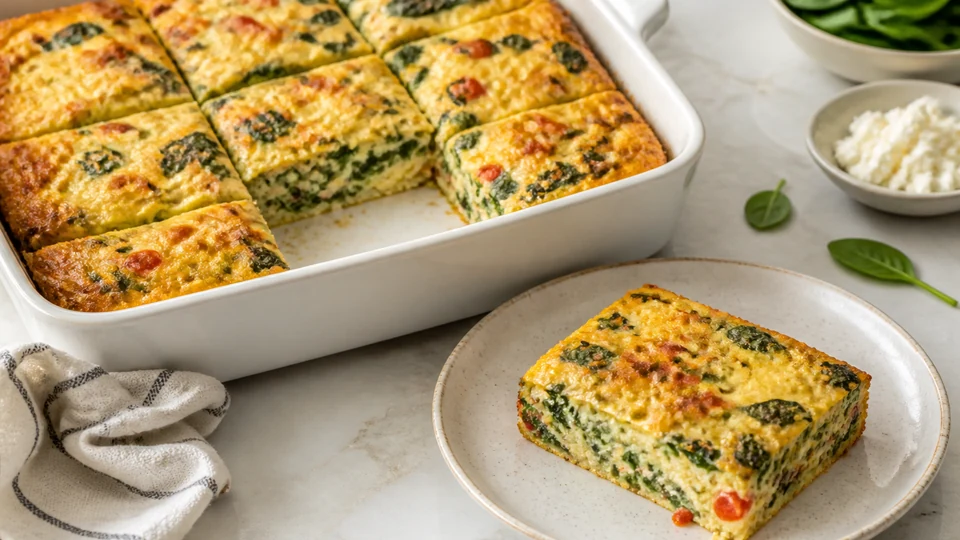
At Pancakes World, for a baked egg dish at brunch, choose the texture and service format first: sliceable casserole, spoonable strata, individual cups, or eggs nested in vegetables. Use a complete tested formula, reduce moisture in fillings, keep the stated pan size, and verify the centre rather than judging only browned edges. See the editorial platform for the wider editorial collection.
Use Pancake Science; Buttermilk pancakes without baking soda; Rice flour pancakes without baking powder; Pancake art batter to move from this exact question to the relevant hub and neighbouring Stage 012 guides without relying on a generic parent label.
| Guide sections |
|---|
| Direct answer and scope |
| Formats that fit the intent |
| Build a controlled workflow |
| Current-batch troubleshooting |
For broader context, continue with American Breakfast: Pancakes, Diner Plates and Brunch.
Direct answer and scope
Egg dishes are perishable and cannot be accepted by appearance alone. This guide does not invent a universal temperature, yield or holding time beyond the cited safety boundary. Start by naming the dish or technique, the guest and ingredient boundaries, the available equipment, and the point at which the result will be judged. That prevents an attractive idea list from becoming an unsupported recipe, nutrition promise, cultural generalisation, or project-test claim.
Formats that fit the intent
Vegetable frittata
Cook moisture-heavy vegetables before adding the egg mixture and preserve the formula's pan depth.
Bread-based strata
Use the specified bread, soaking schedule and filling amount so the centre can set.
Egg-and-potato casserole
Pre-cook potatoes as directed and distribute dense pieces evenly.
Individual egg cups
Use a tested small-format method because timing does not scale directly from a large dish.
Shakshuka-style baked eggs
Follow a complete sauce-and-egg method and avoid treating a loose yolk preference as a universal endpoint.
Eggs baked in vegetables
Stabilise the edible shell and prevent pooled liquid before filling.
Build a controlled workflow
- Select the serving texture and complete formula.
- Prepare and cool wet fillings as directed.
- Use the stated pan dimensions.
- Assemble without an open-ended room-temperature wait.
- Bake to the method and safety endpoint.
- Serve promptly or apply a defined holding and storage plan.
The sequence should leave one baseline that can be described in plain language. Note flow, spread, surface moisture, edge set, centre texture, holding condition, or service behaviour as relevant to the chosen format. Avoid adding invented times, yields or temperatures when the complete source does not establish them.
Current-batch troubleshooting
The centre stays loose
Verify pan depth, filling moisture and endpoint before increasing oven heat.
The edges turn rubbery
Review overbaking and uneven pan depth.
Water pools after slicing
Cook or drain vegetables more thoroughly in the next controlled batch.
Bread remains dry
Preserve the formula's soaking and distribution steps.
Portions collapse
Cool for the method's stated rest before cutting.
Prevent the same problem next time
- Measure pan depth as well as width.
- Pre-cook watery fillings.
- Use a centre check instead of surface colour alone.
- Plan service and refrigeration before baking.
Prevention is useful only when the record is specific enough to repeat. Keep product names and ingredient forms, label checks, pan or vessel size, portion method, sequence, and observable result together. A later batch can then change one plausible cause while preserving the rest.
Measure the chosen baking vessel at the base and note the filled depth, not only the advertised capacity. Two dishes with similar volume can expose the egg mixture differently and change edge-to-centre behaviour. Preserve the tested vessel dimensions before diagnosing a loose centre or dry perimeter as an ingredient problem.
Safety and evidence boundary
Do not taste raw flour batter or dough. Check current packaged-food labels for allergens and use separate tools where cross-contact matters. Egg dishes, meat components and leftovers need their own applicable temperature, cooling, refrigeration and reheating controls. The authoritative references below support those boundaries; they do not convert this article into medical advice, a tested formula, a guaranteed outcome, or a universal cultural definition.
Frequently asked questions
Can it be assembled overnight?
Only when the selected tested method explicitly supports that schedule and refrigeration.
How do I know the centre is done?
Use the formula's cue plus the applicable food-safety endpoint.
Can any vegetable be added?
No. Water content and pre-cooking needs vary.
Can a large casserole become egg cups?
Not by simple division; use a method designed for the smaller format.
Explore related Pancakes World guidance on American Pancakes, Maple Syrup, and Maple Syrup Pancakes.
Sources and editorial references
- U.S. Food and Drug Administration — Food Allergies —
https://www.fda.gov/food/nutrition-food-labeling-and-critical-foods/food-allergies - FoodSafety.gov — Safe Minimum Internal Temperatures —
https://www.foodsafety.gov/food-safety-charts/safe-minimum-internal-temperatures - USDA FSIS — Leftovers and Food Safety —
https://www.fsis.usda.gov/food-safety/safe-food-handling-and-preparation/food-safety-basics/leftovers-and-food-safety - U.S. Food and Drug Administration — Handling Flour Safely —
https://www.fda.gov/food/buy-store-serve-safe-food/handling-flour-safely-what-you-need-know