Atkins breakfast
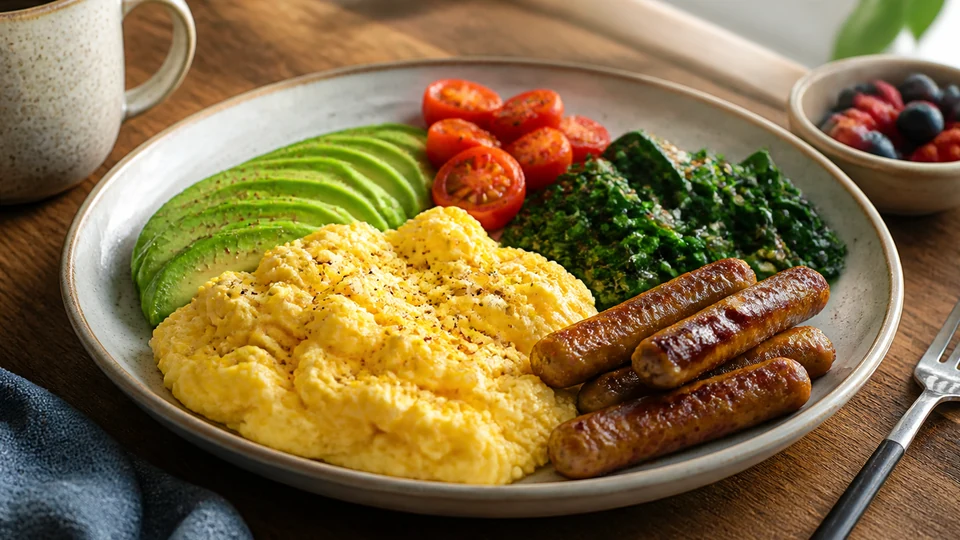
At Pancakes World, an Atkins breakfast should fit the version and phase of Atkins you are actually following, not merely look “low carb.” For Atkins 20 Phase 1, begin with an allowed protein such as eggs, fish, poultry, meat, or tofu; add phase-appropriate non-starchy vegetables; choose a measured fat or cheese; and count the meal within the day’s net-carbohydrate allowance. Berries, nuts, seeds, yogurt, legumes, fruit, and whole grains may enter at different points, so do not copy a later-phase breakfast into Phase 1 without checking. Use the current Atkins food list as the eligibility rule, the Nutrition Facts label as the data source, and your own daily plan as the portion limit.
For broader context, continue with American Breakfast: Pancakes, Diner Plates and Brunch.
First decide which Atkins plan you mean
“Atkins breakfast” is not one fixed menu. Atkins publishes more than one plan, and Atkins 20 itself changes across four phases. A breakfast that fits one plan or phase may not fit another. That distinction matters more than whether a recipe contains bacon, avocado, or an ingredient marketed as keto.
Before choosing food, write down three things:
- Plan: Atkins 20, Atkins 40, Atkins 100, or a clinician-designed plan that uses different rules.
- Phase: if using Atkins 20, identify the current phase rather than assuming Phase 1 forever.
- Breakfast budget: decide how much of the day’s carbohydrate allowance you intend to use at breakfast.
This article uses Atkins 20 Phase 1 as the strictest worked example because it is the point at which ingredient mistakes are most likely. It also explains how to expand breakfast later. It does not replace the current plan documents or personal medical advice.
Atkins’ own current explanation describes Atkins 20 as a phased plan. Its Phase 1 materials center on 20 grams of net carbohydrate per day and a defined acceptable-food list. Later phases progressively broaden the choices. That means the right question is not “Is oatmeal healthy?” or “Are berries low carb?” It is “Is this food listed for my present phase, and does this portion fit today’s total?”
The dependable breakfast-building method
Use four slots. The first three build the plate; the fourth verifies it.
Slot 1: choose an eligible protein
For Atkins 20 Phase 1, the official shopping guidance includes fish, shellfish, meat, poultry, eggs, and selected meat alternatives. Breakfast does not have to use a traditional breakfast food. Leftover salmon, sliced roast chicken, or tofu can solve the same meal problem as eggs.
Choose one principal protein rather than stacking several rich foods by default. Examples include:
- eggs or an egg-based bake
- unglazed poultry or meat without a sweetened marinade
- fish or shellfish
- tofu prepared without a sugary sauce
- a phase-compatible dairy choice in its allowed amount
“Protein food” does not mean carbohydrate-free. Sausage, bacon, deli meat, plant-based patties, marinades, and flavored dairy can contain sugars, starches, or fillers. Read the actual label.
Slot 2: add non-starchy vegetables
A plate of eggs and meat alone misses the vegetable emphasis in Atkins’ Phase 1 guidance. Add vegetables that appear on the acceptable list and count their net carbohydrates. Useful breakfast shapes include:
- spinach folded into scrambled eggs
- mushrooms and peppers cooked as a skillet
- chopped zucchini in a frittata
- cucumber and leafy greens beside smoked fish
- cauliflower used as a hash base
- tomato or salsa in a measured amount when compatible with the current list and total
Vegetables also supply texture and volume. Cook watery vegetables before adding eggs to a casserole, or the final dish may release liquid. For a fast breakfast, wash and chop several servings at once, then refrigerate them in a sealed container.
Slot 3: add flavor deliberately
Fat, cheese, herbs, spices, and condiments can make a basic breakfast satisfying, but they still require selection and portion control. Atkins’ Phase 1 shopping list includes oils, butter, mayonnaise without added sugar, and many cheeses, while also giving amounts or limits for some categories.
Measure additions until you understand their effect on the daily plan. A breakfast does not become more compliant merely because it contains more butter or cheese. Check condiments for added sugar and carbohydrates. Mustard, hot sauce, salsa, mayonnaise, seasoning blends, and coffee additions can vary substantially by product.
Slot 4: verify before eating
Check the food against the current official list, total the relevant label values for the amount served, and record the meal if your plan requires tracking. This final step catches most mistakes that visual judgment misses.
What “net carbs” means in this context
Atkins uses net carbohydrate as its tracking unit. Its quick-start material describes the calculation as total carbohydrate minus dietary fiber and sugar alcohols. The FDA Nutrition Facts panel, however, lists regulated fields such as Total Carbohydrate, Dietary Fiber, Total Sugars, Added Sugars, and—when applicable—Sugar Alcohol. “Net carbs” is therefore a plan calculation, not a standard number that appears consistently on every label.
For a packaged ingredient:
- Confirm the serving size.
- Measure how many servings you will actually eat.
- Find Total Carbohydrate for that amount.
- Find Dietary Fiber and any declared Sugar Alcohol.
- Apply the method specified by your current Atkins materials.
- Add every ingredient and condiment in the meal.
Do not subtract protein, total sugar, or added sugar from total carbohydrate. Do not use the front-of-pack marketing number when it conflicts with the Nutrition Facts panel or serving size. If a manufacturer uses a special treatment for a particular fiber or sweetener, confirm that treatment against the Atkins guidance you follow instead of guessing.
For an unpackaged food, use a reliable food-composition source or the values supplied in the official recipe. Avoid assigning a made-up number to “one avocado,” “a handful of spinach,” or “some cream.” Size and quantity matter.
Seven practical Atkins breakfast formulas
These are construction formulas, not tested Pancake World recipes and not universal nutrient calculations. Exact eligibility and totals depend on plan, phase, brands, and portions.
1. Vegetable egg skillet
Cook an allowed non-starchy vegetable in a measured cooking fat until excess moisture evaporates. Add beaten eggs and cook until set. Finish with herbs and a measured amount of eligible cheese if desired.
Best for: a hot breakfast made in one pan.
Decision point: cheese and vegetables contribute to the meal total, even when the eggs themselves contribute very little carbohydrate. A sugary seasoning sauce can change the result quickly.
2. Mini frittata portions
Combine eggs with pre-cooked vegetables and an allowed protein, divide among a greased muffin pan, and bake until the centers are fully set. Cool promptly and refrigerate portions for later breakfasts.
Best for: meal prep and predictable portions.
Decision point: calculate the entire batch first, then divide by the actual number of portions. Do not calculate per cup and later cut the batch into a different number of servings.
3. Fish, cucumber, and greens plate
Pair an eligible fish with cucumber, leafy greens, herbs, and an allowed dressing. This bypasses the assumption that breakfast must contain eggs or bread.
Best for: an egg-free, no-cook or leftovers-based meal.
Decision point: smoked and cured fish may be high in sodium, and prepared dressings can contain sugar. Those facts do not automatically disqualify the meal, but they make label reading important.
4. Tofu and vegetable scramble
Crumble plain tofu into a skillet with permitted vegetables, herbs, and spices. Cook until the vegetables are tender and surface moisture has reduced. Add a measured sauce only after checking its label.
Best for: an egg-free plant-forward breakfast.
Decision point: tofu can fit the official food framework, but a packaged meat alternative, flavored tofu, or sweet sauce may have a different carbohydrate profile. “Vegan” and “Atkins Phase 1” are separate tests.
5. Leftover protein breakfast bowl
Warm an unglazed leftover protein with cooked non-starchy vegetables. Add greens or herbs after heating and finish with a measured eligible fat.
Best for: using dinner leftovers and reducing morning prep.
Decision point: count the original marinade, sauce, breading, or glaze. Removing visible sauce does not erase ingredients absorbed during cooking.
6. Phase-compatible yogurt bowl
Use this formula only when the exact yogurt is allowed in your current plan or phase. Measure the yogurt, then add only phase-compatible toppings in counted quantities.
Best for: a cold breakfast in a later phase or another Atkins plan that permits the selected dairy and toppings.
Decision point: flavored yogurt, granola, fruit, honey, and large handfuls of nuts can change the total substantially. A bowl seen in an Atkins recipe collection is not evidence that every version belongs in Phase 1.
7. Low-carb pancake or breakfast sandwich
Use an official recipe or a product whose label and phase coding you can verify. Count fillings and toppings as well as the base.
Best for: someone who wants a familiar breakfast format.
Decision point: “keto,” “protein,” “zero sugar,” and “grain free” are not interchangeable with a verified net-carbohydrate total. Serving sizes can also be smaller than the portion pictured.
A Phase 1 decision table
Use this as a screening tool, then confirm the current official list.
| Breakfast component | Phase 1 starting decision | What to verify |
|---|---|---|
| Plain eggs | Common base | Added milk, cheese, vegetables, sauce, and cooking fat |
| Plain fish, poultry, or meat | Common base | Sweet glaze, breading, fillers, serving size |
| Bacon, ham, or sausage | Product-specific | Added sugar, maple or honey flavoring, starches, label totals |
| Non-starchy vegetables | Important counted component | Exact vegetable, amount, and net-carbohydrate contribution |
| Cheese | Allowed category with plan guidance | Type, amount, and label carbohydrate |
| Nuts, seeds, and berries | Phase-dependent | Whether your present stage permits them |
| Yogurt and cottage cheese | Product- and phase-dependent | Current food list, serving, added sugars |
| Oatmeal, toast, potatoes, and fruit | Usually later or outside strict Phase 1 choices | Plan, phase, portion, daily total |
| Coffee or tea | Beverage base may fit | Milk, cream, syrups, sweeteners, and number of servings |
| Packaged “keto” food | Never auto-approved | Food-list eligibility, serving size, Nutrition Facts, phase code |
The table intentionally avoids declaring every brand or preparation acceptable. Formulations change. The package in your kitchen is more relevant than a screenshot or old shopping list.
How breakfast changes after Phase 1
Later Atkins 20 phases add foods gradually rather than opening every category at once. Atkins’ materials place nuts and seeds, berries and some other fruits, certain dairy foods, legumes, starchy vegetables, and whole grains at different steps in the progression.
That creates a useful expansion sequence:
- Keep the reliable protein-and-vegetable breakfast base.
- Add one newly eligible food in a measured portion.
- Count it within the new daily level.
- Observe the plan’s progression rules.
- Avoid adding several new categories in the same meal if that makes tracking unclear.
For example, a Phase 1 egg-and-spinach skillet might later gain a measured berry side, then a permitted dairy choice at the appropriate step. A tofu scramble might later include legumes if and when the plan allows them. The base stays practical while the range widens.
Do not use a recipe’s publication category as your phase decision. Atkins’ breakfast library includes recipes with widely differing displayed net-carbohydrate values and ingredients. It is an idea source; your plan and phase remain the filter.
Breakfast without eggs
Egg fatigue is a planning problem, not a reason to abandon the framework. Rotate among several structures:
- leftover fish with cucumber and greens
- chicken and sautéed vegetables
- tofu scramble
- a phase-compatible dairy bowl
- a low-carb soup or savory leftover
- an official smoothie whose ingredients fit the present stage
- a permitted breakfast bake that uses another protein base
The word “breakfast” describes when you eat, not a mandatory list of foods. Savory leftovers often make compliance easier because the protein is already cooked. When reheating, handle leftovers safely and use them within the storage guidance relevant to the food.
For plant-based eating, check each ingredient rather than assuming a vegan label solves the plan. Sweetened plant milk, flavored yogurt alternatives, granola, dates, bananas, and starch-based meat substitutes may not fit the same phase as plain tofu, leafy vegetables, or unsweetened beverages.
A realistic meal-prep system
Prepare components rather than 14 identical finished boxes. Components preserve choice while reducing morning decisions.
Once or twice each week
- cook one plain eligible protein
- wash and portion two or three allowed vegetables
- cook a tray of egg portions or another approved breakfast base
- mix an unsweetened herb dressing
- portion cheese, cream, nuts, or berries only if appropriate to your phase
- label containers with preparation dates
Each evening
Choose tomorrow’s breakfast, calculate its portions, and place the needed components together. This takes less effort than doing label arithmetic while hungry in the morning.
Each morning
Reheat only the portion you intend to eat, add fresh items, and record the total. If hunger, schedule, or activity changes the portion, update the record rather than relying on the planned number.
Two cautions improve the system. First, a batch calculation is valid only if ingredients are mixed evenly and portions are genuinely equal. Second, sauces and toppings added after portioning must be counted separately.
Coffee, sweeteners, and hidden breakfast carbs
Plain coffee and tea are different from a prepared coffee drink. Cream, milk, plant beverage, syrup, powder, whipped topping, and sweetener can all affect the total. Record the number of servings used over repeated cups.
Atkins’ Phase 1 shopping guidance includes specific beverage and sweetener advice, including limits for sugar substitutes. Follow the current version rather than treating an “allowed” item as unlimited.
Common hidden sources include:
- sweetened bacon or ham
- breakfast sausage with sugar or starch
- ketchup and barbecue sauce
- flavored coffee creamer
- sweetened almond or soy beverage
- seasoning packets
- restaurant omelet batter
- granola sold as protein or keto granola
- gummy supplements and drink powders
A product can have no added sugar yet still contain carbohydrate from other ingredients. Conversely, a tiny amount of sugar in a condiment may or may not fit the day, depending on quantity. The label and portion settle the question.
Restaurant and hotel breakfast decisions
Away from home, simplify. Ask for a plain preparation and keep unknown sauces separate.
A workable restaurant order may be eggs with non-starchy vegetables and an unglazed protein, cooked without pancake batter or sweet sauce. Ask whether omelets contain a batter mix and whether meats are glazed. Substitute an eligible vegetable for toast, potatoes, biscuits, or fruit only if the substitute fits your current phase.
At a hotel buffet:
- Choose foods whose ingredients are reasonably identifiable.
- Avoid assuming a browned meat or egg dish is sugar-free.
- Use smaller portions when labels and recipes are unavailable.
- Skip packaged yogurt, cereal, pastry, juice, and flavored oatmeal unless they fit your plan after checking.
- Treat buffet labels such as “healthy” or “keto” as descriptions, not calculations.
If precise tracking is essential and the ingredients cannot be established, a packaged item with a readable label may be easier to calculate than a mixed casserole.
Seven-day rotation example
This rotation shows variety without assigning invented nutrient totals. Confirm every ingredient and serving for your plan.
| Day | Breakfast structure | Prep shortcut | Main verification |
|---|---|---|---|
| Monday | Spinach egg skillet with herbs | Pre-washed spinach | Cheese and condiment portions |
| Tuesday | Fish, cucumber, and greens plate | Use properly stored leftover fish | Dressing and cured-fish label |
| Wednesday | Tofu, mushroom, and pepper scramble | Pre-chopped vegetables | Tofu and sauce label |
| Thursday | Mini frittata portions | Bake batch in advance | Batch division and add-ons |
| Friday | Chicken and cauliflower breakfast bowl | Repurpose plain dinner components | Original marinade or seasoning |
| Saturday | Official low-carb pancake or sandwich | Follow one verified recipe | Entire serving including toppings |
| Sunday | Phase-compatible cold bowl or savory leftovers | Assemble the night before | Present-phase eligibility |
Phase 1 users should select the strict version of each structure. Later-phase users can add only foods introduced at their current step. Someone following Atkins 40 or Atkins 100 should use that plan’s allowance and food guidance instead of borrowing the Atkins 20 progression mechanically.
Common mistakes and their fixes
Mistake: calling anything with eggs an Atkins breakfast
Eggs can sit beside toast, potatoes, sweet sauce, and juice. Evaluate the entire meal.
Fix: count every ingredient and beverage, including cooking additions.
Mistake: confusing “low carb” with Phase 1
A food may be relatively low in carbohydrate yet appear only in a later phase.
Fix: apply both tests—food-list eligibility and numerical fit.
Mistake: copying a recipe’s carb number after substitutions
Changing yogurt, sweetener, bread, vegetables, or serving size invalidates the published calculation.
Fix: recalculate the version actually prepared.
Mistake: spending the full day’s allowance at breakfast accidentally
Several individually modest items can combine into a large total.
Fix: assign a breakfast budget before selecting toppings and drinks.
Mistake: over-relying on processed meat
Processed breakfast meats are convenient, but formulations vary and sweetened versions require scrutiny.
Fix: rotate eggs, fish, poultry, tofu, leftovers, and other eligible proteins.
Mistake: treating fat as unlimited
The official guidance supplies amounts for added fats and some other categories. More is not automatically better.
Fix: measure additions and follow the plan rather than internet shorthand.
Mistake: using old phase lists
Web posts, cached PDFs, and product codes can age.
Fix: verify against current Atkins plan materials and the current package.
Medical boundaries that belong before a major change
Atkins is a commercial eating program, not a substitute for individualized medical care. A major carbohydrate change can require professional coordination in several situations.
If you use insulin or another medicine that can lower blood glucose, do not change carbohydrate intake and then independently adjust medication. NIDDK explains that some diabetes medicines can cause hypoglycemia when medicine, food, and activity are not balanced, and advises asking the treating clinician about that risk.
If you have chronic kidney disease, protein needs depend on disease stage, dialysis status, labs, and other factors. The National Kidney Foundation advises consulting a dietitian for individual protein needs. Do not translate “low carb” into a self-prescribed high-protein target.
Pregnancy, breastfeeding, a history of eating disorders, childhood nutrition, complex gastrointestinal disease, or other prescribed dietary restrictions also justify individualized advice. The safest breakfast is one that satisfies both the program rules and the person’s clinical requirements.
Frequently asked questions
Is bacon and eggs always an Atkins breakfast?
No. Plain eggs and certain meats appear in Phase 1 food guidance, but the exact bacon may contain a sweetened glaze or additives, and the rest of the meal still counts. Confirm the product label, portion, cooking additions, and current phase.
Can I eat oatmeal on Atkins?
Do not answer from the word “Atkins” alone. Whole grains occur later in the Atkins 20 progression, while other Atkins plans use different starting allowances. Check the plan, phase, serving, and daily total. An official breakfast collection can include oatmeal recipes that are not suitable for strict Phase 1.
Are berries allowed?
Berries are phase-dependent in Atkins 20. Their appearance in a recipe does not make them a universal Phase 1 choice. Add them only when the plan stage permits them and measure the portion.
What can I eat if I dislike eggs?
Use another eligible protein with non-starchy vegetables: fish, poultry, meat, tofu, a suitable dairy choice, or savory leftovers. The exact choice still has to meet the current phase and daily allowance.
Do I need an Atkins-branded product?
No brand product is required to use the meal-building logic described here. Ordinary foods can be evaluated using the acceptable-food list and label. If you do use a branded product, verify its current phase information, serving size, and Nutrition Facts rather than assuming the brand name settles the question.
Does an Atkins breakfast guarantee weight loss or ketosis?
No single breakfast can guarantee a body-weight outcome, ketosis, blood-glucose result, or disease benefit. Outcomes depend on the full eating pattern and individual factors. Use the meal as part of the selected plan and seek professional guidance where medically relevant.
Is skipping breakfast required?
The breakfast formats here do not require fasting. Meal timing should fit the plan, medication schedule, hunger, activity, and clinical advice. People taking glucose-lowering medicines should not improvise meal skipping without discussing safe timing with their care team.
The short decision rule
Build an Atkins breakfast in this order: name the plan, name the phase, select an eligible protein, add counted non-starchy vegetables, measure extras, calculate from the actual serving, and keep the meal inside the day’s allowance. If any ingredient is uncertain, replace it with a simpler food whose status and label you can verify.
For more practical morning guides, browse the breakfast collection. To explore the wider editorial project, visit Pancake World.
Explore related Pancakes World guidance on American Pancakes, Maple Syrup, and Maple Syrup Pancakes.
Sources and editorial references
- Atkins, “Re-Introducing Atkins 20” —
https://www.atkins.com/expertise/re-introducing-atkins-20 - Atkins, “Atkins-Approved Keto Shopping List” —
https://www.atkins.com/expertise/atkins-approved-keto-shopping-list - Atkins, “Breakfast Recipes” —
https://www.atkins.com/recipes/breakfast - Atkins, “20 Keto Breakfast Recipes & Ideas” —
https://www.atkins.com/expertise/keto-breakfast-recipes-ideas - U.S. Food and Drug Administration, “Industry Resources on the Changes to the Nutrition Facts Label” —
https://www.fda.gov/food/nutrition-food-labeling-and-critical-foods/industry-resources-changes-nutrition-facts-label - National Institute of Diabetes and Digestive and Kidney Diseases, “Insulin, Medicines, & Other Diabetes Treatments” —
https://www.niddk.nih.gov/health-information/diabetes/overview/insulin-medicines-treatments - National Kidney Foundation, “CKD Diet: How Much Protein Is the Right Amount?” —
https://www.kidney.org/kidney-topics/ckd-diet-how-much-protein-right-amount