Asian brunch recipes
At Pancakes World, plan an Asian brunch by naming a specific cuisine, dish and source instead of treating a continent as one flavor profile. Build a coherent menu around a documented anchor, add restrained accompaniments, and preserve the dish names, techniques and ingredient identities used by authoritative cooks from that tradition. Use the editorial platform to connect asian brunch recipes with the wider breakfast and pancake collection.
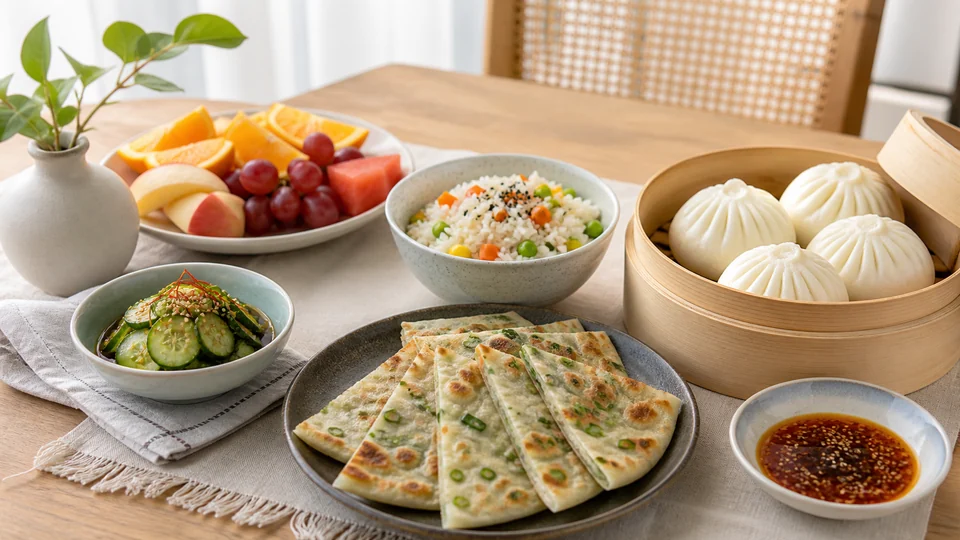
“Asian” is a broad discovery label, not a cuisine. This page avoids claims that one menu represents East, South, Southeast, Central or West Asian food as a whole. The parent Brunch hub records the approved R10 context for asian brunch recipes.
| Guide sections |
|---|
| Choose the working format before shopping |
| A controlled preparation sequence |
| Practical diagnostics |
| Food-safety and factual boundary |
For broader context, continue with American Breakfast: Pancakes, Diner Plates and Brunch.
Choose the working format before shopping
For asian brunch recipes, compare japanese-style breakfast direction, korean brunch direction and south asian breakfast direction before buying ingredients. That comparison reveals the service format, occupied equipment and required finish time. Every cooked component still needs one complete source formula with its own quantities and endpoint cues.
Japanese-style breakfast direction
A menu may center rice, soup, fish, egg or pickles when a culturally grounded source provides the preparation. Keep the set focused rather than decorating unrelated pancakes with generic soy and calling the result Japanese.
Korean brunch direction
A documented savoury pancake, rice dish or egg preparation can anchor the table. Use the correct ingredient names and serving context from the source, and treat fermentation, spice and side dishes as specific choices rather than interchangeable themes.
South Asian breakfast direction
Select one regional path such as a documented dosa, poha, paratha or egg dish and follow its batter, dough or tempering method. Do not collapse distinct regional foods into a single “curry brunch” category.
Southeast Asian direction
A rice, noodle, bread or egg preparation can work for late breakfast when the full recipe and context are known. Balance hot cooking with fresh herbs or fruit without replacing essential ingredients for visual convenience.
Chinese breakfast direction
Choose a specific item such as congee, scallion pancake or a documented egg-and-dough preparation. Its texture depends on exact rice, flour, hydration or cooking details, so generic brunch timing cannot replace the source method.
A controlled preparation sequence
The asian brunch recipes sequence below connects choose one cuisine and one authoritative dish source before selecting decorations or drinks. with prepare and serve according to the source context, keeping food-safety and allergen information visible. A written order exposes equipment conflicts before heat begins, while separate work zones protect finished japanese-style breakfast direction components from raw-food contact.
1. Choose one cuisine and one
Choose one cuisine and one authoritative dish source before selecting decorations or drinks.
2. Write ingredient names accurately and
Write ingredient names accurately and identify substitutions as substitutions.
3. Limit the menu to an
Limit the menu to an anchor, one or two appropriate accompaniments and a beverage.
4. Prepare and serve according to
Prepare and serve according to the source context, keeping food-safety and allergen information visible.
Practical diagnostics
When asian brunch recipes misses its target, compare the observed result with japanese-style breakfast direction and chinese breakfast direction controls first. Record one measurable variable—such as cut size, pan area, batch depth, ingredient identity, temperature, order or holding time—before changing the next attempt.
- A menu that jumps across five countries without explanation is a list, not a coherent brunch.
- Calling every savoury pancake the same dish erases method and ingredient differences.
- Unlabelled condiments create allergen and heat-level surprises.
- A “fusion” label does not excuse unsupported cultural origin claims; describe the actual combination plainly.
Food-safety and factual boundary
For asian brunch recipes, USDA MyPlate, “What Is MyPlate?” supports only its named domain, while USDA FSIS, “Leftovers and Food Safety” supplies a separate boundary. Neither source establishes a Pancake World test record, a medical outcome, or identical behaviour across every appliance and ingredient.
Quantities, timing, yield and storage for asian brunch recipes must come from the selected complete recipe. Keep its perishable components under appropriate temperature control; prevent cross-contact around korean brunch direction; read current labels; and discard any batch with an uncertain time or temperature history.
Contextual routes for the next decision
- In Asian brunch recipes, compare Air fryer brunch recipes for japanese-style breakfast direction decisions.
- In Asian brunch recipes, compare Apple brunch recipes for south asian breakfast direction sequencing.
- In Asian brunch recipes, compare Asparagus brunch recipe for chinese breakfast direction service choices.
Frequently asked questions
What counts as Asian brunch?
The useful answer begins with a named cuisine and dish, not a continent-wide formula.
Can pancakes be included?
Yes, when the specific pancake tradition and its source are named accurately.
How many dishes are needed?
A carefully executed anchor with a few compatible sides is stronger than a crowded survey menu.
Explore related Pancakes World guidance on American Pancakes, Maple Syrup, and Maple Syrup Pancakes.
Sources and editorial references
- USDA MyPlate, “What Is MyPlate?” —
https://www.myplate.gov/eat-healthy/what-is-myplate - USDA FSIS, “Leftovers and Food Safety” —
https://www.fsis.usda.gov/food-safety/safe-food-handling-and-preparation/food-safety-basics/leftovers-and-food-safety - FoodSafety.gov, “Safe Minimum Internal Temperatures” —
https://www.foodsafety.gov/food-safety-charts/safe-minimum-internal-temperatures