Apple brunch recipes
At Pancakes World, build an apple brunch around one cooked apple dish, one fresh or chilled component and a savoury counterpoint. Match apple variety and cut to the method, keep raw fruit handling separate from cooked food, and add crisp toppings only at service. Use the editorial platform to connect apple brunch recipes with the wider breakfast and pancake collection.
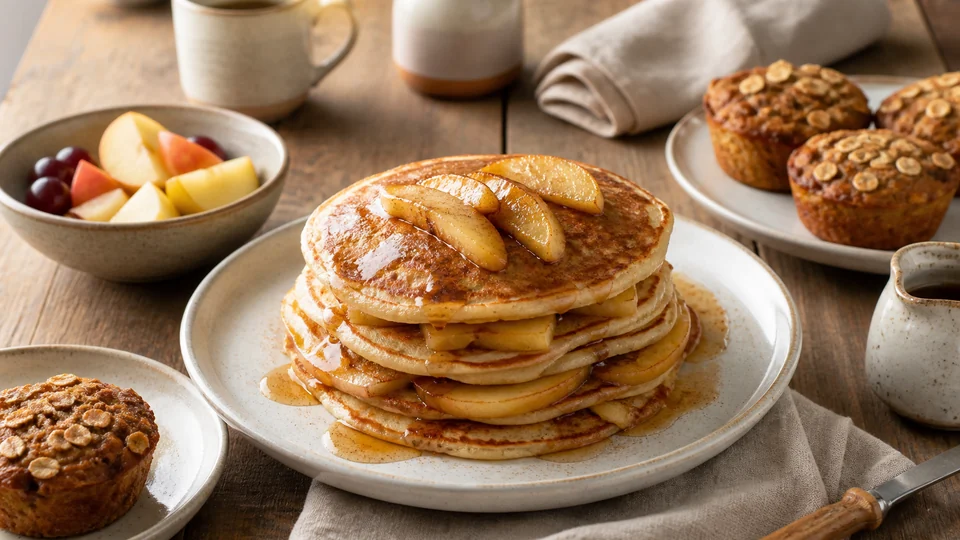
Apple varieties differ in sweetness, acidity and how they soften. A recipe that names a variety or texture target should be followed rather than replaced with a universal “best apple” claim. The parent Brunch hub records the approved R10 context for apple brunch recipes.
| Guide sections |
|---|
| Choose the working format before shopping |
| A controlled preparation sequence |
| Practical diagnostics |
| Food-safety and factual boundary |
For broader context, continue with American Breakfast: Pancakes, Diner Plates and Brunch.
Choose the working format before shopping
For apple brunch recipes, compare pancakes with cooked apple topping, baked apple oatmeal and apple-yogurt cups before buying ingredients. That comparison reveals the service format, occupied equipment and required finish time. Every cooked component still needs one complete source formula with its own quantities and endpoint cues.
Pancakes with cooked apple topping
Cook a measured topping from a complete formula and hold it separately from the pancakes. Spoon it on at the table so steam and syrup do not soften the whole stack before diners arrive.
Baked apple oatmeal
Choose a recipe with pan dimensions, liquid ratio and a set-center cue. Cut apples evenly and distribute them through the grain mixture instead of leaving a wet fruit layer that changes the center.
Apple-yogurt cups
Layer chilled yogurt and prepared apple with oats or nuts kept separate until service. Label allergen-sensitive toppings and return perishable cups to refrigeration rather than leaving a full tray on the buffet.
Apple and savoury toast
Thin fresh slices can work with a savoury spread or cheese when the combination fits the guest list. Prepare toast near service and manage browning fruit with the recipe’s specified acid treatment, not an unmeasured splash.
Warm apple compote as a shared component
One documented compote can support pancakes, oats or toast, reducing duplicated cooking. Its sugar, spice, yield and storage belong to the source recipe; do not present an improvised pan of fruit as tested.
A controlled preparation sequence
The apple brunch recipes sequence below connects choose the apple method first: fresh, sautéed, baked or simmered. with assemble plates at service, preserving contrast between warm fruit, crisp elements and chilled sides. A written order exposes equipment conflicts before heat begins, while separate work zones protect finished pancakes with cooked apple topping components from raw-food contact.
1. Choose the apple method first:
Choose the apple method first: fresh, sautéed, baked or simmered.
2. Match the variety and cut
Match the variety and cut size to the complete recipe and prepare toppings in separate containers.
3. Schedule the hot apple component
Schedule the hot apple component before delicate pancakes or toast but hold it only as the source allows.
4. Assemble plates at service, preserving
Assemble plates at service, preserving contrast between warm fruit, crisp elements and chilled sides.
Practical diagnostics
When apple brunch recipes misses its target, compare the observed result with pancakes with cooked apple topping and warm apple compote as a shared component controls first. Record one measurable variable—such as cut size, pan area, batch depth, ingredient identity, temperature, order or holding time—before changing the next attempt.
- Apples that collapse too early may be cut too small or belong to a different cooking profile.
- Dry baked grain can result from a changed fruit amount or pan size, not simply insufficient time.
- Grey fresh slices show that preparation and service were separated too far.
- Soggy toast and pancakes usually received the apple topping before the table was ready.
Food-safety and factual boundary
For apple brunch recipes, USDA MyPlate, “What Is MyPlate?” supports only its named domain, while USDA FSIS, “Leftovers and Food Safety” supplies a separate boundary. Neither source establishes a Pancake World test record, a medical outcome, or identical behaviour across every appliance and ingredient.
Quantities, timing, yield and storage for apple brunch recipes must come from the selected complete recipe. Keep its perishable components under appropriate temperature control; prevent cross-contact around baked apple oatmeal; read current labels; and discard any batch with an uncertain time or temperature history.
Contextual routes for the next decision
- In Apple brunch recipes, compare Air fryer brunch recipes for pancakes with cooked apple topping decisions.
- In Apple brunch recipes, compare Asparagus brunch recipe for apple-yogurt cups sequencing.
- In Apple brunch recipes, compare Brunch buffet recipes for warm apple compote as a shared component service choices.
Frequently asked questions
Which apple is best?
Use the variety or texture category specified by the complete recipe.
Can the apple topping be made ahead?
Yes only when the source provides cooling, storage and reheating directions.
How can sweetness be controlled?
Choose a formula with measured sweetener and taste the cooked fruit component before adding optional table toppings.
Explore related Pancakes World guidance on American Pancakes, Maple Syrup, and Maple Syrup Pancakes.
Sources and editorial references
- USDA MyPlate, “What Is MyPlate?” —
https://www.myplate.gov/eat-healthy/what-is-myplate - USDA FSIS, “Leftovers and Food Safety” —
https://www.fsis.usda.gov/food-safety/safe-food-handling-and-preparation/food-safety-basics/leftovers-and-food-safety - FoodSafety.gov, “Safe Minimum Internal Temperatures” —
https://www.foodsafety.gov/food-safety-charts/safe-minimum-internal-temperatures