Almond flour banana pancakes, vegan and egg-free
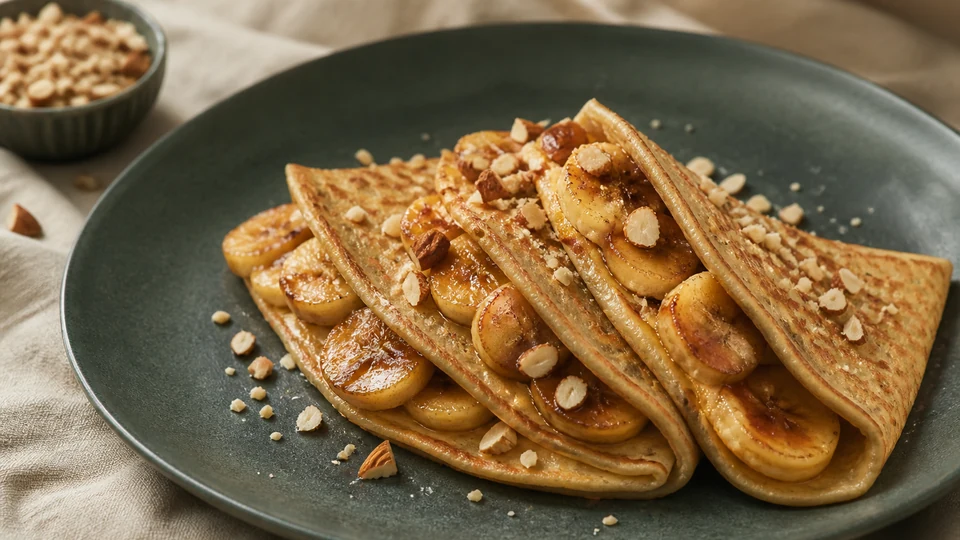
At Pancakes World, for vegan almond-flour banana pancakes, use one developed formula rather than replacing the eggs in an ordinary almond-flour recipe. A published starting formula combines 1 cup almond flour, 1/2 cup gluten-free baking blend or all-purpose flour, 1 overripe mashed banana, 1 tablespoon ground flaxseed hydrated with 3 tablespoons warm water, 1 teaspoon baking powder, 1/4 teaspoon salt, 1 teaspoon vanilla and 1/2 to 3/4 cup almond milk. Cook 1/4-cup portions over low heat for about 2 to 3 minutes per side. These quantities and timings are paraphrased from Plant Prosperous; the editorial platform has verified the source and safety boundaries but has not cooked the recipe.
For broader context, continue with Healthy Pancake Guides.
Direct answer
That last sentence defines the scope. This is a source-led practical guide, not an original tested recipe, so it carries Article status only. It does not claim a Pancake World yield, texture, nutrition result or guaranteed substitution. The useful promise is narrower: a complete published formula, a careful method, observable doneness cues and a way to diagnose the next pancake without inventing kitchen results.
Explore related Pancakes World guidance on American Pancakes, American Breakfast: Pancakes, Diner Plates and Brunch, and Maple Syrup.
Sources and editorial references
Plant Prosperous publishes the following formula with a stated yield of six pancakes. Actual yield at home will depend on the meaning of a 1/4-cup portion, batter retained in the bowl and how much the cook spreads each round. Treat six as the source's yield, not as a guarantee from this article.
Ingredients
- 1 cup almond flour
- 1/2 cup gluten-free baking flour blend, or all-purpose plain flour when gluten-free status is not required
- 1 teaspoon baking powder
- 1/4 teaspoon salt
- 1 overripe banana, mashed
- 1 tablespoon ground flaxseed
- 3 tablespoons warm water for hydrating the flax
- 1 teaspoon vanilla extract
- 1/2 to 3/4 cup almond milk
- optional 1/2 teaspoon ground cinnamon
- a light film of oil for the skillet
- fruit, maple syrup or chopped nuts only as optional serving additions
This is not an almond-flour-only pancake. The second flour is part of the published structure, and the flax and banana share the egg-free binding work. The milk range is also intentional: it allows the cook to begin with less liquid and judge the batter before adding more.
Equipment
- medium mixing bowl
- small bowl or cup for the flax mixture
- fork or whisk
- dry and liquid measures
- flexible spatula for scraping the bowl
- nonstick skillet or griddle
- thin, wide turner
- 1/4-cup measure
A wide turner matters because the pancake is tender before its first side is fully set. The tool should support most of the round instead of lifting one edge and asking the still-soft center to hold its own weight.
Step-by-step method
- Make the flax mixture. Combine 1 tablespoon ground flaxseed with 3 tablespoons warm water. Stir and let it stand while the other ingredients are measured. The source mixes flax, water, almond milk and vanilla together; a brief separate hydration pause makes the changing thickness easier to observe without claiming a new required time.
- Mash the banana. Use an overripe banana and mash until no large firm pieces remain. A few small soft lumps are acceptable, but large chunks can create wet pockets and make portions inconsistent.
- Combine wet ingredients. Stir the mashed banana, hydrated flax, vanilla and the lower end of the milk range together. Hold back the remaining milk until the dry ingredients show how much is needed.
- Combine dry ingredients. In the medium bowl, distribute the almond flour, second flour, baking powder and salt evenly. Add cinnamon here if using it.
- Form the batter. Add the wet mixture to the dry mixture and stir until no dry pockets remain. Do not continue beating simply to make the batter glossy. The published description calls for a thick batter.
- Judge before correcting. The batter should be portionable and should spread into a small round with gentle help. If it is too stiff to leave the measure, add the reserved milk a tablespoon at a time, never exceeding the published 3/4-cup ceiling for this baseline.
- Preheat gently. Warm a nonstick skillet and apply a thin layer of oil. The source specifies low heat. Start there rather than using high heat to hurry the first side.
- Cook one test pancake. Measure 1/4 cup batter and spread it into a modest round. Do not fill the entire pan with the first batch.
- Watch the edge and underside. Cook for roughly 2 to 3 minutes. Time is a checking window, not proof of doneness. The edge should look set, the top should lose some wet shine and the underside should release as one piece.
- Turn with full support. Slide the wide turner beneath most of the pancake and turn once. If the center folds around the tool, the first side was not ready or the round was too large.
- Finish the second side. Cook for about 2 to 3 minutes more, adjusting downward if the surface darkens faster than the center cooks. Check the center of the test pancake before repeating the batch.
- Repeat consistently. Keep the portion size, heat and pan-fat film stable. Changing all three after every pancake makes the result impossible to diagnose.
The method is deliberately conservative. It follows the source quantities while adding only observable decision points. It does not invent an internal temperature for pancakes, promise a particular shade of brown or claim that every pan reaches the same heat at the same dial setting.
What the reader needs to know
Banana is part of the structure, not just a flavor
The source uses an overripe banana alongside hydrated flax. Banana brings water, soluble solids, sweetness and mashed fruit pulp. In this formula it cannot be treated like a handful of optional chocolate chips. Leaving it out changes both the liquid balance and the egg-free structure.
Food Network Kitchen's separate vegan banana pancake recipe also uses one very ripe banana, but it pairs that fruit with all-purpose flour, almond milk and vegan butter rather than almond flour and flax. Its method supports the general practice of mashing ripe banana and reducing the heat if the pancakes brown too quickly. It does not validate a swap between the two ingredient systems.
The safest practical approach is therefore to keep each published formula intact. Do not take the flour ratio from one recipe, the banana amount from another and the milk amount from a third, then describe the combination as source-backed.
Almond flour needs supporting structure here
Almond flour is ground almond, not wheat flour with a different flavor. The primary formula deliberately combines 1 cup almond flour with 1/2 cup of another flour. It also includes flax and baking powder. Removing the supporting flour to make the headline sound simpler creates a different, unverified batter.
This distinction keeps this route separate from a general almond-flour pancake. Here, banana is central and the published formula uses a mixed-flour architecture. Readers who want an egg-free almond-flour method without banana should use a recipe developed for that constraint rather than subtracting the fruit from this one.
The second flour decides whether the batch can be called gluten-free
The source permits either a gluten-free baking blend or ordinary all-purpose flour. Those options are not interchangeable for labeling or dietary suitability. All-purpose wheat flour means the batch is not gluten-free. A gluten-free blend must itself meet the eater's requirements, and every remaining packaged ingredient and preparation surface still needs review.
The U.S. Food and Drug Administration defines a voluntary gluten-free claim around a limit of less than 20 parts per million gluten. That regulation concerns the finished food claim, not merely the absence of wheat in the recipe title. Use a labeled blend, check the baking powder, flax, vanilla, milk and toppings, and protect the bowl, scoop and griddle from wheat cross-contact when medically required.
The planned vegan gluten-free pancake guide addresses the broader multi-flour question. This page stays with banana-and-almond intent and does not declare the formula safe for every person with celiac disease.
Vegan and allergen-safe are different decisions
Almonds are among the tree nuts the FDA treats as a major allergen, and U.S. packaged-food labels must identify the specific nut type. Almond flour makes this recipe unsuitable for anyone who must avoid almond. Using oat milk instead of almond milk does not remove the almond flour already in the batter.
The second flour, plant milk, flax, baking powder, oil and toppings may introduce other allergens or cross-contact statements. Read the complete label each time, even for a product used before. For a serious allergy, follow the person's medical plan and kitchen controls; a vegan label is not medical clearance.
Raw batter is still raw food
The absence of egg does not make uncooked pancake batter ready to taste. FDA consumer guidance says flour is a raw food and advises against eating raw dough or batter. This formula always contains a flour phase, whether the second flour is wheat-based or a gluten-free blend.
Use the cooked test pancake to assess seasoning and texture. Wash hands, tools and surfaces after handling dry flour, and keep flour dust away from ready-to-eat toppings.
Article-only status prevents a misleading recipe claim
The approved content brief allows Recipe schema only when a genuine Pancake World test supports the complete ingredient list, instructions, yield and timings. Reading a published recipe carefully is editorial verification, not a kitchen trial. This page therefore uses Article-only status and publishes no project-owned nutrition panel.
A later test would need to record the exact flour and plant-milk products, peeled banana weight, flax type, liquid actually used, pan material, surface setting, portion mass, actual yield, turn cues and center result across more than one controlled batch. Until that exists, the correct wording is “published source formula,” not “our foolproof recipe.”
Practical options and examples
Option 1: gluten-free blend at the lower milk amount
Use the source quantities with 1/2 cup labeled gluten-free baking blend and begin with 1/2 cup almond milk. This is the most cautious baseline when the aim is a thick batter. Add more milk only after all dry ingredients are hydrated and only within the published range.
Because gluten-free blends differ, the label and ingredient list matter. A blend containing gums or starches can absorb differently from another blend. Record the product rather than assuming every “one-to-one” blend behaves identically in an almond-rich pancake.
Option 2: all-purpose flour when gluten is acceptable
The source explicitly permits plain all-purpose flour as the second flour. That can be used when gluten avoidance is not part of the reader's need. It changes the dietary status but does not change the requirement to cook the batter fully and avoid raw tasting.
Food Network Kitchen advises spooning flour into a dry measure and leveling it rather than scooping directly from the bag, which can compact flour. Apply consistent measuring technique to the 1/2-cup portion so a dry result is not caused by a packed measure.
Option 3: a different plant milk
The primary recipe text says another nondairy milk may be used, although almond milk reinforces the almond flavor. If choosing oat, soy, coconut or another plant drink, verify vegan status, allergens and added sweetness. Begin at the lower volume because beverage solids and thickness vary.
This is a source-authorized category substitution, not proof that every brand is identical. Record the product and actual volume used. If the change works, the note can be repeated; if it fails, the baseline remains identifiable.
Option 4: a conventional vegan banana pancake without almond flour
Food Network Kitchen publishes a coherent vegan banana formula based on 1 1/2 cups all-purpose flour, a large very ripe banana, almond milk, vegan butter, sugar and baking powder. That is useful when banana flavor and conventional flour structure matter more than almond flour.
Do not merge it with this formula. Its 1 1/4 cups milk, tablespoon of baking powder and medium-heat timing belong to a different flour system. Choosing between complete recipes is safer than performing an undocumented hybrid substitution.
Option 5: choose a different breakfast format
If the real goal is to use chia rather than flax, the chia seed breakfast recipes route provides a broader decision space, while chia breakfast ideas keeps the intent from being forced into a fragile pancake. Ingredient ownership should follow the user's actual goal rather than the nearest available batter.
Choosing the right approach
| Reader priority | Best starting point | Boundary to preserve |
|---|---|---|
| Banana-forward vegan almond pancake | Primary mixed-flour source formula | Article-only; not project-tested |
| Gluten-free preparation | Labeled gluten-free blend plus cross-contact control | Almond allergen remains |
| Wheat flour is acceptable | Source-permitted all-purpose option | Do not call it gluten-free |
| Almond-free vegan banana pancake | A complete conventional-flour vegan recipe | Changing only the milk is insufficient |
| No banana | A separately developed egg-free almond formula | Do not simply omit the fruit |
| Flax-free | A recipe developed with another binder | Banana alone is not proven here |
Common mistakes
Calling the recipe almond-flour-only
The published formula contains 1/2 cup of a second flour. Hiding that ingredient misstates the recipe and can cause a failed attempt when a reader uses 100 percent almond flour.
Adding the full milk range immediately
The source gives 1/2 to 3/4 cup, not a command to pour 3/4 cup into every batch. Start low, combine thoroughly and increase in small steps only when the batter is too stiff to portion.
Using a firm banana
The source specifies overripe fruit. A firm banana is harder to mash, less integrated and materially different in moisture and sweetness. Use the stated ripeness for the baseline.
Leaving large banana pieces
Large pieces create uneven moisture pockets. Mash before mixing so each measured pancake receives a more comparable share of fruit.
Forgetting the baking powder
Baking powder appears in the source ingredient card even though the short narrative method emphasizes the flours, cinnamon and salt. Include the listed teaspoon with the dry ingredients. Do not infer that it is optional.
Treating flax as a dry garnish
The formula pairs one tablespoon flaxseed with three tablespoons warm water. Distribute the hydrated mixture through the wet phase instead of sprinkling dry seed into the finished batter.
Using almond meal without checking texture
Coarse meal may not absorb or cohere like finely ground flour. Use a product labeled almond flour for the source baseline and record the brand if consistency matters.
Making a wide first pancake
A large round has a softer center and is harder to support. Use the published 1/4-cup measure and keep the test pancake modest in diameter.
Turning because the timer rang
Two to three minutes is a source range, not an automatic flip signal. Look for a set edge, less-wet top and an underside that releases cleanly.
Raising the heat to force browning
Banana and almond solids can color while the center is still wet. Keep the source's low heat and extend the set time rather than using a dark exterior as proof of doneness.
Pressing after the turn
Pressing can compress the tender center and does not prove it is cooked. Leave the second side in contact with the pan and check the test pancake after removal.
Changing multiple variables after one pancake
If the test tears, do not simultaneously add flour, reduce milk, increase oil and raise heat. Change the most observable process variable first, such as portion size or first-side time.
Publishing a nutrition claim from a generic estimate
The source displays estimated nutrition, but this article does not repeat it. Flour blend, milk, oil absorption, toppings and actual yield can all change the per-pancake result. A reliable calculation needs exact products, weights and consumed portion.
Step-by-step checklist
Before mixing
- Confirm almond flour rather than coarse almond meal.
- Select either gluten-free blend or all-purpose flour and label the batch honestly.
- Check the baking powder date and measure 1 teaspoon.
- Use one overripe banana.
- Verify ground flaxseed and warm water amounts.
- Read every packaged ingredient for vegan status and allergens.
- Prepare a clean nonstick surface and a wide turner.
- Keep ready-to-eat toppings away from flour dust.
While mixing
- Hydrate and disperse the flax.
- Mash the banana before combining.
- Start with 1/2 cup milk.
- Mix baking powder and salt through the dry ingredients.
- Stop stirring when dry pockets disappear.
- Add extra milk only by measured tablespoon.
- Do not taste raw batter.
While cooking
- Start on low heat.
- Use a light, even oil film.
- Cook a single 1/4-cup test pancake.
- Watch the edge and underside, not only the clock.
- Support the whole round during the turn.
- Check the center of the test before filling the pan.
- Keep later portions consistent.
- Lower the heat if color outruns setting.
After cooking
- Record the flour blend, milk brand and actual liquid volume.
- Record portion size and actual yield.
- Note first-side and second-side ranges from the batch.
- Cool leftovers promptly rather than sealing a steaming stack.
- Refrigerate in a covered container under safe conditions.
- Reheat leftovers thoroughly.
USDA Food Safety and Inspection Service guidance says perishable leftovers should be refrigerated within two hours, divided into shallow containers for rapid cooling and reheated to 165°F. It gives a general refrigerator window of three to four days. Those safety limits replace the primary recipe page's unsupported suggestion of up to a week; they do not guarantee texture for this particular pancake.
Troubleshooting by observable symptom
Batter will not leave the measure
Confirm that the milk started at only 1/2 cup and that no flour was packed above the rim. Stir once to incorporate any dry pocket. Then add milk one tablespoon at a time, stopping when the batter can be spread into a small round. Keep the total within 3/4 cup for the source baseline.
Batter runs across the pan
Check whether 3/4 cup milk was added automatically, whether the banana was unusually large or whether a dry ingredient was omitted. Do not pour more almond flour blindly. Cook a smaller test and compare the measured formula before making one recorded correction.
Pancake tears during the turn
The immediate possibilities are an early turn, a large diameter, incomplete support or a wet center. Give the next 1/4-cup portion more first-side time at low heat and slide the turner fully underneath. If the edge remains liquid, it is not ready.
Underside is dark while the top stays wet
The pan is transferring heat faster than the center can set. Reduce the heat, keep the portion small and allow more time. Do not shorten cooking merely because the surface already looks brown.
Pancake is pale and sticks
Check preheating, the pan's condition and the oil film. A damaged surface or cold pan can resist release. Wait for structural setting before moving the next round.
Center is gummy
A gummy center can coincide with an oversized portion, excessive liquid, a short first side or heat that is too high for the thickness. The article cannot assign one universal cause because no project test exists. Change one observable variable and record it.
Result is dry
Review whether the second flour was scooped and compacted, whether the lower milk amount was never adjusted, and whether the pancake stayed on the pan after its center set. Add liquid only within the source range before inventing a new flour ratio.
Banana pieces remain wet
Mash more thoroughly for the next batch and distribute the fruit through the wet phase. Do not interpret a wet banana pocket as proof that the entire formula needs more flour.
Pancakes differ across the same batch
Almond-rich batter can settle and thicken while it waits. Stir gently between rounds, use the same measure and keep the heat stable. Record if the final portions behave differently rather than silently adding milk halfway through.
Variations and substitutions
Cinnamon
The source permits 1/2 teaspoon ground cinnamon. Add it to the dry ingredients so it disperses evenly. It changes flavor, not the core structure.
Fruit additions
Fresh berries can be served on top without changing the batter. If adding berries to the pan, place a few on each poured portion rather than folding a large wet volume into the bowl. That is an untested variation, so keep the first batch plain.
Different sweeteners
The primary formula relies on overripe banana and does not require added batter sugar. Maple syrup is presented as a topping. Pouring syrup into the batter adds liquid and should not be described as a neutral substitution.
Chia instead of flax
The cited formula uses flax. Chia forms a different gel and may change visible texture. Choose a developed chia-binder recipe rather than assuming a one-for-one result from this page.
Coconut flour
Coconut flour is not a direct replacement for either flour in this formula. Its use would require a recipe written around its absorption. Do not apply a cup-for-cup swap.
Oat flour
Oat flour changes the mixed-flour structure and requires separate gluten-free sourcing when needed. It may be sensible in a developed formula, but it is not the source baseline.
Nut-free version
There is no nut-free variation of an almond-flour pancake. Replacing almond milk while retaining almond flour does not meet the goal. Choose a complete oat-, wheat- or buckwheat-based vegan recipe that was developed without nuts.
Flax-forward banana pancakes
Readers whose primary intent is banana plus flax rather than almond flour should use vegan banana flaxseed pancakes. Keeping that route distinct prevents a binder variation from overtaking the almond-flour question here.
Whole-wheat banana pancakes
For a wheat-based, higher-whole-grain intent, follow vegan whole-wheat banana pancakes instead of replacing the supporting 1/2 cup in this recipe and hoping the almond ratio remains balanced.
Frequently asked questions
Can banana replace the flax mixture?
Not on the evidence used here. The complete source formula includes both overripe banana and flax with warm water. Removing flax creates an unverified recipe even though banana can contribute binding in other formulas.
Can I use only almond flour?
Not while claiming to follow this source. Its 1/2 cup supporting flour is explicit. Select an almond-only formula developed with its own binder and liquid ratios.
Is the recipe automatically gluten-free?
No. It is gluten-free only when the second flour and every other ingredient meet the required standard and cross-contact is controlled. The all-purpose option contains wheat.
Is it keto or low-carbohydrate?
This article makes no such claim. Banana, flour blend, milk and toppings all contribute carbohydrate. A diet label requires the exact recipe, products, yield and relevant professional context.
Why use low heat?
Low heat is the primary source instruction. Practically, it gives the center more time to set before the banana-and-almond surface becomes too dark. Pan behavior still varies, so use visible cues.
How many pancakes will it make?
Plant Prosperous states six. Because Pancake World has not tested the batch, this page attributes that yield and asks the reader to record the actual count rather than turning it into a guarantee.
Can I freeze them?
Cooked pancakes can be frozen as leftovers, but follow authoritative cooling, wrapping and thawing guidance. Freeze promptly in a suitable container and reheat safely. This page does not promise a particular post-freezer texture.
Why is there no Recipe schema?
The formula is complete but source-led. No controlled Pancake World kitchen test supports a project-owned yield, timing or result, so Article-only status is the truthful choice.
First-batch log and next-batch prevention
A useful batch record is short enough to complete while the skillet cools. Write down the almond-flour product, supporting flour or blend, banana peeled weight if available, milk product, starting milk volume, additional tablespoons, pan material, heat setting, portion volume, actual yield and approximate times for the first and second sides.
For the test pancake, separate three observations: when the edge looked set, when the underside released and when the center was no longer wet after turning. If the underside darkened before the edge set, lower heat for the next portion. If the edge set but the pancake tore, support a smaller round or wait longer. If it held together but the center was gummy, review liquid measurement and thickness before adding flour.
Do not convert a successful private batch into a public universal claim. Ingredient brands, banana size and cookware matter. The log helps the same cook repeat or improve a result; it does not establish a tested editorial recipe.
For the next batch, change one factor only. Examples include using one fewer tablespoon milk, making a smaller round, extending the first side or using the same formula with the other source-permitted supporting flour. Date the note and keep the unchanged variables visible. That discipline prevents accidental hybrids and makes a failed change reversible.
Practical verdict
The clearest starting point for vegan almond-flour banana pancakes is the complete mixed-flour source formula: 1 cup almond flour, 1/2 cup supporting flour, one overripe banana, hydrated flax, baking powder, salt, vanilla and 1/2 to 3/4 cup almond milk. Begin with less milk, cook one 1/4-cup test pancake over low heat and turn only when its edge and underside are set.
Preserve the route's unique intent. This is not an almond-only pancake, a nut-free recipe, a nutrition plan or a claim of independent testing. When the goal changes, choose a complete formula designed for the new constraint rather than removing structural ingredients one by one.
For more egg-free formats, continue with the vegan pancake hub.
These recipe, labeling and food-safety references were checked on August 16, 2026. Their URLs are deliberately presented as plain, non-clickable text.
- Plant Prosperous, “Vegan Almond Flour Banana Pancakes”:
https://plantprosperous.com/almond-flour-banana-pancakes/ - Food Network Kitchen, “Vegan Banana Pancakes”:
https://www.foodnetwork.com/recipes/food-network-kitchen/vegan-banana-pancakes-11603394 - U.S. Food and Drug Administration, “Food Allergies”:
https://www.fda.gov/food/nutrition-food-labeling-and-critical-foods/food-allergies - U.S. Food and Drug Administration, “Gluten and Food Labeling”:
https://www.fda.gov/food/nutrition-education-resources-materials/gluten-and-food-labeling - U.S. Food and Drug Administration, “Handling Flour Safely: What You Need to Know”:
https://www.fda.gov/food/buy-store-serve-safe-food/handling-flour-safely-what-you-need-know - USDA Food Safety and Inspection Service, “Leftovers and Food Safety”:
https://www.fsis.usda.gov/food-safety/safe-food-handling-and-preparation/food-safety-basics/leftovers-and-food-safety