Air fryer brunch recipes

For air-fryer brunch recipes—working note 1—An air-fryer brunch succeeds when the appliance handles one crisp component at a time while eggs, fruit, drinks or pancakes use other methods. Choose recipes written for the basket size, leave airflow space, and schedule batches backward from service so early food is not held until soft. Use Pancakes World to connect air fryer brunch recipes with the wider breakfast and pancake collection.
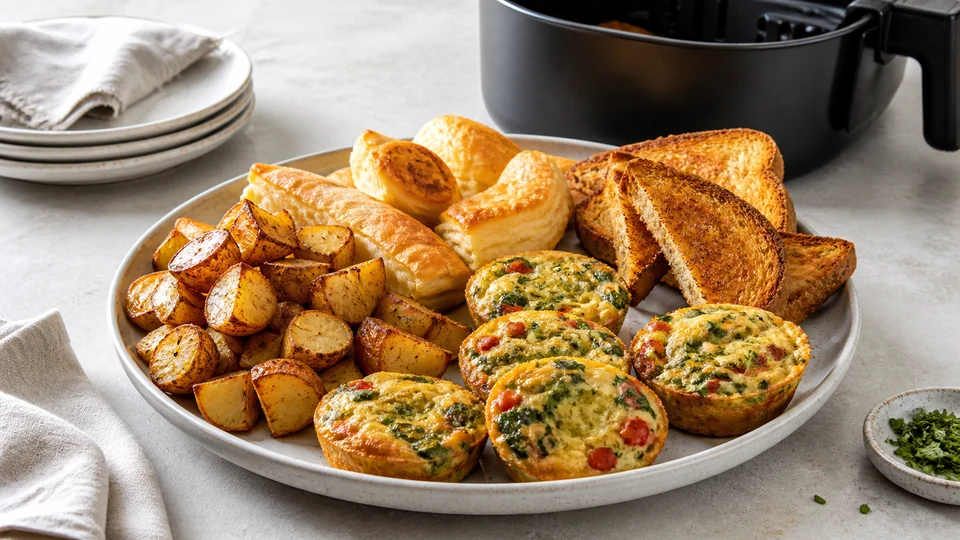
Route-specific preparation and decision guide
For air-fryer brunch recipes—working note 2—For air-fryer brunch recipes, start by setting a practical constraint: time, equipment, guest count, dietary requirement, or the desired finished texture. Read the selected source from beginning to end before shopping or preheating. Separate ingredients that must be measured from optional toppings and service elements. This prevents a familiar route name from being treated as a complete method. Current package labels remain important whenever a commercial product, allergen concern, or dietary claim is involved.
For air-fryer brunch recipes—working note 3—Prepare a small controlled test whenever a result depends on heat, moisture, batch size, or holding time. Use the stated pan, tray, blender, or bowl process as the baseline, then observe a specific result such as spread, browning, tenderness, yield, or serving temperature. Change one variable at a time if something needs correction. A home observation can improve the next batch, but it is not a promise that another brand, kitchen, or diner will have the same result.
For air-fryer brunch recipes—working note 4—Plan service before the last cooking step. Put plates, drinks, utensils, and cold accompaniments in place, then prepare the component that loses quality most quickly. For a group, choose one item to finish hot and make other parts stable enough to wait briefly. Keep optional sauces, toppings, and garnishes separate where practical so guests can identify what is on the plate. This makes the meal easier to serve without presenting one arrangement as the only correct breakfast.
For air-fryer brunch recipes—working note 5—Use a safety and storage checkpoint after the meal. Follow the current source and official food-safety guidance for the ingredients actually used, especially for eggs, dairy, meat, or prepared foods that need refrigeration. Do not use a general article as a substitute for individual allergy, medical, or nutrition advice. Record the exact product, quantity, equipment, and timing if the version is worth repeating.
For air-fryer brunch recipes—working note 6—For the next batch, review the route-specific decision rather than recreating the meal from memory. Note which part created congestion, whether the portion matched the people eating, and whether a substitution changed the result. That record supports a transparent adaptation while preserving the original source context. It also keeps a sensible boundary between practical cooking guidance and unsupported health, safety, or cultural claims.
For air-fryer brunch recipes—working note 7—Air fryers vary in wattage, basket geometry and preheat behavior. This guide does not convert oven times or guarantee one setting across appliances. The parent Brunch hub records the approved R10 context for air fryer brunch recipes.
Choose the working format before shopping
For air-fryer brunch recipes—working note 8—For air fryer brunch recipes, compare crisp potato component, french-toast sticks and vegetable bites before buying ingredients. That comparison reveals the service format, occupied equipment and required finish time. Every cooked component still needs one complete source formula with its own quantities and endpoint cues.
Crisp potato component
For air-fryer brunch recipes—working note 9—Use a recipe that specifies cut size, surface drying, oil amount and basket load. Shake or turn only when instructed. A deep pile blocks airflow and creates uneven pieces, even if the total weight matches the formula.
French-toast sticks
For air-fryer brunch recipes—working note 10—A documented air-fryer formula can provide a hand-held sweet item, but egg-soaked bread still needs thorough cooking. Leave space between pieces and clean any raw mixture from tools before handling the finished batch.
Vegetable bites
For air-fryer brunch recipes—working note 11—Firm vegetables can add a savoury element when the source defines size and coating. Combine items with similar cooking behavior rather than mixing tender tomatoes with dense root vegetables and expecting one endpoint.
Reheated pancakes with a crisp edge
For air-fryer brunch recipes—working note 12—Only use an appliance reheating method documented for the product or recipe. Keep the batch small, monitor the first cycle and avoid letting parchment obstruct the airflow path.
Pastry as the final batch
For air-fryer brunch recipes—working note 13—A small pastry component can cook after savoury items if flavours and residue are managed. Clean the basket as required and do not place lightweight paper into the appliance without food securing it and manufacturer approval.
A controlled preparation sequence
For air-fryer brunch recipes—working note 14—The air fryer brunch recipes sequence below connects list each air-fryer item with its verified temperature, batch capacity and cycle length. with serve batches promptly or use a source-approved holding method that does not trap steam. A written order exposes equipment conflicts before heat begins, while separate work zones protect finished crisp potato component components from raw-food contact.
1. List each air-fryer item with
For air-fryer brunch recipes—working note 15—List each air-fryer item with its verified temperature, batch capacity and cycle length.
2. Choose one anchor and move
For air-fryer brunch recipes—working note 16—Choose one anchor and move all other brunch elements to cold assembly, stovetop or oven methods.
3. Run a test batch before
For air-fryer brunch recipes—working note 17—Run a test batch before guests arrive when the recipe is new to the appliance.
4. Serve batches promptly or use
For air-fryer brunch recipes—working note 18—Serve batches promptly or use a source-approved holding method that does not trap steam.
Symptom, cause, diagnosis, correction, fix, prevention, troubleshooting, and failure
For air-fryer brunch recipes—working note 19—When air fryer brunch recipes misses its target, compare the observed result with crisp potato component and pastry as the final batch controls first. Record one measurable variable—such as cut size, pan area, batch depth, ingredient identity, temperature, order or holding time—before changing the next attempt.
- Pale crowded food indicates an airflow problem before it indicates a time problem.
- Burned edges and a cold center point to pieces that are too large or a setting borrowed from another machine.
- A smoky basket can contain old residue or excess fat and should be cleaned according to the manual.
- If service requires six cycles, the recipe is mismatched to the guest count; select a different anchor.
Food-safety and factual boundary
For air-fryer brunch recipes—working note 20—For air fryer brunch recipes, USDA MyPlate, “What Is MyPlate?” supports only its named domain, while USDA FSIS, “Leftovers and Food Safety” supplies a separate boundary. Neither source establishes a Pancake World test record, a medical outcome, or identical behaviour across every appliance and ingredient.
For air-fryer brunch recipes—working note 21—Quantities, timing, yield and storage for air fryer brunch recipes must come from the selected complete recipe. Keep its perishable components under appropriate temperature control; prevent cross-contact around french-toast sticks; read current labels; and discard any batch with an uncertain time or temperature history.
Contextual routes for the next decision
- In Air fryer brunch recipes, compare Apple brunch recipes for crisp potato component decisions.
- In Air fryer brunch recipes, compare Asparagus brunch recipe for vegetable bites sequencing.
- In Air fryer brunch recipes, compare Brunch buffet recipes for pastry as the final batch service choices.
Frequently asked questions
Can every oven brunch recipe be air-fried?
For air-fryer brunch recipes—working note 22—No. Use a tested air-fryer method or a manufacturer-supported conversion for the exact food.
Can parchment line the basket?
For air-fryer brunch recipes—working note 23—Follow the appliance manual and recipe; liners must not defeat airflow or contact heating elements.
How do I keep batches crisp?
For air-fryer brunch recipes—working note 24—Plan a small number of cycles and serve near completion rather than stacking hot food under a tight cover.
Current-batch observation
For air-fryer brunch recipes—working note 25—For air-fryer brunch recipes, observe one concrete point before changing the method: batter flow, crisping, vegetable moisture, oven set, portion size, or the time a dish can wait before serving. Write down the actual product and equipment used. This keeps a useful kitchen note tied to the route rather than to an assumption about similar foods.
Bounded correction
For air-fryer brunch recipes—working note 26—For air-fryer brunch recipes, make one safe correction at a time. Lower heat when colour advances too quickly, use the source-directed rest when moisture needs time to settle, or reduce the batch size when service is becoming crowded. Do not use a substitution to make a medical, allergy, or nutrition promise that the selected source and current label cannot support.
Next-batch prevention
For air-fryer brunch recipes—working note 27—For air-fryer brunch recipes, prevent the same fault by preparing tools and components in advance. Measure the intended portion, identify the last-minute step, and keep optional toppings separate. If the route includes a packaged food, recheck the current label rather than relying on an earlier box, jar, or mix.
Service and storage record
For air-fryer brunch recipes—working note 28—For air-fryer brunch recipes, record what reached the table, how long it held its intended texture, and which leftovers need ordinary food-safety handling. This record is a home planning aid. It does not replace the directions for the ingredients actually used or individual professional advice for a dietary condition.
Transparent adaptation note
For air-fryer brunch recipes—working note 29—For air-fryer brunch recipes, name any change made for availability, preference, or timing. Preserve the complete source method as the reference point and describe the result as an adaptation. Clear wording helps the next cook repeat the useful parts without presenting a household outcome as a tested universal result.
Final practical record
For air-fryer brunch recipes—working note 30—For air-fryer brunch recipes, make the next decision from the completed meal, not from a generic expectation. Note the exact route option used, the portion served, the equipment that controlled the result, and the moment at which the food was best for the table. If a component was changed, record why it changed and what that did to texture, timing, or service. Use current labels for packaged foods and retain the original source method as the reference point. This is a transparent household record, not a formal safety, nutrition, or performance claim.
For air-fryer brunch recipes—working note 31—When repeating air-fryer brunch recipes, prepare the slowest or least flexible step first, keep the final hot component for last, and make optional elements visible to diners. Review any leftovers using ordinary food-safety guidance appropriate to the ingredients used. A small, clear note prevents an accidental hybrid recipe and gives the next cook a practical starting point.
Conclusion
Practical review 1
For air-fryer brunch recipes—working note 32—For air-fryer brunch recipes, review 1 focuses on a separate kitchen choice. Confirm the exact ingredients, equipment, and serving plan before changing the source method. Measure the stated portion, observe the result at controlled heat or storage conditions, and record only what can be seen in that batch. A clear record distinguishes a product change from a timing change and avoids an unsupported general claim.
For air-fryer brunch recipes—working note 33—Choose the next step by the constraint that matters most in this meal: speed, texture, guest service, dietary clarity, or ingredient availability. Keep toppings and optional components separate where possible, check current labels, and state any adaptation plainly. A smaller, well-managed breakfast is usually easier to serve than a complicated menu that cannot be finished in order.
For air-fryer brunch recipes—working note 34—After eating, note whether the portion, temperature, and timing worked for the actual diners. Follow food-safety guidance for the ingredients used, and use individual professional advice where health or allergy questions arise. This route-specific note supports the next attempt without treating a household observation as a formal test.
Practical review 2
For air-fryer brunch recipes—working note 35—For air-fryer brunch recipes, review 2 focuses on a separate kitchen choice. Confirm the exact ingredients, equipment, and serving plan before changing the source method. Measure the stated portion, observe the result at controlled heat or storage conditions, and record only what can be seen in that batch. A clear record distinguishes a product change from a timing change and avoids an unsupported general claim.
For air-fryer brunch recipes—working note 36—Choose the next step by the constraint that matters most in this meal: speed, texture, guest service, dietary clarity, or ingredient availability. Keep toppings and optional components separate where possible, check current labels, and state any adaptation plainly. A smaller, well-managed breakfast is usually easier to serve than a complicated menu that cannot be finished in order.
For air-fryer brunch recipes—working note 37—After eating, note whether the portion, temperature, and timing worked for the actual diners. Follow food-safety guidance for the ingredients used, and use individual professional advice where health or allergy questions arise. This route-specific note supports the next attempt without treating a household observation as a formal test.
Practical review 3
For air-fryer brunch recipes—working note 38—For air-fryer brunch recipes, review 3 focuses on a separate kitchen choice. Confirm the exact ingredients, equipment, and serving plan before changing the source method. Measure the stated portion, observe the result at controlled heat or storage conditions, and record only what can be seen in that batch. A clear record distinguishes a product change from a timing change and avoids an unsupported general claim.
For air-fryer brunch recipes—working note 39—Choose the next step by the constraint that matters most in this meal: speed, texture, guest service, dietary clarity, or ingredient availability. Keep toppings and optional components separate where possible, check current labels, and state any adaptation plainly. A smaller, well-managed breakfast is usually easier to serve than a complicated menu that cannot be finished in order.
For air-fryer brunch recipes—working note 40—After eating, note whether the portion, temperature, and timing worked for the actual diners. Follow food-safety guidance for the ingredients used, and use individual professional advice where health or allergy questions arise. This route-specific note supports the next attempt without treating a household observation as a formal test.
Practical review 4
For air-fryer brunch recipes—working note 41—For air-fryer brunch recipes, review 4 focuses on a separate kitchen choice. Confirm the exact ingredients, equipment, and serving plan before changing the source method. Measure the stated portion, observe the result at controlled heat or storage conditions, and record only what can be seen in that batch. A clear record distinguishes a product change from a timing change and avoids an unsupported general claim.
For air-fryer brunch recipes—working note 42—Choose the next step by the constraint that matters most in this meal: speed, texture, guest service, dietary clarity, or ingredient availability. Keep toppings and optional components separate where possible, check current labels, and state any adaptation plainly. A smaller, well-managed breakfast is usually easier to serve than a complicated menu that cannot be finished in order.
For air-fryer brunch recipes—working note 43—After eating, note whether the portion, temperature, and timing worked for the actual diners. Follow food-safety guidance for the ingredients used, and use individual professional advice where health or allergy questions arise. This route-specific note supports the next attempt without treating a household observation as a formal test.
Sources
- USDA MyPlate, “What Is MyPlate?” —
https:// www.myplate.gov/ eat- healthy/ what- is- myplate - USDA FSIS, “Leftovers and Food Safety” —
https:// www.fsis.usda.gov/ food- safety/ safe- food- handling- and- preparation/ food- safety- basics/ leftovers- and- food- safety - FoodSafety.gov, “Safe Minimum Internal Temperatures” —
https:// www.foodsafety.gov/ food- safety- charts/ safe- minimum- internal- temperatures