Afternoon brunch ideas
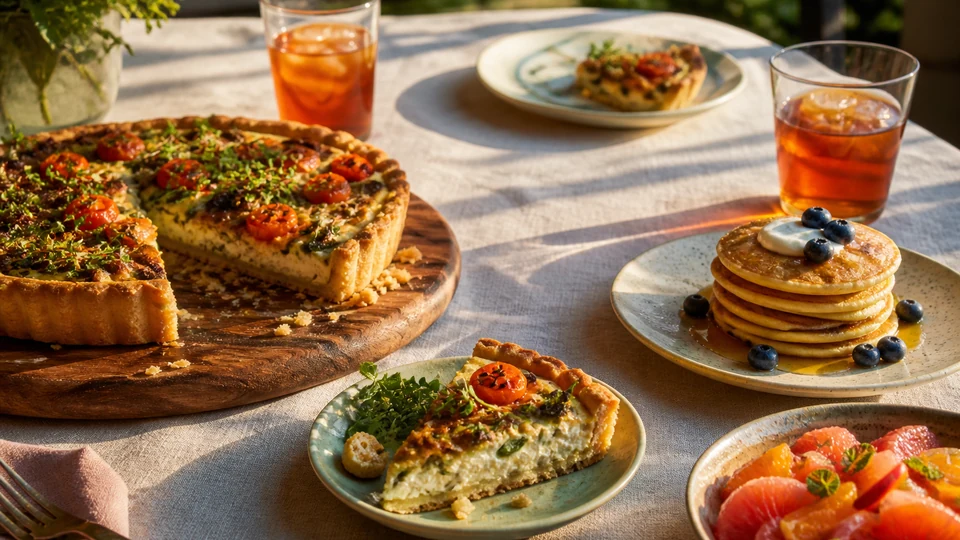
At Pancakes World, an afternoon brunch should bridge lunch and early evening without becoming an all-day buffet. Choose one hot savoury anchor, one fresh item, one baked or griddled item, and a drink station; prepare the cold pieces first and start the temperature-sensitive dish close to the agreed serving time. See the editorial platform for the wider editorial collection.
Use Brunch; American brunch ideas; Brunch spread at home; Brunch tray bake to move from this exact question to the relevant hub and neighbouring Stage 012 guides without relying on a generic parent label.
| Guide sections |
|---|
| Direct answer and scope |
| Formats that fit the intent |
| Build a controlled workflow |
| Current-batch troubleshooting |
For broader context, continue with American Breakfast: Pancakes, Diner Plates and Brunch.
Direct answer and scope
Afternoon describes timing, not a fixed menu. The useful decision is how substantial the meal should be and how long perishable food will remain under controlled service. Start by naming the dish or technique, the guest and ingredient boundaries, the available equipment, and the point at which the result will be judged. That prevents an attractive idea list from becoming an unsupported recipe, nutrition promise, cultural generalisation, or project-test claim.
Formats that fit the intent
Sheet-pan eggs and vegetables
Use a complete egg-dish method, reduce watery vegetables before assembly, and verify doneness rather than relying on surface colour.
Pancakes with fruit on the side
Keep the pancake formula unchanged and place juicy fruit and syrup beside the stack so texture remains observable.
Toast and a dry topping board
Toast near service, drain wet toppings, and give each spread its own labelled utensil.
A grain-and-roasted-vegetable bowl
Cook the grain by its package or tested method, cool it safely when made ahead, and dress only the portion being served.
A simple salad with a substantial component
Add eggs, beans, cheese or another identified component instead of depending on leaves and garnish alone.
One small baked treat
Choose a complete formula and let it be the sweet finish rather than adding several competing pastries.
Build a controlled workflow
- Fix the serving time before choosing dishes.
- Assign one hot anchor and one last-minute task.
- Finish washing, cutting and labelling before heating begins.
- Set cold food out in small replenished portions.
- Cook the hot anchor to its own accepted endpoint.
- Cool and refrigerate leftovers promptly.
The sequence should leave one baseline that can be described in plain language. Note flow, spread, surface moisture, edge set, centre texture, holding condition, or service behaviour as relevant to the chosen format. Avoid adding invented times, yields or temperatures when the complete source does not establish them.
Current-batch troubleshooting
The spread feels too heavy for mid-afternoon
Remove one rich duplicate and add a crisp or fresh counterpoint.
Pancakes become damp
Separate wet toppings and replenish smaller stacks.
The egg dish releases water
Review vegetable preparation and the complete formula before changing oven heat.
Guests arrive over a wide window
Hold components separately and assemble smaller rounds.
The table lacks a clear centre
Choose one substantial anchor instead of adding more side dishes.
Prevent the same problem next time
- Write a two-hour preparation map.
- Reserve one pan and one oven slot for the anchor.
- Label sauces and allergen-containing toppings.
- Record which component must be cooked or dressed last.
Prevention is useful only when the record is specific enough to repeat. Keep product names and ingredient forms, label checks, pan or vessel size, portion method, sequence, and observable result together. A later batch can then change one plausible cause while preserving the rest.
For an afternoon service, write down whether guests expect a full meal or a light bridge to dinner. That single decision controls portion size, the number of hot components, and whether a sweet finish belongs on the table. It also prevents the host from solving a timing problem by adding dishes that require more holding.
Safety and evidence boundary
Do not taste raw flour batter or dough. Check current packaged-food labels for allergens and use separate tools where cross-contact matters. Egg dishes, meat components and leftovers need their own applicable temperature, cooling, refrigeration and reheating controls. The authoritative references below support those boundaries; they do not convert this article into medical advice, a tested formula, a guaranteed outcome, or a universal cultural definition.
Frequently asked questions
How late can afternoon brunch start?
There is no universal start time. State the invitation time and design the meal around the next expected meal.
Can most of it be made ahead?
Cold components can move ahead when their storage method is defined; preserve last-minute work for texture-sensitive food.
Should brunch include both eggs and pancakes?
It can, but one may be enough when another substantial savoury item already anchors the meal.
How should leftovers be handled?
Move perishables out of an open-ended buffet and follow USDA storage guidance.
Explore related Pancakes World guidance on American Pancakes, Maple Syrup, and Maple Syrup Pancakes.
Sources and editorial references
- U.S. Food and Drug Administration — Food Allergies —
https://www.fda.gov/food/nutrition-food-labeling-and-critical-foods/food-allergies - FoodSafety.gov — Safe Minimum Internal Temperatures —
https://www.foodsafety.gov/food-safety-charts/safe-minimum-internal-temperatures - USDA FSIS — Leftovers and Food Safety —
https://www.fsis.usda.gov/food-safety/safe-food-handling-and-preparation/food-safety-basics/leftovers-and-food-safety - U.S. Food and Drug Administration — Handling Flour Safely —
https://www.fda.gov/food/buy-store-serve-safe-food/handling-flour-safely-what-you-need-know