4 instant breakfast recipes
At Pancakes World, four practical instant breakfasts are a yogurt-and-oat bowl, nut-or-seed-butter toast with fruit, cottage cheese with fruit and seeds, and a microwave egg dish made from a complete tested source recipe. Here, “instant” means fast assembly or microwave preparation, not Instant Pot cooking. Read the serving size on packaged ingredients, use a microwave-safe vessel, follow the selected recipe’s power and timing, and verify egg doneness. Prepare only what will be eaten or chilled promptly, and keep nuts, milk, egg, wheat, sesame, and soy clearly identified.
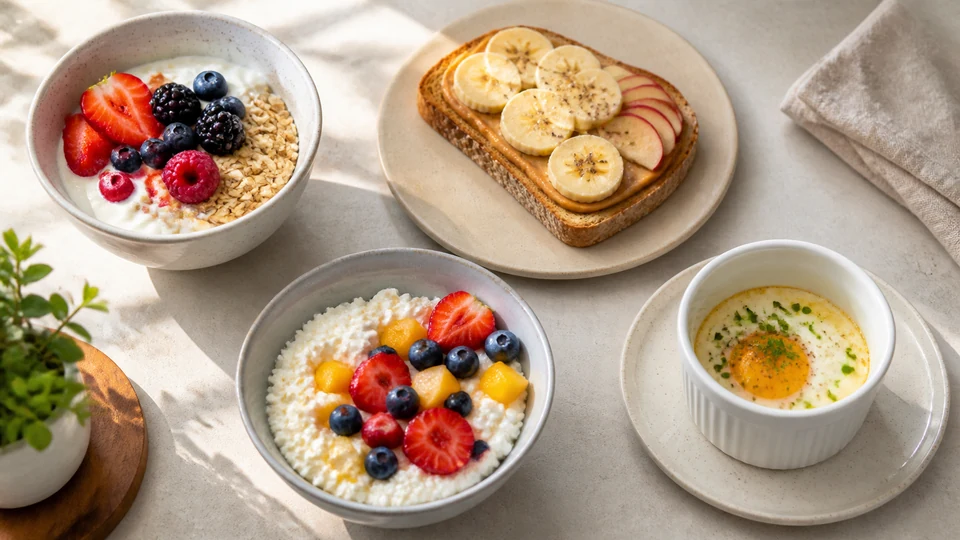
The breakfast hub provides wider morning ideas, while Pancake World connects these four paths to the full collection.
| Guide sections |
|---|
| Exactly four fast paths |
| Recipe 1: yogurt-and-oat bowl |
| Recipe 2: nut-or-seed-butter toast with fruit |
| Recipe 3: cottage cheese, fruit, and seeds |
For broader context, continue with American Breakfast: Pancakes, Diner Plates and Brunch.
Exactly four fast paths
This guide limits the answer to four formats so the reader can choose quickly. It does not reproduce a proprietary recipe, invent a microwave time, or use “instant” as a nutrition claim. Three paths are assembly frameworks based on labeled ingredients; the egg path requires a complete tested recipe matched to the microwave.
Use a simple decision:
- choose Recipe 1 for a cold spoonable bowl;
- choose Recipe 2 for crisp toast and portable fruit;
- choose Recipe 3 for a less sweet dairy-based bowl;
- choose Recipe 4 for a hot egg option.
Check the complete ingredient label and defined serving before assembling. USDA FoodData Central can identify foods and nutrient data, while FDA explains how to read the Nutrition Facts label. Neither source proves that one combination produces a health outcome.
Recipe 1: yogurt-and-oat bowl
This is an assembly formula, not a tested fixed quantity. Start with one labeled serving of refrigerated yogurt. Add the amount of oats permitted by the product and texture you want, then one fruit and one optional crisp topping. If raw dry oats are not suitable for the chosen product or eater, use a complete overnight-oats or cooked-oats recipe instead.
Component choices
Use plain or flavored yogurt, dairy or plant-based, only after checking the label. Plant-based products differ in ingredients and are not automatically equivalent in protein, sugar, allergens, or structure.
Fruit can be berries, sliced banana, apple, pear, peach, or another washed option. Cut only what will be eaten. Nuts, seeds, or granola add crunch but introduce allergens and may add sweeteners.
Fast assembly
- Take a clean bowl and spoon.
- Read the yogurt serving and allergen label.
- Add one measured serving to the bowl.
- Add oats only in the form appropriate to the selected product or complete recipe.
- Wash and prepare one fruit on a clean surface.
- Add one labeled topping, if wanted.
- Eat promptly or return the covered bowl to refrigeration.
Troubleshooting
If the bowl is too thick, do not pour in an unmeasured liquid while claiming the original serving. Use a complete formula designed for the preferred texture next time. If it is watery, check whether frozen fruit thawed or the yogurt separated; stir only as the label permits.
For portability, use a clean leak-resistant container and keep it cold. Pack crisp toppings separately. A commute does not create a safe room-temperature holding period.
Recipe 2: nut-or-seed-butter toast with fruit
This path needs bread, one labeled spread, and one fruit. It is fast because the only hot task is toasting. It also has significant allergen considerations.
Select the base
Choose bread that fits the toaster and the eater’s verified ingredient needs. Wheat, milk, soy, sesame, egg, nuts, or seeds may appear. “Multigrain” and “whole grain” are label terms, not proof that a serving suits every diet.
Toast to the preferred color without burning. Keep the toaster crumb tray and work surface clean, especially when a verified alternative must avoid shared crumbs.
Select one spread
Peanut, almond, cashew, sunflower-seed, sesame, and soy-based spreads are not interchangeable for allergens. Read the complete label and use a clean utensil. Measure the serving rather than estimating from the jar, especially when comparing label information.
Spread after toasting so texture remains visible and the utensil does not enter a hot toaster. Never use a knife inside an energized appliance.
Add fruit
Serve a banana, apple, pear, orange, berries, or another washed fruit. Whole fruit is easiest to carry. For sliced fruit, use a clean board and container, and keep it under appropriate storage.
Troubleshooting
If the toast becomes soggy, let steam dissipate briefly before spreading and keep sliced fruit separate. If the spread tears soft bread, stir the product only as its label allows or use a sturdier bread. Do not warm a sealed spread container unless its manufacturer permits it.
For a nut-free requirement, a seed spread is not automatically safe; verify the product, facility statement, shared toaster, knife, and work surface.
Recipe 3: cottage cheese, fruit, and seeds
This is a cold savory-or-sweet bowl. Use one labeled serving of refrigerated cottage cheese, one prepared fruit, and one optional labeled seed or seasoning.
Build the bowl
- Check the date, storage conditions, and milk allergen label.
- Spoon one serving into a clean bowl.
- Wash and cut one fruit.
- Add fruit on one side so its liquid does not immediately thin the whole bowl.
- Add one seed, herb, or spice only after checking the package.
- Serve immediately and refrigerate the original container.
Tomato, cucumber, berries, peach, pineapple, or pear can each create a different direction, but this page does not assert that every combination is a tested recipe. For a complete seasoned bowl, follow one published formula.
Label and texture decisions
Cottage cheese products vary in curd size, fat level, salt, and serving definition. Use the label for the actual container. Do not infer a nutrition result from the generic name.
Seeds may include sesame or be processed with nuts. Seasoning blends can contain milk, wheat, celery, mustard, or other ingredients. A simple bowl still requires complete labels.
Troubleshooting
If liquid collects, check whether fruit was very wet or the product naturally separated. Drain fruit as a complete recipe directs, but do not discard part of the dairy product and continue using its original nutrition serving without noting the change.
For transport, keep the bowl cold in a leak-resistant container and pack dry seeds separately. Do not return a partly eaten portion to the main container.
Recipe 4: microwave egg dish from a complete recipe
The fourth option is intentionally not a universal “egg mug” formula. Microwave power, vessel shape, egg count, additions, and standing time affect heating. Select a complete recipe written for the appliance range and exact vessel, then follow it without substituting timing.
Before cooking
FDA advises buying clean, uncracked refrigerated eggs and keeping them refrigerated. Wash hands and use a clean bowl. Confirm that the vessel is microwave-safe and large enough to prevent overflow.
Read the recipe completely. Note wattage assumptions, stirring stages, standing time, and the egg endpoint. Do not add cold vegetables, cheese, raw meat, or extra egg unless the formula includes them.
During cooking
Never microwave an egg in its shell. Follow the complete recipe’s method for breaking, mixing, covering, venting, and stirring. Use microwave-safe protection against splatter and beware of steam when uncovering.
FDA guidance says eggs should be cooked until yolks and whites are firm; FoodSafety.gov lists 160°F for egg dishes. Check the center and any cool spot after the stated stand. Microwave heating can be uneven, so a hot vessel edge is not a doneness test.
Raw meat requires a different method and endpoint. Do not place raw sausage or bacon into a quick egg dish unless a complete tested recipe manages it.
After cooking
Use heat protection to remove the vessel. Let it stand as the source directs. Transfer the egg only to a clean plate or eat from the safe vessel. Keep the raw-egg fork, whisk, and bowl away from cooked food unless washed.
If taking the dish away from home, cool and refrigerate only under a complete make-ahead path. A hot egg sealed in a container without a cooling plan is not an “instant meal prep” method.
Troubleshooting
If the edges are rubbery and the center wet, the vessel, power, batch, or stirring may not match the recipe. Do not simply extend time in large jumps. Return to the complete source and use the specified intervals.
If the mixture overflows, stop the appliance safely and clean it after cooling. Use the stated vessel size next time; reducing the bowl depth or adding a plate underneath does not replace recipe conditions.
A five-minute setup station
Keep fast breakfasts genuinely fast by storing tools predictably: clean bowls and spoons together, toaster-safe utensils away from the toaster slots, fruit-washing space clear, and microwave-safe vessels identified.
Do not pre-portion perishable foods at room temperature. Yogurt, cottage cheese, cut fruit, and eggs remain refrigerated. Bread, oats, spreads, seeds, and packages stay in their labeled storage.
Choose the path the night before and place only nonperishable tools and sealed items together. This reduces morning decisions without creating an unsafe holding period.
Reading the label
FDA’s Nutrition Facts guidance explains serving information, nutrients, and percent Daily Value. Compare products using the same serving basis. A bowl built from several packages does not retain the nutrition line of any single ingredient as a total.
Check ingredient lists for milk, egg, wheat, soy, sesame, peanuts, and tree nuts. Formulations can change, so read the current package rather than relying on memory.
USDA MyPlate offers broad meal-pattern guidance, but these four ideas are not an individualized diet. Medical conditions, allergies, restrictive diets, and nutrition targets may require qualified advice.
Food safety and storage
Keep yogurt, cottage cheese, cut fruit, and shell eggs refrigerated. Use clean utensils and avoid returning tasted spoons to shared containers. Wash produce under running water before cutting.
For the egg dish, use a complete microwave recipe and verify its endpoint. FoodSafety.gov lists 160°F for egg dishes and 165°F for leftovers. Consult the cold-storage chart for matching categories rather than assigning one period to every breakfast.
Prepare only the amount needed. If packing a cold bowl, maintain refrigeration with an appropriate cold source. If storage history is uncertain, discard rather than trying to correct it later.
Frequently asked questions
Does “instant” mean Instant Pot?
No. This route means immediate assembly or microwave preparation. Pressure-cooker breakfasts belong to a different intent and require appliance-specific recipes.
Are these four recipes nutritionally equivalent?
No. Ingredients and serving definitions vary. Use the actual labels and a complete calculation if nutrition totals are required.
Can dairy alternatives be swapped one for one?
Not automatically. Choose a complete alternative product or recipe and check texture, ingredients, allergens, and serving information.
Can the egg dish be made without a recipe?
This guide does not recommend that. Use a tested microwave method matched to wattage and vessel, then verify doneness.
Are these tested Pancake World recipes?
No. They are four evidence-bounded selection paths. Packaged servings and complete source recipes control quantities and timing.
Final four-path check
- Exactly one of the four formats has been selected.
- Packaged serving and ingredient labels are read.
- Cold foods remain refrigerated.
- Fruit is washed and prepared with clean tools.
- The toaster is never contacted with a utensil while energized.
- Nut and seed spreads are treated as distinct allergens.
- The microwave vessel and recipe match the appliance.
- Egg doneness is verified at the center.
- No nutrition or health outcome is inferred from the recipe name.
Four clear options are more useful than a long list of vague “instant” ideas. Choose the texture and temperature needed, follow the label or complete recipe, and keep the morning process short without skipping safety controls.
Explore related Pancakes World guidance on American Pancakes, Maple Syrup, and Maple Syrup Pancakes.
Sources and editorial references
- U.S. Food and Drug Administration, “How to Understand and Use the Nutrition Facts Label” —
https://www.fda.gov/food/nutrition-facts-label/how-understand-and-use-nutrition-facts-label - U.S. Food and Drug Administration, “What You Need to Know About Egg Safety” —
https://www.fda.gov/consumers/consumer-updates/what-you-need-know-about-egg-safety - FoodSafety.gov, “Safe Minimum Internal Temperatures” —
https://www.foodsafety.gov/food-safety-charts/safe-minimum-internal-temperatures - FoodSafety.gov, “Cold Food Storage Chart” —
https://www.foodsafety.gov/food-safety-charts/cold-food-storage-charts - USDA FoodData Central —
https://fdc.nal.usda.gov/ - USDA MyPlate —
https://www.myplate.gov/