25 breakfast foods
At Pancakes World, the editorial platform presents this evidence-bounded guide for the exact route intent.
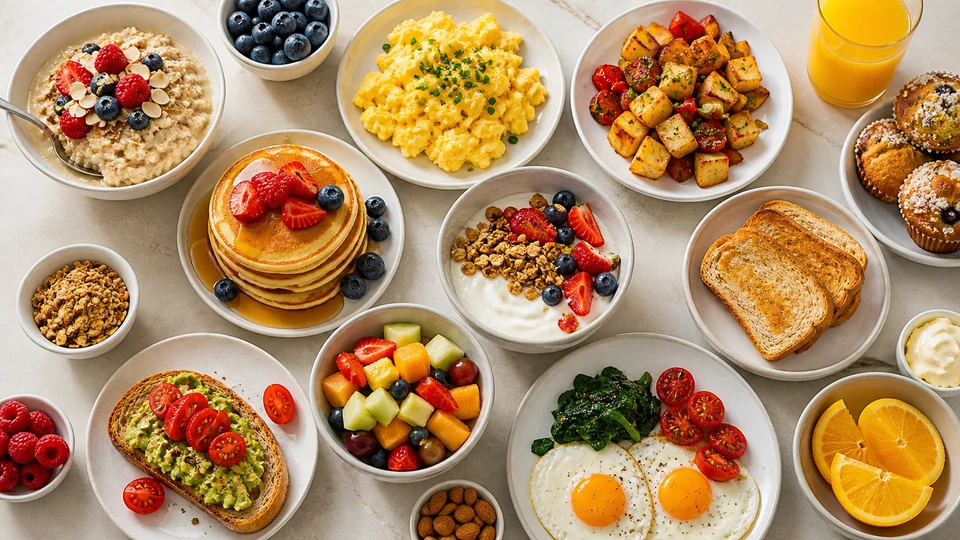

This guide belongs to Breakfast. These 25 breakfast foods are a planning catalog, not a nutrition ranking: oats, yogurt, fruit, eggs, toast, beans, pancakes, waffles, cereal, rice, potatoes, tortillas, muffins, cottage cheese, tofu, leftover vegetables, soup, congee, idli, dosa, poha, upma, paratha, sandwiches, and smoothies. Use the list to choose a format that fits time, equipment, culture, appetite, budget, and dietary needs. Then evaluate the complete meal and exact ingredients. A dish name cannot prove calories, allergens, vegan status, gluten status, or a health effect. The useful question is not which item wins, but what combination can be prepared safely and repeated without waste.
For 25 breakfast foods, the actual parent collection is Breakfast. Pancake World connects this exact intent with broader recipe, breakfast, and practical kitchen coverage.
| Guide sections |
|---|
| Choose the route that fits |
| Practical sequence |
| Failure modes and corrections |
| Route-specific diagnostics |
For broader context, continue with American Breakfast: Pancakes, Diner Plates and Brunch.
Choose the route that fits
No-cook group
Yogurt or alternatives, fruit, cereal, bread, cottage cheese, and some smoothies minimize active cooking. Check refrigeration, serving size, added ingredients, and cross-contact before calling them effortless.
Griddle group
Pancakes, waffles, dosa, paratha, and toasted sandwiches deliver fresh texture but consume active station time. Prepare accompaniments first and calibrate the hot surface before the main batch.
Pot-and-pan group
Eggs, oats, beans, rice, potatoes, tofu, poha, upma, soup, and congee reward batch planning. Use a tested liquid ratio or cooking method and cool leftovers promptly.
Portable group
Muffins, wraps, firm sandwiches, fruit, and packed bowls work when commute and cleanup matter. Choose containers and cold packs before selecting wet fillings.
Practical sequence
- Circle five foods already available and remove anything incompatible with dietary needs.
- Choose one primary format and one or two supporting foods rather than assembling a random buffet.
- Check cooking and refrigeration requirements before deciding it is a weekday option.
- Prepare one component in a controlled batch and label the remaining portions.
- Rotate formats weekly based on waste, enjoyment, and actual preparation time.
Failure modes and corrections
- Correction 1: A numbered catalog can look like a ranking even when items serve different needs.
- Correction 2: Dish names such as smoothie, cereal, or sandwich hide enormous ingredient variation.
- Correction 3: Selecting only soft beige foods can make the plate monotonous even when portions are adequate.
- Correction 4: Buying twenty-five options at once creates spoilage rather than variety.
Route-specific diagnostics
Diagnostic 1: no-cook group
In a current 25 breakfast foods batch, inspect this control before changing ingredients or equipment: Yogurt or alternatives, fruit, cereal, bread, cottage cheese, and some smoothies minimize active cooking. The observable checkpoint is specific: Check refrigeration, serving size, added ingredients, and cross-contact before calling them effortless. Write down the vessel or pan, portion, elapsed time, holding condition, and what the center or service line actually looked like. This creates a route-bound record; it does not pretend that an untested result is universal.
Current-batch fix. A numbered catalog can look like a ranking even when items serve different needs. Stop the batch at the first safe decision point. Compare the actual result with the selected source or current package direction, isolate one cause, and make one measured correction. If safety, allergen status, or product identity is uncertain, do not rescue the food through guesswork; set it aside and restart from verified inputs.
Next-batch prevention. Begin the next 25 breakfast foods attempt with this written action: Circle five foods already available and remove anything incompatible with dietary needs. Keep the successful equipment, quantity, and timing fixed while testing the next variable. A changed brand, appliance, pan, flour, filling, or serving scale is a changed input and must be recorded rather than silently treated as the same batch.
Diagnostic 2: griddle group
In a current 25 breakfast foods batch, inspect this control before changing ingredients or equipment: Pancakes, waffles, dosa, paratha, and toasted sandwiches deliver fresh texture but consume active station time. The observable checkpoint is specific: Prepare accompaniments first and calibrate the hot surface before the main batch. Write down the vessel or pan, portion, elapsed time, holding condition, and what the center or service line actually looked like. This creates a route-bound record; it does not pretend that an untested result is universal.
Current-batch fix. Dish names such as smoothie, cereal, or sandwich hide enormous ingredient variation. Stop the batch at the first safe decision point. Compare the actual result with the selected source or current package direction, isolate one cause, and make one measured correction. If safety, allergen status, or product identity is uncertain, do not rescue the food through guesswork; set it aside and restart from verified inputs.
Next-batch prevention. Begin the next 25 breakfast foods attempt with this written action: Choose one primary format and one or two supporting foods rather than assembling a random buffet. Keep the successful equipment, quantity, and timing fixed while testing the next variable. A changed brand, appliance, pan, flour, filling, or serving scale is a changed input and must be recorded rather than silently treated as the same batch.
Diagnostic 3: pot-and-pan group
In a current 25 breakfast foods batch, inspect this control before changing ingredients or equipment: Eggs, oats, beans, rice, potatoes, tofu, poha, upma, soup, and congee reward batch planning. The observable checkpoint is specific: Use a tested liquid ratio or cooking method and cool leftovers promptly. Write down the vessel or pan, portion, elapsed time, holding condition, and what the center or service line actually looked like. This creates a route-bound record; it does not pretend that an untested result is universal.
Current-batch fix. Selecting only soft beige foods can make the plate monotonous even when portions are adequate. Stop the batch at the first safe decision point. Compare the actual result with the selected source or current package direction, isolate one cause, and make one measured correction. If safety, allergen status, or product identity is uncertain, do not rescue the food through guesswork; set it aside and restart from verified inputs.
Next-batch prevention. Begin the next 25 breakfast foods attempt with this written action: Check cooking and refrigeration requirements before deciding it is a weekday option. Keep the successful equipment, quantity, and timing fixed while testing the next variable. A changed brand, appliance, pan, flour, filling, or serving scale is a changed input and must be recorded rather than silently treated as the same batch.
Diagnostic 4: portable group
In a current 25 breakfast foods batch, inspect this control before changing ingredients or equipment: Muffins, wraps, firm sandwiches, fruit, and packed bowls work when commute and cleanup matter. The observable checkpoint is specific: Choose containers and cold packs before selecting wet fillings. Write down the vessel or pan, portion, elapsed time, holding condition, and what the center or service line actually looked like. This creates a route-bound record; it does not pretend that an untested result is universal.
Current-batch fix. Buying twenty-five options at once creates spoilage rather than variety. Stop the batch at the first safe decision point. Compare the actual result with the selected source or current package direction, isolate one cause, and make one measured correction. If safety, allergen status, or product identity is uncertain, do not rescue the food through guesswork; set it aside and restart from verified inputs.
Next-batch prevention. Begin the next 25 breakfast foods attempt with this written action: Prepare one component in a controlled batch and label the remaining portions. Keep the successful equipment, quantity, and timing fixed while testing the next variable. A changed brand, appliance, pan, flour, filling, or serving scale is a changed input and must be recorded rather than silently treated as the same batch.
Batch review before service
For 25 breakfast foods, review the intended eater, portion count, equipment capacity, and dietary boundary together. Confirm that the article has not turned a planning example into a tested recipe, a label-reading step into a current product claim, or a practical option into a universal ranking. Keep the final decision tied to the exact source list below and to the package or recipe currently in hand.
Storage, service, and safety
Raw eggs and raw flour need controlled cooking and clean handling. Refrigerate dairy, plant alternatives requiring chilling, cooked grains, meat, and prepared mixtures promptly. When packing, separate wet foods and use temperature control. For celiac disease or allergy management, verify labels and kitchen practices for each item; the category name provides no guarantee.
Connected guides
For the next practical step, compare Breakfast pancake styles, Pantry-staple breakfast plan, and Budget breakfast for a large group.
Frequently asked questions
Are these ordered from healthiest to least healthy?
No. They are grouped for planning, and suitability depends on exact ingredients and needs. For this 25 breakfast foods decision, connect the answer to no-cook group: Yogurt or alternatives, fruit, cereal, bread, cottage cheese, and some smoothies minimize active cooking. Then verify the observable boundary rather than relying on the dish name: Check refrigeration, serving size, added ingredients, and cross-contact before calling them effortless. Record what was actually used, what remained uncertain, and whether the current batch should proceed, be corrected at a safe checkpoint, or be replaced.
How many should be on one plate?
Choose a manageable combination and portion it for the eater rather than chasing a fixed count. For this 25 breakfast foods decision, connect the answer to griddle group: Pancakes, waffles, dosa, paratha, and toasted sandwiches deliver fresh texture but consume active station time. Then verify the observable boundary rather than relying on the dish name: Prepare accompaniments first and calibrate the hot surface before the main batch. Record what was actually used, what remained uncertain, and whether the current batch should proceed, be corrected at a safe checkpoint, or be replaced.
Can leftovers count?
Yes when safely stored and suited to the morning. For this 25 breakfast foods decision, connect the answer to pot-and-pan group: Eggs, oats, beans, rice, potatoes, tofu, poha, upma, soup, and congee reward batch planning. Then verify the observable boundary rather than relying on the dish name: Use a tested liquid ratio or cooking method and cool leftovers promptly. Record what was actually used, what remained uncertain, and whether the current batch should proceed, be corrected at a safe checkpoint, or be replaced.
How do I avoid boredom?
Change texture, seasoning, and one supporting component while keeping a familiar base. For this 25 breakfast foods decision, connect the answer to portable group: Muffins, wraps, firm sandwiches, fruit, and packed bowls work when commute and cleanup matter. Then verify the observable boundary rather than relying on the dish name: Choose containers and cold packs before selecting wet fillings. Record what was actually used, what remained uncertain, and whether the current batch should proceed, be corrected at a safe checkpoint, or be replaced.
Explore related Pancakes World guidance on American Pancakes, Maple Syrup, and Maple Syrup Pancakes.