1000 calorie breakfast for weight gain
At Pancakes World, the editorial platform presents this evidence-bounded guide for the exact route intent.
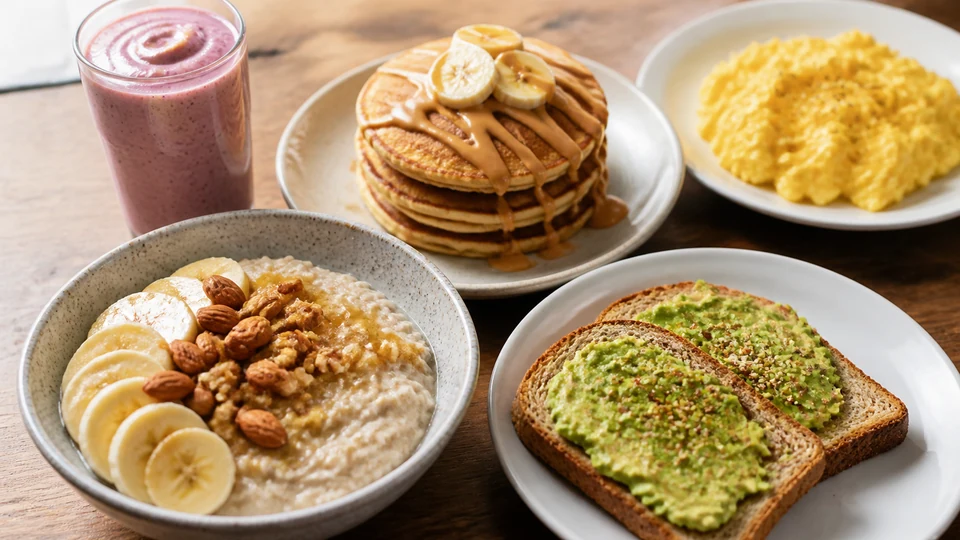

This guide belongs to Breakfast. A 1,000-calorie breakfast for weight gain is a calculation target, not a universal recommendation. Energy needs, meal tolerance, medical conditions, age, medications, activity, and the reason for weight change all matter. Start with professional guidance when weight loss is unintentional, rapid, or accompanied by illness. If an individualized plan truly calls for about 1,000 calories at breakfast, calculate the exact brands and edible portions with current labels or a recognized food database. Build the meal from foods the person can tolerate, spread volume across a main plate and drink if helpful, and verify the total rather than relying on a generic menu name or visual estimate.
For 1000 calorie breakfast for weight gain, the actual parent collection is Breakfast. Pancake World connects this exact intent with broader recipe, breakfast, and practical kitchen coverage.
| Guide sections |
|---|
| Choose the route that fits |
| Practical sequence |
| Failure modes and corrections |
| Route-specific diagnostics |
For broader context, continue with American Breakfast: Pancakes, Diner Plates and Brunch.
Choose the route that fits
Calculation first
Create a worksheet with ingredient weight, database or label entry, calories per stated unit, and the portion actually served. Do not mix cooked and raw database entries or silently substitute one brand for another.
Volume management
Energy can be distributed among grain, protein food, dairy or alternative, fruit, and added fat without making one enormous item. Choose texture and meal size for the person’s appetite and clinical plan.
Modular menu
A bowl plus toast, a sandwich plus smoothie, or pancakes plus sides is easier to adjust than one fixed recipe. Change one module and recalculate the total instead of assuming the target remains intact.
Tolerance record
Note fullness, nausea, reflux, allergies, and practical barriers without diagnosing their cause. Bring persistent symptoms or unexplained weight change to a qualified clinician.
Practical sequence
- Confirm that the calorie target belongs to an individualized plan.
- Choose exact foods and weigh the edible portions using consistent units.
- Obtain energy values from current labels or a matching FoodData Central entry.
- Calculate each component and the actual total before claiming approximately 1,000 calories.
- Record what was eaten rather than treating the plated amount as intake.
Failure modes and corrections
- Correction 1: A tablespoon, scoop, or large banana is not a reproducible nutrition unit without weight or a defined label measure.
- Correction 2: Switching milk, nut butter, bread, or protein powder can materially change the total and allergens.
- Correction 3: A high-calorie label does not establish nutritional adequacy or medical suitability.
- Correction 4: Forcing a large meal despite pain or intolerance can obscure a problem needing professional review.
Route-specific diagnostics
Diagnostic 1: calculation first
In a current 1000 calorie breakfast for weight gain batch, inspect this control before changing ingredients or equipment: Create a worksheet with ingredient weight, database or label entry, calories per stated unit, and the portion actually served. The observable checkpoint is specific: Do not mix cooked and raw database entries or silently substitute one brand for another. Write down the vessel or pan, portion, elapsed time, holding condition, and what the center or service line actually looked like. This creates a route-bound record; it does not pretend that an untested result is universal.
Current-batch fix. A tablespoon, scoop, or large banana is not a reproducible nutrition unit without weight or a defined label measure. Stop the batch at the first safe decision point. Compare the actual result with the selected source or current package direction, isolate one cause, and make one measured correction. If safety, allergen status, or product identity is uncertain, do not rescue the food through guesswork; set it aside and restart from verified inputs.
Next-batch prevention. Begin the next 1000 calorie breakfast for weight gain attempt with this written action: Confirm that the calorie target belongs to an individualized plan. Keep the successful equipment, quantity, and timing fixed while testing the next variable. A changed brand, appliance, pan, flour, filling, or serving scale is a changed input and must be recorded rather than silently treated as the same batch.
Diagnostic 2: volume management
In a current 1000 calorie breakfast for weight gain batch, inspect this control before changing ingredients or equipment: Energy can be distributed among grain, protein food, dairy or alternative, fruit, and added fat without making one enormous item. The observable checkpoint is specific: Choose texture and meal size for the person’s appetite and clinical plan. Write down the vessel or pan, portion, elapsed time, holding condition, and what the center or service line actually looked like. This creates a route-bound record; it does not pretend that an untested result is universal.
Current-batch fix. Switching milk, nut butter, bread, or protein powder can materially change the total and allergens. Stop the batch at the first safe decision point. Compare the actual result with the selected source or current package direction, isolate one cause, and make one measured correction. If safety, allergen status, or product identity is uncertain, do not rescue the food through guesswork; set it aside and restart from verified inputs.
Next-batch prevention. Begin the next 1000 calorie breakfast for weight gain attempt with this written action: Choose exact foods and weigh the edible portions using consistent units. Keep the successful equipment, quantity, and timing fixed while testing the next variable. A changed brand, appliance, pan, flour, filling, or serving scale is a changed input and must be recorded rather than silently treated as the same batch.
Diagnostic 3: modular menu
In a current 1000 calorie breakfast for weight gain batch, inspect this control before changing ingredients or equipment: A bowl plus toast, a sandwich plus smoothie, or pancakes plus sides is easier to adjust than one fixed recipe. The observable checkpoint is specific: Change one module and recalculate the total instead of assuming the target remains intact. Write down the vessel or pan, portion, elapsed time, holding condition, and what the center or service line actually looked like. This creates a route-bound record; it does not pretend that an untested result is universal.
Current-batch fix. A high-calorie label does not establish nutritional adequacy or medical suitability. Stop the batch at the first safe decision point. Compare the actual result with the selected source or current package direction, isolate one cause, and make one measured correction. If safety, allergen status, or product identity is uncertain, do not rescue the food through guesswork; set it aside and restart from verified inputs.
Next-batch prevention. Begin the next 1000 calorie breakfast for weight gain attempt with this written action: Obtain energy values from current labels or a matching FoodData Central entry. Keep the successful equipment, quantity, and timing fixed while testing the next variable. A changed brand, appliance, pan, flour, filling, or serving scale is a changed input and must be recorded rather than silently treated as the same batch.
Diagnostic 4: tolerance record
In a current 1000 calorie breakfast for weight gain batch, inspect this control before changing ingredients or equipment: Note fullness, nausea, reflux, allergies, and practical barriers without diagnosing their cause. The observable checkpoint is specific: Bring persistent symptoms or unexplained weight change to a qualified clinician. Write down the vessel or pan, portion, elapsed time, holding condition, and what the center or service line actually looked like. This creates a route-bound record; it does not pretend that an untested result is universal.
Current-batch fix. Forcing a large meal despite pain or intolerance can obscure a problem needing professional review. Stop the batch at the first safe decision point. Compare the actual result with the selected source or current package direction, isolate one cause, and make one measured correction. If safety, allergen status, or product identity is uncertain, do not rescue the food through guesswork; set it aside and restart from verified inputs.
Next-batch prevention. Begin the next 1000 calorie breakfast for weight gain attempt with this written action: Calculate each component and the actual total before claiming approximately 1,000 calories. Keep the successful equipment, quantity, and timing fixed while testing the next variable. A changed brand, appliance, pan, flour, filling, or serving scale is a changed input and must be recorded rather than silently treated as the same batch.
Batch review before service
For 1000 calorie breakfast for weight gain, review the intended eater, portion count, equipment capacity, and dietary boundary together. Confirm that the article has not turned a planning example into a tested recipe, a label-reading step into a current product claim, or a practical option into a universal ranking. Keep the final decision tied to the exact source list below and to the package or recipe currently in hand.
Storage, service, and safety
This page does not prescribe weight gain or diagnose low weight. Seek medical assessment for unexplained or concerning change and use a registered dietitian or other qualified professional for an individualized plan. Keep milk, cooked eggs, meat, and prepared smoothies refrigerated, prevent allergen cross-contact, and never add raw flour or raw egg to a drink for extra calories.
Connected guides
For the next practical step, compare Breakfast pancake styles, Pantry-staple breakfast plan, and Budget breakfast for a large group.
Frequently asked questions
Does this page contain a guaranteed 1,000-calorie menu?
No. Exact totals depend on current products, weights, and preparation and must be calculated. For this 1000 calorie breakfast for weight gain decision, connect the answer to calculation first: Create a worksheet with ingredient weight, database or label entry, calories per stated unit, and the portion actually served. Then verify the observable boundary rather than relying on the dish name: Do not mix cooked and raw database entries or silently substitute one brand for another. Record what was actually used, what remained uncertain, and whether the current batch should proceed, be corrected at a safe checkpoint, or be replaced.
Can I just double breakfast?
Doubling may exceed volume tolerance and does not address nutrient balance or medical context. For this 1000 calorie breakfast for weight gain decision, connect the answer to volume management: Energy can be distributed among grain, protein food, dairy or alternative, fruit, and added fat without making one enormous item. Then verify the observable boundary rather than relying on the dish name: Choose texture and meal size for the person’s appetite and clinical plan. Record what was actually used, what remained uncertain, and whether the current batch should proceed, be corrected at a safe checkpoint, or be replaced.
Are smoothies always easier?
Some people tolerate them, others do not; ingredients still require calculation and safe storage. For this 1000 calorie breakfast for weight gain decision, connect the answer to modular menu: A bowl plus toast, a sandwich plus smoothie, or pancakes plus sides is easier to adjust than one fixed recipe. Then verify the observable boundary rather than relying on the dish name: Change one module and recalculate the total instead of assuming the target remains intact. Record what was actually used, what remained uncertain, and whether the current batch should proceed, be corrected at a safe checkpoint, or be replaced.
When should I seek help?
Unintentional, rapid, or symptomatic weight change deserves prompt professional evaluation. For this 1000 calorie breakfast for weight gain decision, connect the answer to tolerance record: Note fullness, nausea, reflux, allergies, and practical barriers without diagnosing their cause. Then verify the observable boundary rather than relying on the dish name: Bring persistent symptoms or unexplained weight change to a qualified clinician. Record what was actually used, what remained uncertain, and whether the current batch should proceed, be corrected at a safe checkpoint, or be replaced.
Explore related Pancakes World guidance on American Pancakes, Maple Syrup, and Maple Syrup Pancakes.
Sources and editorial references
- USDA FoodData Central —
https://fdc.nal.usda.gov/ - U.S. Food and Drug Administration, Nutrition Facts label —
https://www.fda.gov/food/nutrition-facts-label/how-understand-and-use-nutrition-facts-label - USDA FSIS, Shell Eggs from Farm to Table —
https://www.fsis.usda.gov/food-safety/safe-food-handling-and-preparation/eggs/shell-eggs-farm-table