Bing in China and Taiwan: A Guide to Distinct Pancakes and Flatbreads
Bing names a broad family, not a single pancake recipe: jianbing, cong you bing and Taiwanese dan bing differ in dough or batter, structure and serving context. Explore the wider pancake collection on the The Pancake World Home Page.

Start with the named food, not a blanket definition
A useful first question
On a menu or package, preserve the written name and ask whether it describes a filled griddle item, a layered scallion flatbread, an egg-based wrap, or another local preparation. An English word such as pancake can hide those distinctions.
A scope boundary
This guide does not assign one origin story, one authentic formula or one national meaning to bing. It is a terminology aid for reading names and methods carefully.
Compare a few named forms by method
| Name used in this guide | Practical distinction to verify | What not to infer |
|---|---|---|
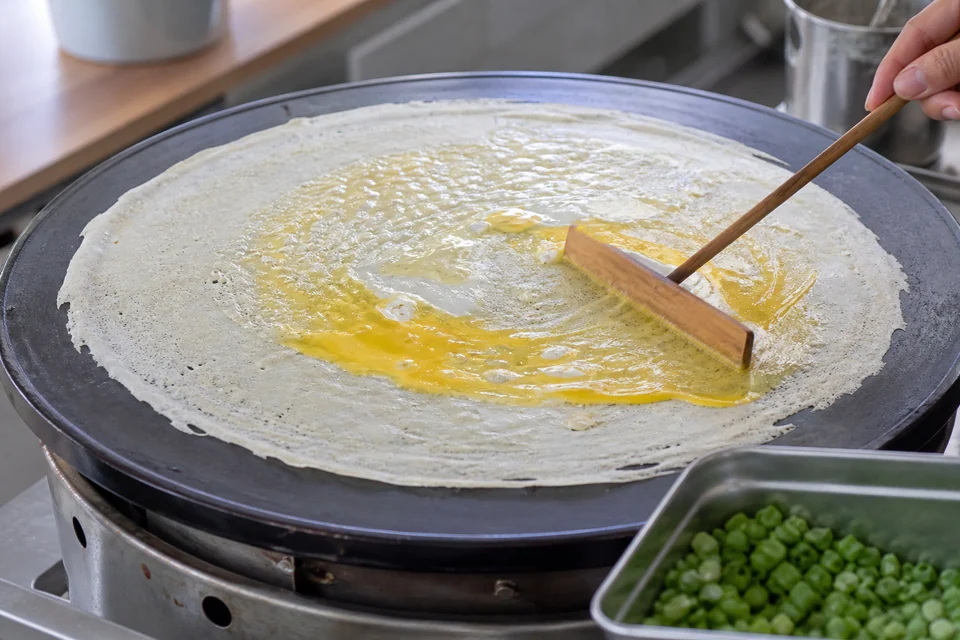
| Jianbing | A thin cooked base commonly described with egg and fillings; check the seller’s stated components. | That every item called jianbing has the same batter, filling or regional history. |
| Cong you bing | A scallion flatbread whose layers and pan cooking distinguish it from a poured batter pancake. | That the word bing alone identifies a single dough method. |
| Dan bing | An egg-based breakfast wrap; check whether the wrapper, egg and filling are served separately or together. | That it is interchangeable with jianbing because both can contain egg. |
What the available evidence can support
Use source pages to support a named dish description, a displayed ingredient list or a stated cooking method. Treat a restaurant menu, tourism page or recipe as evidence of that presentation, not proof of all household practice or of a country-wide rule.
If a source does not identify its locality, language or method, keep the description narrower or omit it.
Adapt without renaming the result as a canonical original
A home cook can make a thin egg wrap or a scallion flatbread inspired by a named preparation, but should name the changes: different flour, purchased wrapper, omitted filling, or a home pan. Use a complete identified recipe for quantities rather than this terminology guide.
Do not use this page to claim that a shortcut is traditional, authentic, or representative of every Chinese or Taiwanese kitchen.

Three different structures behind similar English names
Jianbing is often encountered as a thin griddle-cooked base assembled with egg, sauces and a crisp component. The Woks of Life describes the vendor assembly that inspired its explicitly labelled tortilla shortcut. That account is useful for understanding the contrast between a spread batter and a purchased wrap, not for declaring one formula universal across China.
Cong you bing is a scallion pancake made through a dough-and-layering approach rather than by pouring ordinary breakfast batter. The Woks of Life explains rolling dough with oil, salt and scallions and also documents a shortcut using stacked dumpling wrappers. Those methods can produce layers, but they are not the same preparation. A menu name alone does not tell you which method a seller used.
Dan bing appears in Taipei Travel’s breakfast coverage as an egg crêpe. It belongs in a discussion of Taiwanese breakfast shops, but the English phrase does not specify every wrapper, filling or texture. Ask about the actual version being served. The presence of egg is not enough to identify it as jianbing, and a photograph of one wrap cannot establish a rule for every shop.
For the connected preparation step, see the world-pancake collection.
Choose a home project by the technique you want
Choose a poured-batter preparation if you want to practise spreading a thin layer on a hot surface. Choose a layered scallion flatbread if you want to practise rolling and managing layers. Choose a clearly identified egg-wrap recipe if your main goal is assembling a quick breakfast. Follow a complete recipe for quantities and cooking endpoints; this comparison is not a universal batter formula.
If you use a tortilla, purchased wrapper, different flour or a different filling, describe the substitution. A useful name might be “jianbing-inspired tortilla wrap”, not a claim to reproduce every vendor version. The value of an adaptation is that it is clear about what it changes. You can enjoy it without inventing a historical justification.
When comparing the result, evaluate the feature you actually changed. A thicker purchased wrapper will not behave like freshly spread batter simply because the fillings match. Layered dough and liquid batter respond to different handling. Keep that distinction when borrowing ideas from another pancake tradition.
For the connected preparation step, see blade support for delicate pancakes.
How to discuss bing without flattening regional differences
Bing is a category term, not one uniform pancake. A guide should name the particular form and distinguish dough breads, batter pancakes, layered preparations and filled versions before describing taste or technique. That precision prevents a reader from mistaking one regional food for a national rule.
A scallion-filled layered bread, a crisp wheat flatbread and a softer batter pancake may all be discussed under related names, yet their ingredients, lamination, fillings and cooking equipment can differ. Use the original name alongside a plain English description so the reader knows what is being compared.
For a home adaptation, state the substitution openly. Replacing a regional flour, using a skillet instead of a dedicated oven or griddle, or omitting a filling changes the result and should be presented as an adaptation, not as an authoritative reproduction.
Cultural and historical claims need a source that supports their scope. When origin stories, local habits or terminology are contested or vary by place, say so. A tourism-style statement is not enough evidence that everyone in China or Taiwan eats one version in the same way.
The reader should leave able to identify a specific bing form, ask what dough or batter it uses, note whether it is filled or layered, and recognize the boundary between a documented tradition and a convenient home variation. That is more useful than a single oversimplified recipe.
Ask about the structure before choosing a bing
An English menu that says Chinese pancake leaves several practical questions unanswered. Ask whether the item is a dough-based flatbread or a thin batter preparation, whether a filling is rolled inside, and whether it arrives whole, folded or cut. These questions identify what you are ordering without insisting that the restaurant use one English translation. A name plus a description of the actual preparation is more informative than pancake alone.
For jianbing, distinguish the thin cooked base from the crisp component and other additions wrapped into it. For cong you bing, ask about the layered flatbread itself rather than expecting the same filled wrapper. For dan bing, look for the egg-and-wrapper combination described by that particular vendor or recipe. These descriptions are useful signposts, not a fixed ingredient list for every shop or household.
Dietary questions need separate answers. A wheat-based wrapper does not tell you whether a filling, sauce or cooking fat contains an ingredient you avoid. Ask about those components directly, including shared equipment where relevant. Do not infer vegetarian status merely because the visible topping is scallion, or egg-free status from a photograph that shows only the outside.
At home, name the adaptation honestly: a tortilla-based jianbing-inspired wrap changes the base, while a shortcut wrapper for scallion pancakes changes the method of making layers. The adaptation may be convenient and enjoyable without demonstrating how every regional version is traditionally made. Keeping the original term and the changed method together helps the reader compare rather than confuse them.
Sources and editorial references
Taipei Travel supports the named egg-crêpe breakfast context; The Woks of Life supplies explicitly identified recipe and adaptation examples. These sources do not establish universal origins, formulas or household practices. R3.1 extension: scenario-specific decision support is editorial; it does not claim unpublished tests or transfer a local observation to every setup.
- Taipei Travel — Spring 2021, breakfast coverage: https://travel.taipei/file/3370/
- The Woks of Life — Tortilla Jianbing Wraps: https://thewoksoflife.com/tortilla-jianbing-wraps/
- The Woks of Life — Easy Shortcut Scallion Pancakes: https://thewoksoflife.com/easy-scallion-pancakes/